

Here's something you might be interested in.
Ask a Hipster — Advice you didn't know you needed
Big Screen — Movie commentary
Blurt — Music's inside track
Booze News — San Diego spirits
Classical Music — Immortal beauty
Classifieds — Free and easy
Close to Home — What it’s like on the street where you live
Cover Stories — Front-page features
Drinks All Around — Bartenders' drink recipes
Excerpts — Literary and spiritual excerpts
Feast! — Food & drink reviews
Feature Stories — Local news & stories
Fishing Report — What’s getting hooked from ship and shore
From the Archives — Spotlight on the past
Golden Dreams — Talk of the town
The Gonzo Report — Making the musical scene, or at least reporting from it
Letters — Our inbox
Movies@Home — Local movie buffs share favorites
Movie Reviews — Our critics' picks and pans
Musician Interviews — Up close with local artists
Neighborhood News from Stringers — Hyperlocal news
News Ticker — News & politics
Obermeyer — San Diego politics illustrated
Outdoors — Weekly changes in flora and fauna
Overheard in San Diego — Eavesdropping illustrated
Poetry — The old and the new
Reader Travel — Travel section built by travelers
Reading — The hunt for intellectuals
Roam-O-Rama — SoCal's best hiking/biking trails
San Diego Beer — Inside San Diego suds
SD on the QT — Almost factual news
Sheep and Goats — Places of worship
Special Issues — The best of
Street Style — San Diego streets have style
Surf Diego — Real stories from those braving the waves
Theater — On stage in San Diego this week
Tin Fork — Silver spoon alternative
Under the Radar — Matt Potter's undercover work
Unforgettable — Long-ago San Diego
Unreal Estate — San Diego's priciest pads
Your Week — Daily event picks
Costa's hummingbirds are widespread along the coast, chaparral flowers still remain
Fleas used to be much worse in San Diego
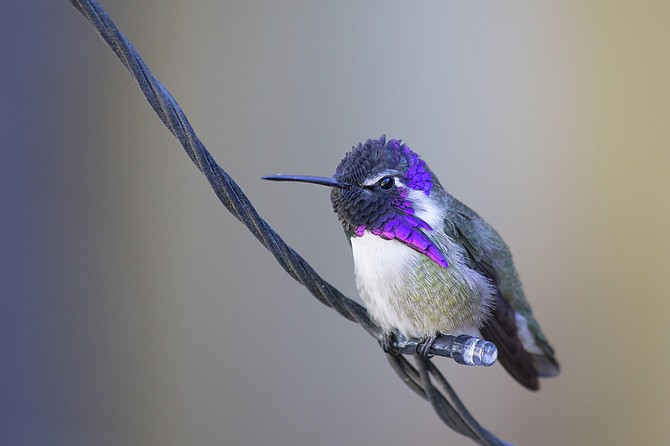
A male Costa's Hummingbird sits on a barb.
Three Hummingbird Species Are San Diego Residents and can be spotted regularly: Anna’s, Black-chinned, and Costa’s hummingbird. Costa’s Hummingbirds arrive at the Anza–Borrego Desert in December and are abundant in spring. Feeding on nectar from many desert plants and small flying insects, they nest in the desert from February into April, then leave in early summer. They are also widespread along the coast — on the foothills of the mountains, and in chaparral forests — and remain there until mid-August. During the non-breeding season they are found in similar dry habitats as well as parks, gardens, and higher elevation mountains. Adult male Costa’s Hummingbirds have an iridescent purple crown and gorget, a green back, and a green vest. Females and juveniles are greenish above with a white eyebrow stripe and whitish underparts.
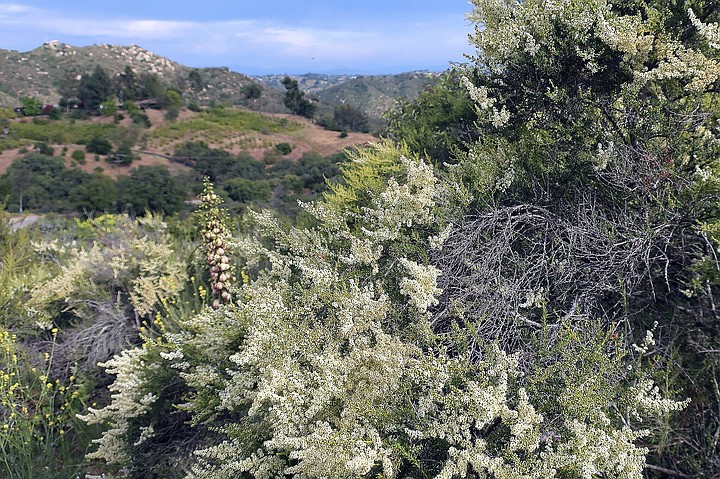
A cluster of blooming chamise among the chaparral at Harris Trail just north of Fallbrook.
This Month, The Coppery, Sun-Burnished Remnants Of Last Spring’s Flower Clusters are still clinging to the tips of buckwheat and chamise plants, and a few wildflowers have popped up here and there in response to scant thunderstorm activity over the mountains. To enjoy the beauty of the chaparral landscape, explore the hillsides above Lake Morena and along Lyons Valley, Japatul, and Boulder Creek roads in East County. Or head inland from Escondido toward Ramona or Valley Center. Most of these areas have been swept by one wildfire or another in the past years, but the native vegetation is gradually returning.
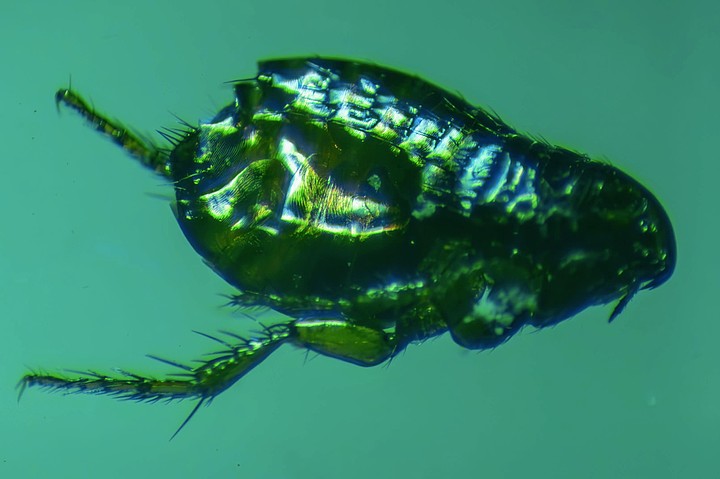
Cat flea photographed under the MBS-9 Soviet microscope with 7x lens.
Fleas, The Bane Of Pets And Humans Alike, are hopping all over San Diego again as the summer progresses. Fleas were even more troublesome in long-ago San Diego County than they are today. Soldiers on the Portola expedition, undertaken over two centuries ago, named a deserted Indian village in today’s North County Rancheria de las Pulgas, and the problem of pulgas (fleas) in the dusty streets and dwelling places of southern California was commonly mentioned in 19th-century journals and diaries. The place-names Las Pulgas Canyon and Las Pulgas Road in Camp Pendleton are reminders of their timeless torment.
Here's something you might be interested in.
Costa's hummingbirds are widespread along the coast, chaparral flowers still remain
Fleas used to be much worse in San Diego

Costa's hummingbirds are widespread along the coast, chaparral flowers still remain
Fleas used to be much worse in San Diego
A male Costa's Hummingbird sits on a barb.
Three Hummingbird Species Are San Diego Residents and can be spotted regularly: Anna’s, Black-chinned, and Costa’s hummingbird. Costa’s Hummingbirds arrive at the Anza–Borrego Desert in December and are abundant in spring. Feeding on nectar from many desert plants and small flying insects, they nest in the desert from February into April, then leave in early summer. They are also widespread along the coast — on the foothills of the mountains, and in chaparral forests — and remain there until mid-August. During the non-breeding season they are found in similar dry habitats as well as parks, gardens, and higher elevation mountains. Adult male Costa’s Hummingbirds have an iridescent purple crown and gorget, a green back, and a green vest. Females and juveniles are greenish above with a white eyebrow stripe and whitish underparts.
A cluster of blooming chamise among the chaparral at Harris Trail just north of Fallbrook.
This Month, The Coppery, Sun-Burnished Remnants Of Last Spring’s Flower Clusters are still clinging to the tips of buckwheat and chamise plants, and a few wildflowers have popped up here and there in response to scant thunderstorm activity over the mountains. To enjoy the beauty of the chaparral landscape, explore the hillsides above Lake Morena and along Lyons Valley, Japatul, and Boulder Creek roads in East County. Or head inland from Escondido toward Ramona or Valley Center. Most of these areas have been swept by one wildfire or another in the past years, but the native vegetation is gradually returning.
Cat flea photographed under the MBS-9 Soviet microscope with 7x lens.
Fleas, The Bane Of Pets And Humans Alike, are hopping all over San Diego again as the summer progresses. Fleas were even more troublesome in long-ago San Diego County than they are today. Soldiers on the Portola expedition, undertaken over two centuries ago, named a deserted Indian village in today’s North County Rancheria de las Pulgas, and the problem of pulgas (fleas) in the dusty streets and dwelling places of southern California was commonly mentioned in 19th-century journals and diaries. The place-names Las Pulgas Canyon and Las Pulgas Road in Camp Pendleton are reminders of their timeless torment.
Comments