

Here's something you might be interested in.
Ask a Hipster — Advice you didn't know you needed
Big Screen — Movie commentary
Blurt — Music's inside track
Booze News — San Diego spirits
Classical Music — Immortal beauty
Classifieds — Free and easy
Close to Home — What it’s like on the street where you live
Cover Stories — Front-page features
Drinks All Around — Bartenders' drink recipes
Excerpts — Literary and spiritual excerpts
Feast! — Food & drink reviews
Feature Stories — Local news & stories
Fishing Report — What’s getting hooked from ship and shore
From the Archives — Spotlight on the past
Golden Dreams — Talk of the town
The Gonzo Report — Making the musical scene, or at least reporting from it
Letters — Our inbox
Movies@Home — Local movie buffs share favorites
Movie Reviews — Our critics' picks and pans
Musician Interviews — Up close with local artists
Neighborhood News from Stringers — Hyperlocal news
News Ticker — News & politics
Obermeyer — San Diego politics illustrated
Outdoors — Weekly changes in flora and fauna
Overheard in San Diego — Eavesdropping illustrated
Poetry — The old and the new
Reader Travel — Travel section built by travelers
Reading — The hunt for intellectuals
Roam-O-Rama — SoCal's best hiking/biking trails
San Diego Beer — Inside San Diego suds
SD on the QT — Almost factual news
Sheep and Goats — Places of worship
Special Issues — The best of
Street Style — San Diego streets have style
Surf Diego — Real stories from those braving the waves
Theater — On stage in San Diego this week
Tin Fork — Silver spoon alternative
Under the Radar — Matt Potter's undercover work
Unforgettable — Long-ago San Diego
Unreal Estate — San Diego's priciest pads
Your Week — Daily event picks
Downtown La Mesa's parking crunch
What will happen when they add 211 apartments?
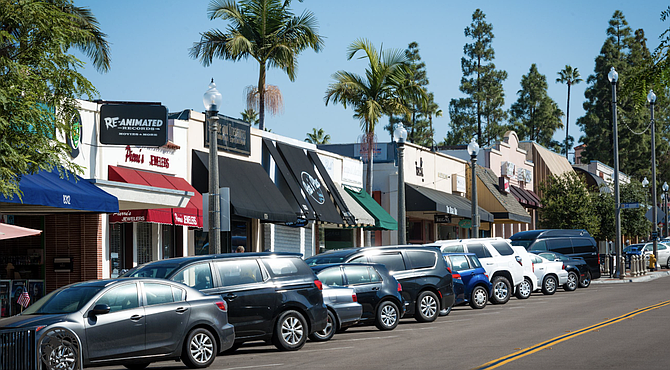
One restaurant owner told her that restaurants and retailers need abundant free or low-cost parking; or they wither and die.
Big changes are coming to La Mesa’s downtown village district, where hundreds of new apartments are expected to reshuffle traffic, including the stationary kind.
Where everyone will park was more of a concern at last week’s city council meeting than the doubled meter rates and other changes the city’s parking commission is recommending.
“Right now, we don’t have apartment buildings in downtown La Mesa, but very soon we’re going to have 211 units,” said councilmember Laura Lothian. And those apartments “have 146 parking spaces which means they’re short 65.”
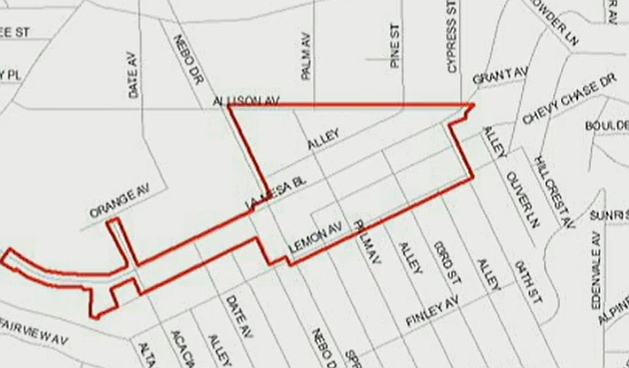
La Mesa Parking District. Apartment dwellers might even be desperate enough to create a remote business to get a permit.
At least. If each of the one- and two-bedroom units has one or more cars, “we could be looking at 60-200 cars permanently here without a place to go.”
One worry is they’ll come home from work and fill the parking lots where at 6:00 p.m. the meter stops, the permits stop, and they’ll be there until the next morning. Those apartment dwellers might even be desperate enough to create a remote business to get a permit, she suggested.
The city made the parking permit program in 2021 to benefit business owners and employees, but Lothian said the wording around it is fuzzy and the city should make it clear it’s only for businesses that have a storefront.
One restaurant owner told her that restaurants and retailers need abundant free or low-cost parking; or they wither and die.
“We need to start addressing possibly no overnight parking because when those apartments come in, the parking lots are going to be filled with those cars, and it’s going to be catastrophic for our businesses downtown.”
Others said the public lots should serve the entire community, not just one group. If the lots are empty overnight, let residents use them.
Lyn Dedmon, assistant to the city manager, said the suggestions from the council and others will be considered in the recommendations before they are brought back for approval. For one, the city’s vendor who manages the parking permits could vet applications online to check addresses of the housing projects. “It would just be an extra step to verify it is a storefront business.”
The last time the city adjusted the parking meter rate was in 2010. The city has 433 meters on streets and in three of four municipal parking lots. The meters are all $.75 per hour except for Allison Ave., Allison Ave. parking lot, and La Mesa Blvd. lot which are .50.
Other cities have higher parking rates, except Chula Vista, where it’s also $.75. San Diego charges $2.50, topped by Del Mar, which charges $3.00. The average meter cost in the county is about $2.05. The new recommended meter rate in parking district one is $1.50.
The commission studied parking data over the last 10 years to estimate how much revenue would have been collected if rates had been $1.00; $1.25; or $1.50. For example, had the rate been $1.50 all along, revenues in 2024 could have been $546,659 instead of $273,329.
Parking fund revenues haven’t kept pace with the costs of infrastructure, maintenance, and improvements. For village projects, some of the bigger expenses the parking fund couldn’t fully fund over the years include the Lemon Ave parking lot rehabilitation, streetscape improvements, replacing coin-only meters, a bollard enhancement project in 2025 and trash and recycling receptacles replacement.
Another change the commission recommends is to eliminate parking tiers and provide one permit for all seven parking areas for $80 per quarter or $288 annually. In the current tier one, there are 171 spaces in four areas while tier two has 276 spaces in seven areas.
Getting rid of the tiers would let someone who normally parks at one lot, say, the Palm Ave. lot, switch to a new location.
Desmon said the reason the city implemented this segregated parking “was because those areas were deemed the least desirable parking – and that’s where businesses wanted their employees to park, to avoid consuming customer parking. “Mainly La Mesa Blvd from Acacia east to past 6th St.; that would be prime customer parking.”
Here's something you might be interested in.
Downtown La Mesa's parking crunch
What will happen when they add 211 apartments?

Downtown La Mesa's parking crunch
What will happen when they add 211 apartments?
One restaurant owner told her that restaurants and retailers need abundant free or low-cost parking; or they wither and die.
Big changes are coming to La Mesa’s downtown village district, where hundreds of new apartments are expected to reshuffle traffic, including the stationary kind.
Where everyone will park was more of a concern at last week’s city council meeting than the doubled meter rates and other changes the city’s parking commission is recommending.
“Right now, we don’t have apartment buildings in downtown La Mesa, but very soon we’re going to have 211 units,” said councilmember Laura Lothian. And those apartments “have 146 parking spaces which means they’re short 65.”
La Mesa Parking District. Apartment dwellers might even be desperate enough to create a remote business to get a permit.
At least. If each of the one- and two-bedroom units has one or more cars, “we could be looking at 60-200 cars permanently here without a place to go.”
One worry is they’ll come home from work and fill the parking lots where at 6:00 p.m. the meter stops, the permits stop, and they’ll be there until the next morning. Those apartment dwellers might even be desperate enough to create a remote business to get a permit, she suggested.
The city made the parking permit program in 2021 to benefit business owners and employees, but Lothian said the wording around it is fuzzy and the city should make it clear it’s only for businesses that have a storefront.
One restaurant owner told her that restaurants and retailers need abundant free or low-cost parking; or they wither and die.
“We need to start addressing possibly no overnight parking because when those apartments come in, the parking lots are going to be filled with those cars, and it’s going to be catastrophic for our businesses downtown.”
Others said the public lots should serve the entire community, not just one group. If the lots are empty overnight, let residents use them.
Lyn Dedmon, assistant to the city manager, said the suggestions from the council and others will be considered in the recommendations before they are brought back for approval. For one, the city’s vendor who manages the parking permits could vet applications online to check addresses of the housing projects. “It would just be an extra step to verify it is a storefront business.”
The last time the city adjusted the parking meter rate was in 2010. The city has 433 meters on streets and in three of four municipal parking lots. The meters are all $.75 per hour except for Allison Ave., Allison Ave. parking lot, and La Mesa Blvd. lot which are .50.
Other cities have higher parking rates, except Chula Vista, where it’s also $.75. San Diego charges $2.50, topped by Del Mar, which charges $3.00. The average meter cost in the county is about $2.05. The new recommended meter rate in parking district one is $1.50.
The commission studied parking data over the last 10 years to estimate how much revenue would have been collected if rates had been $1.00; $1.25; or $1.50. For example, had the rate been $1.50 all along, revenues in 2024 could have been $546,659 instead of $273,329.
Parking fund revenues haven’t kept pace with the costs of infrastructure, maintenance, and improvements. For village projects, some of the bigger expenses the parking fund couldn’t fully fund over the years include the Lemon Ave parking lot rehabilitation, streetscape improvements, replacing coin-only meters, a bollard enhancement project in 2025 and trash and recycling receptacles replacement.
Another change the commission recommends is to eliminate parking tiers and provide one permit for all seven parking areas for $80 per quarter or $288 annually. In the current tier one, there are 171 spaces in four areas while tier two has 276 spaces in seven areas.
Getting rid of the tiers would let someone who normally parks at one lot, say, the Palm Ave. lot, switch to a new location.
Desmon said the reason the city implemented this segregated parking “was because those areas were deemed the least desirable parking – and that’s where businesses wanted their employees to park, to avoid consuming customer parking. “Mainly La Mesa Blvd from Acacia east to past 6th St.; that would be prime customer parking.”
Comments