

Here's something you might be interested in.
Ask a Hipster — Advice you didn't know you needed
Big Screen — Movie commentary
Blurt — Music's inside track
Booze News — San Diego spirits
Classical Music — Immortal beauty
Classifieds — Free and easy
Close to Home — What it’s like on the street where you live
Cover Stories — Front-page features
Drinks All Around — Bartenders' drink recipes
Excerpts — Literary and spiritual excerpts
Feast! — Food & drink reviews
Feature Stories — Local news & stories
Fishing Report — What’s getting hooked from ship and shore
From the Archives — Spotlight on the past
Golden Dreams — Talk of the town
The Gonzo Report — Making the musical scene, or at least reporting from it
Letters — Our inbox
Movies@Home — Local movie buffs share favorites
Movie Reviews — Our critics' picks and pans
Musician Interviews — Up close with local artists
Neighborhood News from Stringers — Hyperlocal news
News Ticker — News & politics
Obermeyer — San Diego politics illustrated
Outdoors — Weekly changes in flora and fauna
Overheard in San Diego — Eavesdropping illustrated
Poetry — The old and the new
Reader Travel — Travel section built by travelers
Reading — The hunt for intellectuals
Roam-O-Rama — SoCal's best hiking/biking trails
San Diego Beer — Inside San Diego suds
SD on the QT — Almost factual news
Sheep and Goats — Places of worship
Special Issues — The best of
Street Style — San Diego streets have style
Surf Diego — Real stories from those braving the waves
Theater — On stage in San Diego this week
Tin Fork — Silver spoon alternative
Under the Radar — Matt Potter's undercover work
Unforgettable — Long-ago San Diego
Unreal Estate — San Diego's priciest pads
Your Week — Daily event picks
Ken under construction
But new owners say the facade can stay
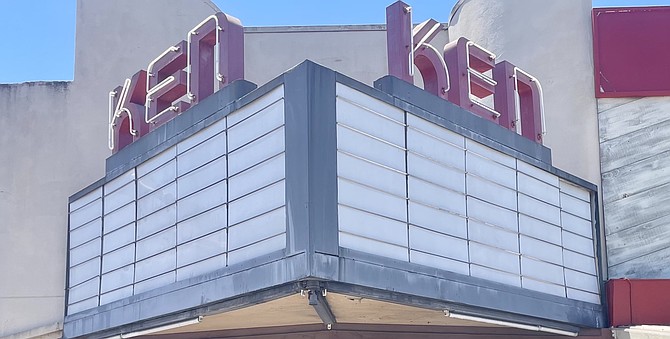
The building that once housed the Ken Cinema on Adams Avenue is preparing for a new debut — but as what?
In late May, construction crews arrived and unlocked the gates below the marquee for the iconic single-screen theater for the first time in five years. Since then, they have removed the screen and the seats, stripped the walls to the studs, dug out the floor, and laid a cinderblock barrier across the former auditorium.
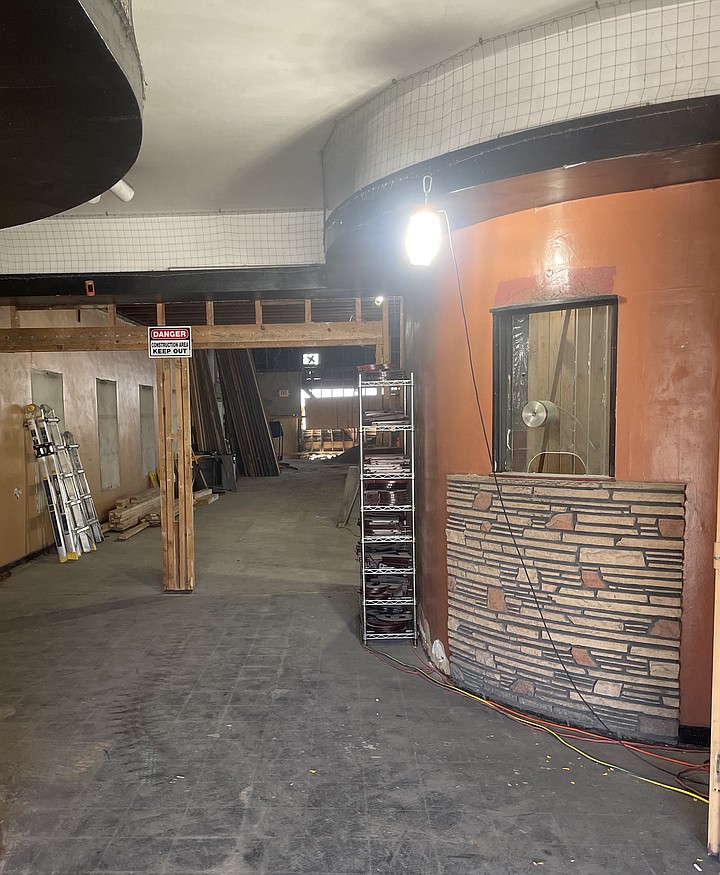
Guesses about what is taking shape in the space abound, from office space to boutique shops and salons owned by locals. However, owner Tom Frenkel will reveal only that he’s building a hub for what he calls “community spaces."
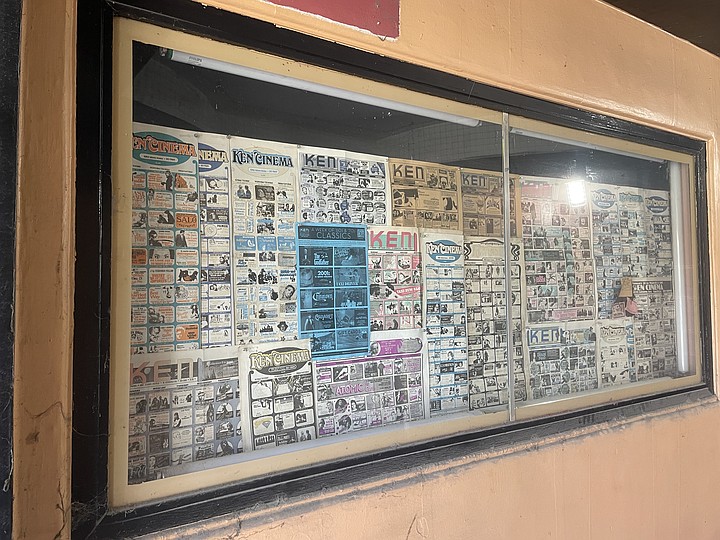
What it won't be is a movie theater. The marquee has overlooked Adams Avenue since 1946, when Robert Berkun opened San Diego’s first theater devoted to foreign and art films. As recounted in this 1974 Reader story, Berkun sold the lease in 1969 to Strand Amusement Corporation, which then sold it in 1973 to Great Western Theaters out of Los Angeles. In the early 1980s, the Ken became noted for its raucous midnight showings of the Rocky Horror Picture Show, especially significant to the city’s queer community. In its curatorial embrace, the Ken welcomed Fellini triple-features as readily as thrash metal documentaries — with impromptu thrash metal concerts afterward.
Video:
Ken Cinema: ROCKY HORROR PICTURE SHOW
But after enduring for seven decades as an institution, the Ken struggled in the streaming era. In 2014, Landmark Theaters, the national theater chain that ran the Ken from 1975 on, announced plans to exit. Fans responded with outrage online, leading Landmark to sign a new deal to keep the Ken running “for many years to come,” as a company spokesperson told the San Diego Union Tribune. Six unprofitable years later, the pandemic struck and Landmark withdrew for good. The theater played its final show in March 2020, a screening of Casablanca.
As soon as the Ken’s fate was sealed, members of the San Diego community began to fight for different visions of the building’s future. Ethan Van Trillo, director of the independent theater The Digital Gym, , looked into keeping it open as a theater, but realized the economics simply didn’t work, as he told KPBS. Developers, including the owner of the Kensington Commons, eyed the property as part of a potential mixed-use multi-story complex. In response to this, Kensington residents — led by neighborhood historian and preservationist Maggie McCann — made preparations to buy it themselves. As McCann told CBS 8, they were willing to form a limited-liability partnership to prevent the proposed high-rise, citing concerns about congestion, competition for already-scarce parking, and the character of the neighborhood.
However, real estate agent and former Rolando Community Council President Doug Lister says a multi-story residential building is exactly what it should have been. “We need more housing, especially on the corridors,” Lister said. “All over town, people are complaining about mini dorms, ADUs, and overcrowding in neighborhoods. If they don’t want their neighborhoods to get crowded, large residential complexes should be built along the transit lines on those corridors.”
Whether Lister is right or wrong, Kensington’s residents have worked hard to maintain the sleepy village-within-a-city character of the suburb. In 1998, the city downzoned Kensington and the Mid-Cities area, preventing multi-family housing from being built and helping to create a pocket of extremely valuable single-family homes close to the city center that has withstood population pressure as San Diego grows. A new community plan is currently in the works and may bring changes, but in December 2022, the preservationists got good news. The Berkun family trust announced it had sold the building to an unnamed buyer, and a family representative told KPBS they were “working to maintain the visual appeal to blend in with the integrity and character of the neighborhood.”
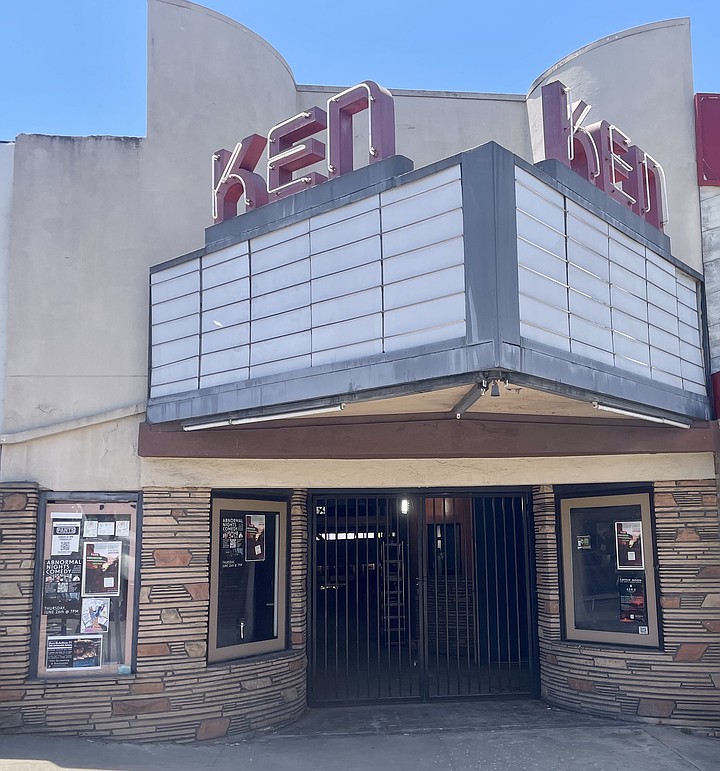
So far, that appears to be the case. The new owner, Arizona businessman Tom Frenkel, runs a family real estate empire in Scottsdale. In an interview with Arizona Business Today, Frenkel described his investment philosophy as ‘generational investment,’ “meaning we create investments, once we create them we hold onto them long term, with the idea they will stay in the family for years.” In the case of the Ken Cinema building, according to the construction crew chief, the scale of the building will not change and the front—the marquee, classic sandstone facade, and ticket window—will remain untouched.
Maggie McCann is now cautiously optimistic. “It remains to be seen what happens, but if the owner follows through on his promises, I think it will be the best non-theater use we could ask for,” she wrote in an email. “While there is a lot of teeth-gnashing about the loss of the cinema, no one stepped up to take it over, and the days of the single-screen theater are gone, it seems.”
Other neighbors agreed. “I would love for it to be an indie movie theatre again, but that’s clearly not going to happen,” said Mary Wall, a resident of the neighborhood since 1996. “I’m just glad that the owner is keeping the existing building rather than tearing it down and replacing it with a seven-story apartment building.”
Still, other neighbors had familiar concerns. “Where will they all park?,” wrote Ruth Sigler on NextDoor. Nine other long-term Kensington residents echoed the question. But extra parking may not be an issue if Kensington residents themselves rent space in the new Ken. Longtime resident Susan Taylor, for example, is excited about the possibility of opening “a bookshop with poetry books from local authors, novels from local authors, children’s books cookbooks used and new." Taylor, a retired English teacher, poet, radio host, and English tutor, is also interested in using the space as a tutoring center. “I’d also like to have Open Mic poetry events there,” she said. She is hoping to share a lease with someone, perhaps a florist or coffee cart.
Whether such local endeavors will be able make rent at the new complex is another question. For now, the owner is staying silent on details like prices, and will not say when the old Kensington Theater building might reopen for business.
Here's something you might be interested in.
Ken under construction
But new owners say the facade can stay

Ken under construction
But new owners say the facade can stay
The building that once housed the Ken Cinema on Adams Avenue is preparing for a new debut — but as what?
In late May, construction crews arrived and unlocked the gates below the marquee for the iconic single-screen theater for the first time in five years. Since then, they have removed the screen and the seats, stripped the walls to the studs, dug out the floor, and laid a cinderblock barrier across the former auditorium.
Guesses about what is taking shape in the space abound, from office space to boutique shops and salons owned by locals. However, owner Tom Frenkel will reveal only that he’s building a hub for what he calls “community spaces."
What it won't be is a movie theater. The marquee has overlooked Adams Avenue since 1946, when Robert Berkun opened San Diego’s first theater devoted to foreign and art films. As recounted in this 1974 Reader story, Berkun sold the lease in 1969 to Strand Amusement Corporation, which then sold it in 1973 to Great Western Theaters out of Los Angeles. In the early 1980s, the Ken became noted for its raucous midnight showings of the Rocky Horror Picture Show, especially significant to the city’s queer community. In its curatorial embrace, the Ken welcomed Fellini triple-features as readily as thrash metal documentaries — with impromptu thrash metal concerts afterward.
Video:
Ken Cinema: ROCKY HORROR PICTURE SHOW
But after enduring for seven decades as an institution, the Ken struggled in the streaming era. In 2014, Landmark Theaters, the national theater chain that ran the Ken from 1975 on, announced plans to exit. Fans responded with outrage online, leading Landmark to sign a new deal to keep the Ken running “for many years to come,” as a company spokesperson told the San Diego Union Tribune. Six unprofitable years later, the pandemic struck and Landmark withdrew for good. The theater played its final show in March 2020, a screening of Casablanca.
As soon as the Ken’s fate was sealed, members of the San Diego community began to fight for different visions of the building’s future. Ethan Van Trillo, director of the independent theater The Digital Gym, , looked into keeping it open as a theater, but realized the economics simply didn’t work, as he told KPBS. Developers, including the owner of the Kensington Commons, eyed the property as part of a potential mixed-use multi-story complex. In response to this, Kensington residents — led by neighborhood historian and preservationist Maggie McCann — made preparations to buy it themselves. As McCann told CBS 8, they were willing to form a limited-liability partnership to prevent the proposed high-rise, citing concerns about congestion, competition for already-scarce parking, and the character of the neighborhood.
However, real estate agent and former Rolando Community Council President Doug Lister says a multi-story residential building is exactly what it should have been. “We need more housing, especially on the corridors,” Lister said. “All over town, people are complaining about mini dorms, ADUs, and overcrowding in neighborhoods. If they don’t want their neighborhoods to get crowded, large residential complexes should be built along the transit lines on those corridors.”
Whether Lister is right or wrong, Kensington’s residents have worked hard to maintain the sleepy village-within-a-city character of the suburb. In 1998, the city downzoned Kensington and the Mid-Cities area, preventing multi-family housing from being built and helping to create a pocket of extremely valuable single-family homes close to the city center that has withstood population pressure as San Diego grows. A new community plan is currently in the works and may bring changes, but in December 2022, the preservationists got good news. The Berkun family trust announced it had sold the building to an unnamed buyer, and a family representative told KPBS they were “working to maintain the visual appeal to blend in with the integrity and character of the neighborhood.”
So far, that appears to be the case. The new owner, Arizona businessman Tom Frenkel, runs a family real estate empire in Scottsdale. In an interview with Arizona Business Today, Frenkel described his investment philosophy as ‘generational investment,’ “meaning we create investments, once we create them we hold onto them long term, with the idea they will stay in the family for years.” In the case of the Ken Cinema building, according to the construction crew chief, the scale of the building will not change and the front—the marquee, classic sandstone facade, and ticket window—will remain untouched.
Maggie McCann is now cautiously optimistic. “It remains to be seen what happens, but if the owner follows through on his promises, I think it will be the best non-theater use we could ask for,” she wrote in an email. “While there is a lot of teeth-gnashing about the loss of the cinema, no one stepped up to take it over, and the days of the single-screen theater are gone, it seems.”
Other neighbors agreed. “I would love for it to be an indie movie theatre again, but that’s clearly not going to happen,” said Mary Wall, a resident of the neighborhood since 1996. “I’m just glad that the owner is keeping the existing building rather than tearing it down and replacing it with a seven-story apartment building.”
Still, other neighbors had familiar concerns. “Where will they all park?,” wrote Ruth Sigler on NextDoor. Nine other long-term Kensington residents echoed the question. But extra parking may not be an issue if Kensington residents themselves rent space in the new Ken. Longtime resident Susan Taylor, for example, is excited about the possibility of opening “a bookshop with poetry books from local authors, novels from local authors, children’s books cookbooks used and new." Taylor, a retired English teacher, poet, radio host, and English tutor, is also interested in using the space as a tutoring center. “I’d also like to have Open Mic poetry events there,” she said. She is hoping to share a lease with someone, perhaps a florist or coffee cart.
Whether such local endeavors will be able make rent at the new complex is another question. For now, the owner is staying silent on details like prices, and will not say when the old Kensington Theater building might reopen for business.
Comments