

Here's something you might be interested in.
Ask a Hipster — Advice you didn't know you needed
Big Screen — Movie commentary
Blurt — Music's inside track
Booze News — San Diego spirits
Classical Music — Immortal beauty
Classifieds — Free and easy
Close to Home — What it’s like on the street where you live
Cover Stories — Front-page features
Drinks All Around — Bartenders' drink recipes
Excerpts — Literary and spiritual excerpts
Feast! — Food & drink reviews
Feature Stories — Local news & stories
Fishing Report — What’s getting hooked from ship and shore
From the Archives — Spotlight on the past
Golden Dreams — Talk of the town
The Gonzo Report — Making the musical scene, or at least reporting from it
Letters — Our inbox
Movies@Home — Local movie buffs share favorites
Movie Reviews — Our critics' picks and pans
Musician Interviews — Up close with local artists
Neighborhood News from Stringers — Hyperlocal news
News Ticker — News & politics
Obermeyer — San Diego politics illustrated
Outdoors — Weekly changes in flora and fauna
Overheard in San Diego — Eavesdropping illustrated
Poetry — The old and the new
Reader Travel — Travel section built by travelers
Reading — The hunt for intellectuals
Roam-O-Rama — SoCal's best hiking/biking trails
San Diego Beer — Inside San Diego suds
SD on the QT — Almost factual news
Sheep and Goats — Places of worship
Special Issues — The best of
Street Style — San Diego streets have style
Surf Diego — Real stories from those braving the waves
Theater — On stage in San Diego this week
Tin Fork — Silver spoon alternative
Under the Radar — Matt Potter's undercover work
Unforgettable — Long-ago San Diego
Unreal Estate — San Diego's priciest pads
Your Week — Daily event picks
Fan Palms are showing their fruit, full moon brings extreme tides this weekend
Earth will be at perihelion this weekend
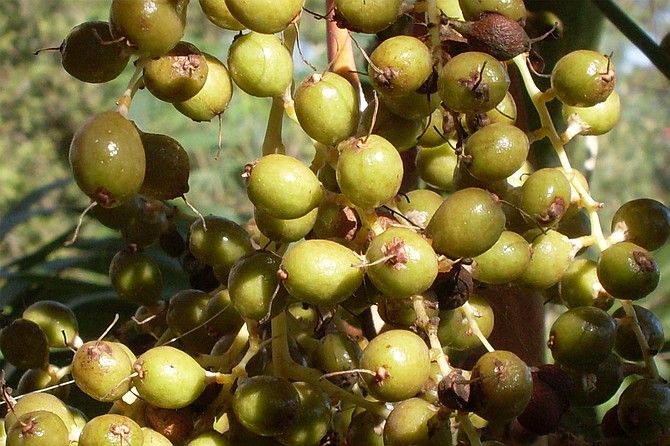
A close-up of a cluster of Fan Palm fruit
Ripening Palm Fruit, Hanging In Great Clusters on California’s native fan palms (Washingtonia filifera), can be seen (and tasted) this month. The black, pea-sized fruit consists of a deliciously sweet but almost paper-thin skin surrounding a hard seed. (It's worth noting that these are not “California dates” — the fruit of cultivated palms introduced into California’s deserts from northern Africa.) Our native fan palms can be seen in their natural habitat in about two dozen canyons within Anza-Borrego Desert State Park. They have also been planted widely elsewhere in California, including along the main streets of Palm Springs.
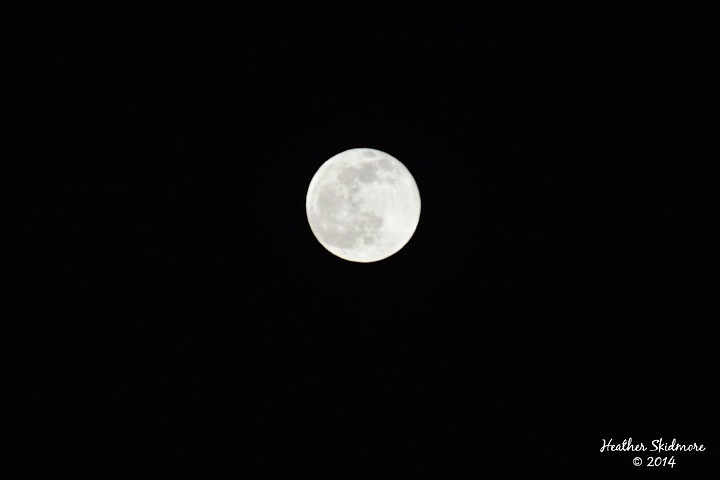
Full Moon over Balboa Park
The Full Moon on Saturday, January 3 rises impressively from the dusky east horizon at around 5:24 pm, just thirty minutes after the sun has set. Some folk names for the January full moon include “Chaste Moon,” “Quiet Moon,” “Snow Moon,” and “Wolf Moon.” This is the first super moon of 2026 and will likely wash out the peaking Quadrantid meteor shower. After midnight look to the Northern sky, near the handle of the big dipper, and you may still see some of the brightest meteors.
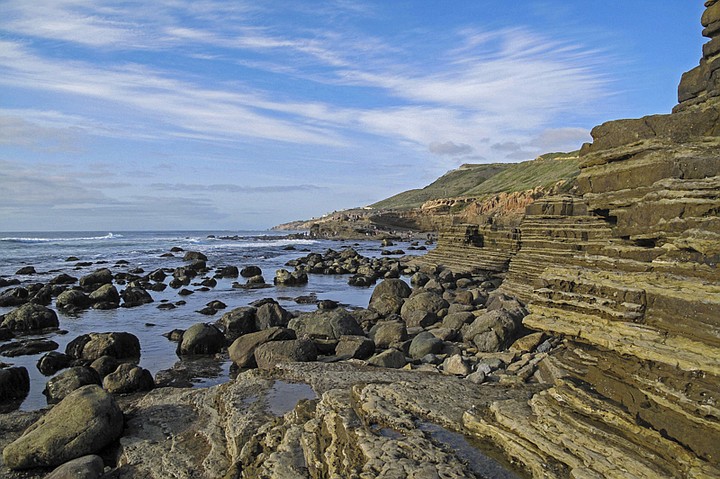
Cabrillo National Monument tidepools.
A String of Extraordinarily High And Low Tides Occurs This Weekend. The tide on Friday, January 2, dips to -2.1 feet at 3:05 pm. Saturday’s low tide of -2.1 feet occurs at 3:48 pm. On Sunday, the tide falls to -1.87 feet at 4:30 pm. These low-tide episodes will be perfect for exploring the lowermost of the intertidal zones in the rocky areas of San Diego County’s coastline. Extreme high tides will also occur a few hours before each extreme low tide, with Friday's and Saturday's high tides reaching heights of 7.61 and 7.68 feet. The tidal extremes this month are related to the full moon phase, and also to the moon’s seasonal position in the sky, which is helping to carry the global tidal bulges and troughs over latitudes farther north than usual.
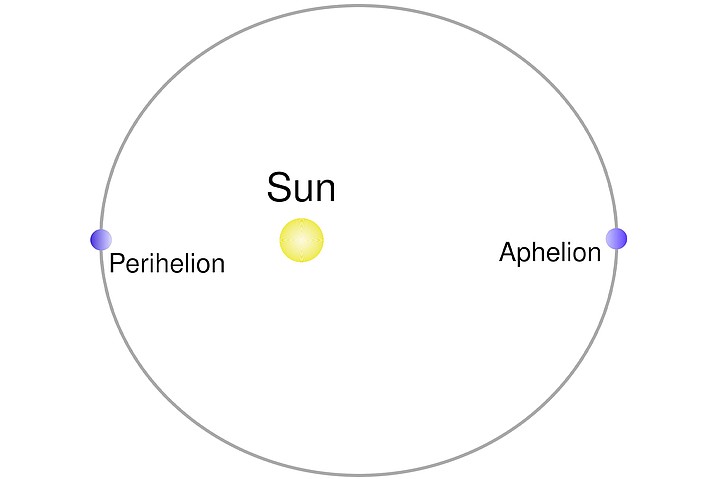
Our “closest” distance from the sun is still 91.4 million miles.
The Earth Will Be At Its Closest Point To The Sun on the morning of January 4th. This point is called the perihelion, from the Greek roots peri, meaning “near,” and helios, meaning “sun.” Because the earth’s orbit around the sun isn’t circular but elliptical — a stretched but still rounded path — there are closest and farthest points in its cycle. In early January, we are 3% closer to the sun (1.5 million miles) than we will be in July, when earth reaches its aphelion.
Here's something you might be interested in.
Fan Palms are showing their fruit, full moon brings extreme tides this weekend
Earth will be at perihelion this weekend

Fan Palms are showing their fruit, full moon brings extreme tides this weekend
Earth will be at perihelion this weekend
A close-up of a cluster of Fan Palm fruit
Ripening Palm Fruit, Hanging In Great Clusters on California’s native fan palms (Washingtonia filifera), can be seen (and tasted) this month. The black, pea-sized fruit consists of a deliciously sweet but almost paper-thin skin surrounding a hard seed. (It's worth noting that these are not “California dates” — the fruit of cultivated palms introduced into California’s deserts from northern Africa.) Our native fan palms can be seen in their natural habitat in about two dozen canyons within Anza-Borrego Desert State Park. They have also been planted widely elsewhere in California, including along the main streets of Palm Springs.
Full Moon over Balboa Park
The Full Moon on Saturday, January 3 rises impressively from the dusky east horizon at around 5:24 pm, just thirty minutes after the sun has set. Some folk names for the January full moon include “Chaste Moon,” “Quiet Moon,” “Snow Moon,” and “Wolf Moon.” This is the first super moon of 2026 and will likely wash out the peaking Quadrantid meteor shower. After midnight look to the Northern sky, near the handle of the big dipper, and you may still see some of the brightest meteors.
Cabrillo National Monument tidepools.
A String of Extraordinarily High And Low Tides Occurs This Weekend. The tide on Friday, January 2, dips to -2.1 feet at 3:05 pm. Saturday’s low tide of -2.1 feet occurs at 3:48 pm. On Sunday, the tide falls to -1.87 feet at 4:30 pm. These low-tide episodes will be perfect for exploring the lowermost of the intertidal zones in the rocky areas of San Diego County’s coastline. Extreme high tides will also occur a few hours before each extreme low tide, with Friday's and Saturday's high tides reaching heights of 7.61 and 7.68 feet. The tidal extremes this month are related to the full moon phase, and also to the moon’s seasonal position in the sky, which is helping to carry the global tidal bulges and troughs over latitudes farther north than usual.
Our “closest” distance from the sun is still 91.4 million miles.
The Earth Will Be At Its Closest Point To The Sun on the morning of January 4th. This point is called the perihelion, from the Greek roots peri, meaning “near,” and helios, meaning “sun.” Because the earth’s orbit around the sun isn’t circular but elliptical — a stretched but still rounded path — there are closest and farthest points in its cycle. In early January, we are 3% closer to the sun (1.5 million miles) than we will be in July, when earth reaches its aphelion.
Comments