

Here's something you might be interested in.
Ask a Hipster — Advice you didn't know you needed
Big Screen — Movie commentary
Blurt — Music's inside track
Booze News — San Diego spirits
Classical Music — Immortal beauty
Classifieds — Free and easy
Close to Home — What it’s like on the street where you live
Cover Stories — Front-page features
Drinks All Around — Bartenders' drink recipes
Excerpts — Literary and spiritual excerpts
Feast! — Food & drink reviews
Feature Stories — Local news & stories
Fishing Report — What’s getting hooked from ship and shore
From the Archives — Spotlight on the past
Golden Dreams — Talk of the town
The Gonzo Report — Making the musical scene, or at least reporting from it
Letters — Our inbox
Movies@Home — Local movie buffs share favorites
Movie Reviews — Our critics' picks and pans
Musician Interviews — Up close with local artists
Neighborhood News from Stringers — Hyperlocal news
News Ticker — News & politics
Obermeyer — San Diego politics illustrated
Outdoors — Weekly changes in flora and fauna
Overheard in San Diego — Eavesdropping illustrated
Poetry — The old and the new
Reader Travel — Travel section built by travelers
Reading — The hunt for intellectuals
Roam-O-Rama — SoCal's best hiking/biking trails
San Diego Beer — Inside San Diego suds
SD on the QT — Almost factual news
Sheep and Goats — Places of worship
Special Issues — The best of
Street Style — San Diego streets have style
Surf Diego — Real stories from those braving the waves
Theater — On stage in San Diego this week
Tin Fork — Silver spoon alternative
Under the Radar — Matt Potter's undercover work
Unforgettable — Long-ago San Diego
Unreal Estate — San Diego's priciest pads
Your Week — Daily event picks
Short days and long nights, the White-crowned sparrow is visiting
Cold, clean air makes for great hiking, the Geminids will have optimal viewing this year
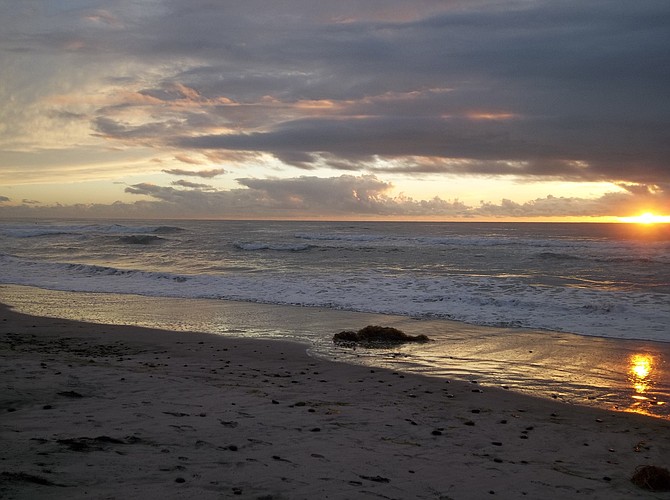
Cardiff Beach at dusk
With Only About 10 Hours Of Daylight, San Diego must endure its darkest and gloomiest nights of the year during this week and next. After rising, the sun struggles to an altitude of only 34 degrees (as seen from San Diego), and then quickly sinks toward the horizon. The word “solstice” comes from the Latin sol (“sun”) and sistere (“to stand still”); the sun’s path appears to freeze for a few days at the equinox before reversing. On the bright side, literally and figuratively, our days will start getting longer as the sun’s path rises higher in the sky each day. The process starts very slowly, though: in December, our daylight increases by merely seconds per day. By March, we will see daily increases of 3 minutes.
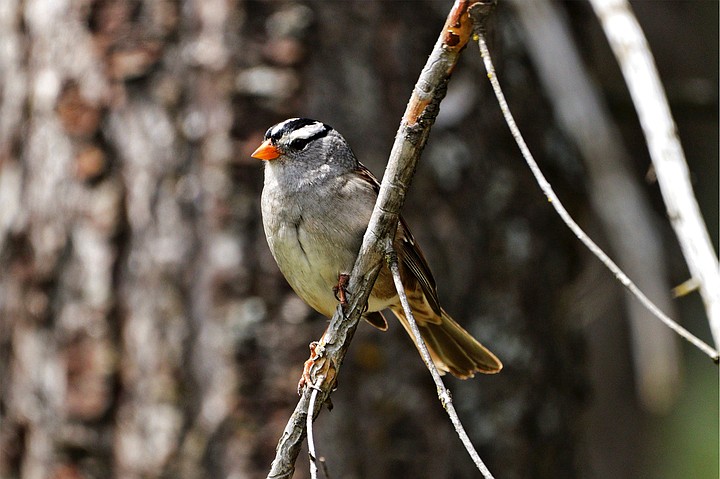
Close up of a White-crowned Sparrow perched on a branch.
The White-crowned Sparrow Is A Common Winter Visitor throughout San Diego and even far into Mexico, and is easily recognizable by a black and white striped head, colorful pink or yellow bill, and a gray breast. They typically forage in small flocks, digging through leaf litter for weed seeds, buds, and fruits. They also scavenge for scrap seeds underneath backyard bird feeders. Look for them in open areas close to brushy habitat or perched on low branches within shrubby hedgerows, and listen for their whistled songs ringing out on winter’s shorter days and colder mornings.
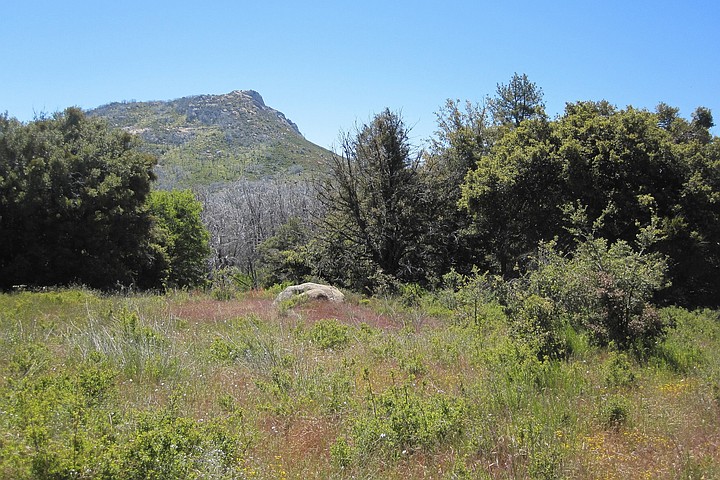
Azalea Glen Trail, Cuyamaca Rancho State Park
Maybe Hike to San Diego County’s High Places to take advantage of the winter season’s characteristically clear air. From spots such as Cuyamaca Peak in Cuyamaca Rancho State Park, Wooded Hill in the Laguna Mountain Recreation Area, and Boucher Hill at Palomar Mountain State Park, night sky vistas stretching a hundred miles across the Pacific Ocean are not uncommon at this time of year. Look for the dark profiles of Santa Catalina and San Clemente islands, lying northwest and west of San Diego, respectively.
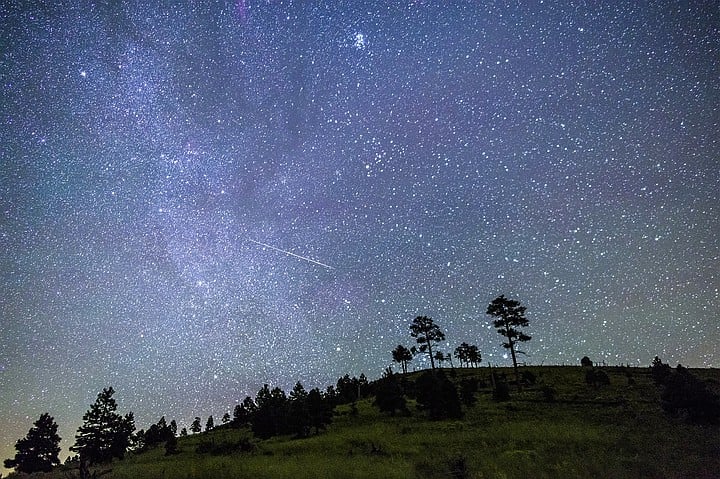
The Geminid meteor shower Is Often Considered The Most Active Shower of the year, and it will peak from the night of December 13 into the morning of December 14. The show should start as early as 9 pm, and peak around 2 am. Expect to see an average of 50 meteors per hour and up to 120 at the peak. The Geminids are slower and brighter than most showers and the moon will be a thin crescent on the night of the 13th, so it will be a dark (and therefore optimal) night for viewing.
Here's something you might be interested in.
Short days and long nights, the White-crowned sparrow is visiting
Cold, clean air makes for great hiking, the Geminids will have optimal viewing this year

Short days and long nights, the White-crowned sparrow is visiting
Cold, clean air makes for great hiking, the Geminids will have optimal viewing this year
Cardiff Beach at dusk
With Only About 10 Hours Of Daylight, San Diego must endure its darkest and gloomiest nights of the year during this week and next. After rising, the sun struggles to an altitude of only 34 degrees (as seen from San Diego), and then quickly sinks toward the horizon. The word “solstice” comes from the Latin sol (“sun”) and sistere (“to stand still”); the sun’s path appears to freeze for a few days at the equinox before reversing. On the bright side, literally and figuratively, our days will start getting longer as the sun’s path rises higher in the sky each day. The process starts very slowly, though: in December, our daylight increases by merely seconds per day. By March, we will see daily increases of 3 minutes.
Close up of a White-crowned Sparrow perched on a branch.
The White-crowned Sparrow Is A Common Winter Visitor throughout San Diego and even far into Mexico, and is easily recognizable by a black and white striped head, colorful pink or yellow bill, and a gray breast. They typically forage in small flocks, digging through leaf litter for weed seeds, buds, and fruits. They also scavenge for scrap seeds underneath backyard bird feeders. Look for them in open areas close to brushy habitat or perched on low branches within shrubby hedgerows, and listen for their whistled songs ringing out on winter’s shorter days and colder mornings.
Azalea Glen Trail, Cuyamaca Rancho State Park
Maybe Hike to San Diego County’s High Places to take advantage of the winter season’s characteristically clear air. From spots such as Cuyamaca Peak in Cuyamaca Rancho State Park, Wooded Hill in the Laguna Mountain Recreation Area, and Boucher Hill at Palomar Mountain State Park, night sky vistas stretching a hundred miles across the Pacific Ocean are not uncommon at this time of year. Look for the dark profiles of Santa Catalina and San Clemente islands, lying northwest and west of San Diego, respectively.
The Geminid meteor shower Is Often Considered The Most Active Shower of the year, and it will peak from the night of December 13 into the morning of December 14. The show should start as early as 9 pm, and peak around 2 am. Expect to see an average of 50 meteors per hour and up to 120 at the peak. The Geminids are slower and brighter than most showers and the moon will be a thin crescent on the night of the 13th, so it will be a dark (and therefore optimal) night for viewing.
Comments