

Here's something you might be interested in.
Ask a Hipster — Advice you didn't know you needed
Big Screen — Movie commentary
Blurt — Music's inside track
Booze News — San Diego spirits
Classical Music — Immortal beauty
Classifieds — Free and easy
Close to Home — What it’s like on the street where you live
Cover Stories — Front-page features
Drinks All Around — Bartenders' drink recipes
Excerpts — Literary and spiritual excerpts
Feast! — Food & drink reviews
Feature Stories — Local news & stories
Fishing Report — What’s getting hooked from ship and shore
From the Archives — Spotlight on the past
Golden Dreams — Talk of the town
The Gonzo Report — Making the musical scene, or at least reporting from it
Letters — Our inbox
Movies@Home — Local movie buffs share favorites
Movie Reviews — Our critics' picks and pans
Musician Interviews — Up close with local artists
Neighborhood News from Stringers — Hyperlocal news
News Ticker — News & politics
Obermeyer — San Diego politics illustrated
Outdoors — Weekly changes in flora and fauna
Overheard in San Diego — Eavesdropping illustrated
Poetry — The old and the new
Reader Travel — Travel section built by travelers
Reading — The hunt for intellectuals
Roam-O-Rama — SoCal's best hiking/biking trails
San Diego Beer — Inside San Diego suds
SD on the QT — Almost factual news
Sheep and Goats — Places of worship
Special Issues — The best of
Street Style — San Diego streets have style
Surf Diego — Real stories from those braving the waves
Theater — On stage in San Diego this week
Tin Fork — Silver spoon alternative
Under the Radar — Matt Potter's undercover work
Unforgettable — Long-ago San Diego
Unreal Estate — San Diego's priciest pads
Your Week — Daily event picks
Chicken-friendlier National City
Now 12 hens okay per 1000 square feet
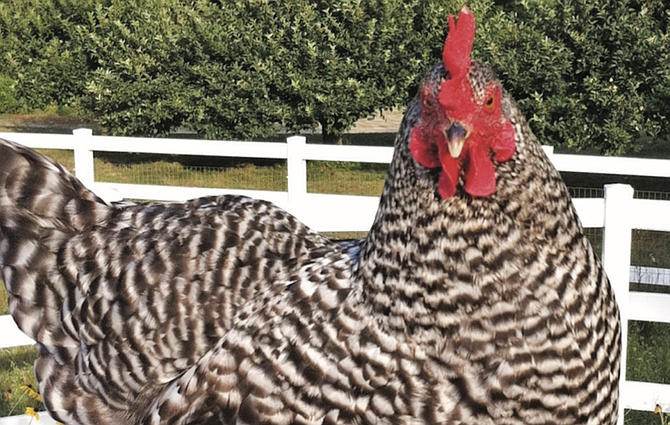
In May, the proposal required a minimum lot size of 20,000 square feet.
In a move that could help with food insecurity, the National City city council has introduced an ordinance to allow up to 12 chicken hens per 1000 square feet on single-family zoned lots. If passed, the measure would provide a welcome increase for urban farmers; currently, only four hens are allowed.
“I believe the residents of National City deserve to have and raise chickens as well,” said Doyle Morrison, who lives in the less restrictive area of Lincoln Acres, when the ordinance was first discussed in May. Last week, a revised version of the ordinance came back under discussion.
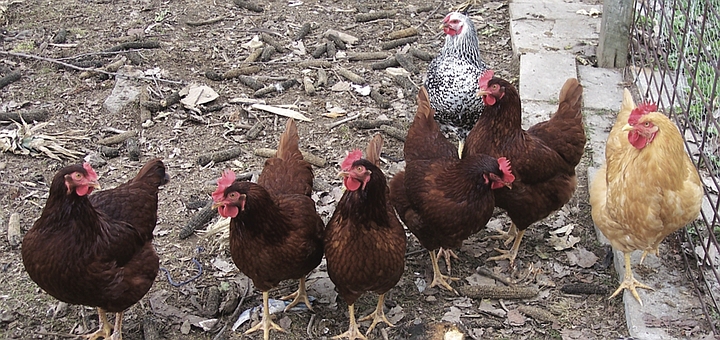
in July, the state declared it was free of bird flu.
The ordinance was Initiated by council member Jose Rodriquez to help the city “get reconnected with our food source" — the increased number of hens is actually a return to earlier code. Officials explained that before 2000, the city allowed four chickens per 20,000 square feet of land. In 2000, to encourage urban agriculture, the amount was increased to 12 at any residential property. “That’s the exact same thing we’re trying to do now,” said mayor Ron Morrison.
The reduction in chicken allowance to just four came in 2004 over concerns about avian diseases, according to a staff report.
Last May's version of the proposal required a minimum lot size of 20,000 square feet for keeping chickens. But critics said this effectively acted as a ban, and that the minimum should be reduced to a more typical size, potentially between 2500 and 5000 square feet. Martin Reeder, the city’s principal planner, acknowledged that few lots are as big as 20,000 square feet. In fact, most of the city’s lots are about 5000 square feet, he said.
Comparing the proposed ordinance to rules already on the books in other cities, Reeder said that San Diego allows five (outside of all setbacks); Chula Vista, six; Lemon Grove, one per 1000 square feet; and La Mesa – “nothing loud or raucous.”
Unlike the other cities, which only propose maximums when it comes to numbers of birds, National City is proposing a minimum: six hens — no roosters — along with the maximum of one per 1000 thousand square feet of lot, not to exceed 12. Coops would need to be at least five feet from side property lines and 10 feet from the rear property line.
One council member suggested allowing fewer chickens, since bird flu remains an ongoing concern. But since the ordinance was revised in 2004, the state has been declared free of virulent Newcastle disease; there has been only one local case reported this year of West Nile Virus; and in July, the state declared it was free of bird flu.
Then again, just a month later, on August 19, an outbreak was discovered in a retail flock in Los Angeles. The county of San Diego in March urged flock owners to increase biosecurity practices, which can include things like wearing rubber gloves and boots, and keeping wild birds away from coops.
Here's something you might be interested in.
Chicken-friendlier National City
Now 12 hens okay per 1000 square feet

Chicken-friendlier National City
Now 12 hens okay per 1000 square feet
In May, the proposal required a minimum lot size of 20,000 square feet.
In a move that could help with food insecurity, the National City city council has introduced an ordinance to allow up to 12 chicken hens per 1000 square feet on single-family zoned lots. If passed, the measure would provide a welcome increase for urban farmers; currently, only four hens are allowed.
“I believe the residents of National City deserve to have and raise chickens as well,” said Doyle Morrison, who lives in the less restrictive area of Lincoln Acres, when the ordinance was first discussed in May. Last week, a revised version of the ordinance came back under discussion.
in July, the state declared it was free of bird flu.
The ordinance was Initiated by council member Jose Rodriquez to help the city “get reconnected with our food source" — the increased number of hens is actually a return to earlier code. Officials explained that before 2000, the city allowed four chickens per 20,000 square feet of land. In 2000, to encourage urban agriculture, the amount was increased to 12 at any residential property. “That’s the exact same thing we’re trying to do now,” said mayor Ron Morrison.
The reduction in chicken allowance to just four came in 2004 over concerns about avian diseases, according to a staff report.
Last May's version of the proposal required a minimum lot size of 20,000 square feet for keeping chickens. But critics said this effectively acted as a ban, and that the minimum should be reduced to a more typical size, potentially between 2500 and 5000 square feet. Martin Reeder, the city’s principal planner, acknowledged that few lots are as big as 20,000 square feet. In fact, most of the city’s lots are about 5000 square feet, he said.
Comparing the proposed ordinance to rules already on the books in other cities, Reeder said that San Diego allows five (outside of all setbacks); Chula Vista, six; Lemon Grove, one per 1000 square feet; and La Mesa – “nothing loud or raucous.”
Unlike the other cities, which only propose maximums when it comes to numbers of birds, National City is proposing a minimum: six hens — no roosters — along with the maximum of one per 1000 thousand square feet of lot, not to exceed 12. Coops would need to be at least five feet from side property lines and 10 feet from the rear property line.
One council member suggested allowing fewer chickens, since bird flu remains an ongoing concern. But since the ordinance was revised in 2004, the state has been declared free of virulent Newcastle disease; there has been only one local case reported this year of West Nile Virus; and in July, the state declared it was free of bird flu.
Then again, just a month later, on August 19, an outbreak was discovered in a retail flock in Los Angeles. The county of San Diego in March urged flock owners to increase biosecurity practices, which can include things like wearing rubber gloves and boots, and keeping wild birds away from coops.
Comments