

Here's something you might be interested in.
Ask a Hipster — Advice you didn't know you needed
Big Screen — Movie commentary
Blurt — Music's inside track
Booze News — San Diego spirits
Classical Music — Immortal beauty
Classifieds — Free and easy
Close to Home — What it’s like on the street where you live
Cover Stories — Front-page features
Drinks All Around — Bartenders' drink recipes
Excerpts — Literary and spiritual excerpts
Feast! — Food & drink reviews
Feature Stories — Local news & stories
Fishing Report — What’s getting hooked from ship and shore
From the Archives — Spotlight on the past
Golden Dreams — Talk of the town
The Gonzo Report — Making the musical scene, or at least reporting from it
Letters — Our inbox
Movies@Home — Local movie buffs share favorites
Movie Reviews — Our critics' picks and pans
Musician Interviews — Up close with local artists
Neighborhood News from Stringers — Hyperlocal news
News Ticker — News & politics
Obermeyer — San Diego politics illustrated
Outdoors — Weekly changes in flora and fauna
Overheard in San Diego — Eavesdropping illustrated
Poetry — The old and the new
Reader Travel — Travel section built by travelers
Reading — The hunt for intellectuals
Roam-O-Rama — SoCal's best hiking/biking trails
San Diego Beer — Inside San Diego suds
SD on the QT — Almost factual news
Sheep and Goats — Places of worship
Special Issues — The best of
Street Style — San Diego streets have style
Surf Diego — Real stories from those braving the waves
Theater — On stage in San Diego this week
Tin Fork — Silver spoon alternative
Under the Radar — Matt Potter's undercover work
Unforgettable — Long-ago San Diego
Unreal Estate — San Diego's priciest pads
Your Week — Daily event picks
Great operas, basic stories
The narrative is there to support the music

Opera, a vibrant fusion of music, drama, and visual spectacle, has entertained audiences for centuries. Its power lies in its ability to convey human emotions through profound music while employing basic storytelling. The basic storytelling aspect is often overlooked. In recent decades, opera directors have tried to imbue operas with dramatic and psychological elements that simply aren’t there. Every great opera has a basic plot that lets the audience follow the story while focusing on what is happening musically.
Here are five great operas with basic storylines and immortal music.
1. Wolfgang Amadeus Mozart – The Marriage of Figaro (1786)
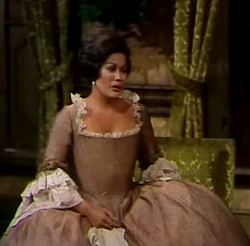
Mozart’s The Marriage of Figaro is the pinnacle not just of opera, but of Western Culture as a whole. It’s witty, has some basic social commentary, and is rife with sublime music. Based on Pierre Beaumarchais’ play, it follows the clever servant Figaro as he navigates young love and a series of mistaken identities in a single chaotic day. Mozart’s score conveys a marvel of emotional range, from the playful overture to the poignant arias such as “Dove sono,” which captures the Countess’s heartbreak. The opera’s exploration of power dynamics — servants outwitting their masters — was revolutionary for its time, but easy to follow.
Video:
Dame Te Kanawa - Dove Sono
2. Giuseppe Verdi – La Traviata (1853)
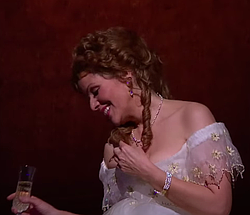
Verdi’s La Traviata is a heart-wrenching exploration of love and sacrifice. Verdi’s music elevates the tragedy, with arias such as “Sempre libera” showcasing Violetta’s defiance and vulnerability. Yet, the story remains simple. A young man, Alfredo, falls in love with an older woman, Violetta, who is not appropriate for his social standing. The young man’s father confronts Violetta and basically tells her that she is ruining Alfredo’s life. Violetta makes the gut-wrenching decision to die alone rather than ruin Alfredo’s social status. It is a profound and tragic moment, but the story makes it clear and simple.
Video:
La traviata - 'Sempre libera' (Verdi; Renée Fleming, The Royal Opera)
3. Richard Wagner – Tristan und Isolde (1865)
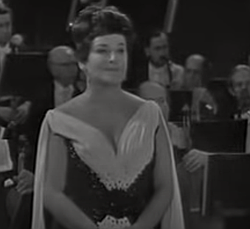
Wagner’s Tristan und Isolde redefined opera with its radical harmonies and psychological depth. However, the tale is a basic story of doomed love between the knight Tristan and the princess Isolde. The story is driven by Wagner’s innovative use of chromaticism, particularly in the famous “Tristan chord,” which stretched the tonal boundaries of the day. The opera’s lush, expansive score mirrors the lovers’ forbidden passion, culminating in Isolde’s ecstatic “Liebestod.” Wagner’s concept of the Gesamtkunstwerk — a total work of art — unifies music, drama, and staging in a way that still feels revolutionary. Its influence on modern music and opera is profound, making it a towering musical achievement of a simple story about forbidden love.
Video:
Birgit Nilsson - Liebestod
4. Giacomo Puccini – La Bohème (1896)
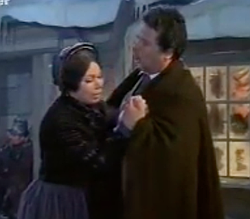
Puccini’s La Bohème captures the bittersweet beauty of youth, love, poverty, and loss in 19th-century Paris. Following the poet Rodolfo and the seamstress Mimì, the opera weaves a delicate balance of joy and tragedy. Puccini’s gift for melody shines in the third act. The two sets of lovers change their status over the course of the act. Mimi and Rodolfo start the act on the rocks and end up together again. Marcello and Mussetta start out together and end up on the rocks. It’s a simple device, but Puccini’s music makes it transcendent.
Video:
BOHÈME - MIRELLA FRENI & ROLANDO PANERAI " MIMÌ " 3 atto. PUCCINI
5. Georges Bizet – Carmen (1875)
Bizet’s Carmen is a fiery masterpiece of passion and rebellion. The story of the seductive, free-spirited Carmen and her ridiculous entanglement with the toxic Don José is electrified by Bizet’s vibrant score. The opera’s bold orchestration and raw emotional power broke new ground, influencing the verismo movement. Its universal appeal and vivid characters ensure its place among opera’s greatest. The climax of the story is based on a simple dramatic device. Carmen breaks up with Don José in favor of the toreador Escamillo. This drives José into a murderous mindset.
Video:
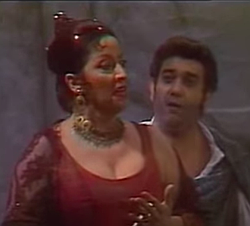
Teresa BERGANZA & Placido DOMINGO *Carmen*- finale
These operas are profound musical expressions of basic human interactions. This is what makes opera great.
Here's something you might be interested in.
Great operas, basic stories
The narrative is there to support the music

Great operas, basic stories
The narrative is there to support the music
Opera, a vibrant fusion of music, drama, and visual spectacle, has entertained audiences for centuries. Its power lies in its ability to convey human emotions through profound music while employing basic storytelling. The basic storytelling aspect is often overlooked. In recent decades, opera directors have tried to imbue operas with dramatic and psychological elements that simply aren’t there. Every great opera has a basic plot that lets the audience follow the story while focusing on what is happening musically.
Here are five great operas with basic storylines and immortal music.
1. Wolfgang Amadeus Mozart – The Marriage of Figaro (1786)
Mozart’s The Marriage of Figaro is the pinnacle not just of opera, but of Western Culture as a whole. It’s witty, has some basic social commentary, and is rife with sublime music. Based on Pierre Beaumarchais’ play, it follows the clever servant Figaro as he navigates young love and a series of mistaken identities in a single chaotic day. Mozart’s score conveys a marvel of emotional range, from the playful overture to the poignant arias such as “Dove sono,” which captures the Countess’s heartbreak. The opera’s exploration of power dynamics — servants outwitting their masters — was revolutionary for its time, but easy to follow.
Video:
Dame Te Kanawa - Dove Sono
2. Giuseppe Verdi – La Traviata (1853)
Verdi’s La Traviata is a heart-wrenching exploration of love and sacrifice. Verdi’s music elevates the tragedy, with arias such as “Sempre libera” showcasing Violetta’s defiance and vulnerability. Yet, the story remains simple. A young man, Alfredo, falls in love with an older woman, Violetta, who is not appropriate for his social standing. The young man’s father confronts Violetta and basically tells her that she is ruining Alfredo’s life. Violetta makes the gut-wrenching decision to die alone rather than ruin Alfredo’s social status. It is a profound and tragic moment, but the story makes it clear and simple.
Video:
La traviata - 'Sempre libera' (Verdi; Renée Fleming, The Royal Opera)
3. Richard Wagner – Tristan und Isolde (1865)
Wagner’s Tristan und Isolde redefined opera with its radical harmonies and psychological depth. However, the tale is a basic story of doomed love between the knight Tristan and the princess Isolde. The story is driven by Wagner’s innovative use of chromaticism, particularly in the famous “Tristan chord,” which stretched the tonal boundaries of the day. The opera’s lush, expansive score mirrors the lovers’ forbidden passion, culminating in Isolde’s ecstatic “Liebestod.” Wagner’s concept of the Gesamtkunstwerk — a total work of art — unifies music, drama, and staging in a way that still feels revolutionary. Its influence on modern music and opera is profound, making it a towering musical achievement of a simple story about forbidden love.
Video:
Birgit Nilsson - Liebestod
4. Giacomo Puccini – La Bohème (1896)
Puccini’s La Bohème captures the bittersweet beauty of youth, love, poverty, and loss in 19th-century Paris. Following the poet Rodolfo and the seamstress Mimì, the opera weaves a delicate balance of joy and tragedy. Puccini’s gift for melody shines in the third act. The two sets of lovers change their status over the course of the act. Mimi and Rodolfo start the act on the rocks and end up together again. Marcello and Mussetta start out together and end up on the rocks. It’s a simple device, but Puccini’s music makes it transcendent.
Video:
BOHÈME - MIRELLA FRENI & ROLANDO PANERAI " MIMÌ " 3 atto. PUCCINI
5. Georges Bizet – Carmen (1875)
Bizet’s Carmen is a fiery masterpiece of passion and rebellion. The story of the seductive, free-spirited Carmen and her ridiculous entanglement with the toxic Don José is electrified by Bizet’s vibrant score. The opera’s bold orchestration and raw emotional power broke new ground, influencing the verismo movement. Its universal appeal and vivid characters ensure its place among opera’s greatest. The climax of the story is based on a simple dramatic device. Carmen breaks up with Don José in favor of the toreador Escamillo. This drives José into a murderous mindset.
Video:
Teresa BERGANZA & Placido DOMINGO *Carmen*- finale
These operas are profound musical expressions of basic human interactions. This is what makes opera great.
Comments