

Here's something you might be interested in.
Ask a Hipster — Advice you didn't know you needed
Big Screen — Movie commentary
Blurt — Music's inside track
Booze News — San Diego spirits
Classical Music — Immortal beauty
Classifieds — Free and easy
Close to Home — What it’s like on the street where you live
Cover Stories — Front-page features
Drinks All Around — Bartenders' drink recipes
Excerpts — Literary and spiritual excerpts
Feast! — Food & drink reviews
Feature Stories — Local news & stories
Fishing Report — What’s getting hooked from ship and shore
From the Archives — Spotlight on the past
Golden Dreams — Talk of the town
The Gonzo Report — Making the musical scene, or at least reporting from it
Letters — Our inbox
Movies@Home — Local movie buffs share favorites
Movie Reviews — Our critics' picks and pans
Musician Interviews — Up close with local artists
Neighborhood News from Stringers — Hyperlocal news
News Ticker — News & politics
Obermeyer — San Diego politics illustrated
Outdoors — Weekly changes in flora and fauna
Overheard in San Diego — Eavesdropping illustrated
Poetry — The old and the new
Reader Travel — Travel section built by travelers
Reading — The hunt for intellectuals
Roam-O-Rama — SoCal's best hiking/biking trails
San Diego Beer — Inside San Diego suds
SD on the QT — Almost factual news
Sheep and Goats — Places of worship
Special Issues — The best of
Street Style — San Diego streets have style
Surf Diego — Real stories from those braving the waves
Theater — On stage in San Diego this week
Tin Fork — Silver spoon alternative
Under the Radar — Matt Potter's undercover work
Unforgettable — Long-ago San Diego
Unreal Estate — San Diego's priciest pads
Your Week — Daily event picks
Carlsbad faces grumbling over water rate hikes
49% over next two years
Carlsbad residents pay less for water than other cities around the county, but rates are about to jump. A 20 percent increase in July will add $25.30 to the average customer bill, with more to come.
The Carlsbad City Council voted 4-1 last week to raise rates for water, sewer and recycled water that will bring additional increases in Jan. 2026 and 2027, for a total of $61.75, or 49% over the current rate.
City staff explained that the San Diego County Water Authority raised wholesale rates by 14% last July. “That means it costs us 14% more to purchase water for Carlsbad customers,” said Shoshana Aguilar, senior management analyst with the city’s utilities department.
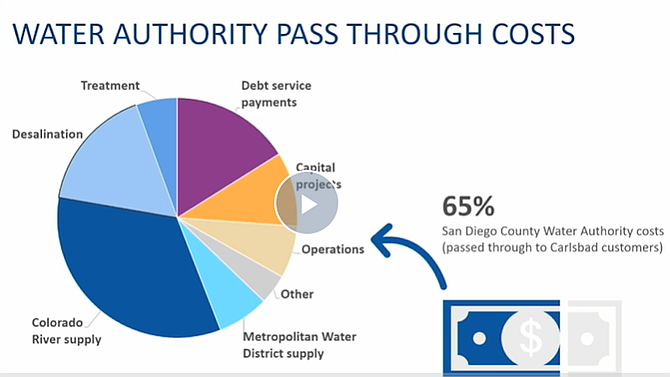
Sixty five percent of the cost of water bills involves county water purchases from sources such as the Colorado River and desalination. The rate hikes fund the many costs of water delivery and can’t exceed the cost of service. “We make no profit on utility rates.”
Rates depend on the size of your water meter, the type of property and other variables, she said.
Residents on fixed incomes, retirees and low-income families described feeling gouged.
“Ok, then raise it 14%,” said Thomas Rudden – not 49%. “I’m a retiree and on a fixed income.”
Tedd Carr said his bill has gone from $150 to $347, and given three years of increases, he projects a staggering jump to over $500 a month, which will be hard to keep up with. “Please don’t approve this.”
Residents had the option to protest the proposed rate increases under prop 218, a state law passed by voters in 1996. If a simple majority of customers had submitted written protests (not emails or oral comments), the council could not vote on the issue.
“We had a robust outreach effort that went beyond the requirements of prop 218,” Aguilar said. The council voted in February to begin the rate setting process ahead of the hearing. Printed mailers were sent to all 30,000 customer accounts, telling people how to protest the rates.
In the end, city staff reported having received only 102 protests of the water rate increase and 61 against the wastewater increase.
“There would be more people here, I’m sure, if they weren’t tired of the futility,” said local Roseanne Bentley, wondering how the less affluent demographic will get by when they are already struggling. “It makes no economic sense right now to raise rates of any sort.”
Some suggested offering discounted rates to fixed income residents, and higher rates to other tiers but the city attorney said Prop 218 prohibits any property owner from being charged more than their proportional cost of service.
Aguilar said customers can get rebates on water saving devices like low flow toilets. The utility department can set up payment plans and connect customers with regional financial assistance.
Councilmember Melanie Burkholder voted against the increase.
“I believe wholeheartedly that this will have a disproportionate effect on businesses, like the 350 restaurants in district one alone, on folks that are on fixed incomes, and on seniors.”
Here's something you might be interested in.
Carlsbad faces grumbling over water rate hikes
49% over next two years

Carlsbad faces grumbling over water rate hikes
49% over next two years
Carlsbad residents pay less for water than other cities around the county, but rates are about to jump. A 20 percent increase in July will add $25.30 to the average customer bill, with more to come.
The Carlsbad City Council voted 4-1 last week to raise rates for water, sewer and recycled water that will bring additional increases in Jan. 2026 and 2027, for a total of $61.75, or 49% over the current rate.
City staff explained that the San Diego County Water Authority raised wholesale rates by 14% last July. “That means it costs us 14% more to purchase water for Carlsbad customers,” said Shoshana Aguilar, senior management analyst with the city’s utilities department.
Sixty five percent of the cost of water bills involves county water purchases from sources such as the Colorado River and desalination. The rate hikes fund the many costs of water delivery and can’t exceed the cost of service. “We make no profit on utility rates.”
Rates depend on the size of your water meter, the type of property and other variables, she said.
Residents on fixed incomes, retirees and low-income families described feeling gouged.
“Ok, then raise it 14%,” said Thomas Rudden – not 49%. “I’m a retiree and on a fixed income.”
Tedd Carr said his bill has gone from $150 to $347, and given three years of increases, he projects a staggering jump to over $500 a month, which will be hard to keep up with. “Please don’t approve this.”
Residents had the option to protest the proposed rate increases under prop 218, a state law passed by voters in 1996. If a simple majority of customers had submitted written protests (not emails or oral comments), the council could not vote on the issue.
“We had a robust outreach effort that went beyond the requirements of prop 218,” Aguilar said. The council voted in February to begin the rate setting process ahead of the hearing. Printed mailers were sent to all 30,000 customer accounts, telling people how to protest the rates.
In the end, city staff reported having received only 102 protests of the water rate increase and 61 against the wastewater increase.
“There would be more people here, I’m sure, if they weren’t tired of the futility,” said local Roseanne Bentley, wondering how the less affluent demographic will get by when they are already struggling. “It makes no economic sense right now to raise rates of any sort.”
Some suggested offering discounted rates to fixed income residents, and higher rates to other tiers but the city attorney said Prop 218 prohibits any property owner from being charged more than their proportional cost of service.
Aguilar said customers can get rebates on water saving devices like low flow toilets. The utility department can set up payment plans and connect customers with regional financial assistance.
Councilmember Melanie Burkholder voted against the increase.
“I believe wholeheartedly that this will have a disproportionate effect on businesses, like the 350 restaurants in district one alone, on folks that are on fixed incomes, and on seniors.”
Comments