

Here's something you might be interested in.
Ask a Hipster — Advice you didn't know you needed
Big Screen — Movie commentary
Blurt — Music's inside track
Booze News — San Diego spirits
Classical Music — Immortal beauty
Classifieds — Free and easy
Close to Home — What it’s like on the street where you live
Cover Stories — Front-page features
Drinks All Around — Bartenders' drink recipes
Excerpts — Literary and spiritual excerpts
Feast! — Food & drink reviews
Feature Stories — Local news & stories
Fishing Report — What’s getting hooked from ship and shore
From the Archives — Spotlight on the past
Golden Dreams — Talk of the town
The Gonzo Report — Making the musical scene, or at least reporting from it
Letters — Our inbox
Movies@Home — Local movie buffs share favorites
Movie Reviews — Our critics' picks and pans
Musician Interviews — Up close with local artists
Neighborhood News from Stringers — Hyperlocal news
News Ticker — News & politics
Obermeyer — San Diego politics illustrated
Outdoors — Weekly changes in flora and fauna
Overheard in San Diego — Eavesdropping illustrated
Poetry — The old and the new
Reader Travel — Travel section built by travelers
Reading — The hunt for intellectuals
Roam-O-Rama — SoCal's best hiking/biking trails
San Diego Beer — Inside San Diego suds
SD on the QT — Almost factual news
Sheep and Goats — Places of worship
Special Issues — The best of
Street Style — San Diego streets have style
Surf Diego — Real stories from those braving the waves
Theater — On stage in San Diego this week
Tin Fork — Silver spoon alternative
Under the Radar — Matt Potter's undercover work
Unforgettable — Long-ago San Diego
Unreal Estate — San Diego's priciest pads
Your Week — Daily event picks
The $200B Talent Gap: Why Beauty Schools Are the New Front Line of Economic Growth
The beauty industry is hiring. Everywhere. The common diagnosis is a labor shortage, but that’s wrong. The real problem isn’t a lack of talent—it’s a bottleneck in our education system.
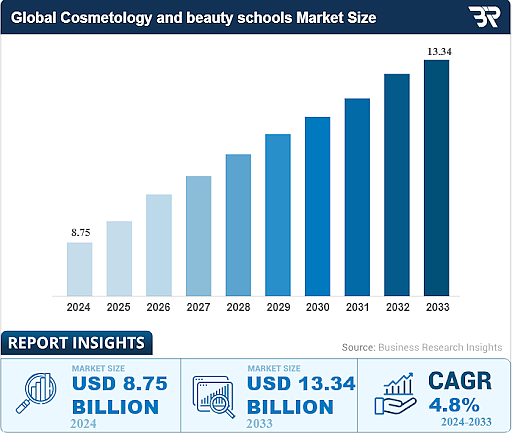
The educational infrastructure that connects talent to opportunity has failed to keep up, even as the beauty education market itself is projected to become a $13.34 billion industry by 2033. This is not a workforce crisis. It's an education gap, and for those ready to build, it's the biggest opportunity in the market today.
Real Demand on Both Ends
The market dynamic is clear. Demand is surging from both sides.
On the client side, the demand is outpacing the supply. The professional beauty services market will be worth $202.5 billion by 2035. This boom is powered by a new type of client—one who sees personal care as an essential part of wellness, not an occasional luxury.
On the student end, the interest is substantial. Research conducted by Olympia Marketing, a marketing agency catering to the Beauty and other industries based in Southwest Florida, shows that over one million online searches for careers in esthetics and cosmetology are made every month throughout the United States. These searches are driven by young women who see a clear and viable path to a creative and independent profession. They are drawn to a career that requires just 6–14 months of training, compared to four years for a traditional college degree, offering a much faster entry into the workforce.
The problem? The system designed to connect these two powerful forces is falling short. While clients book appointments weeks in advance and aspiring students search for schools, the educational pathways remain too slow and too limited to meet the moment.
The Business Opportunity for Schools
This gap between talent and the market creates a massive opportunity for beauty schools ready to scale and innovate. The immense student interest is a clear signal of untapped enrollment potential.
The US is already a leader, holding 32% of the global beauty school market. But that leadership is heavily concentrated. A full 45% of all enrollments are in just three states: California, Texas, and Florida. This leaves huge parts of the country with high demand but a severe lack of quality training options. For schools looking to grow, the map is wide open.
Licensing requirements are wildly inconsistent from state to state. Cosmetology can require anywhere from 1,200 to 1,800 hours. Esthetics can be anything from 220 to 750 hours.
The logic is hard to defend. Some states require 11 times more training for a cosmetologist than for an EMT, with only a tiny fraction of that time spent on safety. Schools that solve this puzzle for students, either through smart programs or by pushing for reform, will lead the pack.
How to Expand Responsibly
Scaling a school is not just about adding more locations. The industry still carries the scars of past for-profit scandals, where fast growth led to low-quality education and poor student outcomes, with some schools posting graduation rates as low as 5–9%.
The stakes are incredibly high, as new federal Gainful Employment rules could disqualify up to 98% of all Title IV-funded beauty programs if they fail to deliver a positive return on investment for their graduates. Responsible expansion must be built on a foundation of quality.
This starts with investing in a diverse and highly skilled teaching staff. The student body is changing. The numbers show it: today’s professionals are roughly 15% Hispanic, 12% Black, and 8% Asian. For schools to succeed, their teaching staff must reflect this change. Training students for a diverse world requires instructors who come from it.
Modernization is no longer optional. Students must graduate with skills for the modern salon. This means direct training with current technology, including everything from AR/AI skin tools to digital marketing and booking platforms. This includes adapting to consumer demand, as 65–70% of clients now actively seek out professionals trained in sustainable and clean beauty practices.
It also means offering specializations in the fastest-growing parts of the industry. Medical aesthetics, for example, is growing at an 8.5% CAGR. This is twice the speed of traditional cosmetology. Schools can grow their footprint without compromising their mission by combining quality teaching with an eye toward the future.
A New Foundation for the Sheconomy
It’s time we rethink what the beauty industry represents—not just a career path, but a cultural shift and one that provides downstream benefits for many aspects of the economy. As millions of young women seek creative, flexible, and fulfilling careers, many are turning away from corporate ladders and toward something that feels more authentic, more them. They’re reclaiming traditional roles on their own terms—not as a step back, but as a power move and one that often allows them to have fulfilling relationships and build families.
Beauty isn’t just about lashes, brows, or balayage. It’s a multi-billion-dollar industry built on skill, hustle, and connection, but one that allows for real connections with clients and the flexibility to truly experience the most life has to offer. It’s where craft meets commerce, and where thousands of women are building businesses, commanding loyal followings, and redefining what success looks like.
The schools that thrive in this next chapter will understand that they’re not just teaching hair and skincare—they’re shaping a new kind of entrepreneur - a new kind of woman, one that understands the value of a dollar, time, and ingenuity, while at the same time serving their fellow men and women. One who wants independence, community, and a career that aligns with her values. The ones that rise will modernize, diversify, and meet this generation where they are.
Because this isn’t just a beauty boom. It’s a pink-collar revolution.
Here's something you might be interested in.
The $200B Talent Gap: Why Beauty Schools Are the New Front Line of Economic Growth

The $200B Talent Gap: Why Beauty Schools Are the New Front Line of Economic Growth
The beauty industry is hiring. Everywhere. The common diagnosis is a labor shortage, but that’s wrong. The real problem isn’t a lack of talent—it’s a bottleneck in our education system.
The educational infrastructure that connects talent to opportunity has failed to keep up, even as the beauty education market itself is projected to become a $13.34 billion industry by 2033. This is not a workforce crisis. It's an education gap, and for those ready to build, it's the biggest opportunity in the market today.
Real Demand on Both Ends
The market dynamic is clear. Demand is surging from both sides.
On the client side, the demand is outpacing the supply. The professional beauty services market will be worth $202.5 billion by 2035. This boom is powered by a new type of client—one who sees personal care as an essential part of wellness, not an occasional luxury.
On the student end, the interest is substantial. Research conducted by Olympia Marketing, a marketing agency catering to the Beauty and other industries based in Southwest Florida, shows that over one million online searches for careers in esthetics and cosmetology are made every month throughout the United States. These searches are driven by young women who see a clear and viable path to a creative and independent profession. They are drawn to a career that requires just 6–14 months of training, compared to four years for a traditional college degree, offering a much faster entry into the workforce.
The problem? The system designed to connect these two powerful forces is falling short. While clients book appointments weeks in advance and aspiring students search for schools, the educational pathways remain too slow and too limited to meet the moment.
The Business Opportunity for Schools
This gap between talent and the market creates a massive opportunity for beauty schools ready to scale and innovate. The immense student interest is a clear signal of untapped enrollment potential.
The US is already a leader, holding 32% of the global beauty school market. But that leadership is heavily concentrated. A full 45% of all enrollments are in just three states: California, Texas, and Florida. This leaves huge parts of the country with high demand but a severe lack of quality training options. For schools looking to grow, the map is wide open.
Licensing requirements are wildly inconsistent from state to state. Cosmetology can require anywhere from 1,200 to 1,800 hours. Esthetics can be anything from 220 to 750 hours.
The logic is hard to defend. Some states require 11 times more training for a cosmetologist than for an EMT, with only a tiny fraction of that time spent on safety. Schools that solve this puzzle for students, either through smart programs or by pushing for reform, will lead the pack.
How to Expand Responsibly
Scaling a school is not just about adding more locations. The industry still carries the scars of past for-profit scandals, where fast growth led to low-quality education and poor student outcomes, with some schools posting graduation rates as low as 5–9%.
The stakes are incredibly high, as new federal Gainful Employment rules could disqualify up to 98% of all Title IV-funded beauty programs if they fail to deliver a positive return on investment for their graduates. Responsible expansion must be built on a foundation of quality.
This starts with investing in a diverse and highly skilled teaching staff. The student body is changing. The numbers show it: today’s professionals are roughly 15% Hispanic, 12% Black, and 8% Asian. For schools to succeed, their teaching staff must reflect this change. Training students for a diverse world requires instructors who come from it.
Modernization is no longer optional. Students must graduate with skills for the modern salon. This means direct training with current technology, including everything from AR/AI skin tools to digital marketing and booking platforms. This includes adapting to consumer demand, as 65–70% of clients now actively seek out professionals trained in sustainable and clean beauty practices.
It also means offering specializations in the fastest-growing parts of the industry. Medical aesthetics, for example, is growing at an 8.5% CAGR. This is twice the speed of traditional cosmetology. Schools can grow their footprint without compromising their mission by combining quality teaching with an eye toward the future.
A New Foundation for the Sheconomy
It’s time we rethink what the beauty industry represents—not just a career path, but a cultural shift and one that provides downstream benefits for many aspects of the economy. As millions of young women seek creative, flexible, and fulfilling careers, many are turning away from corporate ladders and toward something that feels more authentic, more them. They’re reclaiming traditional roles on their own terms—not as a step back, but as a power move and one that often allows them to have fulfilling relationships and build families.
Beauty isn’t just about lashes, brows, or balayage. It’s a multi-billion-dollar industry built on skill, hustle, and connection, but one that allows for real connections with clients and the flexibility to truly experience the most life has to offer. It’s where craft meets commerce, and where thousands of women are building businesses, commanding loyal followings, and redefining what success looks like.
The schools that thrive in this next chapter will understand that they’re not just teaching hair and skincare—they’re shaping a new kind of entrepreneur - a new kind of woman, one that understands the value of a dollar, time, and ingenuity, while at the same time serving their fellow men and women. One who wants independence, community, and a career that aligns with her values. The ones that rise will modernize, diversify, and meet this generation where they are.
Because this isn’t just a beauty boom. It’s a pink-collar revolution.
Comments
This article was submitted by a client of the San Diego Reader.