

Here's something you might be interested in.
Ask a Hipster — Advice you didn't know you needed
Big Screen — Movie commentary
Blurt — Music's inside track
Booze News — San Diego spirits
Classical Music — Immortal beauty
Classifieds — Free and easy
Close to Home — What it’s like on the street where you live
Cover Stories — Front-page features
Drinks All Around — Bartenders' drink recipes
Excerpts — Literary and spiritual excerpts
Feast! — Food & drink reviews
Feature Stories — Local news & stories
Fishing Report — What’s getting hooked from ship and shore
From the Archives — Spotlight on the past
Golden Dreams — Talk of the town
The Gonzo Report — Making the musical scene, or at least reporting from it
Letters — Our inbox
Movies@Home — Local movie buffs share favorites
Movie Reviews — Our critics' picks and pans
Musician Interviews — Up close with local artists
Neighborhood News from Stringers — Hyperlocal news
News Ticker — News & politics
Obermeyer — San Diego politics illustrated
Outdoors — Weekly changes in flora and fauna
Overheard in San Diego — Eavesdropping illustrated
Poetry — The old and the new
Reader Travel — Travel section built by travelers
Reading — The hunt for intellectuals
Roam-O-Rama — SoCal's best hiking/biking trails
San Diego Beer — Inside San Diego suds
SD on the QT — Almost factual news
Sheep and Goats — Places of worship
Special Issues — The best of
Street Style — San Diego streets have style
Surf Diego — Real stories from those braving the waves
Theater — On stage in San Diego this week
Tin Fork — Silver spoon alternative
Under the Radar — Matt Potter's undercover work
Unforgettable — Long-ago San Diego
Unreal Estate — San Diego's priciest pads
Your Week — Daily event picks
Bridging the Crypto Literacy Divide: Why More Education Is Critical to Stability
Crypto's performance looks strong on the surface, but a deep-seated knowledge gap is creating instability from within. This isn't a minor issue. It actively contributes to the market's wild swings and slows down any real progress toward mainstream use. An investor community that doesn't understand the fundamentals is easily swayed by panic and fake news, which poses a systemic risk to the entire ecosystem, including its strongest projects.
Data brings the problem into sharp focus. A recent GoMining survey revealed a telling statistic: more than 70% of people who own Bitcoin feel they cannot properly explain its mechanics. Similarly, a study by PiP World described the crypto community's financial literacy rate as "dangerously low," falling significantly behind the US average.
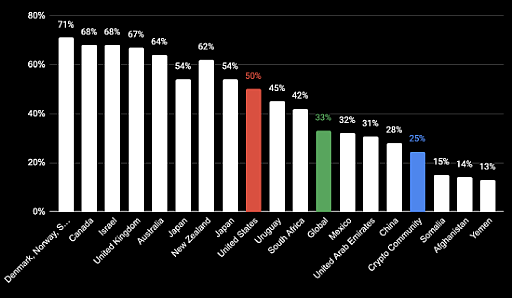
This challenge is a primary obstacle to broader acceptance. For the vast majority of Americans who don't own crypto, the reason is simple: they feel they don't understand it. Research from the NCA confirms that nearly 90% feel unknowledgeable, and this confusion is the primary barrier for almost half of them.
With the market maturing, building a foundation of knowledge is now essential for stability. This reality has prompted industry leaders to take a more active role in education.
The Crypto Literacy Divide
The problem isn't awareness; it's a deficit in functional understanding. According to research from Binance's ANZ division, 86% of non-investors are familiar with crypto, but this familiarity is superficial. But that casual familiarity rarely goes deeper.
Many people recognize the names of major cryptocurrencies. But that’s often where their knowledge ends. The actual mechanics of mining, the industry's unique jargon, and the basic rules of investing still remain major points of confusion. Dig into the essentials and you’ll find these concepts are still complete mystery to most.
This knowledge gap creates clear demographic fault lines. Aevi research shows that familiarity and use of crypto fall sharply after age 45. There is also a significant gap between genders. More than 60% of women admit to not fully understanding cryptocurrencies, while fewer than 40% of men say the same.
The real-world consequences are clear. A poorly informed user base is a recipe for panic and speculative manias, which directly feed into market volatility. This leaves the whole ecosystem vulnerable to bad information, which travels incredibly fast on social media among users who haven't yet learned to question what they read.
Adding to the risk, a study by Carbo-Valverde found that overconfidence, a known bias in financial literacy, is a strong predictor of crypto ownership. The data points to a worrying pattern: the most confident players in the market are often not the most knowledgeable.
When that kind of overconfidence takes the wheel, it results in reckless decisions—people using high leverage without understanding the consequences, or pouring money into projects they haven't researched. Every time this happens, it injects more systemic risk into the market for everyone.
The Answer: More Education
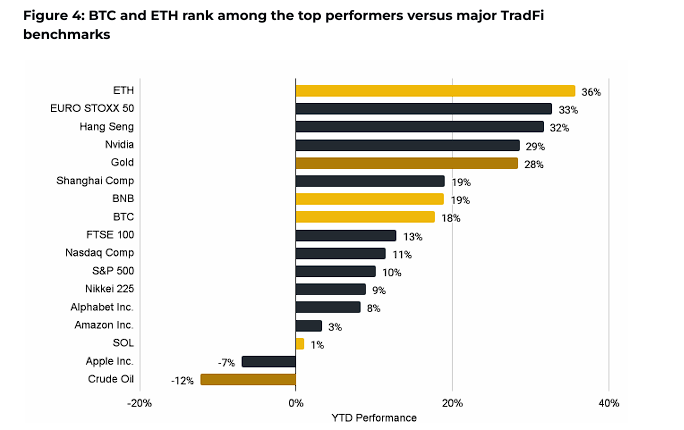
Even with this significant knowledge gap, leading digital assets have outperformed traditional markets. Binance Research data from 2025 shows ETH returning 36% year-to-date, BTC 18%, and BNB an impressive 19%, all ahead of the S&P 500's 10%. This contrast frames education not just as a benefit, but as a necessary stabilizing force to sustain such growth and protect market integrity.
As a leader in this effort, Binance has developed a multi-layered educational strategy. The core of this effort is Binance Academy, a free platform started in 2018. It has already provided educational content, from articles to interactive "Learn & Earn" programs, to more than 64 million people across 29 languages. It was built to be a go-to resource, with hundreds of articles and a full glossary available to help make sense of crypto's most complex ideas.
Back in August, Binance launched the “Humans of Binance” content series to spotlight real people whose lives have been transformed by blockchain technology and the Binance ecosystem. Binance CMO Rachel Conlan shared, "At Binance, we believe authentic storytelling is the foundation for building meaningful connections with people from all walks of life. Through ‘Humans of Binance,’ we’re encouraging everyone to share their unique crypto stories, with the hope that this will be the start of a movement to debunk misconceptions of crypto and highlight its true potential."
"In a market that’s often crowded and misunderstood, emotional narratives like this allow us to cut through the noise, build genuine brand trust, and inspire new users to discover the possibilities of blockchain technology. We are excited to be part of the crypto journey for the next one billion crypto users and beyond," Rachel added.
This initiative also pushes into formal education. Through its Global University Outreach program, Binance is working with over 200 universities in more than 50 countries to teach one million students about blockchain by 2026.
These aren't just introductory lectures; collaborations in Pakistan, Vietnam, and with the University of Oulu focus on technical skills like Solidity to build a Web3 talent pool. Because informed regulation is crucial for the industry's future, Binance also funds scholarships for the Global Fintech Institute's compliance course to support professional development. Rounding out its educational offerings, programs like Crypto School give users a clear learning path with structured courses for all skill levels.
Building a Foundation for a Stable Future
Crypto is at a critical inflection point. While asset performance has been impressive, it's dangerously mismatched with the low level of user understanding. This isn't just a hurdle—it's a direct cause of market instability that prevents the development of a truly durable financial ecosystem.
Accessible education is the most powerful tool to address these risks, much as it was in the early days of the internet when moving from a niche technology to a global utility required educating a generation of new users.
Industry leaders are now stepping in with comprehensive programs aimed at building a more rational investor base. The goal is to create a genuine understanding of the technology and its financial principles. When an investor truly understands the fundamentals, they are far less prone to the emotional trading that defines crypto's volatility.
A market composed of users who are comfortable with concepts like blockchain, self-custody, and risk management is inherently a more stable market. Education is the bridge that will carry digital assets from a phase of speculation to one of trust and real integration into global finance.
Here's something you might be interested in.
Bridging the Crypto Literacy Divide: Why More Education Is Critical to Stability

Bridging the Crypto Literacy Divide: Why More Education Is Critical to Stability
Crypto's performance looks strong on the surface, but a deep-seated knowledge gap is creating instability from within. This isn't a minor issue. It actively contributes to the market's wild swings and slows down any real progress toward mainstream use. An investor community that doesn't understand the fundamentals is easily swayed by panic and fake news, which poses a systemic risk to the entire ecosystem, including its strongest projects.
Data brings the problem into sharp focus. A recent GoMining survey revealed a telling statistic: more than 70% of people who own Bitcoin feel they cannot properly explain its mechanics. Similarly, a study by PiP World described the crypto community's financial literacy rate as "dangerously low," falling significantly behind the US average.
This challenge is a primary obstacle to broader acceptance. For the vast majority of Americans who don't own crypto, the reason is simple: they feel they don't understand it. Research from the NCA confirms that nearly 90% feel unknowledgeable, and this confusion is the primary barrier for almost half of them.
With the market maturing, building a foundation of knowledge is now essential for stability. This reality has prompted industry leaders to take a more active role in education.
The Crypto Literacy Divide
The problem isn't awareness; it's a deficit in functional understanding. According to research from Binance's ANZ division, 86% of non-investors are familiar with crypto, but this familiarity is superficial. But that casual familiarity rarely goes deeper.
Many people recognize the names of major cryptocurrencies. But that’s often where their knowledge ends. The actual mechanics of mining, the industry's unique jargon, and the basic rules of investing still remain major points of confusion. Dig into the essentials and you’ll find these concepts are still complete mystery to most.
This knowledge gap creates clear demographic fault lines. Aevi research shows that familiarity and use of crypto fall sharply after age 45. There is also a significant gap between genders. More than 60% of women admit to not fully understanding cryptocurrencies, while fewer than 40% of men say the same.
The real-world consequences are clear. A poorly informed user base is a recipe for panic and speculative manias, which directly feed into market volatility. This leaves the whole ecosystem vulnerable to bad information, which travels incredibly fast on social media among users who haven't yet learned to question what they read.
Adding to the risk, a study by Carbo-Valverde found that overconfidence, a known bias in financial literacy, is a strong predictor of crypto ownership. The data points to a worrying pattern: the most confident players in the market are often not the most knowledgeable.
When that kind of overconfidence takes the wheel, it results in reckless decisions—people using high leverage without understanding the consequences, or pouring money into projects they haven't researched. Every time this happens, it injects more systemic risk into the market for everyone.
The Answer: More Education
Even with this significant knowledge gap, leading digital assets have outperformed traditional markets. Binance Research data from 2025 shows ETH returning 36% year-to-date, BTC 18%, and BNB an impressive 19%, all ahead of the S&P 500's 10%. This contrast frames education not just as a benefit, but as a necessary stabilizing force to sustain such growth and protect market integrity.
As a leader in this effort, Binance has developed a multi-layered educational strategy. The core of this effort is Binance Academy, a free platform started in 2018. It has already provided educational content, from articles to interactive "Learn & Earn" programs, to more than 64 million people across 29 languages. It was built to be a go-to resource, with hundreds of articles and a full glossary available to help make sense of crypto's most complex ideas.
Back in August, Binance launched the “Humans of Binance” content series to spotlight real people whose lives have been transformed by blockchain technology and the Binance ecosystem. Binance CMO Rachel Conlan shared, "At Binance, we believe authentic storytelling is the foundation for building meaningful connections with people from all walks of life. Through ‘Humans of Binance,’ we’re encouraging everyone to share their unique crypto stories, with the hope that this will be the start of a movement to debunk misconceptions of crypto and highlight its true potential."
"In a market that’s often crowded and misunderstood, emotional narratives like this allow us to cut through the noise, build genuine brand trust, and inspire new users to discover the possibilities of blockchain technology. We are excited to be part of the crypto journey for the next one billion crypto users and beyond," Rachel added.
This initiative also pushes into formal education. Through its Global University Outreach program, Binance is working with over 200 universities in more than 50 countries to teach one million students about blockchain by 2026.
These aren't just introductory lectures; collaborations in Pakistan, Vietnam, and with the University of Oulu focus on technical skills like Solidity to build a Web3 talent pool. Because informed regulation is crucial for the industry's future, Binance also funds scholarships for the Global Fintech Institute's compliance course to support professional development. Rounding out its educational offerings, programs like Crypto School give users a clear learning path with structured courses for all skill levels.
Building a Foundation for a Stable Future
Crypto is at a critical inflection point. While asset performance has been impressive, it's dangerously mismatched with the low level of user understanding. This isn't just a hurdle—it's a direct cause of market instability that prevents the development of a truly durable financial ecosystem.
Accessible education is the most powerful tool to address these risks, much as it was in the early days of the internet when moving from a niche technology to a global utility required educating a generation of new users.
Industry leaders are now stepping in with comprehensive programs aimed at building a more rational investor base. The goal is to create a genuine understanding of the technology and its financial principles. When an investor truly understands the fundamentals, they are far less prone to the emotional trading that defines crypto's volatility.
A market composed of users who are comfortable with concepts like blockchain, self-custody, and risk management is inherently a more stable market. Education is the bridge that will carry digital assets from a phase of speculation to one of trust and real integration into global finance.
Comments
Members of the editorial staff of San Diego Reader were not involved in the creation of this content.