

Here's something you might be interested in.
Ask a Hipster — Advice you didn't know you needed
Big Screen — Movie commentary
Blurt — Music's inside track
Booze News — San Diego spirits
Classical Music — Immortal beauty
Classifieds — Free and easy
Close to Home — What it’s like on the street where you live
Cover Stories — Front-page features
Drinks All Around — Bartenders' drink recipes
Excerpts — Literary and spiritual excerpts
Feast! — Food & drink reviews
Feature Stories — Local news & stories
Fishing Report — What’s getting hooked from ship and shore
From the Archives — Spotlight on the past
Golden Dreams — Talk of the town
The Gonzo Report — Making the musical scene, or at least reporting from it
Letters — Our inbox
Movies@Home — Local movie buffs share favorites
Movie Reviews — Our critics' picks and pans
Musician Interviews — Up close with local artists
Neighborhood News from Stringers — Hyperlocal news
News Ticker — News & politics
Obermeyer — San Diego politics illustrated
Outdoors — Weekly changes in flora and fauna
Overheard in San Diego — Eavesdropping illustrated
Poetry — The old and the new
Reader Travel — Travel section built by travelers
Reading — The hunt for intellectuals
Roam-O-Rama — SoCal's best hiking/biking trails
San Diego Beer — Inside San Diego suds
SD on the QT — Almost factual news
Sheep and Goats — Places of worship
Special Issues — The best of
Street Style — San Diego streets have style
Surf Diego — Real stories from those braving the waves
Theater — On stage in San Diego this week
Tin Fork — Silver spoon alternative
Under the Radar — Matt Potter's undercover work
Unforgettable — Long-ago San Diego
Unreal Estate — San Diego's priciest pads
Your Week — Daily event picks
Bob Dylan sunglasses, Rose Kennedy bathing suit, Pancho Villa's head, Bogart as Gerber baby, OJ Simpson evidence, presidents who smoked
Reader's Matthew Alice shares celebrity tidbits
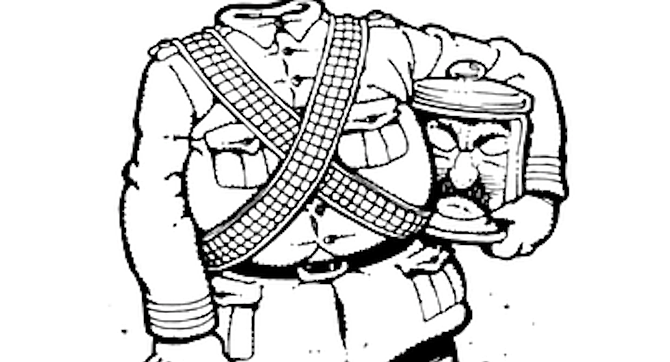
People who believe the story feel that Pancho Villa will not rest in peace until his head and body are reunited.
The Reader has started this series of its best stories from the past 52 years — 2600 cover stories and some remarkable interior features — to help make up for the loss of its physical edition, which was once large enough to hold whole oceans of print. These stories will feature all the original illustrations and photos (plus easy-to-read typography).
^^^^^^^^^^^
Matthew Alice, the Reader question-and-answer columnist for over 25 years, took a special interest in questions about celebrities
Who was driving JFK?
Matthew Alice: Who, specifically, was driving the car when JFK was assassinated? What was his name? What happened to the car? How about the items that were in JFK's pockets? And his suit? Just need to know. — Matthew A. Janulewicz, San Diego
Please, we don’t want to know why you just need to know. Some things are better left untold, I suspect. Anyway, the man driving the 1961 custom X-100 Lincoln Continental convertible (with removable bubble top) was William Greer, born in Ireland, now retired in Waynesville, North Carolina. According to a 1983 Associated Press interview, Greer joined the Secret Service in 1946 and was the driver for Truman, Eisenhower, Kennedy, Johnson, and such visiting dignitaries as Khrushchev, Churchill, Queen Elizabeth, and Heile Selassie. He retired in 1967. President Johnson had the car overhauled, reupholstered, repainted (from dark blue to black), and it was given an armored top. Johnson used it during his administration. It’s now in the Henry Ford Museum in Michigan. A Florida collector of Kennedy memorabilia built a replica of the original limo. Oliver Stone rented it from him for the movie JFK.
Pieces of the Lincoln’s original upholstery were framed and presented to people close to the president. One of the pieces is now owned by the king of Kennedy collectors, Robert White, a Baltimore man who claims to have 15,000 items from JFK’s life, including a Rose Kennedy bathing suit and Jack’s and Jackie’s passports. White knows lots of Kennedy insiders from whom he acquires his memorabilia. He has JFK’s watch and wallet from the day of the assassination, the briefcase he brought on the Dallas trip, and the U.S. and presidential flags that flew on the limo’s fenders. White also owns the uniform worn by the police officer who arrested Lee Harvey Oswald. Kennedy’s suit was cut off him as he entered the Dallas emergency room, and, best I can find out, was not salvaged.
| Read full article February 29, 1996
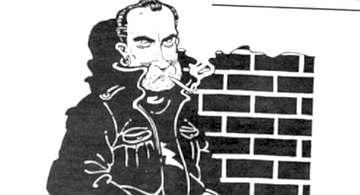 Richard Nixon was an ex-smoker of cigarettes by the time he took office.
Presidents who smoked
Dear Matthew Alice: Other than an occasional victory cigar, we've never seen pictures of our U.S. presidents with a cigarette in their hand. Were there any modern-day presidents that actively inhaled while in office? — Cardiff Ken, Cardiff
The list of presidential puffers is surprisingly long. One of the most famous pictures of Franklin Roosevelt shows him smiling broadly and clutching a cigarette holder (with glowing cig) between his teeth. When the Trumans moved into the White House, Bess probably had to dry-clean the drapes and slipcovers. Harry was a nonsmoker, unusual for that era. According to the Truman Library in Missouri, Harry once received a letter from a man who collected cigarette butts from famous people. The president wrote back saying he was sorry he couldn’t oblige; he had tried smoking once when he was a kid, out behind the bam in Independence, but his dad caught him and whupped him good, and he never tried it again.
According to the Tobacco Institute, the mouthpiece for the tobacco industry, Dwight Eisenhower smoked cigarettes, as did Lyndon Johnson, the last active, daily cigarette smoker to fog up the Oval Office. They also say Richard Nixon was an ex-smoker of cigarettes by the time he took office. The Museum of Tobacco Art and History in Nashville contends Nixon is still a champion cigar smoker. JFK was also an ex-smoker who switched to a pipe and cigars, though, says the Tobacco Institute, wife Jackie was and is still a chain smoker. You’ll probably not find photographic evidence, since she requested that the White House camera corps not snap pics of the First Lady sucking on a butt.
Gerald Ford was known to smoke a pipe occasionally. And many candid pics of Ronald Reagan from the ’40s show him with a pipe in his hand, though it never appeared to be filled with tobacco, so maybe it was just a prop he carried around to give him an air of distinction. He also smoked cigarettes in a couple of his movies. Reagan’s best-known connection to the tobacco industry is the series of endorsement magazine ads from the ’50s showing him toking away on a Chesterfield. I seem to recall news accounts that Ronnie acquired his big jellybean habit when he quit smoking. At any rate, he wasn’t a puffer by the time he tottered into the White House.
If Nixon is remembered for “I am not a crook,” and Kennedy is remembered for “Ich bin ein Berliner, ’’ then Bill Clinton’s legacy has to be “I did not inhale." That apparently applies to tobacco as well as weed. And Jimmy Carter may have lusted in his heart, but not for Marlboros. Clinton, Carter, Truman, and George Bush are the only smoke-free presidents in this century.
December 23, 1993 | Read full article
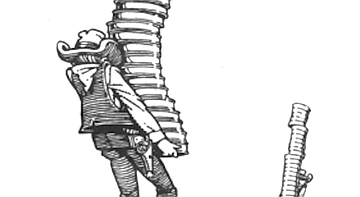 Tom London made about 2000 films, his first The Great Train Robbery (1903) and his last The Lone Texan (1959).
The actor who made the most movies
Dear Matthew Alice: Please settle a bet between my friends and I. Which actor has made the most movies in their career, John Wayne or Clint Eastwood? And which actor or actress has made the most movies of all time? — Stewart, Art, and Gonzolo, Lakeside
Who’s the boob with the money on Eastwood? Well, ya better reach for that wallet, Pilgrim. The Duke’s got him beat by a mile. If Clint’s on-screen career ended today, his total would be 48, beginning with four bit roles in 1955 (Francis in the Navy, Revenge of the Creature, Lady Godiva, and Tarantula). He only made four features (his popular spaghetti Westerns) between 1959 and ’66, when he was playing Rowdy Yates on the weekly TV series Rawhide.
Screen behemoth that Wayne was, his career statistics are occasionally inflated. According to the International Directory of Films and Filmmakers, in 50 years, Big John made 164 screen appearances (not the 200+ you’ll sometimes read), including two made-for-TV dramas and one documentary. He also narrated one documentary but didn’t appear on screen. Wayne actually made one other scripted TV appearance when he introduced the first episode of Gunsmoke. The series was originally a radio show, with the roly-poly William (“10-4”) Conrad as the voice of Marshall Dillon. When CBS decided to make it a TV series, they designed the role with Wayne in mind. But the Duke was too much of a ramblin’ kind of guy to be fenced in by the small screen, so he plugged their plans full of lead. He recommended they take a chance with a little-known (but even taller) actor, James Amess (67”). That figure of 164 includes five early appearances (1926 to 1929) as an uncredited extra, four bit roles under the name “Duke" Morrison, and one film in which he appeared as a corpse. Wayne is generally considered to be the film actor (in the legitimate theatrical film industry) with the most starring roles, 142.
Hard to say who’s absolutely appeared in films more than any other actor or actress, if you include bit parts and roles as an extra. Helen Hayes, best known as a stage star, had the longest film career of any American actress — first film 1910, last film 1988. But in 75 years Lillian Gish made more movies, 103, with a starring or feature role in virtually all of them. She must have spent most of 1913 tied to railroad tracks and running from villains; she made 20 films that year. The Guinness records folks say that Indian comedienne Manorama starred in more than 1000 crank-’em-out-in-Bombay movies between 1958 and 1985. At one point, she claims, she was working on 30 simultaneously.
Among the men, John Carradine claimed 400+ screen appearances. You’ll sometimes see that figure as 500+. A lot, anyway. American actor Tom London made about 2000 films, his first The Great Train Robbery (1903) and his last The Lone Texan (1959). But in fact the most-seen actor, in all ways, is probably the late porn stud John Holmes, with about 200 feature-length films in a career that included (his estimate) 2274 projects. And he certainly wasn’t bothered by those pesky professional details of costume fittings and dialogue.
April 14, 1994 | Read full article
Pancho Villa's head
Matthew Alice: I just watched a documentary on Channel 15 about the Mexican revolutionary bandit Pancho Villa, who was finally assassinated in 1923. A few days ago there was also a movie about him on the Mexican station, Channel 12, which, of course, was in Spanish. I was able to follow it a little bit, but not completely. My question is, in the beginning of the movie they were talking about him, and then the narrator and the camera brought us into what looked like a large, deserted warehouse with dusty furniture covered with cobwebs scattered here and there, or it could have been a crypt under a cathedral, or it could have been a deserted theater. I'm not sure what it was, but there was perched on a dirty chair or table what looked like Pancho Villa’s head in a jar full of liquid. I guess Mexicans go in for rather macabre and bizarre relics or mementos, so I suppose it really was Pancho Villa’s head. Is there somewhere in Mexico the head of Pancho Villa floating around in a jar of formaldehyde? If so, what’s the reason for it, and where is it? — Joe Gringo, San Diego
Now that’s my idea of entertainment. Pancho Villa’s dome bobbing around in a big jar, like some pale, bloated gherkin. When I first read your letter, Joe, I’ll admit I was ready to slide it into my “Body Parts” file to fester along with the inquiry about the rumor that Al Capone’s penis is in the Smithsonian Institution. But it’s occurred to me that maybe this is just the kind of thing the public is clamoring for, exactly what we need to make families part with more leisuretime dollars. Now be honest. Which would you rather see, one more plaster brontosaurus or an actual piece of pickled anatomy from a famous person? Hey, no contest. There’s a museum in Paris that includes a display of Napoleon’s socks. Most days you could lob mortar rounds into the place and inflict no personal injury. The joint is empty. But replace Napoleon’s socks with Napoleon’s feet and they’d have something, I’d say.
Anyway, Joe, don’t make any vacation plans figuring you’ll take the kids to some Mexican Cabezaland theme park to take a peek at Pancho. The head in the jar was a fake, a prop. My best guess is that you were watching the 1957 film Cuando viva villa es la muerte, a dramatization of certain incidents that are part of the bandit-hero’s mythology. Mexican film idol Pedro Armendariz plays the role of Villa (except, presumably, in the head-in-the-jar interlude). The film opens with the director’s statement that the stories he’s selected to dramatize are based on the rumors and folk tales about Villa that he believes are actually true. And most of them are at least plausible, with the exception of the jarred head.
According to that rumor, after Villa’s assassination someone removed his head, put it in a jar, and sent it to France, where they’d enlisted specialists to poke around in his cranium to figure out what made the guy tick. People who believe the story feel that Villa will not rest in peace until his head and body are reunited. But even the most outrageous myths sprout from a few seeds of truth, in this case, (1) Villa was a charismatic and contradictory personality and (2) the body in Villa’s grave in Parral, Chihuahua, is headless. In fact, Villa’s remains are headless because three years after his death, vandals raided his grave and made off with his skull. It’s never been found.
Villa has been the subject of many films, the best known probably Viva Villa!, a 1934 MGM fictionalized biography. According to a tiny blurb in the San Diego Union of November 2, 1933, there’s a local connection to Villa and the film. The Associated Press report says that one of Pancho Villa’s sons, 21-year-old Pancho Augustin Villa, had just been declared “violently insane” by an L.A. judge and was confined to a psychiatric hospital. Until September of ’33, he’d been a student in San Diego. He and his mother, Asuncion Villa, had moved to Los Angeles because Pancho was slated to play a role in Viva Villa! But ever since signing the contract, the younger Villa had been “acting strangely,” going around naked, and threatening to kill his mother. So much for Panchito’s acting career.
Though I’ve not yet checked any local school records, there’s no 1932 or ’33 San Diego City Directory listing for a Pancho Augustin or Asuncion Villa. They also don’t appear in biographies of the famous man; but he had “wives” and children stashed all over northern Mexico, and few biographies mention more than one or two.
If the A.P. report about Panchito’s odd behavior is accurate, Viva Villa! seems to have attracted more than its share of nude loonies. About two weeks after young Pancho’s encounter with the L.A. law, actor Lee Tracy, alcoholic and popular Hollywood “bad boy” slated for a co-starring role in the film, staggered unclothed onto his hotel balcony in Mexico and peed on a contingent of the Chapultepec Military Cadets, who were marching by in an independence day parade. The international insult prompted MGM chief Louis B. Mayer to fire Tracy, cancel his studio contract, and send a humbly apologetic letter to the people of Mexico via President Abelardo Rodriguez. That was 60 years ago; amazing how little our South of the Border behavior has changed, except for the apology part, of course.
November 24, 1993 | Read full article
More on missing body parts
Dear Matthew: Although I was very interested to read your article dispelling the myth of Dillinger's penis [being on display in a medical museum in Washington], there is another “bit" of anatomy you might check into. According to the Guinness Book of Records, Napoleon’s "manhood” was one of the smallest. Is it on display somewhere? — Steve Guetersloh, San Diego
The Matthew Alice Archive of Famous Body Parts will shortly need its own building. New information has been pouring in since we first dallied with rumors of the whereabouts of Pancho Villa’s head and fictitious displays of Dillinger’s and Capone’s amputated things. Included in the deluge are some dandy tales about various items of Napoleon’s anatomy. There seems to have been a lively trade in Bonie’s parts over the years. Considering all the stuff people claim was cut off or cut out at his autopsy, it’s amazing there was anything left of the guy to bury. Naturally, his penis is among the memorabilia rumored to be still making the rounds. The story goes that Napoleon’s doctor was bribed by a Corsican chaplain (once insulted by Napoleon and bent on revenge) to remove the emperor’s nether member at autopsy and give it to him, preserved in formaldehyde. When the cleric’s estate was sold, the pickled penis went from dealer to dealer and in 1972 was placed on the auction block at Christie’s in London. It was, um, withdrawn, shall we say, when the bids weren’t high enough.
But wait. There’s more. A New York physician and Napoleon scholar, John Lattimer of Columbia Presbyterian Hospital, is certain he now owns the fabled penis of Napoleon. He bought it, he says, for S4000 in a deal with the French government in 1972. It is now in the hospital’s Squire Urology Clinic, though not on public display, which the doctor seems to think would be undignified. Lattimer has been quoted as saying the relic looks like “a small, shriveled finger. But to be fair, it has been sitting in the jar for a very long time.”
The doctor admits there’s no unassailable way to prove his
February 17, 1994 | Read full article
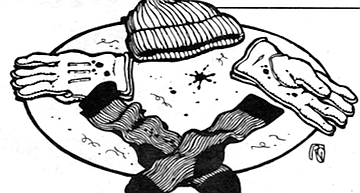 Items of clothing from a homicide, particularly contaminated evidence like the glove, could not be put up for sale.
O.J. Simpson court evidence
Mr. (or Ms.) Alice: Now that the trial of the century has ended, and Mr. Simpson has apparently convinced the jury that the hat and gloves probably weren't his, what happens to those items and other pieces of evidence? I would have to believe that there are people out there who would pay handsomely for a piece of judicial history (and L.A. County could certainly use the cash). Guy Tapper, SIO, La Jolla
No question that scores of taste-challenged folks would love to display the bloody glove or hairy watch cap on their coffee tables, for whatever ghoulish reason. And there’s no abyss so low that someone in L.A. would not crawl into it to retrieve a buck or two. We’ve seen enough ugliness on both sides in People vs. O.J. to keep patrons of the tabloid arts in bidding wars for years. But in the memorabilia category we might call Homicidal Chic: Gear for the Hip Double-Murderer, there is some hope.
The L.A. Superior Court and D.A.’s offices were more than willing to chat about your hypothesis. Their spokesfolks sounded almost giddy, like troops freed from their foxholes after 12 months of relentless Uzi fire. The LAPD was quite another story. Snarly, abrupt. Underlying theme: The press? Simpson evidence? Take a hike. Although they phrased it, “We’ll get back to you.” No, they won’t.
At the moment, the clerk of the Superior Court in LA. is cataloging the evidence—examining it, listing it, describing it, making sure it’s all accounted for. (When the evidence was seized, it went into the LAPD property room; once it was presented and numbered during court proceedings, it came under the clerk’s control.) When the inventory is complete, it goes to Judge Ito, who determines the fate of each item. From what we’ve seen of the whimsical jurist, who knows what he’ll do. If he follows protocol, he’ll release back to the D.A. all evidence submitted by that office, and to the defense their evidence. Any personal items (the golf bag, the Bronco, etc.) can be reclaimed by their owners. But of course, no one’s going to leap forward to claim the glove and cap. Well, in a sane world, nobody would. But this is L.A.... Anyway, items of clothing from a homicide, particularly contaminated evidence like the glove, could not be put up for sale. They’d be destroyed as biohazardous material. That’s not to say that somehow, through whatever subterfuge, the items won’t weasel their way onto the memorabilia black market. But L.A. County (that is, the ordinary folks who paid the salaries and production costs for this sideshow) won’t benefit from it in any event.
There’s also the question of the O.J. evidence being needed in the civil suits now pending against him. That may affect the timing of the final disposal. And of course, if the verdict had gone the other way, the evidence would have been held indefinitely, pending an appeal. The unclaimed fruits of burglaries are generally auctioned to the public. The SDPD unloads bikes, electronics, jewelry, cameras, and the like several times a year, with proceeds going into the city’s general fund. But homicide evidence usually involves weapons, contaminated articles, and other nonsalable property, so give up those dreams of placing the winning bid on the steak knife or phone cord that finished off some famous victim.
But to reassure you that the Geraldo-ing of the (inquiring) American mind is still in full swing, consider what you can buy, if you’re so inclined. Like to enhance your collection with a painting by John Wayne Gacy? Clown Descending a Staircase perhaps, or Whistler’s Mother’s Killer or La Grande Jatte (“Lurking in the Park with John”). Got a spare 10K? Sociopath art is all the rage. Gacy cleared about $100,000 from his cell before Illinois put him out of business.
But more to the point is the outfall from the Jeffrey Dahmer case, in which the victims’ families are attempting to receive compensation through the sale of evidence. Still in Milwaukee police custody are Dahmer’s refrigerator, an 80-quart kettle, surgical instruments, cutlery and dishes, handcuffs, hatchets, and all the other hardware and some photographs seized as evidence. Victims’ families won $80 million in court-ordered restitution from Dahmer but have yet to collect anything. Dahmer’s father said he’d share with them the proceeds of his book about his son, but he never did. So now their attorney wants to sell the evidence. Legally, the property belonged to Jeffrey, and he said he had no objection to selling it to benefit the victims’ families. Since his death, as part of his estate, it’s likely destined for his father’s hands. Papa Dahmer claims he wants it destroyed, not auctioned. But for the moment, the county D.A. still controls it.
The victims’ attorney already has a tentative agreement with a grade school teacher from Brooklyn who is a part-time auctioneer to conduct the Dahmer evidence sale in New York City. Herman Dravick, a specialist in autographs, is gaining a reputation as a dealer in crime memorabilia since he recently auctioned Jack Ruby’s gun for $220,000 and gaveled home $8800 for the toe tag from the corpse of Lee Harvey Oswald. Dravick probably sensed the direction of contemporary American lusts a few years ago, when he was taking bids on documents, including some by Washington, Lincoln, Twain, and Dickens. At that auction, an Al Capone signature drew more interest than any of the others.
So, stay tuned for the Menendez Brothers’ new parlor game, Patricide. The person who whines the most wins. And does anybody know where I can pick up one of those neat Heidi Fleiss action figures?
October 28, 1995 | Read full article
 Max Born took some of Albert Einstein’s scientific papers with him on his honeymoon.
Olivia Newton-John's grandfather Max Born was friend of Albert Einstein
Dear Matthew Alice: Was Olivia Newton-]ohn ever kissed by Albert Einstein? — Milton F., Normal Heights
Usually I don’t much care which way the facts fall. True, false; you’re right, you’re wrong — as long as my paycheck doesn’t bounce, it’s all the same to me. But this time, I really hoped I’d dig up some stories about Einstein and the Newton-Johns picnicking by the Thames, Uncle Albert giving giggly Olivia horsie rides and noogies and a friendly smooch. Or maybe details of the day Albert and Livy rollerskated around Piccadilly Circus until she got dizzy and threw up on his shoes, and he kissed her to make it all better. Instead... nuts. I came up with nothing. Albert Einstein never kissed Olivia Newton-John. He never even met her. Personally, I’m bummed. It should have happened. It could have happened.
Olivia, born in Cambridge, England in 1948, was the daughter of Bryn Newton-J (English teacher, King’s College) and Irene Born Newton-J. Irene’s father was Max Born, a German physicist who won a Nobel Prize in 1954. Fellow Nobelist (1933) Einstein was a friend of Max and his family. According to Einstein biographies, in the 19-teens, he used to visit the Borns in Berlin and entertain them with his fiddle playing; Max took some of Albert’s scientific papers with him on his honeymoon. So you see, it’s not so crazy that Einstein just maybe, somehow, might have met Max’s granddaughter Olivia and given her a friendly peck on her little toddler cheek. (Olivia was only seven when Einstein died.) The president of Hopelessly Devoted, the Olivia Newton-John Fan Club, says poor Olivia only met her Grandpa Max once, even though he didn’t die until Olivia was 22. But I’d like to believe she was secretly thinking about Albert when she recorded “Let’s Get Physical.” Or was that “Let’s Get Physicists”?
September 28, 1995 | Read full article
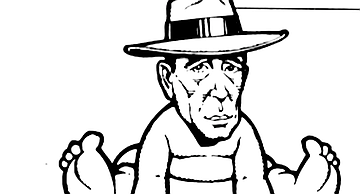 That pudgy face on the Gerber jar is Ann Turner Cook.
Humphrey Bogart was not the Gerber baby
Last December, my wife and I successfully completed the adoption of a baby boy from an Eastern Bloc country. We have both decided that he is officially the cutest child in the entire world. In fact, he looks almost exactly like the Gerber baby. Last week I was boring some new acquaintances with stories of the adoption when someone mentioned that it was a little-known fact that the Gerber baby was actually Humphrey Bogart. According to the story, his mother was a commercial artist who used him as the model. Is any of this true? Will my child end up smoking cigarettes, wearing trench coats, and hanging around seedy characters? — Michael Taylor, Faxland
Fret no more, Mike. Your acquaintance’s “little-known fact” is just a widely believed fiction. The littlest Taylor will be no chain-smoking tough guy. He’ll be a schoolteacher, will marry a small-town deputy sheriff, and retire to Florida to write unpublished novels. Oh, and he’ll be a woman. That pudgy face on the Gerber jar is Ann Turner Cook, who, in 1928, lived next door to illustrator Dorothy Hope Smith. But it happens that Bogey does have a strained-carrots connection, just not the one most people think. His mother, Maude Humphrey, was an illustrator and used her baby as the model for many of her sketches. Bogey’s mug appeared on package labels and in ads for Mellin’s Baby Food beginning around 1900. Maybe that’s why Mellin’s is defunct and Gerber’s is still chugging along.
April 4, 1996 | Read full article
When Bob Dylan took off his sunglasses
Dear Matt: What the hell does Bob Dylan have in his right hand on the cover of the Highway 61 Revisited album? I’ve been trying to figure it out for a couple of years already. Please, please, PLEASE answer me now. The mental hospital will be waiting for me if you don't. — Gonzalo Redo Fernandez, Bilbao (Vizcaya), Spain
Hey, M.A. goes international! We here at the Alice family compound extend the clammy hand of friendship to our Basque brothers across the sea. Please note that besides the hidden joy buzzer, our amiable paw holds a pair of sunglasses. And so does Bob’s. M.A.’s chief technician in charge of inconsequential musical info can’t imagine what they said to Dylan to convince him to remove the shades. At the time, it was the first solid evidence that Bob had eyes, so rarely did he uncover that space between his forehead and his nose. And our question for you, Gonzalo, is, where exactly do you pick up your Reader every week?
June 19, 1997 | Read full article
Here's something you might be interested in.
Bob Dylan sunglasses, Rose Kennedy bathing suit, Pancho Villa's head, Bogart as Gerber baby, OJ Simpson evidence, presidents who smoked
Reader's Matthew Alice shares celebrity tidbits

Bob Dylan sunglasses, Rose Kennedy bathing suit, Pancho Villa's head, Bogart as Gerber baby, OJ Simpson evidence, presidents who smoked
Reader's Matthew Alice shares celebrity tidbits
People who believe the story feel that Pancho Villa will not rest in peace until his head and body are reunited.
The Reader has started this series of its best stories from the past 52 years — 2600 cover stories and some remarkable interior features — to help make up for the loss of its physical edition, which was once large enough to hold whole oceans of print. These stories will feature all the original illustrations and photos (plus easy-to-read typography).
^^^^^^^^^^^
Matthew Alice, the Reader question-and-answer columnist for over 25 years, took a special interest in questions about celebrities
Who was driving JFK?
Matthew Alice: Who, specifically, was driving the car when JFK was assassinated? What was his name? What happened to the car? How about the items that were in JFK's pockets? And his suit? Just need to know. — Matthew A. Janulewicz, San Diego
Please, we don’t want to know why you just need to know. Some things are better left untold, I suspect. Anyway, the man driving the 1961 custom X-100 Lincoln Continental convertible (with removable bubble top) was William Greer, born in Ireland, now retired in Waynesville, North Carolina. According to a 1983 Associated Press interview, Greer joined the Secret Service in 1946 and was the driver for Truman, Eisenhower, Kennedy, Johnson, and such visiting dignitaries as Khrushchev, Churchill, Queen Elizabeth, and Heile Selassie. He retired in 1967. President Johnson had the car overhauled, reupholstered, repainted (from dark blue to black), and it was given an armored top. Johnson used it during his administration. It’s now in the Henry Ford Museum in Michigan. A Florida collector of Kennedy memorabilia built a replica of the original limo. Oliver Stone rented it from him for the movie JFK.
Pieces of the Lincoln’s original upholstery were framed and presented to people close to the president. One of the pieces is now owned by the king of Kennedy collectors, Robert White, a Baltimore man who claims to have 15,000 items from JFK’s life, including a Rose Kennedy bathing suit and Jack’s and Jackie’s passports. White knows lots of Kennedy insiders from whom he acquires his memorabilia. He has JFK’s watch and wallet from the day of the assassination, the briefcase he brought on the Dallas trip, and the U.S. and presidential flags that flew on the limo’s fenders. White also owns the uniform worn by the police officer who arrested Lee Harvey Oswald. Kennedy’s suit was cut off him as he entered the Dallas emergency room, and, best I can find out, was not salvaged.
| Read full article February 29, 1996
Richard Nixon was an ex-smoker of cigarettes by the time he took office.Presidents who smoked
Dear Matthew Alice: Other than an occasional victory cigar, we've never seen pictures of our U.S. presidents with a cigarette in their hand. Were there any modern-day presidents that actively inhaled while in office? — Cardiff Ken, Cardiff
The list of presidential puffers is surprisingly long. One of the most famous pictures of Franklin Roosevelt shows him smiling broadly and clutching a cigarette holder (with glowing cig) between his teeth. When the Trumans moved into the White House, Bess probably had to dry-clean the drapes and slipcovers. Harry was a nonsmoker, unusual for that era. According to the Truman Library in Missouri, Harry once received a letter from a man who collected cigarette butts from famous people. The president wrote back saying he was sorry he couldn’t oblige; he had tried smoking once when he was a kid, out behind the bam in Independence, but his dad caught him and whupped him good, and he never tried it again.
According to the Tobacco Institute, the mouthpiece for the tobacco industry, Dwight Eisenhower smoked cigarettes, as did Lyndon Johnson, the last active, daily cigarette smoker to fog up the Oval Office. They also say Richard Nixon was an ex-smoker of cigarettes by the time he took office. The Museum of Tobacco Art and History in Nashville contends Nixon is still a champion cigar smoker. JFK was also an ex-smoker who switched to a pipe and cigars, though, says the Tobacco Institute, wife Jackie was and is still a chain smoker. You’ll probably not find photographic evidence, since she requested that the White House camera corps not snap pics of the First Lady sucking on a butt.
Gerald Ford was known to smoke a pipe occasionally. And many candid pics of Ronald Reagan from the ’40s show him with a pipe in his hand, though it never appeared to be filled with tobacco, so maybe it was just a prop he carried around to give him an air of distinction. He also smoked cigarettes in a couple of his movies. Reagan’s best-known connection to the tobacco industry is the series of endorsement magazine ads from the ’50s showing him toking away on a Chesterfield. I seem to recall news accounts that Ronnie acquired his big jellybean habit when he quit smoking. At any rate, he wasn’t a puffer by the time he tottered into the White House.
If Nixon is remembered for “I am not a crook,” and Kennedy is remembered for “Ich bin ein Berliner, ’’ then Bill Clinton’s legacy has to be “I did not inhale." That apparently applies to tobacco as well as weed. And Jimmy Carter may have lusted in his heart, but not for Marlboros. Clinton, Carter, Truman, and George Bush are the only smoke-free presidents in this century.
December 23, 1993 | Read full article
Tom London made about 2000 films, his first The Great Train Robbery (1903) and his last The Lone Texan (1959).The actor who made the most movies
Dear Matthew Alice: Please settle a bet between my friends and I. Which actor has made the most movies in their career, John Wayne or Clint Eastwood? And which actor or actress has made the most movies of all time? — Stewart, Art, and Gonzolo, Lakeside
Who’s the boob with the money on Eastwood? Well, ya better reach for that wallet, Pilgrim. The Duke’s got him beat by a mile. If Clint’s on-screen career ended today, his total would be 48, beginning with four bit roles in 1955 (Francis in the Navy, Revenge of the Creature, Lady Godiva, and Tarantula). He only made four features (his popular spaghetti Westerns) between 1959 and ’66, when he was playing Rowdy Yates on the weekly TV series Rawhide.
Screen behemoth that Wayne was, his career statistics are occasionally inflated. According to the International Directory of Films and Filmmakers, in 50 years, Big John made 164 screen appearances (not the 200+ you’ll sometimes read), including two made-for-TV dramas and one documentary. He also narrated one documentary but didn’t appear on screen. Wayne actually made one other scripted TV appearance when he introduced the first episode of Gunsmoke. The series was originally a radio show, with the roly-poly William (“10-4”) Conrad as the voice of Marshall Dillon. When CBS decided to make it a TV series, they designed the role with Wayne in mind. But the Duke was too much of a ramblin’ kind of guy to be fenced in by the small screen, so he plugged their plans full of lead. He recommended they take a chance with a little-known (but even taller) actor, James Amess (67”). That figure of 164 includes five early appearances (1926 to 1929) as an uncredited extra, four bit roles under the name “Duke" Morrison, and one film in which he appeared as a corpse. Wayne is generally considered to be the film actor (in the legitimate theatrical film industry) with the most starring roles, 142.
Hard to say who’s absolutely appeared in films more than any other actor or actress, if you include bit parts and roles as an extra. Helen Hayes, best known as a stage star, had the longest film career of any American actress — first film 1910, last film 1988. But in 75 years Lillian Gish made more movies, 103, with a starring or feature role in virtually all of them. She must have spent most of 1913 tied to railroad tracks and running from villains; she made 20 films that year. The Guinness records folks say that Indian comedienne Manorama starred in more than 1000 crank-’em-out-in-Bombay movies between 1958 and 1985. At one point, she claims, she was working on 30 simultaneously.
Among the men, John Carradine claimed 400+ screen appearances. You’ll sometimes see that figure as 500+. A lot, anyway. American actor Tom London made about 2000 films, his first The Great Train Robbery (1903) and his last The Lone Texan (1959). But in fact the most-seen actor, in all ways, is probably the late porn stud John Holmes, with about 200 feature-length films in a career that included (his estimate) 2274 projects. And he certainly wasn’t bothered by those pesky professional details of costume fittings and dialogue.
April 14, 1994 | Read full article
Pancho Villa's head
Matthew Alice: I just watched a documentary on Channel 15 about the Mexican revolutionary bandit Pancho Villa, who was finally assassinated in 1923. A few days ago there was also a movie about him on the Mexican station, Channel 12, which, of course, was in Spanish. I was able to follow it a little bit, but not completely. My question is, in the beginning of the movie they were talking about him, and then the narrator and the camera brought us into what looked like a large, deserted warehouse with dusty furniture covered with cobwebs scattered here and there, or it could have been a crypt under a cathedral, or it could have been a deserted theater. I'm not sure what it was, but there was perched on a dirty chair or table what looked like Pancho Villa’s head in a jar full of liquid. I guess Mexicans go in for rather macabre and bizarre relics or mementos, so I suppose it really was Pancho Villa’s head. Is there somewhere in Mexico the head of Pancho Villa floating around in a jar of formaldehyde? If so, what’s the reason for it, and where is it? — Joe Gringo, San Diego
Now that’s my idea of entertainment. Pancho Villa’s dome bobbing around in a big jar, like some pale, bloated gherkin. When I first read your letter, Joe, I’ll admit I was ready to slide it into my “Body Parts” file to fester along with the inquiry about the rumor that Al Capone’s penis is in the Smithsonian Institution. But it’s occurred to me that maybe this is just the kind of thing the public is clamoring for, exactly what we need to make families part with more leisuretime dollars. Now be honest. Which would you rather see, one more plaster brontosaurus or an actual piece of pickled anatomy from a famous person? Hey, no contest. There’s a museum in Paris that includes a display of Napoleon’s socks. Most days you could lob mortar rounds into the place and inflict no personal injury. The joint is empty. But replace Napoleon’s socks with Napoleon’s feet and they’d have something, I’d say.
Anyway, Joe, don’t make any vacation plans figuring you’ll take the kids to some Mexican Cabezaland theme park to take a peek at Pancho. The head in the jar was a fake, a prop. My best guess is that you were watching the 1957 film Cuando viva villa es la muerte, a dramatization of certain incidents that are part of the bandit-hero’s mythology. Mexican film idol Pedro Armendariz plays the role of Villa (except, presumably, in the head-in-the-jar interlude). The film opens with the director’s statement that the stories he’s selected to dramatize are based on the rumors and folk tales about Villa that he believes are actually true. And most of them are at least plausible, with the exception of the jarred head.
According to that rumor, after Villa’s assassination someone removed his head, put it in a jar, and sent it to France, where they’d enlisted specialists to poke around in his cranium to figure out what made the guy tick. People who believe the story feel that Villa will not rest in peace until his head and body are reunited. But even the most outrageous myths sprout from a few seeds of truth, in this case, (1) Villa was a charismatic and contradictory personality and (2) the body in Villa’s grave in Parral, Chihuahua, is headless. In fact, Villa’s remains are headless because three years after his death, vandals raided his grave and made off with his skull. It’s never been found.
Villa has been the subject of many films, the best known probably Viva Villa!, a 1934 MGM fictionalized biography. According to a tiny blurb in the San Diego Union of November 2, 1933, there’s a local connection to Villa and the film. The Associated Press report says that one of Pancho Villa’s sons, 21-year-old Pancho Augustin Villa, had just been declared “violently insane” by an L.A. judge and was confined to a psychiatric hospital. Until September of ’33, he’d been a student in San Diego. He and his mother, Asuncion Villa, had moved to Los Angeles because Pancho was slated to play a role in Viva Villa! But ever since signing the contract, the younger Villa had been “acting strangely,” going around naked, and threatening to kill his mother. So much for Panchito’s acting career.
Though I’ve not yet checked any local school records, there’s no 1932 or ’33 San Diego City Directory listing for a Pancho Augustin or Asuncion Villa. They also don’t appear in biographies of the famous man; but he had “wives” and children stashed all over northern Mexico, and few biographies mention more than one or two.
If the A.P. report about Panchito’s odd behavior is accurate, Viva Villa! seems to have attracted more than its share of nude loonies. About two weeks after young Pancho’s encounter with the L.A. law, actor Lee Tracy, alcoholic and popular Hollywood “bad boy” slated for a co-starring role in the film, staggered unclothed onto his hotel balcony in Mexico and peed on a contingent of the Chapultepec Military Cadets, who were marching by in an independence day parade. The international insult prompted MGM chief Louis B. Mayer to fire Tracy, cancel his studio contract, and send a humbly apologetic letter to the people of Mexico via President Abelardo Rodriguez. That was 60 years ago; amazing how little our South of the Border behavior has changed, except for the apology part, of course.
November 24, 1993 | Read full article
More on missing body parts
Dear Matthew: Although I was very interested to read your article dispelling the myth of Dillinger's penis [being on display in a medical museum in Washington], there is another “bit" of anatomy you might check into. According to the Guinness Book of Records, Napoleon’s "manhood” was one of the smallest. Is it on display somewhere? — Steve Guetersloh, San Diego
The Matthew Alice Archive of Famous Body Parts will shortly need its own building. New information has been pouring in since we first dallied with rumors of the whereabouts of Pancho Villa’s head and fictitious displays of Dillinger’s and Capone’s amputated things. Included in the deluge are some dandy tales about various items of Napoleon’s anatomy. There seems to have been a lively trade in Bonie’s parts over the years. Considering all the stuff people claim was cut off or cut out at his autopsy, it’s amazing there was anything left of the guy to bury. Naturally, his penis is among the memorabilia rumored to be still making the rounds. The story goes that Napoleon’s doctor was bribed by a Corsican chaplain (once insulted by Napoleon and bent on revenge) to remove the emperor’s nether member at autopsy and give it to him, preserved in formaldehyde. When the cleric’s estate was sold, the pickled penis went from dealer to dealer and in 1972 was placed on the auction block at Christie’s in London. It was, um, withdrawn, shall we say, when the bids weren’t high enough.
But wait. There’s more. A New York physician and Napoleon scholar, John Lattimer of Columbia Presbyterian Hospital, is certain he now owns the fabled penis of Napoleon. He bought it, he says, for S4000 in a deal with the French government in 1972. It is now in the hospital’s Squire Urology Clinic, though not on public display, which the doctor seems to think would be undignified. Lattimer has been quoted as saying the relic looks like “a small, shriveled finger. But to be fair, it has been sitting in the jar for a very long time.”
The doctor admits there’s no unassailable way to prove his
February 17, 1994 | Read full article
Items of clothing from a homicide, particularly contaminated evidence like the glove, could not be put up for sale.O.J. Simpson court evidence
Mr. (or Ms.) Alice: Now that the trial of the century has ended, and Mr. Simpson has apparently convinced the jury that the hat and gloves probably weren't his, what happens to those items and other pieces of evidence? I would have to believe that there are people out there who would pay handsomely for a piece of judicial history (and L.A. County could certainly use the cash). Guy Tapper, SIO, La Jolla
No question that scores of taste-challenged folks would love to display the bloody glove or hairy watch cap on their coffee tables, for whatever ghoulish reason. And there’s no abyss so low that someone in L.A. would not crawl into it to retrieve a buck or two. We’ve seen enough ugliness on both sides in People vs. O.J. to keep patrons of the tabloid arts in bidding wars for years. But in the memorabilia category we might call Homicidal Chic: Gear for the Hip Double-Murderer, there is some hope.
The L.A. Superior Court and D.A.’s offices were more than willing to chat about your hypothesis. Their spokesfolks sounded almost giddy, like troops freed from their foxholes after 12 months of relentless Uzi fire. The LAPD was quite another story. Snarly, abrupt. Underlying theme: The press? Simpson evidence? Take a hike. Although they phrased it, “We’ll get back to you.” No, they won’t.
At the moment, the clerk of the Superior Court in LA. is cataloging the evidence—examining it, listing it, describing it, making sure it’s all accounted for. (When the evidence was seized, it went into the LAPD property room; once it was presented and numbered during court proceedings, it came under the clerk’s control.) When the inventory is complete, it goes to Judge Ito, who determines the fate of each item. From what we’ve seen of the whimsical jurist, who knows what he’ll do. If he follows protocol, he’ll release back to the D.A. all evidence submitted by that office, and to the defense their evidence. Any personal items (the golf bag, the Bronco, etc.) can be reclaimed by their owners. But of course, no one’s going to leap forward to claim the glove and cap. Well, in a sane world, nobody would. But this is L.A.... Anyway, items of clothing from a homicide, particularly contaminated evidence like the glove, could not be put up for sale. They’d be destroyed as biohazardous material. That’s not to say that somehow, through whatever subterfuge, the items won’t weasel their way onto the memorabilia black market. But L.A. County (that is, the ordinary folks who paid the salaries and production costs for this sideshow) won’t benefit from it in any event.
There’s also the question of the O.J. evidence being needed in the civil suits now pending against him. That may affect the timing of the final disposal. And of course, if the verdict had gone the other way, the evidence would have been held indefinitely, pending an appeal. The unclaimed fruits of burglaries are generally auctioned to the public. The SDPD unloads bikes, electronics, jewelry, cameras, and the like several times a year, with proceeds going into the city’s general fund. But homicide evidence usually involves weapons, contaminated articles, and other nonsalable property, so give up those dreams of placing the winning bid on the steak knife or phone cord that finished off some famous victim.
But to reassure you that the Geraldo-ing of the (inquiring) American mind is still in full swing, consider what you can buy, if you’re so inclined. Like to enhance your collection with a painting by John Wayne Gacy? Clown Descending a Staircase perhaps, or Whistler’s Mother’s Killer or La Grande Jatte (“Lurking in the Park with John”). Got a spare 10K? Sociopath art is all the rage. Gacy cleared about $100,000 from his cell before Illinois put him out of business.
But more to the point is the outfall from the Jeffrey Dahmer case, in which the victims’ families are attempting to receive compensation through the sale of evidence. Still in Milwaukee police custody are Dahmer’s refrigerator, an 80-quart kettle, surgical instruments, cutlery and dishes, handcuffs, hatchets, and all the other hardware and some photographs seized as evidence. Victims’ families won $80 million in court-ordered restitution from Dahmer but have yet to collect anything. Dahmer’s father said he’d share with them the proceeds of his book about his son, but he never did. So now their attorney wants to sell the evidence. Legally, the property belonged to Jeffrey, and he said he had no objection to selling it to benefit the victims’ families. Since his death, as part of his estate, it’s likely destined for his father’s hands. Papa Dahmer claims he wants it destroyed, not auctioned. But for the moment, the county D.A. still controls it.
The victims’ attorney already has a tentative agreement with a grade school teacher from Brooklyn who is a part-time auctioneer to conduct the Dahmer evidence sale in New York City. Herman Dravick, a specialist in autographs, is gaining a reputation as a dealer in crime memorabilia since he recently auctioned Jack Ruby’s gun for $220,000 and gaveled home $8800 for the toe tag from the corpse of Lee Harvey Oswald. Dravick probably sensed the direction of contemporary American lusts a few years ago, when he was taking bids on documents, including some by Washington, Lincoln, Twain, and Dickens. At that auction, an Al Capone signature drew more interest than any of the others.
So, stay tuned for the Menendez Brothers’ new parlor game, Patricide. The person who whines the most wins. And does anybody know where I can pick up one of those neat Heidi Fleiss action figures?
October 28, 1995 | Read full article
Max Born took some of Albert Einstein’s scientific papers with him on his honeymoon.Olivia Newton-John's grandfather Max Born was friend of Albert Einstein
Dear Matthew Alice: Was Olivia Newton-]ohn ever kissed by Albert Einstein? — Milton F., Normal Heights
Usually I don’t much care which way the facts fall. True, false; you’re right, you’re wrong — as long as my paycheck doesn’t bounce, it’s all the same to me. But this time, I really hoped I’d dig up some stories about Einstein and the Newton-Johns picnicking by the Thames, Uncle Albert giving giggly Olivia horsie rides and noogies and a friendly smooch. Or maybe details of the day Albert and Livy rollerskated around Piccadilly Circus until she got dizzy and threw up on his shoes, and he kissed her to make it all better. Instead... nuts. I came up with nothing. Albert Einstein never kissed Olivia Newton-John. He never even met her. Personally, I’m bummed. It should have happened. It could have happened.
Olivia, born in Cambridge, England in 1948, was the daughter of Bryn Newton-J (English teacher, King’s College) and Irene Born Newton-J. Irene’s father was Max Born, a German physicist who won a Nobel Prize in 1954. Fellow Nobelist (1933) Einstein was a friend of Max and his family. According to Einstein biographies, in the 19-teens, he used to visit the Borns in Berlin and entertain them with his fiddle playing; Max took some of Albert’s scientific papers with him on his honeymoon. So you see, it’s not so crazy that Einstein just maybe, somehow, might have met Max’s granddaughter Olivia and given her a friendly peck on her little toddler cheek. (Olivia was only seven when Einstein died.) The president of Hopelessly Devoted, the Olivia Newton-John Fan Club, says poor Olivia only met her Grandpa Max once, even though he didn’t die until Olivia was 22. But I’d like to believe she was secretly thinking about Albert when she recorded “Let’s Get Physical.” Or was that “Let’s Get Physicists”?
September 28, 1995 | Read full article
That pudgy face on the Gerber jar is Ann Turner Cook.Humphrey Bogart was not the Gerber baby
Last December, my wife and I successfully completed the adoption of a baby boy from an Eastern Bloc country. We have both decided that he is officially the cutest child in the entire world. In fact, he looks almost exactly like the Gerber baby. Last week I was boring some new acquaintances with stories of the adoption when someone mentioned that it was a little-known fact that the Gerber baby was actually Humphrey Bogart. According to the story, his mother was a commercial artist who used him as the model. Is any of this true? Will my child end up smoking cigarettes, wearing trench coats, and hanging around seedy characters? — Michael Taylor, Faxland
Fret no more, Mike. Your acquaintance’s “little-known fact” is just a widely believed fiction. The littlest Taylor will be no chain-smoking tough guy. He’ll be a schoolteacher, will marry a small-town deputy sheriff, and retire to Florida to write unpublished novels. Oh, and he’ll be a woman. That pudgy face on the Gerber jar is Ann Turner Cook, who, in 1928, lived next door to illustrator Dorothy Hope Smith. But it happens that Bogey does have a strained-carrots connection, just not the one most people think. His mother, Maude Humphrey, was an illustrator and used her baby as the model for many of her sketches. Bogey’s mug appeared on package labels and in ads for Mellin’s Baby Food beginning around 1900. Maybe that’s why Mellin’s is defunct and Gerber’s is still chugging along.
April 4, 1996 | Read full article
When Bob Dylan took off his sunglasses
Dear Matt: What the hell does Bob Dylan have in his right hand on the cover of the Highway 61 Revisited album? I’ve been trying to figure it out for a couple of years already. Please, please, PLEASE answer me now. The mental hospital will be waiting for me if you don't. — Gonzalo Redo Fernandez, Bilbao (Vizcaya), Spain
Hey, M.A. goes international! We here at the Alice family compound extend the clammy hand of friendship to our Basque brothers across the sea. Please note that besides the hidden joy buzzer, our amiable paw holds a pair of sunglasses. And so does Bob’s. M.A.’s chief technician in charge of inconsequential musical info can’t imagine what they said to Dylan to convince him to remove the shades. At the time, it was the first solid evidence that Bob had eyes, so rarely did he uncover that space between his forehead and his nose. And our question for you, Gonzalo, is, where exactly do you pick up your Reader every week?
June 19, 1997 | Read full article