

Here's something you might be interested in.
Ask a Hipster — Advice you didn't know you needed
Big Screen — Movie commentary
Blurt — Music's inside track
Booze News — San Diego spirits
Classical Music — Immortal beauty
Classifieds — Free and easy
Close to Home — What it’s like on the street where you live
Cover Stories — Front-page features
Drinks All Around — Bartenders' drink recipes
Excerpts — Literary and spiritual excerpts
Feast! — Food & drink reviews
Feature Stories — Local news & stories
Fishing Report — What’s getting hooked from ship and shore
From the Archives — Spotlight on the past
Golden Dreams — Talk of the town
The Gonzo Report — Making the musical scene, or at least reporting from it
Letters — Our inbox
Movies@Home — Local movie buffs share favorites
Movie Reviews — Our critics' picks and pans
Musician Interviews — Up close with local artists
Neighborhood News from Stringers — Hyperlocal news
News Ticker — News & politics
Obermeyer — San Diego politics illustrated
Outdoors — Weekly changes in flora and fauna
Overheard in San Diego — Eavesdropping illustrated
Poetry — The old and the new
Reader Travel — Travel section built by travelers
Reading — The hunt for intellectuals
Roam-O-Rama — SoCal's best hiking/biking trails
San Diego Beer — Inside San Diego suds
SD on the QT — Almost factual news
Sheep and Goats — Places of worship
Special Issues — The best of
Street Style — San Diego streets have style
Surf Diego — Real stories from those braving the waves
Theater — On stage in San Diego this week
Tin Fork — Silver spoon alternative
Under the Radar — Matt Potter's undercover work
Unforgettable — Long-ago San Diego
Unreal Estate — San Diego's priciest pads
Your Week — Daily event picks
What San Diego writers read a generation ago
Dostoevsky, Kerouac, J.D. Salinger, Edith Wharton, Robert Parker, Umberto Eco
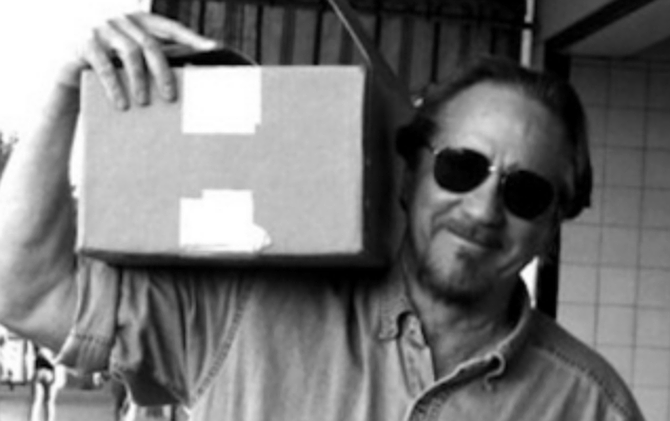
Duff Brenna's picks: "Rolvaag's Giants in the Earth, Tolstoy's Anna Karenina and War and Peace, Conrad’s Lord Jim. "I have absolute faith in these geniuses that keep getting read and reread."
The Reader has started this series of its best stories from the past 52 years — 2600 cover stories and some remarkable interior features — to help make up for the loss of its physical edition, which was once large enough to hold whole oceans of print. These stories will feature all the original illustrations and photos (plus easy-to-read typography).
^^^^^^^^^^^
From their outposts around San Diego County, some local writers share their reading styles and current | passions:
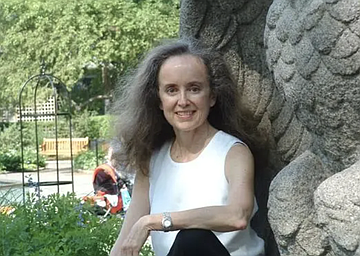
Alcosser: "Poetry is an act of attention."
Sandra Alcosser directs the Master of Fine Arts program in creative writing at SDSU. Her book of poems. A Fish to Feed All Hunger, was an Associated Writing Programs winner in 1986. and her work has appeared in The New Yorker and The Paris Review. among others. In preparation for a Christmas trip to Brazil. Alcosser is stocking up on Jorge Amado’s books. "He's the godfather of Brazilian literature." famous for Dona Flor and Her Two Husbands and Gabriela, Clove and Cinnamon — in addition to being an honorary voodoo priest. Alcosser is also immersing herself in the literature of chaos theory, in preparation for a spring-semester seminar: "I want to talk about how literary forms change in response to scientific discoveries and theories. For example, there are many parallels — in the wake of Darwin, the naturalists appeared; anD with the advent of the industrial revolution and the rise of the middle-class, literature began to focus on the individual."
Alcosser recommends a book of poetry by Lorine Niedecker, The Granite Tale, recently issued by North Point Press. “I consider Niedecker a modern-day Emily Dickinson. She was very much allied with the Moderns and well respected by Williams. Zukofsky. and Basil Bunting. Living on an island near Milwaukee, she worked as a librarian early on. then she scrubbed floors and did janitorial work. She didn't marry until late in life, and through it all she just wanted to write her poetry without having to go through the business of giving readings or teaching classes. And through it all. she wrote some very challenging stuff.” Alcosser also respects the work of Robert Hass, a California poet who teaches at Berkeley. The latest of his four books of poetry is Human Wishes, and he's also a primary translator of Czeslaw Milosz, the Polish poet who won a Nobel Prize in 1980. "Hass is also a great essayist, very intelligent and humane."
As a teacher. Alcosser is pleased that so many people are studying poetry now. "Because poetry is an act of attention. Writing poetry allows us to pay close attention in a world that is constantly trying to distract us."
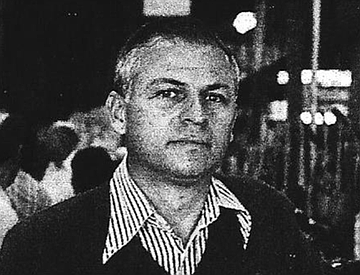
Bumpus: "The more I read about war. the more unreal it seems.”
Jerry Bumpus was dubbed by Vance Bourjaily in 1967 as "the king of America's underground writers." Bumpus adds. "Someone overheard Vance at a party once, and the quote somehow ended up on my first book cover." Ever since. Bumpus has been publishing steadily his unique fictions while serving as a professor of creative writing at San Diego State University. "Since I teach short story writing. I spend a great deal of time reading collections like Best American Short Stories and The Pushcart Prize anthologies. Not to mention literary journals. I read most of the university publications and keep up with The Paris Review and the like. Even The New Yorker."
Outside this wealth of short fiction. Bumpus mentions Margaret Atwood's novel The Handmaid's Tale. William Gibson’s science fiction dazzler Neuromancer. and Duff Brenna's The Book of Mamie as three recent favorites. "I also enjoyed Ron Argo's Vietnam novel Year of the Monkey, partially because he’s a former student of mine."
Bumpus is currently working on a series of stories that portray the psychological effects of war. He has been researching personal accounts from World War II, including George Wilson’s If You Survive. Does this mark a departure into realism? “No." Bumpus replies, "because the more I read about war. the more unreal it seems.”
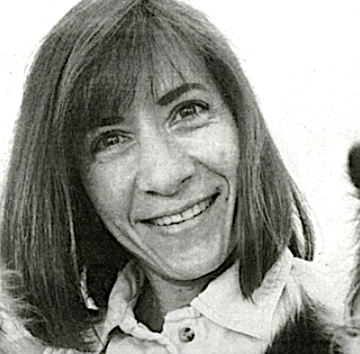
Mazza. A personal interest in feminist poetics led her back to Edith Wharton.
Cris Mazza's first collection of short stories, Animal Acts, was published this fall by the Fiction Collective. A native Southern Californian and a San Diegan since the age of three. Mazza was praised last month by The New York Times for “fictions that are remarkable for the force and freedom of their imaginative style."
Of late. Mazza has been re-reading classics like Salinger's Catcher in the Rye and Hemingway's The Sun Also Rises, books she taught in literature courses at the University of San Diego prior assuming her present fiction-writing post at UCSD. A personal interest in feminist poetics led her back to Edith Wharton also. "Her novel Summer is an amazing book for its time. Many people think the feminist movement came out of the '60s; but actually, it was restarted in the '60s. Wharton deals openly with themes of female individuality and sexuality — even abortion. Not bad for 1911."
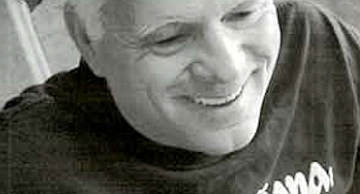
Kuhlken currently is wrapping up a novel about the '60s.
Ken Kuhlken published his first novel. Mid-Heaven. with Viking, and his short fiction has appeared in Esquire. Virginia Quarterly, and other periodicals. A long-time San Diegan. Kuhlken currently is wrapping up a novel about the '60s. "That period in our cultural history has been caricatured and romanticized to death." he maintains. “In this new book I'm trying to get closer to the truth of that era.”
His two favorite novels are Dostoevsky’s Crime and Punishment and Jack Kerouac’s On the Road. "I think that’s the only Kerouac novel that still holds up. probably because he was willing to rewrite and revise it." Recent purchases by Kuhlken are two works from Japan: Kotaro Takamura's collection of poems. Chieko's Sky and Yasunari Kawabata's contemporary classic novel. Snow Country. And? "I’m not a big mystery (In fact, about the only ones I can stomach are Tony Hillermans Navajo mysteries. But I'm reading one now — Skinwalker — and it’s great."
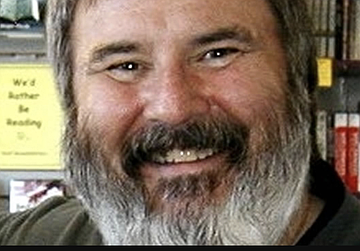
Hertzler: "I've got books all over my house."
Terry Hertzler is a poet who saw combat in Vietnam. His book of war poems, The Way of the Snake, has sold more than 1500 copies locally. Hertzler also edits and publishes the "No Street Poet’s Voice," a monthly broadside showcasing works by local poets, along with a schedule of readings and events. "I've got books all over my house." he admits, "and I read on the average three to four books each week. My wife's an avid reader loo, and we spend a lot of our extra money on books. A lot."
Lately. Hertzler has gobbled up a pile of history: Harvey Wasserman's History of the United States, and two big Vietnam books — Neil Sheehan's A Bright Shining Lie: John Paul Vann and America in Vietnam, and America's Longest War by George Herring. He just completed Neon Bible, by John Kennedy Toole, author of A Confederacy of Dunces. "That’s a phenomenal work of fiction, considering how young he was — 16. At the time. I was also listening to a new Phil Ochs’ CD. Toole and Ochs both committed suicide, a coincidence that led to one of my newest poems."
Hertzler confesses his eclectic tastes then spins off a list of other books he's read in the past few weeks, to include Hunter Thompson's Generation of Swine, William Kotzwinkle's Hot Jazz Trio, and Umberto Eco's Foucault's Pendulum. "I also enjoy stuff I call mind candy.' like Lawrence Block’s Matthew Scudder mysteries. William Gibson's new science fiction novel, Mona Lisa Overdrive, and Tony Hillerman’s mysteries." One of the most memorable novels he’s read in the past few years was John Nichols’s American Blood, "a truly intense Vietnam book."
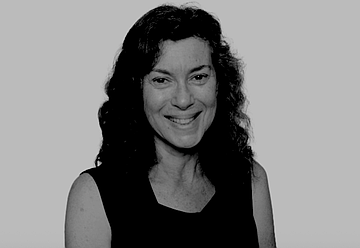
An early story of Oppenheimer's appeared in Redbook, "Little Mr. Tall Tales."
Joan Oppenhelmer has published 22 novels; four of those books became after-school network television specials for young adults. Originally. Oppenheimer started out writing short fiction for adults. An early story of hers appeared in Redbook, "Little Mr. Tall Tales"; it was later adapted for the small screen and presented on the old Loretta Young show. She now devotes herself to writing mystery novels.
Part of her work includes reading the competition. One of her favorites is Robert Parker. "His Spencer series is great; it's like eating popcorn. He’s heavy on dialogue, but marvelous dialogue." Ed McBain's 87th Precinct novels are "the best of the police procedural books." She also enjoys, albeit reluctantly, the dark themes in Jonathan Kellerman's books. especially The Butcher's Theater. "That one’s about a serial killer in Israel, one of the bloodiest, sickest, darkest books I’ve ever read.
In the last ten pages, you're in the mind of the killer — it’s absolutely ghastly. Kellerman explores the mythology and pathology of the country very well. Even so. my first impulse after finishing the book was to take it out and burn it. His latest (book) is called The Silent Partner."
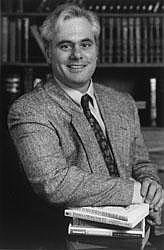
Elster says he waits for most of the new books to come out in paperback.
For the past four years. Charles Harrington Elster has provided language commentary on his regular KPBS radio segment, A Word to the Wise. In 1988. Macmillan published his word book. There Is No Zoo in Zoology: And Other Beastly Mispronunciations. Another work of the same species is forthcoming: Is There a Cow in Moscow?
Recently Elster's reading list has included Umberto Eco's Name of the Rose, "because I'm into words, and the words in that book are fabulous; I devoured it." And the Vietnamese odyssey When Heaven and Earth Changed Places by Le Ly Hayslip and Jay Wurts; the taut Presumed Innocent by fiction-writer-tumed-lawyer-tumed-fiction-writer Scott Turow; the darkly comic Mambo Kings Play Songs of Love by Oscar Hijuelos; and the immense Bonfire of the Vanities by Tom Wolfe, "a big laugh — really funny black humor." Elster says he waits for most of the new books to come out in paperback. "I just bought Marquez’ Love in the Time of Cholera: I'm really looking forward to that one. He's awfully lyrical.”
Duff Brenna struggled and persisted, seeing his first novel through to publication after years of rejection by dozens of agents and houses. His Book of Mamie (University of Iowa Press) won the 1988 Associated Writing Programs prize for best novel of the year — ahead of 264 other entries.
Without hesitation. Brenna admits reading everything that crosses his path. Within this stream of books, however, there are classics he returns to often — for pleasure, for rejuvenation, for release from writer's block: Rolvaag's Giants in the Earth; Tolstoy's Anna Karenina. War and Peace; Conrad’s Lord Jim. "I have absolute faith in these geniuses that keep getting read and reread." Brenna says.
Among recent reads. Brenna mentions Louise Erdrich's Beet Queen. Milan Kundera’s The Unbearable Lightness of Being, and two books for Flaubert fans. Mario Vargas Llosa’s Perpetual Orgy and Julian Barnes’s Flaubert's Parrot.
Brenna liked two recent books on controversial topics: William Calvin’s River That Flows Uphill, a nonfiction adventure that provides a convincing argument for the reality of evolution, and John Romer's Testament, an examination by a respected Egyptologist into the sources of the Bible. “I believe this is the sort of information a novelist needs to have. The more ideas you possess, the more you understand your place in the universe."
This story first appeared in the Reader on December 21, 1989.
Here's something you might be interested in.
What San Diego writers read a generation ago
Dostoevsky, Kerouac, J.D. Salinger, Edith Wharton, Robert Parker, Umberto Eco

What San Diego writers read a generation ago
Dostoevsky, Kerouac, J.D. Salinger, Edith Wharton, Robert Parker, Umberto Eco
Duff Brenna's picks: "Rolvaag's Giants in the Earth, Tolstoy's Anna Karenina and War and Peace, Conrad’s Lord Jim. "I have absolute faith in these geniuses that keep getting read and reread."
The Reader has started this series of its best stories from the past 52 years — 2600 cover stories and some remarkable interior features — to help make up for the loss of its physical edition, which was once large enough to hold whole oceans of print. These stories will feature all the original illustrations and photos (plus easy-to-read typography).
^^^^^^^^^^^
From their outposts around San Diego County, some local writers share their reading styles and current | passions:
Alcosser: "Poetry is an act of attention."
Sandra Alcosser directs the Master of Fine Arts program in creative writing at SDSU. Her book of poems. A Fish to Feed All Hunger, was an Associated Writing Programs winner in 1986. and her work has appeared in The New Yorker and The Paris Review. among others. In preparation for a Christmas trip to Brazil. Alcosser is stocking up on Jorge Amado’s books. "He's the godfather of Brazilian literature." famous for Dona Flor and Her Two Husbands and Gabriela, Clove and Cinnamon — in addition to being an honorary voodoo priest. Alcosser is also immersing herself in the literature of chaos theory, in preparation for a spring-semester seminar: "I want to talk about how literary forms change in response to scientific discoveries and theories. For example, there are many parallels — in the wake of Darwin, the naturalists appeared; anD with the advent of the industrial revolution and the rise of the middle-class, literature began to focus on the individual."
Alcosser recommends a book of poetry by Lorine Niedecker, The Granite Tale, recently issued by North Point Press. “I consider Niedecker a modern-day Emily Dickinson. She was very much allied with the Moderns and well respected by Williams. Zukofsky. and Basil Bunting. Living on an island near Milwaukee, she worked as a librarian early on. then she scrubbed floors and did janitorial work. She didn't marry until late in life, and through it all she just wanted to write her poetry without having to go through the business of giving readings or teaching classes. And through it all. she wrote some very challenging stuff.” Alcosser also respects the work of Robert Hass, a California poet who teaches at Berkeley. The latest of his four books of poetry is Human Wishes, and he's also a primary translator of Czeslaw Milosz, the Polish poet who won a Nobel Prize in 1980. "Hass is also a great essayist, very intelligent and humane."
As a teacher. Alcosser is pleased that so many people are studying poetry now. "Because poetry is an act of attention. Writing poetry allows us to pay close attention in a world that is constantly trying to distract us."
Bumpus: "The more I read about war. the more unreal it seems.”
Jerry Bumpus was dubbed by Vance Bourjaily in 1967 as "the king of America's underground writers." Bumpus adds. "Someone overheard Vance at a party once, and the quote somehow ended up on my first book cover." Ever since. Bumpus has been publishing steadily his unique fictions while serving as a professor of creative writing at San Diego State University. "Since I teach short story writing. I spend a great deal of time reading collections like Best American Short Stories and The Pushcart Prize anthologies. Not to mention literary journals. I read most of the university publications and keep up with The Paris Review and the like. Even The New Yorker."
Outside this wealth of short fiction. Bumpus mentions Margaret Atwood's novel The Handmaid's Tale. William Gibson’s science fiction dazzler Neuromancer. and Duff Brenna's The Book of Mamie as three recent favorites. "I also enjoyed Ron Argo's Vietnam novel Year of the Monkey, partially because he’s a former student of mine."
Bumpus is currently working on a series of stories that portray the psychological effects of war. He has been researching personal accounts from World War II, including George Wilson’s If You Survive. Does this mark a departure into realism? “No." Bumpus replies, "because the more I read about war. the more unreal it seems.”
Mazza. A personal interest in feminist poetics led her back to Edith Wharton.
Cris Mazza's first collection of short stories, Animal Acts, was published this fall by the Fiction Collective. A native Southern Californian and a San Diegan since the age of three. Mazza was praised last month by The New York Times for “fictions that are remarkable for the force and freedom of their imaginative style."
Of late. Mazza has been re-reading classics like Salinger's Catcher in the Rye and Hemingway's The Sun Also Rises, books she taught in literature courses at the University of San Diego prior assuming her present fiction-writing post at UCSD. A personal interest in feminist poetics led her back to Edith Wharton also. "Her novel Summer is an amazing book for its time. Many people think the feminist movement came out of the '60s; but actually, it was restarted in the '60s. Wharton deals openly with themes of female individuality and sexuality — even abortion. Not bad for 1911."
Kuhlken currently is wrapping up a novel about the '60s.
Ken Kuhlken published his first novel. Mid-Heaven. with Viking, and his short fiction has appeared in Esquire. Virginia Quarterly, and other periodicals. A long-time San Diegan. Kuhlken currently is wrapping up a novel about the '60s. "That period in our cultural history has been caricatured and romanticized to death." he maintains. “In this new book I'm trying to get closer to the truth of that era.”
His two favorite novels are Dostoevsky’s Crime and Punishment and Jack Kerouac’s On the Road. "I think that’s the only Kerouac novel that still holds up. probably because he was willing to rewrite and revise it." Recent purchases by Kuhlken are two works from Japan: Kotaro Takamura's collection of poems. Chieko's Sky and Yasunari Kawabata's contemporary classic novel. Snow Country. And? "I’m not a big mystery (In fact, about the only ones I can stomach are Tony Hillermans Navajo mysteries. But I'm reading one now — Skinwalker — and it’s great."
Hertzler: "I've got books all over my house."
Terry Hertzler is a poet who saw combat in Vietnam. His book of war poems, The Way of the Snake, has sold more than 1500 copies locally. Hertzler also edits and publishes the "No Street Poet’s Voice," a monthly broadside showcasing works by local poets, along with a schedule of readings and events. "I've got books all over my house." he admits, "and I read on the average three to four books each week. My wife's an avid reader loo, and we spend a lot of our extra money on books. A lot."
Lately. Hertzler has gobbled up a pile of history: Harvey Wasserman's History of the United States, and two big Vietnam books — Neil Sheehan's A Bright Shining Lie: John Paul Vann and America in Vietnam, and America's Longest War by George Herring. He just completed Neon Bible, by John Kennedy Toole, author of A Confederacy of Dunces. "That’s a phenomenal work of fiction, considering how young he was — 16. At the time. I was also listening to a new Phil Ochs’ CD. Toole and Ochs both committed suicide, a coincidence that led to one of my newest poems."
Hertzler confesses his eclectic tastes then spins off a list of other books he's read in the past few weeks, to include Hunter Thompson's Generation of Swine, William Kotzwinkle's Hot Jazz Trio, and Umberto Eco's Foucault's Pendulum. "I also enjoy stuff I call mind candy.' like Lawrence Block’s Matthew Scudder mysteries. William Gibson's new science fiction novel, Mona Lisa Overdrive, and Tony Hillerman’s mysteries." One of the most memorable novels he’s read in the past few years was John Nichols’s American Blood, "a truly intense Vietnam book."
An early story of Oppenheimer's appeared in Redbook, "Little Mr. Tall Tales."
Joan Oppenhelmer has published 22 novels; four of those books became after-school network television specials for young adults. Originally. Oppenheimer started out writing short fiction for adults. An early story of hers appeared in Redbook, "Little Mr. Tall Tales"; it was later adapted for the small screen and presented on the old Loretta Young show. She now devotes herself to writing mystery novels.
Part of her work includes reading the competition. One of her favorites is Robert Parker. "His Spencer series is great; it's like eating popcorn. He’s heavy on dialogue, but marvelous dialogue." Ed McBain's 87th Precinct novels are "the best of the police procedural books." She also enjoys, albeit reluctantly, the dark themes in Jonathan Kellerman's books. especially The Butcher's Theater. "That one’s about a serial killer in Israel, one of the bloodiest, sickest, darkest books I’ve ever read.
In the last ten pages, you're in the mind of the killer — it’s absolutely ghastly. Kellerman explores the mythology and pathology of the country very well. Even so. my first impulse after finishing the book was to take it out and burn it. His latest (book) is called The Silent Partner."
Elster says he waits for most of the new books to come out in paperback.
For the past four years. Charles Harrington Elster has provided language commentary on his regular KPBS radio segment, A Word to the Wise. In 1988. Macmillan published his word book. There Is No Zoo in Zoology: And Other Beastly Mispronunciations. Another work of the same species is forthcoming: Is There a Cow in Moscow?
Recently Elster's reading list has included Umberto Eco's Name of the Rose, "because I'm into words, and the words in that book are fabulous; I devoured it." And the Vietnamese odyssey When Heaven and Earth Changed Places by Le Ly Hayslip and Jay Wurts; the taut Presumed Innocent by fiction-writer-tumed-lawyer-tumed-fiction-writer Scott Turow; the darkly comic Mambo Kings Play Songs of Love by Oscar Hijuelos; and the immense Bonfire of the Vanities by Tom Wolfe, "a big laugh — really funny black humor." Elster says he waits for most of the new books to come out in paperback. "I just bought Marquez’ Love in the Time of Cholera: I'm really looking forward to that one. He's awfully lyrical.”
Duff Brenna struggled and persisted, seeing his first novel through to publication after years of rejection by dozens of agents and houses. His Book of Mamie (University of Iowa Press) won the 1988 Associated Writing Programs prize for best novel of the year — ahead of 264 other entries.
Without hesitation. Brenna admits reading everything that crosses his path. Within this stream of books, however, there are classics he returns to often — for pleasure, for rejuvenation, for release from writer's block: Rolvaag's Giants in the Earth; Tolstoy's Anna Karenina. War and Peace; Conrad’s Lord Jim. "I have absolute faith in these geniuses that keep getting read and reread." Brenna says.
Among recent reads. Brenna mentions Louise Erdrich's Beet Queen. Milan Kundera’s The Unbearable Lightness of Being, and two books for Flaubert fans. Mario Vargas Llosa’s Perpetual Orgy and Julian Barnes’s Flaubert's Parrot.
Brenna liked two recent books on controversial topics: William Calvin’s River That Flows Uphill, a nonfiction adventure that provides a convincing argument for the reality of evolution, and John Romer's Testament, an examination by a respected Egyptologist into the sources of the Bible. “I believe this is the sort of information a novelist needs to have. The more ideas you possess, the more you understand your place in the universe."
This story first appeared in the Reader on December 21, 1989.
Comments