

Here's something you might be interested in.
Ask a Hipster — Advice you didn't know you needed
Big Screen — Movie commentary
Blurt — Music's inside track
Booze News — San Diego spirits
Classical Music — Immortal beauty
Classifieds — Free and easy
Close to Home — What it’s like on the street where you live
Cover Stories — Front-page features
Drinks All Around — Bartenders' drink recipes
Excerpts — Literary and spiritual excerpts
Feast! — Food & drink reviews
Feature Stories — Local news & stories
Fishing Report — What’s getting hooked from ship and shore
From the Archives — Spotlight on the past
Golden Dreams — Talk of the town
The Gonzo Report — Making the musical scene, or at least reporting from it
Letters — Our inbox
Movies@Home — Local movie buffs share favorites
Movie Reviews — Our critics' picks and pans
Musician Interviews — Up close with local artists
Neighborhood News from Stringers — Hyperlocal news
News Ticker — News & politics
Obermeyer — San Diego politics illustrated
Outdoors — Weekly changes in flora and fauna
Overheard in San Diego — Eavesdropping illustrated
Poetry — The old and the new
Reader Travel — Travel section built by travelers
Reading — The hunt for intellectuals
Roam-O-Rama — SoCal's best hiking/biking trails
San Diego Beer — Inside San Diego suds
SD on the QT — Almost factual news
Sheep and Goats — Places of worship
Special Issues — The best of
Street Style — San Diego streets have style
Surf Diego — Real stories from those braving the waves
Theater — On stage in San Diego this week
Tin Fork — Silver spoon alternative
Under the Radar — Matt Potter's undercover work
Unforgettable — Long-ago San Diego
Unreal Estate — San Diego's priciest pads
Your Week — Daily event picks
Now playing: AMERICAN PACHUCO: THE LEGEND OF LUIS VALDEZ
Turning anger into artistry
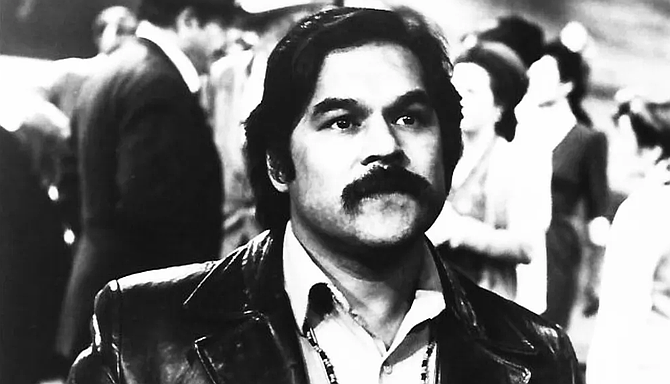
Valdez on the set of Zoot Suit
AMERICAN PACHUCO: THE LEGEND OF LUIS VALDEZ (2026) Written & Directed by David Alvarado / Cinematographer: Zachary Fink (Multi Ratio) / Editor: Daniel Chávez Ontiveros / Original score by Eduardo Arenas / With: Luis Valdez, Taylor Hackford, Dolores Huerta, Daniel Valdez, Cheech Marin, Edward James Olmos, Lou Diamond Phillips, and Linda Ronstadt / Documentary / USA / Insignia Pictures & American Masters Pictures / Not Rated / 92 min.
If a pachuco is a member of the Mexican-American youth counterculture defined by zoot suit fashion, caló slang, and a rebellious identity, that would make Luis Valdez the architect of pachuco. Fortunately, enough footage of his early work survives to illustrate the remarkable rebellious spirit of American Pachuco: the Legend of Luis Valdez.
Valdez grew up working the fields, a self-proclaimed beast of burden. Born in 1940, as he matured, Valdez couldn’t wrap his head around why his family was so poor in the 1950s, especially during a time of such great prosperity in America. He set out with the daunting task of making life better for all those around him, and he did it by turning his anger into artistry. He took his act on the road with an ensemble of traveling players. (At the time no one had seen Latino characters perform.)
Video:
Trailer: American Pachuco
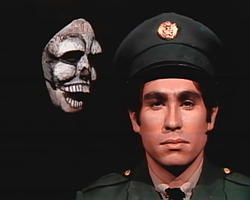
When they played El Paso, the audience initially heckled; by the time it was over, the crowd had gone silent. As he put it, “The play went over like hot tamales.” So hot they traveled overseas to introduce Parisians to the troop’s ballsy political satire, ancient indigenous philosophy, and raw human dignity born from decades of oppression. (And lest you think ICE was something new under the sun: the police brutality on display in the East Central riots of the '60s will prove you wrong.)
His was a history of the Mexican-American Revolution, a force that he managed to translate into the first Chicano play to reach Broadway. When Valdez started work on Zoot Suit, the most well-known Chicano in America was the Frito Bandito. Zoot Suit proved to be the first production of its kind to present Latinos as they were — not in racist or offensive fashion, but in truth.
Despite making history, Zoot Suit was not a box office smash. Eight out of nine of New York’s influential theatre critics panned it. Still, in spite of all the derision, the play was made into a film that fared better than the play. (The same goes for La Bamba, a biopic of Ritchie Valens, who was aboard the Beechcraft Bonanza when it crashed, claiming the lives of Valens, Buddy Holly, and The Big Bopper. February 3, 1959 lives on in infamy as "The Day the Music Died." To this day, La Bamba remains the most successful Latino film ever made.)
Narrated by Edward James Olmos, the star of Zoot Suit and a performer who Valdez calls “Mexico's answer to Humphrey Bogart,” David Alvarado’s inspirational documentary will leave audiences feeling a deep sense of cultural pride, historical awakening, and a renewed recognition of Chicano identity. ***
Now playing at the Digital Gym.
Here's something you might be interested in.
Now playing: AMERICAN PACHUCO: THE LEGEND OF LUIS VALDEZ
Turning anger into artistry

Now playing: AMERICAN PACHUCO: THE LEGEND OF LUIS VALDEZ
Turning anger into artistry
Valdez on the set of Zoot Suit
AMERICAN PACHUCO: THE LEGEND OF LUIS VALDEZ (2026) Written & Directed by David Alvarado / Cinematographer: Zachary Fink (Multi Ratio) / Editor: Daniel Chávez Ontiveros / Original score by Eduardo Arenas / With: Luis Valdez, Taylor Hackford, Dolores Huerta, Daniel Valdez, Cheech Marin, Edward James Olmos, Lou Diamond Phillips, and Linda Ronstadt / Documentary / USA / Insignia Pictures & American Masters Pictures / Not Rated / 92 min.
If a pachuco is a member of the Mexican-American youth counterculture defined by zoot suit fashion, caló slang, and a rebellious identity, that would make Luis Valdez the architect of pachuco. Fortunately, enough footage of his early work survives to illustrate the remarkable rebellious spirit of American Pachuco: the Legend of Luis Valdez.
Valdez grew up working the fields, a self-proclaimed beast of burden. Born in 1940, as he matured, Valdez couldn’t wrap his head around why his family was so poor in the 1950s, especially during a time of such great prosperity in America. He set out with the daunting task of making life better for all those around him, and he did it by turning his anger into artistry. He took his act on the road with an ensemble of traveling players. (At the time no one had seen Latino characters perform.)
Video:
Trailer: American Pachuco
When they played El Paso, the audience initially heckled; by the time it was over, the crowd had gone silent. As he put it, “The play went over like hot tamales.” So hot they traveled overseas to introduce Parisians to the troop’s ballsy political satire, ancient indigenous philosophy, and raw human dignity born from decades of oppression. (And lest you think ICE was something new under the sun: the police brutality on display in the East Central riots of the '60s will prove you wrong.)
His was a history of the Mexican-American Revolution, a force that he managed to translate into the first Chicano play to reach Broadway. When Valdez started work on Zoot Suit, the most well-known Chicano in America was the Frito Bandito. Zoot Suit proved to be the first production of its kind to present Latinos as they were — not in racist or offensive fashion, but in truth.
Despite making history, Zoot Suit was not a box office smash. Eight out of nine of New York’s influential theatre critics panned it. Still, in spite of all the derision, the play was made into a film that fared better than the play. (The same goes for La Bamba, a biopic of Ritchie Valens, who was aboard the Beechcraft Bonanza when it crashed, claiming the lives of Valens, Buddy Holly, and The Big Bopper. February 3, 1959 lives on in infamy as "The Day the Music Died." To this day, La Bamba remains the most successful Latino film ever made.)
Narrated by Edward James Olmos, the star of Zoot Suit and a performer who Valdez calls “Mexico's answer to Humphrey Bogart,” David Alvarado’s inspirational documentary will leave audiences feeling a deep sense of cultural pride, historical awakening, and a renewed recognition of Chicano identity. ***
Now playing at the Digital Gym.
Comments