

Here's something you might be interested in.
Ask a Hipster — Advice you didn't know you needed
Big Screen — Movie commentary
Blurt — Music's inside track
Booze News — San Diego spirits
Classical Music — Immortal beauty
Classifieds — Free and easy
Close to Home — What it’s like on the street where you live
Cover Stories — Front-page features
Drinks All Around — Bartenders' drink recipes
Excerpts — Literary and spiritual excerpts
Feast! — Food & drink reviews
Feature Stories — Local news & stories
Fishing Report — What’s getting hooked from ship and shore
From the Archives — Spotlight on the past
Golden Dreams — Talk of the town
The Gonzo Report — Making the musical scene, or at least reporting from it
Letters — Our inbox
Movies@Home — Local movie buffs share favorites
Movie Reviews — Our critics' picks and pans
Musician Interviews — Up close with local artists
Neighborhood News from Stringers — Hyperlocal news
News Ticker — News & politics
Obermeyer — San Diego politics illustrated
Outdoors — Weekly changes in flora and fauna
Overheard in San Diego — Eavesdropping illustrated
Poetry — The old and the new
Reader Travel — Travel section built by travelers
Reading — The hunt for intellectuals
Roam-O-Rama — SoCal's best hiking/biking trails
San Diego Beer — Inside San Diego suds
SD on the QT — Almost factual news
Sheep and Goats — Places of worship
Special Issues — The best of
Street Style — San Diego streets have style
Surf Diego — Real stories from those braving the waves
Theater — On stage in San Diego this week
Tin Fork — Silver spoon alternative
Under the Radar — Matt Potter's undercover work
Unforgettable — Long-ago San Diego
Unreal Estate — San Diego's priciest pads
Your Week — Daily event picks
Winter is coming, I hope
In the meantime, there's Sibelius — and others
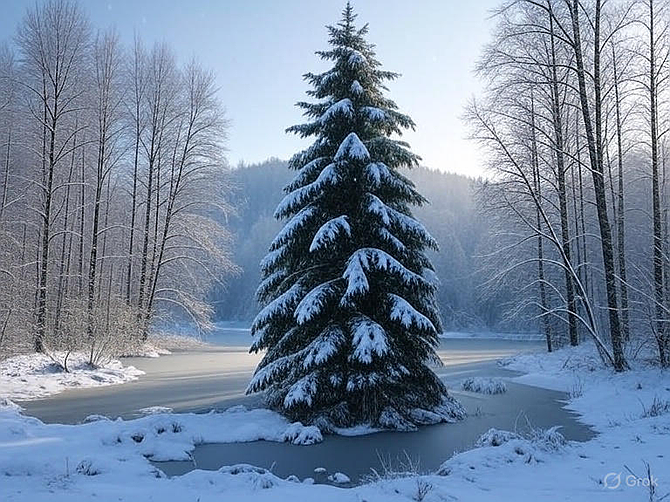
Loneliness or solitude, take your pick.
Technically, the dog days of summer run from July 3 through August 11. The term comes from ancient Greece. The star Sirius rises with the sun between these dates, adding to the heat, or so the Greeks thought. Sirius is part of the Canis Major constellation, which led to the “dog” designation.
In San Diego, the dog days of summer are relatively mild. September is another story. I hate it so very, very much. Every year, the humidity rises with the temperature in September, and every year, I can’t wait for this cursed month to end. To ease my suffering, I train my mind on the cooler days of October — and the start of the classical music season. I long for any hint of winter. I’ve also been listening to some cold classical music in order to distract my heat-addled mind.
When it comes to assessing what classical music qualifies as cold, there are a number ways to approach the matter. Act III of Giacomo Puccini’s La Boheme is set in the dead of winter. Emotionally, there is more than a little chill in the air; the four main characters — Mimi, Rodolfo, Mussetta, and Marcelo — struggle to stay warm as their romances wax and wane.
Video:
Puccini: La Boheme, Act III
Frédéric Chopin’s Etude Opus 25, No. 11 is often referred to as “The Winter Wind.” Of Chopin’s 24 Etudes, The Winter Wind is one of the most difficult. After a stoic introduction, the wind begins to howl away until the conclusion of the piece.
Video:
Chopin: Winter Wind
Pytor Tchaikovsky’s Symphony No. 1 is referred to as “Winter Dreams." Of course, that is exactly what I’m doing, dreaming of winter, but it is the opening of Tchaikovsky’s Symphony No. 5 has always felt cold to my ear. It is very much a depiction of a dark winter morning covered in fresh snow.
Video:
Tchaikovsky: Symphony No. 5
Sergei Prokofiev also knew a thing or two about the cold. His epic depiction of the battle on the frozen lake from Alexander Nevsky conveys the temperature of the scene as the piece begins. Though I suppose I should say cold and ominous as the Teutonic Knights gather their invading forces to attack Mother Russia.
Video:
Prokofiev: The Battle on the Ice
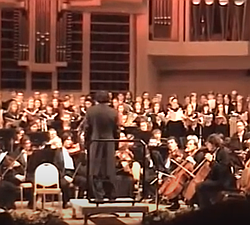
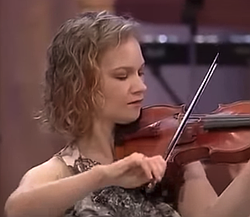
No dream of cooler weather would be complete without Jean Sibelius’s Violin Concerto. There are days when I wonder if this is my favorite concerto of all time. The piece hits as more than a spell of cold weather. The chill of loneliness also inhabits this music. To be fair, it could also be the detached perspective that is brought on by solitude. Loneliness or solitude. Take your pick.
My plans for this evening are to listen to Sibelius while standing, in solitude, directly in front of the AC. It’s the only way for the civilized soul (and body) to make it through the hellscape of September.
Video:
Sibelius: Violin Concerto
Here's something you might be interested in.
Winter is coming, I hope
In the meantime, there's Sibelius — and others

Winter is coming, I hope
In the meantime, there's Sibelius — and others
Loneliness or solitude, take your pick.
Technically, the dog days of summer run from July 3 through August 11. The term comes from ancient Greece. The star Sirius rises with the sun between these dates, adding to the heat, or so the Greeks thought. Sirius is part of the Canis Major constellation, which led to the “dog” designation.
In San Diego, the dog days of summer are relatively mild. September is another story. I hate it so very, very much. Every year, the humidity rises with the temperature in September, and every year, I can’t wait for this cursed month to end. To ease my suffering, I train my mind on the cooler days of October — and the start of the classical music season. I long for any hint of winter. I’ve also been listening to some cold classical music in order to distract my heat-addled mind.
When it comes to assessing what classical music qualifies as cold, there are a number ways to approach the matter. Act III of Giacomo Puccini’s La Boheme is set in the dead of winter. Emotionally, there is more than a little chill in the air; the four main characters — Mimi, Rodolfo, Mussetta, and Marcelo — struggle to stay warm as their romances wax and wane.
Video:
Puccini: La Boheme, Act III
Frédéric Chopin’s Etude Opus 25, No. 11 is often referred to as “The Winter Wind.” Of Chopin’s 24 Etudes, The Winter Wind is one of the most difficult. After a stoic introduction, the wind begins to howl away until the conclusion of the piece.
Video:
Chopin: Winter Wind
Pytor Tchaikovsky’s Symphony No. 1 is referred to as “Winter Dreams." Of course, that is exactly what I’m doing, dreaming of winter, but it is the opening of Tchaikovsky’s Symphony No. 5 has always felt cold to my ear. It is very much a depiction of a dark winter morning covered in fresh snow.
Video:
Tchaikovsky: Symphony No. 5
Sergei Prokofiev also knew a thing or two about the cold. His epic depiction of the battle on the frozen lake from Alexander Nevsky conveys the temperature of the scene as the piece begins. Though I suppose I should say cold and ominous as the Teutonic Knights gather their invading forces to attack Mother Russia.
Video:
Prokofiev: The Battle on the Ice
No dream of cooler weather would be complete without Jean Sibelius’s Violin Concerto. There are days when I wonder if this is my favorite concerto of all time. The piece hits as more than a spell of cold weather. The chill of loneliness also inhabits this music. To be fair, it could also be the detached perspective that is brought on by solitude. Loneliness or solitude. Take your pick.
My plans for this evening are to listen to Sibelius while standing, in solitude, directly in front of the AC. It’s the only way for the civilized soul (and body) to make it through the hellscape of September.
Video:
Comments
Sibelius: Violin Concerto