

Here's something you might be interested in.
Ask a Hipster — Advice you didn't know you needed
Big Screen — Movie commentary
Blurt — Music's inside track
Booze News — San Diego spirits
Classical Music — Immortal beauty
Classifieds — Free and easy
Close to Home — What it’s like on the street where you live
Cover Stories — Front-page features
Drinks All Around — Bartenders' drink recipes
Excerpts — Literary and spiritual excerpts
Feast! — Food & drink reviews
Feature Stories — Local news & stories
Fishing Report — What’s getting hooked from ship and shore
From the Archives — Spotlight on the past
Golden Dreams — Talk of the town
The Gonzo Report — Making the musical scene, or at least reporting from it
Letters — Our inbox
Movies@Home — Local movie buffs share favorites
Movie Reviews — Our critics' picks and pans
Musician Interviews — Up close with local artists
Neighborhood News from Stringers — Hyperlocal news
News Ticker — News & politics
Obermeyer — San Diego politics illustrated
Outdoors — Weekly changes in flora and fauna
Overheard in San Diego — Eavesdropping illustrated
Poetry — The old and the new
Reader Travel — Travel section built by travelers
Reading — The hunt for intellectuals
Roam-O-Rama — SoCal's best hiking/biking trails
San Diego Beer — Inside San Diego suds
SD on the QT — Almost factual news
Sheep and Goats — Places of worship
Special Issues — The best of
Street Style — San Diego streets have style
Surf Diego — Real stories from those braving the waves
Theater — On stage in San Diego this week
Tin Fork — Silver spoon alternative
Under the Radar — Matt Potter's undercover work
Unforgettable — Long-ago San Diego
Unreal Estate — San Diego's priciest pads
Your Week — Daily event picks
Fantasia football
Imagination running free on the field and on the composer's staff
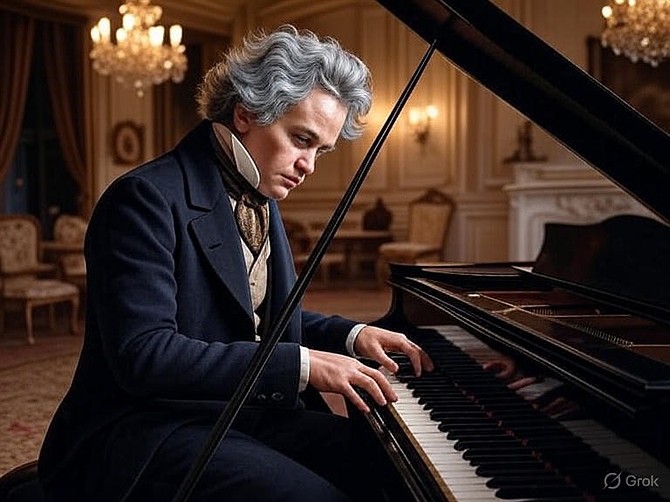
Image created with Grok AI
I am currently trapped in the throes of a fantasy football fever. I never thought this would be the case, but as it turns out, I'm a micromanager. I have been poring over stats and analytics, trying to make the right decision. I’m not sure this is healthy behavior.
Yet, before there was fantasy football, there was another sort of fantasy that gripped me: the fantasia. No, not the movie. A fantasia is a free-form piece of classical music. The name simply means it doesn't adhere to established forms of compositional architecture.
Take a famous piece such as Ludwig van Beethoven's Moonlight Sonata. Beethoven gave it the distinction of being “Quasi una fantasia.” In this case, "fantasia" means that the piece is to be performed without pauses between the three movements. This is intended to give it a more improvisational feel. Improvisation was a big part of Beethoven’s early success in Vienna. He established himself as the preeminent master of the keyboard, in no small part due to his improvisational skills. The Moonlight Sonata was an attempt to recreate the atmosphere of a Viennese salon and Beethoven's improvisational prowess.
Another famous piece, Fantasia on a Theme by Thomas Tallis by Ralph Vaughan Williams, uses the fantasia appellation in a different way. The indication here is that this isn't a traditional theme and variations, but rather a free-form exploration and development of a theme by Thomas Tallis.
Video:
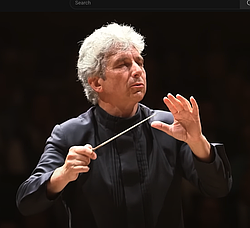
Vaughan Williams: Fantasia on a Theme by Thomas Tallis / Oundjian
Wolfgang Amadeus Mozart’s Fantasia in D Minor is an example of circumstances creating the fantasia designation. The piece is incomplete. The final 10 measures were completed by another composer. It is unclear if the rest of the piece was lost or if this was to be a larger piece that Mozart abandoned. At this point, it doesn’t matter. The Fantasia in D Minor is one of Mozart’s most popular piano pieces, and it wouldn’t exist if we didn’t have the fantasia idiom.
Frédéric Chopin's Fantasie Impromptu is another popular piano piece that shouldn’t exist. This piece was published after Chopin’s death, even though he left instructions for none of his unpublished pieces to be published. Chopin was another famous improvisationalist. Most of his compositions were based on improvisations that he had performed in Paris salons. Again, this piece doesn’t fit into any specific musical form, so it gets the fantasia label.
According to Wikipedia, the Fantasie Impromptu shares many harmonic and tonal elements with Beethoven’s Moonlight Sonata. Some speculate that this is why Chopin never published it. It might have been considered too derivative by the musically astute audiences of the day.
Video:
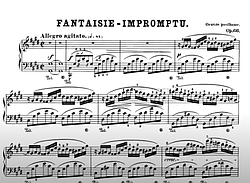
Chopin - Fantaisie Impromptu, Op. 66
Here's something you might be interested in.
Fantasia football
Imagination running free on the field and on the composer's staff

Fantasia football
Imagination running free on the field and on the composer's staff
Image created with Grok AI
I am currently trapped in the throes of a fantasy football fever. I never thought this would be the case, but as it turns out, I'm a micromanager. I have been poring over stats and analytics, trying to make the right decision. I’m not sure this is healthy behavior.
Yet, before there was fantasy football, there was another sort of fantasy that gripped me: the fantasia. No, not the movie. A fantasia is a free-form piece of classical music. The name simply means it doesn't adhere to established forms of compositional architecture.
Take a famous piece such as Ludwig van Beethoven's Moonlight Sonata. Beethoven gave it the distinction of being “Quasi una fantasia.” In this case, "fantasia" means that the piece is to be performed without pauses between the three movements. This is intended to give it a more improvisational feel. Improvisation was a big part of Beethoven’s early success in Vienna. He established himself as the preeminent master of the keyboard, in no small part due to his improvisational skills. The Moonlight Sonata was an attempt to recreate the atmosphere of a Viennese salon and Beethoven's improvisational prowess.
Another famous piece, Fantasia on a Theme by Thomas Tallis by Ralph Vaughan Williams, uses the fantasia appellation in a different way. The indication here is that this isn't a traditional theme and variations, but rather a free-form exploration and development of a theme by Thomas Tallis.
Video:
Vaughan Williams: Fantasia on a Theme by Thomas Tallis / Oundjian
Wolfgang Amadeus Mozart’s Fantasia in D Minor is an example of circumstances creating the fantasia designation. The piece is incomplete. The final 10 measures were completed by another composer. It is unclear if the rest of the piece was lost or if this was to be a larger piece that Mozart abandoned. At this point, it doesn’t matter. The Fantasia in D Minor is one of Mozart’s most popular piano pieces, and it wouldn’t exist if we didn’t have the fantasia idiom.
Frédéric Chopin's Fantasie Impromptu is another popular piano piece that shouldn’t exist. This piece was published after Chopin’s death, even though he left instructions for none of his unpublished pieces to be published. Chopin was another famous improvisationalist. Most of his compositions were based on improvisations that he had performed in Paris salons. Again, this piece doesn’t fit into any specific musical form, so it gets the fantasia label.
According to Wikipedia, the Fantasie Impromptu shares many harmonic and tonal elements with Beethoven’s Moonlight Sonata. Some speculate that this is why Chopin never published it. It might have been considered too derivative by the musically astute audiences of the day.
Video:
Chopin - Fantaisie Impromptu, Op. 66