

Here's something you might be interested in.
Ask a Hipster — Advice you didn't know you needed
Big Screen — Movie commentary
Blurt — Music's inside track
Booze News — San Diego spirits
Classical Music — Immortal beauty
Classifieds — Free and easy
Close to Home — What it’s like on the street where you live
Cover Stories — Front-page features
Drinks All Around — Bartenders' drink recipes
Excerpts — Literary and spiritual excerpts
Feast! — Food & drink reviews
Feature Stories — Local news & stories
Fishing Report — What’s getting hooked from ship and shore
From the Archives — Spotlight on the past
Golden Dreams — Talk of the town
The Gonzo Report — Making the musical scene, or at least reporting from it
Letters — Our inbox
Movies@Home — Local movie buffs share favorites
Movie Reviews — Our critics' picks and pans
Musician Interviews — Up close with local artists
Neighborhood News from Stringers — Hyperlocal news
News Ticker — News & politics
Obermeyer — San Diego politics illustrated
Outdoors — Weekly changes in flora and fauna
Overheard in San Diego — Eavesdropping illustrated
Poetry — The old and the new
Reader Travel — Travel section built by travelers
Reading — The hunt for intellectuals
Roam-O-Rama — SoCal's best hiking/biking trails
San Diego Beer — Inside San Diego suds
SD on the QT — Almost factual news
Sheep and Goats — Places of worship
Special Issues — The best of
Street Style — San Diego streets have style
Surf Diego — Real stories from those braving the waves
Theater — On stage in San Diego this week
Tin Fork — Silver spoon alternative
Under the Radar — Matt Potter's undercover work
Unforgettable — Long-ago San Diego
Unreal Estate — San Diego's priciest pads
Your Week — Daily event picks
Mendelssohn, Sibelius, and Schubert at San Diego Symphony Orchestra
The Sibelius is the ultimate violin concerto
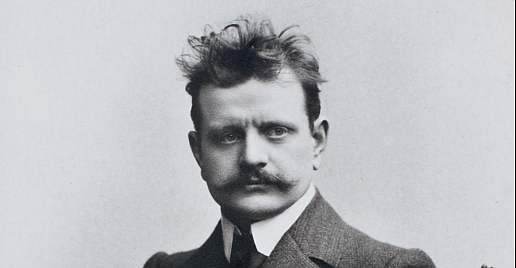
Jean Sibelius
San Diego Symphony Orchestra music director Rafael Payare finished his slate of Fall concerts this last weekend. I attended the Friday, November 14th, concert at The Jacobs Music Center. It was announced that he has been extended as the music director through 2029. Payare started in 2019. This season, Payare will return in late January to conduct Dimitri Shostakovich’s Symphony No. 8, Gustav Mahler’s Symphony No. 7, and then the Brahms festival in late February.
This concert began with Felix Mendelssohn’s Hebrides Overture. The piece was inspired by the composer's trip to Scotland and the island of Staffa, where Mendelssohn visited Fingal’s Cave. The music starts with a rolling theme that evokes the pull and push of the tide within the cave. The tone of the music is inviting and positive. This is a friendly cleft in the rock, not an ominous maw waiting to devour the audience. The orchestral playing was fantastic. The detailed phrasing of Mendelssohn’s music was spot-on when it came to the creation of atmosphere.
Here, I’m going to skip to the final piece of the concert, which was Franz Schubert’s Symphony No. 9. Maestro Payare and the orchestra improved upon their best with this one. That is more of an accomplishment than one might realize, given the difficulty of Schubert’s score. Orchestras of the day refused to play it because of the difficulty of the string and woodwind parts. In London, it was reported that the players dissolved into laughter while rehearsing the second subject of the finale.
Last Friday, it appeared as if the orchestra was having a good time with Schubert’s magnum opus. However, as an audience member, I found each of the four movements to be about two or three minutes too long. The piece comes in at 50 minutes, but if you removed the repeats, it would be more in the 35-40 minute range. That would be a more appropriate length for the musical ideas that were presented. Schubert gives us wonderful music, but repeats it so often that it gets tedious. I found myself thinking, “Thanks, Schubert, I’ve heard that nine times now.” To which Schubert replied, “Well, you’re gonna hear it again.”
If you were in the audience and feeling somewhat exhausted, understand that you were not alone. The music is brilliant, but ultimately too much of a good thing.
The middle piece of the concert was the Violin Concerto by Jean Sibelius, and this was a performance for the ages. You will never hear a better performance of this masterful music. Violinist Augustin Hadelich has given San Diego some of its best concerts over the past few decades. His performance of Samuel Barber’s Violin Concerto with the symphony in 2014 was spectacular. His performance of the Beethoven Violin Concerto with Mainly Mozart in 2018 was transcendent. So too was this performance of Sibelius.
Video:
Sibelius: Violinkonzert
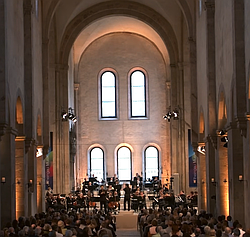
The Sibelius is the ultimate violin concerto. It is not just technically demanding; it is emotionally demanding. A soloist might have the technical ability to play the piece, but unless they’ve lived a good chunk of life and faced the adversity of being, it can fall flat. Hadelich has an uncanny ability to express the emotions of the piece in his playing. The notes are the same as might be produced by another musician, but there is something undeniably finer about Hadelich’s playing.
After receiving thunderous applause, Hadelich blessed us with the most virtuosic rendition of “The Orange Blossom Express” you will ever hear. The juxtaposition of a fiddle piece against the Sibelius was brilliant.
Here's something you might be interested in.
Mendelssohn, Sibelius, and Schubert at San Diego Symphony Orchestra
The Sibelius is the ultimate violin concerto

Mendelssohn, Sibelius, and Schubert at San Diego Symphony Orchestra
The Sibelius is the ultimate violin concerto
Jean Sibelius
San Diego Symphony Orchestra music director Rafael Payare finished his slate of Fall concerts this last weekend. I attended the Friday, November 14th, concert at The Jacobs Music Center. It was announced that he has been extended as the music director through 2029. Payare started in 2019. This season, Payare will return in late January to conduct Dimitri Shostakovich’s Symphony No. 8, Gustav Mahler’s Symphony No. 7, and then the Brahms festival in late February.
This concert began with Felix Mendelssohn’s Hebrides Overture. The piece was inspired by the composer's trip to Scotland and the island of Staffa, where Mendelssohn visited Fingal’s Cave. The music starts with a rolling theme that evokes the pull and push of the tide within the cave. The tone of the music is inviting and positive. This is a friendly cleft in the rock, not an ominous maw waiting to devour the audience. The orchestral playing was fantastic. The detailed phrasing of Mendelssohn’s music was spot-on when it came to the creation of atmosphere.
Here, I’m going to skip to the final piece of the concert, which was Franz Schubert’s Symphony No. 9. Maestro Payare and the orchestra improved upon their best with this one. That is more of an accomplishment than one might realize, given the difficulty of Schubert’s score. Orchestras of the day refused to play it because of the difficulty of the string and woodwind parts. In London, it was reported that the players dissolved into laughter while rehearsing the second subject of the finale.
Last Friday, it appeared as if the orchestra was having a good time with Schubert’s magnum opus. However, as an audience member, I found each of the four movements to be about two or three minutes too long. The piece comes in at 50 minutes, but if you removed the repeats, it would be more in the 35-40 minute range. That would be a more appropriate length for the musical ideas that were presented. Schubert gives us wonderful music, but repeats it so often that it gets tedious. I found myself thinking, “Thanks, Schubert, I’ve heard that nine times now.” To which Schubert replied, “Well, you’re gonna hear it again.”
If you were in the audience and feeling somewhat exhausted, understand that you were not alone. The music is brilliant, but ultimately too much of a good thing.
The middle piece of the concert was the Violin Concerto by Jean Sibelius, and this was a performance for the ages. You will never hear a better performance of this masterful music. Violinist Augustin Hadelich has given San Diego some of its best concerts over the past few decades. His performance of Samuel Barber’s Violin Concerto with the symphony in 2014 was spectacular. His performance of the Beethoven Violin Concerto with Mainly Mozart in 2018 was transcendent. So too was this performance of Sibelius.
Video:
Sibelius: Violinkonzert
The Sibelius is the ultimate violin concerto. It is not just technically demanding; it is emotionally demanding. A soloist might have the technical ability to play the piece, but unless they’ve lived a good chunk of life and faced the adversity of being, it can fall flat. Hadelich has an uncanny ability to express the emotions of the piece in his playing. The notes are the same as might be produced by another musician, but there is something undeniably finer about Hadelich’s playing.
After receiving thunderous applause, Hadelich blessed us with the most virtuosic rendition of “The Orange Blossom Express” you will ever hear. The juxtaposition of a fiddle piece against the Sibelius was brilliant.