

Here's something you might be interested in.
Ask a Hipster — Advice you didn't know you needed
Big Screen — Movie commentary
Blurt — Music's inside track
Booze News — San Diego spirits
Classical Music — Immortal beauty
Classifieds — Free and easy
Close to Home — What it’s like on the street where you live
Cover Stories — Front-page features
Drinks All Around — Bartenders' drink recipes
Excerpts — Literary and spiritual excerpts
Feast! — Food & drink reviews
Feature Stories — Local news & stories
Fishing Report — What’s getting hooked from ship and shore
From the Archives — Spotlight on the past
Golden Dreams — Talk of the town
The Gonzo Report — Making the musical scene, or at least reporting from it
Letters — Our inbox
Movies@Home — Local movie buffs share favorites
Movie Reviews — Our critics' picks and pans
Musician Interviews — Up close with local artists
Neighborhood News from Stringers — Hyperlocal news
News Ticker — News & politics
Obermeyer — San Diego politics illustrated
Outdoors — Weekly changes in flora and fauna
Overheard in San Diego — Eavesdropping illustrated
Poetry — The old and the new
Reader Travel — Travel section built by travelers
Reading — The hunt for intellectuals
Roam-O-Rama — SoCal's best hiking/biking trails
San Diego Beer — Inside San Diego suds
SD on the QT — Almost factual news
Sheep and Goats — Places of worship
Special Issues — The best of
Street Style — San Diego streets have style
Surf Diego — Real stories from those braving the waves
Theater — On stage in San Diego this week
Tin Fork — Silver spoon alternative
Under the Radar — Matt Potter's undercover work
Unforgettable — Long-ago San Diego
Unreal Estate — San Diego's priciest pads
Your Week — Daily event picks
Mahler and Bruckner at San Diego Symphony
The performance was exactly as it should have been
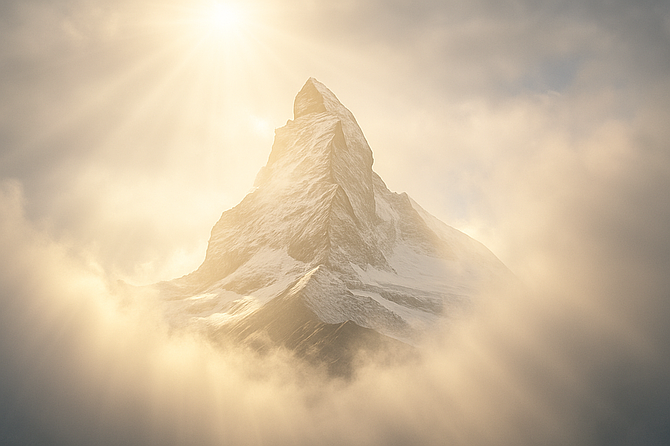
A dim, grey light filtered through the early morning mists as The Glacier Express chugged away from the station at St. Moritz. As the train climbed higher, the peak of the Matterhorn pushed its way through the fog and loomed in the distance, its granite countenance still imposing even after enduring aeons of glacial erosion. So began the first few minutes of Anton Bruckner’s Symphony No. 4 as performed on Friday, November 7, by the San Diego Symphony Orchestra.
Even before our Alpine excursion began, we bore witness to the deaths of both children and soldiers in six selections from Gustav Mahler’s setting of Das Knaben Wunderhorn. Baritone Matthias Goerne is at the very end of an illustrious career. He has worked with every legendary conductor of the past 30 years. There is a 1999 documentary portrait of his singing on YouTube. Alas, it is in German. The evidence of his glorious tone still remained in the lower register of his voice, but the top is not what it used to be. Even so, Goerne’s masterful artistry was evident.
Video:
Matthias Goerne - Portrait of the German baritone
If you’ve read this column for any length of time, then you know that I am a casual Brucknerian. I claim the title of casual because I’m not about to start debating the merits or lack thereof of the different versions of Bruckner’s symphonies. But I still claim the title of Brucknerian because I have his symphonies on repeat throughout most of the year.
Let me first declare that the performance was stellar. Bruckner’s Fourth could almost be considered a horn concerto. Benjamin Jaber, the principal horn of the San Diego Symphony Orchestra, was up to the task, but so too was the entire orchestra. San Diego Symphony Orchestra music director Rafael Payare brought the lumber, wielding his baton like a paladin of the podium.
Regarding the overall character, I would say that this was the performance of a young and energetic soul. This was a puncher's performance, and by the end, I was definitely knocked out. The tempo moved forward. The rhythms were squared off and sharp. It was thrilling.
The orchestral balance was extraordinary. The renovations to the hall continue to bear fruit, as the strings were able to hold their own against the grizzly bear of a brass section that the piece calls for.
If I were to predict the future, I would say that as Payare’s career progresses, his treatment of Bruckner will age well. There is, as is visible in the career of a conductor such as Herbert Bloomstedt, a way of approaching Bruckner that develops over time. As with the Matterhorn, age will soften some of the angles, the tempo will broaden slightly, and the thrill will be in the unfathomable depth of the music.
But I am not suggesting that the performance was somehow less than it should have been, or that it was superficial. No, no. The performance was exactly as it should have been and was a profound experience of this symphony. I am simply, as a Brucknerian, excited to witness how Payare’s Bruckner evolves over time. We Brucknerians are greedy, perhaps even needy, in our desire to experience the composer not over the years but over the decades.
Video:
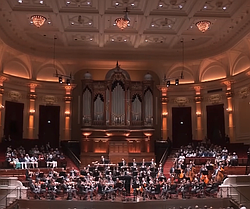
Final chords of Bruckner's Symphony No. 4
Here's something you might be interested in.
Mahler and Bruckner at San Diego Symphony
The performance was exactly as it should have been

Mahler and Bruckner at San Diego Symphony
The performance was exactly as it should have been
A dim, grey light filtered through the early morning mists as The Glacier Express chugged away from the station at St. Moritz. As the train climbed higher, the peak of the Matterhorn pushed its way through the fog and loomed in the distance, its granite countenance still imposing even after enduring aeons of glacial erosion. So began the first few minutes of Anton Bruckner’s Symphony No. 4 as performed on Friday, November 7, by the San Diego Symphony Orchestra.
Even before our Alpine excursion began, we bore witness to the deaths of both children and soldiers in six selections from Gustav Mahler’s setting of Das Knaben Wunderhorn. Baritone Matthias Goerne is at the very end of an illustrious career. He has worked with every legendary conductor of the past 30 years. There is a 1999 documentary portrait of his singing on YouTube. Alas, it is in German. The evidence of his glorious tone still remained in the lower register of his voice, but the top is not what it used to be. Even so, Goerne’s masterful artistry was evident.
Video:
Matthias Goerne - Portrait of the German baritone
If you’ve read this column for any length of time, then you know that I am a casual Brucknerian. I claim the title of casual because I’m not about to start debating the merits or lack thereof of the different versions of Bruckner’s symphonies. But I still claim the title of Brucknerian because I have his symphonies on repeat throughout most of the year.
Let me first declare that the performance was stellar. Bruckner’s Fourth could almost be considered a horn concerto. Benjamin Jaber, the principal horn of the San Diego Symphony Orchestra, was up to the task, but so too was the entire orchestra. San Diego Symphony Orchestra music director Rafael Payare brought the lumber, wielding his baton like a paladin of the podium.
Regarding the overall character, I would say that this was the performance of a young and energetic soul. This was a puncher's performance, and by the end, I was definitely knocked out. The tempo moved forward. The rhythms were squared off and sharp. It was thrilling.
The orchestral balance was extraordinary. The renovations to the hall continue to bear fruit, as the strings were able to hold their own against the grizzly bear of a brass section that the piece calls for.
If I were to predict the future, I would say that as Payare’s career progresses, his treatment of Bruckner will age well. There is, as is visible in the career of a conductor such as Herbert Bloomstedt, a way of approaching Bruckner that develops over time. As with the Matterhorn, age will soften some of the angles, the tempo will broaden slightly, and the thrill will be in the unfathomable depth of the music.
But I am not suggesting that the performance was somehow less than it should have been, or that it was superficial. No, no. The performance was exactly as it should have been and was a profound experience of this symphony. I am simply, as a Brucknerian, excited to witness how Payare’s Bruckner evolves over time. We Brucknerians are greedy, perhaps even needy, in our desire to experience the composer not over the years but over the decades.
Video:
Final chords of Bruckner's Symphony No. 4