

Here's something you might be interested in.
Ask a Hipster — Advice you didn't know you needed
Big Screen — Movie commentary
Blurt — Music's inside track
Booze News — San Diego spirits
Classical Music — Immortal beauty
Classifieds — Free and easy
Close to Home — What it’s like on the street where you live
Cover Stories — Front-page features
Drinks All Around — Bartenders' drink recipes
Excerpts — Literary and spiritual excerpts
Feast! — Food & drink reviews
Feature Stories — Local news & stories
Fishing Report — What’s getting hooked from ship and shore
From the Archives — Spotlight on the past
Golden Dreams — Talk of the town
The Gonzo Report — Making the musical scene, or at least reporting from it
Letters — Our inbox
Movies@Home — Local movie buffs share favorites
Movie Reviews — Our critics' picks and pans
Musician Interviews — Up close with local artists
Neighborhood News from Stringers — Hyperlocal news
News Ticker — News & politics
Obermeyer — San Diego politics illustrated
Outdoors — Weekly changes in flora and fauna
Overheard in San Diego — Eavesdropping illustrated
Poetry — The old and the new
Reader Travel — Travel section built by travelers
Reading — The hunt for intellectuals
Roam-O-Rama — SoCal's best hiking/biking trails
San Diego Beer — Inside San Diego suds
SD on the QT — Almost factual news
Sheep and Goats — Places of worship
Special Issues — The best of
Street Style — San Diego streets have style
Surf Diego — Real stories from those braving the waves
Theater — On stage in San Diego this week
Tin Fork — Silver spoon alternative
Under the Radar — Matt Potter's undercover work
Unforgettable — Long-ago San Diego
Unreal Estate — San Diego's priciest pads
Your Week — Daily event picks
Is San Diego losing war on plastics?
Dock bumpers, buoys, straw wattles, sandbags, cigarettes
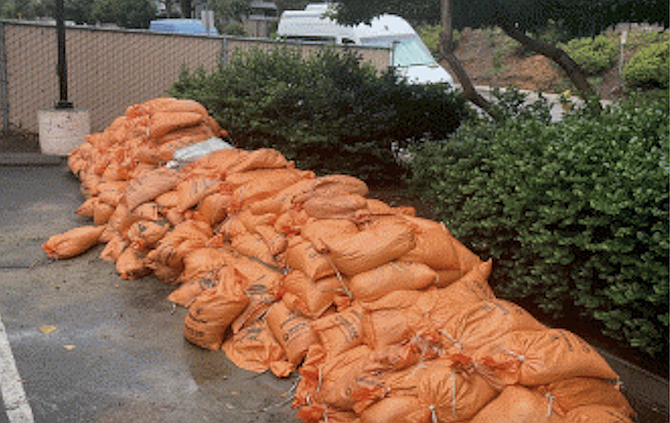
Sandbags, after flooding
It isn’t just plastic bags, butts and balloons littering the coast. Dock bumpers, debris booms and sandbags shed plastic, too.
The California Coastal Commission will vote this week on new guidance cities can use in their coastal development plans to reduce plastic in its growing number of forms, whether it's foodware, plastic paint flaking off boats, caution tape swirling in the tide or beached buoys.
San Diego passed an ordinance in 2023 to curb single-use plastics like polystyrene (aka Styrofoam), including foam dock floats, buoys and navigation markers, but things like sandbags and tobacco waste aren’t part of it.
Yet more than 100,000 sandbags were used across the county during a single storm in August 2023. Once made from burlap, most now are plastic; the county says if they can’t be safely reused, or the sand removed and the cover trashed, take them straight to the landfill. .
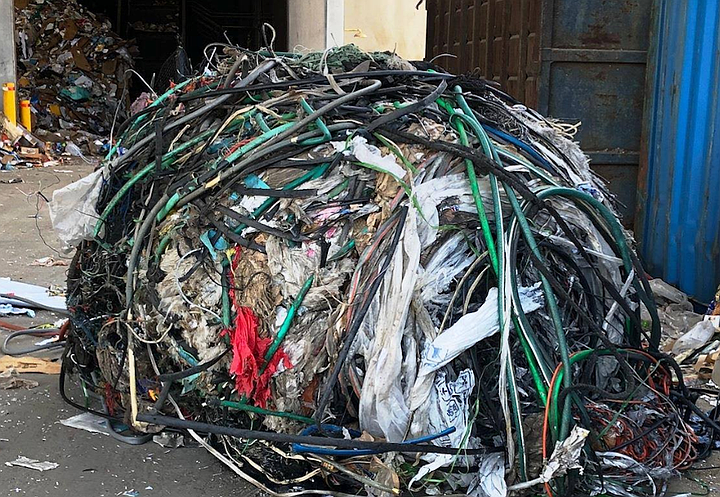
San Diego County tanglers
Less than nine percent of plastic gets recycled in California, causing harm to terrestrial, freshwater, estuarine, and marine ecosystems, not to mention a hefty cleaning bill: California communities spend more than $428 million per year on plastic pollution.
Using the guidance, project reviewers could help reduce the toll from one of the most littered items on earth, cigarette filters — each of which can fragment into as many as 15,000 microfibers — by requiring receptacles in areas where smokers congregate.
Alila Marea, a beach resort in Encinitas, faced stricter permit conditions applied by the commission: keep a smoke-free environment to reduce cigarette litter, install recycling bins and a microfiber laundry filtration system, swap one-time use containers for reusable ones where feasible, and join regional programs that monitor such measures.
In addition to such common trash, the nonprofit Paddle Out Plastic picks up “dock bumpers of all shapes and sizes”; wrappers around piling that falls in the water; chunks of debris booms; straw wattles wrapped in plastic netting, used in erosion control; foam from floating docks; and all types of signs and their protective plastic, which hail from shore and buoy.
Woven plastic sandbags are currently ubiquitous along the coast, trails, roads, and nature preserves, said a letter to the commission. The bags break open and leak plastic “and seem to never be removed by whoever installed them,” it said.
“To our way of thinking burlap or other natural fiber should be substituted universally for woven plastic sandbags.”
Burlap, which is biodegradable, is recommended “when available” by the department of water resources, but polypropylene plastic sandbags are cheaper, more plentiful, and can be stored for years without rotting.
Like other sources of plastic, they also leach toxic chemicals and can have a large impact.
Among the many ways the commission suggests cities can cut down on plastic is by choosing alternative materials. Local coastal plans “can require that outdoor structures, products, and activities prioritize the use of non-plastic materials wherever feasible.”
According to the commission, well over 80 percent of debris found on California beaches is some form of plastic.
Here's something you might be interested in.
Is San Diego losing war on plastics?
Dock bumpers, buoys, straw wattles, sandbags, cigarettes

Is San Diego losing war on plastics?
Dock bumpers, buoys, straw wattles, sandbags, cigarettes
Sandbags, after flooding
It isn’t just plastic bags, butts and balloons littering the coast. Dock bumpers, debris booms and sandbags shed plastic, too.
The California Coastal Commission will vote this week on new guidance cities can use in their coastal development plans to reduce plastic in its growing number of forms, whether it's foodware, plastic paint flaking off boats, caution tape swirling in the tide or beached buoys.
San Diego passed an ordinance in 2023 to curb single-use plastics like polystyrene (aka Styrofoam), including foam dock floats, buoys and navigation markers, but things like sandbags and tobacco waste aren’t part of it.
Yet more than 100,000 sandbags were used across the county during a single storm in August 2023. Once made from burlap, most now are plastic; the county says if they can’t be safely reused, or the sand removed and the cover trashed, take them straight to the landfill. .
San Diego County tanglers
Less than nine percent of plastic gets recycled in California, causing harm to terrestrial, freshwater, estuarine, and marine ecosystems, not to mention a hefty cleaning bill: California communities spend more than $428 million per year on plastic pollution.
Using the guidance, project reviewers could help reduce the toll from one of the most littered items on earth, cigarette filters — each of which can fragment into as many as 15,000 microfibers — by requiring receptacles in areas where smokers congregate.
Alila Marea, a beach resort in Encinitas, faced stricter permit conditions applied by the commission: keep a smoke-free environment to reduce cigarette litter, install recycling bins and a microfiber laundry filtration system, swap one-time use containers for reusable ones where feasible, and join regional programs that monitor such measures.
In addition to such common trash, the nonprofit Paddle Out Plastic picks up “dock bumpers of all shapes and sizes”; wrappers around piling that falls in the water; chunks of debris booms; straw wattles wrapped in plastic netting, used in erosion control; foam from floating docks; and all types of signs and their protective plastic, which hail from shore and buoy.
Woven plastic sandbags are currently ubiquitous along the coast, trails, roads, and nature preserves, said a letter to the commission. The bags break open and leak plastic “and seem to never be removed by whoever installed them,” it said.
“To our way of thinking burlap or other natural fiber should be substituted universally for woven plastic sandbags.”
Burlap, which is biodegradable, is recommended “when available” by the department of water resources, but polypropylene plastic sandbags are cheaper, more plentiful, and can be stored for years without rotting.
Like other sources of plastic, they also leach toxic chemicals and can have a large impact.
Among the many ways the commission suggests cities can cut down on plastic is by choosing alternative materials. Local coastal plans “can require that outdoor structures, products, and activities prioritize the use of non-plastic materials wherever feasible.”
According to the commission, well over 80 percent of debris found on California beaches is some form of plastic.
Comments