

Here's something you might be interested in.
Ask a Hipster — Advice you didn't know you needed
Big Screen — Movie commentary
Blurt — Music's inside track
Booze News — San Diego spirits
Classical Music — Immortal beauty
Classifieds — Free and easy
Close to Home — What it’s like on the street where you live
Cover Stories — Front-page features
Drinks All Around — Bartenders' drink recipes
Excerpts — Literary and spiritual excerpts
Feast! — Food & drink reviews
Feature Stories — Local news & stories
Fishing Report — What’s getting hooked from ship and shore
From the Archives — Spotlight on the past
Golden Dreams — Talk of the town
The Gonzo Report — Making the musical scene, or at least reporting from it
Letters — Our inbox
Movies@Home — Local movie buffs share favorites
Movie Reviews — Our critics' picks and pans
Musician Interviews — Up close with local artists
Neighborhood News from Stringers — Hyperlocal news
News Ticker — News & politics
Obermeyer — San Diego politics illustrated
Outdoors — Weekly changes in flora and fauna
Overheard in San Diego — Eavesdropping illustrated
Poetry — The old and the new
Reader Travel — Travel section built by travelers
Reading — The hunt for intellectuals
Roam-O-Rama — SoCal's best hiking/biking trails
San Diego Beer — Inside San Diego suds
SD on the QT — Almost factual news
Sheep and Goats — Places of worship
Special Issues — The best of
Street Style — San Diego streets have style
Surf Diego — Real stories from those braving the waves
Theater — On stage in San Diego this week
Tin Fork — Silver spoon alternative
Under the Radar — Matt Potter's undercover work
Unforgettable — Long-ago San Diego
Unreal Estate — San Diego's priciest pads
Your Week — Daily event picks
Mahler's Third concludes the San Diego Symphony's season
I like my Mahler to be dark and moody and defiant
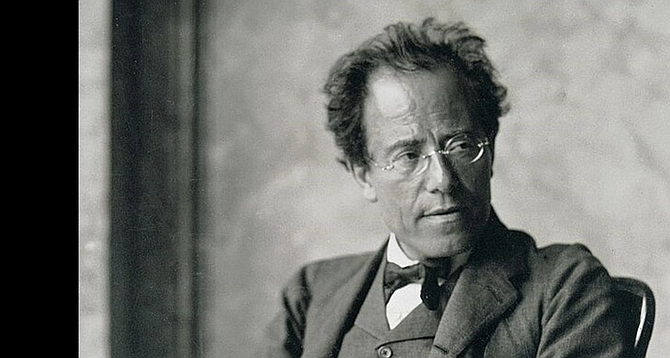
Gustav Mahler
The San Diego Symphony concluded the 2024-2025 Jacob's Masterworks Series with three performances of Gustav Mahler's Symphony No. 3. I attended on Saturday, May 24. San Diego Symphony music director Rafael Payare conducted.
Mahler’s Third has traditionally been outside the canon of Mahler symphonies I know well. My list is Mahler Two, Five, Six, Eight, and Nine. The reason the Third hasn't been in there is the first movement. The piece starts off with a declaration by the horn, with stern comments by the strings. It's a strong start. However, after that, it starts to wander — and never gains any real momentum until the very last bars of the movement.
As in all early Mahler, there’s the unique and I would say unfortunate sound of the woodwinds. Even when I couldn't get enough Mahler, the complaining tone of the woodwinds drove me crazy.
Even with the great performance spun out by Payare, the Third remains the Third, and the opening movement remained a struggle for me to get through. Happily, I found the second and third movements to be more interesting and fulfilling. The third movement in particular was enthralling with its nocturnal coloring and off-stage trumpet solo.
The fourth movement features a soloist with women's chorus. It is reminiscent of the fourth movement of Mahler’s Second. However, it doesn't quite accomplish the same effect. I like my Mahler to be dark and moody and defiant. When he gets optimistic, I start to check out. That, sadly, was the case with the women's chorus in the fourth movement. The textures were too light to compel me to buy in. I say "sadly" because the women's chorus singing was top-notch. This will always be remembered as the year the San Diego Symphony got serious about choral standards.
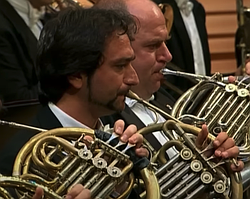
The horn, on the other hand, completely fell apart in the fourth movement. Entrances were shaking and even downright wrong at one point. While I'm no longer a Mahler acolyte, I appreciated and admired the effort and execution that the orchestra demonstrated throughout the performance. It was astounding — until the sloppy play of the horn.
The finale movement is a vast and compelling piece of music. Mahler famously mimicked Beethoven's Symphony No. 5 in the opening of his Fifth. Here, in the finale movement of the Third, he directly quotes the adagio assai from Beethoven's final string quartet. It is a beautiful homage to Beethoven's final utterance.
Talking of Beethoven: the concert concluded with a massive orchestral rendering of Beethoven's themes a la a Mahler-sized band. It was a fitting conclusion to a victorious first season in a new home.
Video:
Mahler: Symphony No. 3
Here's something you might be interested in.
Mahler's Third concludes the San Diego Symphony's season
I like my Mahler to be dark and moody and defiant

Mahler's Third concludes the San Diego Symphony's season
I like my Mahler to be dark and moody and defiant
Gustav Mahler
The San Diego Symphony concluded the 2024-2025 Jacob's Masterworks Series with three performances of Gustav Mahler's Symphony No. 3. I attended on Saturday, May 24. San Diego Symphony music director Rafael Payare conducted.
Mahler’s Third has traditionally been outside the canon of Mahler symphonies I know well. My list is Mahler Two, Five, Six, Eight, and Nine. The reason the Third hasn't been in there is the first movement. The piece starts off with a declaration by the horn, with stern comments by the strings. It's a strong start. However, after that, it starts to wander — and never gains any real momentum until the very last bars of the movement.
As in all early Mahler, there’s the unique and I would say unfortunate sound of the woodwinds. Even when I couldn't get enough Mahler, the complaining tone of the woodwinds drove me crazy.
Even with the great performance spun out by Payare, the Third remains the Third, and the opening movement remained a struggle for me to get through. Happily, I found the second and third movements to be more interesting and fulfilling. The third movement in particular was enthralling with its nocturnal coloring and off-stage trumpet solo.
The fourth movement features a soloist with women's chorus. It is reminiscent of the fourth movement of Mahler’s Second. However, it doesn't quite accomplish the same effect. I like my Mahler to be dark and moody and defiant. When he gets optimistic, I start to check out. That, sadly, was the case with the women's chorus in the fourth movement. The textures were too light to compel me to buy in. I say "sadly" because the women's chorus singing was top-notch. This will always be remembered as the year the San Diego Symphony got serious about choral standards.
The horn, on the other hand, completely fell apart in the fourth movement. Entrances were shaking and even downright wrong at one point. While I'm no longer a Mahler acolyte, I appreciated and admired the effort and execution that the orchestra demonstrated throughout the performance. It was astounding — until the sloppy play of the horn.
The finale movement is a vast and compelling piece of music. Mahler famously mimicked Beethoven's Symphony No. 5 in the opening of his Fifth. Here, in the finale movement of the Third, he directly quotes the adagio assai from Beethoven's final string quartet. It is a beautiful homage to Beethoven's final utterance.
Talking of Beethoven: the concert concluded with a massive orchestral rendering of Beethoven's themes a la a Mahler-sized band. It was a fitting conclusion to a victorious first season in a new home.
Video:
Mahler: Symphony No. 3