

Here's something you might be interested in.
Ask a Hipster — Advice you didn't know you needed
Big Screen — Movie commentary
Blurt — Music's inside track
Booze News — San Diego spirits
Classical Music — Immortal beauty
Classifieds — Free and easy
Close to Home — What it’s like on the street where you live
Cover Stories — Front-page features
Drinks All Around — Bartenders' drink recipes
Excerpts — Literary and spiritual excerpts
Feast! — Food & drink reviews
Feature Stories — Local news & stories
Fishing Report — What’s getting hooked from ship and shore
From the Archives — Spotlight on the past
Golden Dreams — Talk of the town
The Gonzo Report — Making the musical scene, or at least reporting from it
Letters — Our inbox
Movies@Home — Local movie buffs share favorites
Movie Reviews — Our critics' picks and pans
Musician Interviews — Up close with local artists
Neighborhood News from Stringers — Hyperlocal news
News Ticker — News & politics
Obermeyer — San Diego politics illustrated
Outdoors — Weekly changes in flora and fauna
Overheard in San Diego — Eavesdropping illustrated
Poetry — The old and the new
Reader Travel — Travel section built by travelers
Reading — The hunt for intellectuals
Roam-O-Rama — SoCal's best hiking/biking trails
San Diego Beer — Inside San Diego suds
SD on the QT — Almost factual news
Sheep and Goats — Places of worship
Special Issues — The best of
Street Style — San Diego streets have style
Surf Diego — Real stories from those braving the waves
Theater — On stage in San Diego this week
Tin Fork — Silver spoon alternative
Under the Radar — Matt Potter's undercover work
Unforgettable — Long-ago San Diego
Unreal Estate — San Diego's priciest pads
Your Week — Daily event picks
Keepers of the Curve
Scripps' Keeling worries about Trump cuts

Ralph Keeling, climate scientist
“I’m certainly not optimistic,” says Ralph Keeling.
Not optimistic? “That we’ll turn around tomorrow and say ‘This was all a bad dream.’ I’m not that kind of an optimist.”
Keeling’s a climate scientist, but he’s not talking about global warming. He’s talking about the Trump administration’s threat to discontinue funding for “up to 27 percent of NOAA’s [National Oceanic and Atmospheric Administration] programs.” That would put Keeling’s outfit, Scripps Institution of Oceanography, in the crosshairs.
When Keeling talks, people listen. He and his dad Charles are the creators of the two iconic “Keeling Curves” which have become the baseline reference for all global warming claims around the world. Ever since 1955, he and his father, Charles David Keeling, have been perching themselves at a spot 11,500 feet up Mauna Loa, the Hawaiian volcano, so they could consistently measure the amount of carbon dioxide present in the earth’s atmosphere blowing past them year by year. Son Ralph added his own Curve when he started measuring the amount of oxygen. His father had deliberately sought out that isolated part of the Pacific so he could build up a record to measure if the percentage of CO2 in our air was going up, but Ralph wanted to know if the supply of oxygen was going down.
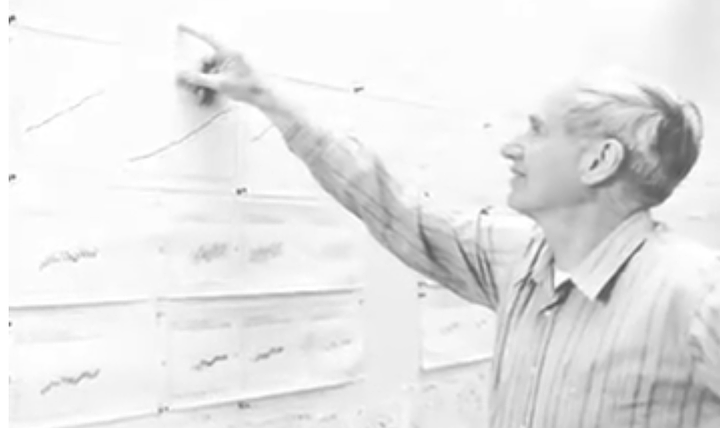
Charles Keeling, curve keeper
Both things have happened. Carbon dioxide’s intrusion into our air has increased from 313 parts per million in 1958 to 430 ppm today. And, say the Keelings, the cause has to be anthropogenic — i.e. us, the human race, and our industrial age. Ralph, who followed in his footsteps to also become a professor at Scripps Institution of Oceanography, has watched as the amount of oxygen in the air has gone down at about the same rate as CO2 is going up.
But now, all that record-keeping could end. The Trump administration wants to drastically cut NOAA funding. “Our two million dollars [out of NOAA’s estimated 6.5 billion-dollar budget] to keep the Keeling Curve measurement program alive is not huge, but it’s vital to us,” says Dr. Keeling. He says if the measuring is forced to discontinue, the integrity of the 60-plus years of consistent measuring will be compromised.
It's not that we're actually running out of oxygen. “There’s a lot of oxygen in the world’s air,” Keeling says. “There’s enough to the point that, even though it’s decreasing, it’s not threatening to run out. But we need to keep measuring it, because it’s telling us where carbon dioxide is going that isn’t remaining in the air.”
Now he is leaving me behind. I ask if these figures are as alarming as they sound. And, well, maybe not. “Back up a second,” he says. “The amount of oxygen in the air is going down steeper, decade by decade. It’s the flipside of the CO2 curve, with this nuance — that it doesn’t have quite the same influence. It’s not as influenced by the ocean as carbon dioxide is. Each mouthful of air you breathe is about 21 percent oxygen. Out of 100 air molecules, 21 will be oxygen. Out of a million air molecules, that’d be about 210,000 parts per million that are oxygen molecules. In contrast, carbon dioxide’s current concentration is only about 425 parts per million. So there’s way more oxygen in the air. The oxygen is going down slightly faster in molecules per year than carbon dioxide is going up. But that’s against an enormously bigger background. So it’s going to take forever, centuries at the present rate, to have a significant impact. And guess what? Even if we don’t do anything to slow our burning of fossil fuel, we are going to run out at some point. It’s a finite resource. [Yet] it turns out that even if we burn all the imaginable, unconventional — as well as conventional — sources of fossil energy, we still won’t have made that big of a dent in the oxygen in the atmosphere.”
The CO2, now that has influence. The new high of 430 parts per million is already a cause of the 1.5 degree Centigrade rise in our daily temperatures above 1850 levels, higher than we’ve had in the past 200,000 years. Some say higher than earth has experienced in the past 23 million years.
But what worries him most right now is interrupting the measurements his father and he have been tracking since the late 1950s. This record now forms the bedrock for many different analyses of what’s going on in climate change. The Keeling Curves are a set of figures nobody argues with, and everybody knows.
“Our measurements have a connection for people because they’re more aware of them. In a way, they’re globally important. They have an iconic status, because they’re kind of a bottom line. You ask, ‘Are we bending the curve?’ This is the curve. We are the keepers of the curve.”
Here's something you might be interested in.
Keepers of the Curve
Scripps' Keeling worries about Trump cuts

Keepers of the Curve
Scripps' Keeling worries about Trump cuts
Ralph Keeling, climate scientist
“I’m certainly not optimistic,” says Ralph Keeling.
Not optimistic? “That we’ll turn around tomorrow and say ‘This was all a bad dream.’ I’m not that kind of an optimist.”
Keeling’s a climate scientist, but he’s not talking about global warming. He’s talking about the Trump administration’s threat to discontinue funding for “up to 27 percent of NOAA’s [National Oceanic and Atmospheric Administration] programs.” That would put Keeling’s outfit, Scripps Institution of Oceanography, in the crosshairs.
When Keeling talks, people listen. He and his dad Charles are the creators of the two iconic “Keeling Curves” which have become the baseline reference for all global warming claims around the world. Ever since 1955, he and his father, Charles David Keeling, have been perching themselves at a spot 11,500 feet up Mauna Loa, the Hawaiian volcano, so they could consistently measure the amount of carbon dioxide present in the earth’s atmosphere blowing past them year by year. Son Ralph added his own Curve when he started measuring the amount of oxygen. His father had deliberately sought out that isolated part of the Pacific so he could build up a record to measure if the percentage of CO2 in our air was going up, but Ralph wanted to know if the supply of oxygen was going down.
Charles Keeling, curve keeper
Both things have happened. Carbon dioxide’s intrusion into our air has increased from 313 parts per million in 1958 to 430 ppm today. And, say the Keelings, the cause has to be anthropogenic — i.e. us, the human race, and our industrial age. Ralph, who followed in his footsteps to also become a professor at Scripps Institution of Oceanography, has watched as the amount of oxygen in the air has gone down at about the same rate as CO2 is going up.
But now, all that record-keeping could end. The Trump administration wants to drastically cut NOAA funding. “Our two million dollars [out of NOAA’s estimated 6.5 billion-dollar budget] to keep the Keeling Curve measurement program alive is not huge, but it’s vital to us,” says Dr. Keeling. He says if the measuring is forced to discontinue, the integrity of the 60-plus years of consistent measuring will be compromised.
It's not that we're actually running out of oxygen. “There’s a lot of oxygen in the world’s air,” Keeling says. “There’s enough to the point that, even though it’s decreasing, it’s not threatening to run out. But we need to keep measuring it, because it’s telling us where carbon dioxide is going that isn’t remaining in the air.”
Now he is leaving me behind. I ask if these figures are as alarming as they sound. And, well, maybe not. “Back up a second,” he says. “The amount of oxygen in the air is going down steeper, decade by decade. It’s the flipside of the CO2 curve, with this nuance — that it doesn’t have quite the same influence. It’s not as influenced by the ocean as carbon dioxide is. Each mouthful of air you breathe is about 21 percent oxygen. Out of 100 air molecules, 21 will be oxygen. Out of a million air molecules, that’d be about 210,000 parts per million that are oxygen molecules. In contrast, carbon dioxide’s current concentration is only about 425 parts per million. So there’s way more oxygen in the air. The oxygen is going down slightly faster in molecules per year than carbon dioxide is going up. But that’s against an enormously bigger background. So it’s going to take forever, centuries at the present rate, to have a significant impact. And guess what? Even if we don’t do anything to slow our burning of fossil fuel, we are going to run out at some point. It’s a finite resource. [Yet] it turns out that even if we burn all the imaginable, unconventional — as well as conventional — sources of fossil energy, we still won’t have made that big of a dent in the oxygen in the atmosphere.”
The CO2, now that has influence. The new high of 430 parts per million is already a cause of the 1.5 degree Centigrade rise in our daily temperatures above 1850 levels, higher than we’ve had in the past 200,000 years. Some say higher than earth has experienced in the past 23 million years.
But what worries him most right now is interrupting the measurements his father and he have been tracking since the late 1950s. This record now forms the bedrock for many different analyses of what’s going on in climate change. The Keeling Curves are a set of figures nobody argues with, and everybody knows.
“Our measurements have a connection for people because they’re more aware of them. In a way, they’re globally important. They have an iconic status, because they’re kind of a bottom line. You ask, ‘Are we bending the curve?’ This is the curve. We are the keepers of the curve.”
Comments