

Here's something you might be interested in.
Ask a Hipster — Advice you didn't know you needed
Big Screen — Movie commentary
Blurt — Music's inside track
Booze News — San Diego spirits
Classical Music — Immortal beauty
Classifieds — Free and easy
Close to Home — What it’s like on the street where you live
Cover Stories — Front-page features
Drinks All Around — Bartenders' drink recipes
Excerpts — Literary and spiritual excerpts
Feast! — Food & drink reviews
Feature Stories — Local news & stories
Fishing Report — What’s getting hooked from ship and shore
From the Archives — Spotlight on the past
Golden Dreams — Talk of the town
The Gonzo Report — Making the musical scene, or at least reporting from it
Letters — Our inbox
Movies@Home — Local movie buffs share favorites
Movie Reviews — Our critics' picks and pans
Musician Interviews — Up close with local artists
Neighborhood News from Stringers — Hyperlocal news
News Ticker — News & politics
Obermeyer — San Diego politics illustrated
Outdoors — Weekly changes in flora and fauna
Overheard in San Diego — Eavesdropping illustrated
Poetry — The old and the new
Reader Travel — Travel section built by travelers
Reading — The hunt for intellectuals
Roam-O-Rama — SoCal's best hiking/biking trails
San Diego Beer — Inside San Diego suds
SD on the QT — Almost factual news
Sheep and Goats — Places of worship
Special Issues — The best of
Street Style — San Diego streets have style
Surf Diego — Real stories from those braving the waves
Theater — On stage in San Diego this week
Tin Fork — Silver spoon alternative
Under the Radar — Matt Potter's undercover work
Unforgettable — Long-ago San Diego
Unreal Estate — San Diego's priciest pads
Your Week — Daily event picks
Two poems for Memorial Day by Randall Jarrell
"Death of the Ball Turret Gunner" and "Losses"
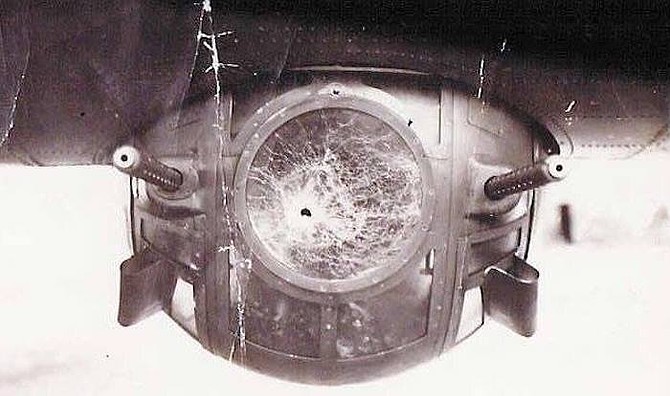
Death of the Ball Turret Gunner
From my mother’s sleep I fell into the State,
And I hunched in its belly till my wet fur froze.
Six miles from earth, loosed from its dream of life,
I woke to black flak and the nightmare fighters.
When I died they washed me out of the turret with a hose.
Losses
It was not dying: everybody died.
It was not dying: we had died before
In the routine crashes—and our fields
Called up the papers, wrote home to our folks,
And the rates rose, all because of us.
We died on the wrong page of the almanac,
Scattered on mountains fifty miles away;
Diving on haystacks, fighting with a friend,
We blazed up on the lines we never saw.
We died like aunts or pets or foreigners.
(When we left high school nothing else had died
For us to figure we had died like.)
In our new planes, with our new crews, we bombed
The ranges by the desert or the shore,
Fired at towed targets, waited for our scores—
And turned into replacements and worked up
One morning, over England, operational.
It wasn't different: but if we died
It was not an accident but a mistake
(But an easy one for anyone to make.)
We read our mail and counted up our missions—
In bombers named for girls, we burned
The cities we had learned about in school—
Till our lives wore out; our bodies lay among
The people we had killed and never seen.
When we lasted long enough they gave us medals;
When we died they said, "Our casualties were low."
They said, "Here are the maps;" we burned the cities.
It was not dying —no, not ever dying;
But the night I died I dreamed that I was dead,
And the cities said to me: "Why are you dying?
We are satisfied, if you are; but why did I die?"
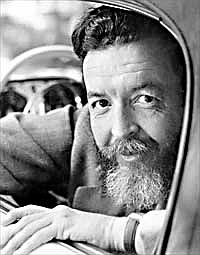
Randall Jarrell (1914-1965) was an American poet who also wrote criticism, children’s books, essays and fiction. Winner of the National Book Award n 1961, Jarrell was a major figure in the “Middle Generation” of poets, which included Delmore Schwartz, Robert Lowell and John Berryman. A native of Nashville, TN, and student of three of the members of the Fugitive Movement—Robert Penn Warren, Allen Tate and John Crowe Ransom—Jarrell adopted their formal approach to poetry without sharing their more conservative views of culture and politics. His early poetry reflected his experiences in the Air Force during World War II—including perhaps his most famous (or famously anthologized) poem, “Death of a Ball Turret Gunner.” While sometimes grouped with the “confessional” school of poets, which saw personal biography as a fit subject for poetry, Jarrell often wrote his poems through personae —such as dead servicemen or aging women looking back on their lives. Jarrell died under suspicious circumstances; he was struck by a car, which some believe to have been a suicide (he had attempted to take his own life before). But his family believed his death to be as the coroner ruled it: an accident.
Here's something you might be interested in.
Two poems for Memorial Day by Randall Jarrell
"Death of the Ball Turret Gunner" and "Losses"

Two poems for Memorial Day by Randall Jarrell
"Death of the Ball Turret Gunner" and "Losses"
Death of the Ball Turret Gunner
From my mother’s sleep I fell into the State,
And I hunched in its belly till my wet fur froze.
Six miles from earth, loosed from its dream of life,
I woke to black flak and the nightmare fighters.
When I died they washed me out of the turret with a hose.
Losses
It was not dying: everybody died.
It was not dying: we had died before
In the routine crashes—and our fields
Called up the papers, wrote home to our folks,
And the rates rose, all because of us.
We died on the wrong page of the almanac,
Scattered on mountains fifty miles away;
Diving on haystacks, fighting with a friend,
We blazed up on the lines we never saw.
We died like aunts or pets or foreigners.
(When we left high school nothing else had died
For us to figure we had died like.)
In our new planes, with our new crews, we bombed
The ranges by the desert or the shore,
Fired at towed targets, waited for our scores—
And turned into replacements and worked up
One morning, over England, operational.
It wasn't different: but if we died
It was not an accident but a mistake
(But an easy one for anyone to make.)
We read our mail and counted up our missions—
In bombers named for girls, we burned
The cities we had learned about in school—
Till our lives wore out; our bodies lay among
The people we had killed and never seen.
When we lasted long enough they gave us medals;
When we died they said, "Our casualties were low."
They said, "Here are the maps;" we burned the cities.
It was not dying —no, not ever dying;
But the night I died I dreamed that I was dead,
And the cities said to me: "Why are you dying?
We are satisfied, if you are; but why did I die?"
Randall Jarrell (1914-1965) was an American poet who also wrote criticism, children’s books, essays and fiction. Winner of the National Book Award n 1961, Jarrell was a major figure in the “Middle Generation” of poets, which included Delmore Schwartz, Robert Lowell and John Berryman. A native of Nashville, TN, and student of three of the members of the Fugitive Movement—Robert Penn Warren, Allen Tate and John Crowe Ransom—Jarrell adopted their formal approach to poetry without sharing their more conservative views of culture and politics. His early poetry reflected his experiences in the Air Force during World War II—including perhaps his most famous (or famously anthologized) poem, “Death of a Ball Turret Gunner.” While sometimes grouped with the “confessional” school of poets, which saw personal biography as a fit subject for poetry, Jarrell often wrote his poems through personae —such as dead servicemen or aging women looking back on their lives. Jarrell died under suspicious circumstances; he was struck by a car, which some believe to have been a suicide (he had attempted to take his own life before). But his family believed his death to be as the coroner ruled it: an accident.
Comments