

Here's something you might be interested in.
Ask a Hipster — Advice you didn't know you needed
Big Screen — Movie commentary
Blurt — Music's inside track
Booze News — San Diego spirits
Classical Music — Immortal beauty
Classifieds — Free and easy
Close to Home — What it’s like on the street where you live
Cover Stories — Front-page features
Drinks All Around — Bartenders' drink recipes
Excerpts — Literary and spiritual excerpts
Feast! — Food & drink reviews
Feature Stories — Local news & stories
Fishing Report — What’s getting hooked from ship and shore
From the Archives — Spotlight on the past
Golden Dreams — Talk of the town
The Gonzo Report — Making the musical scene, or at least reporting from it
Letters — Our inbox
Movies@Home — Local movie buffs share favorites
Movie Reviews — Our critics' picks and pans
Musician Interviews — Up close with local artists
Neighborhood News from Stringers — Hyperlocal news
News Ticker — News & politics
Obermeyer — San Diego politics illustrated
Outdoors — Weekly changes in flora and fauna
Overheard in San Diego — Eavesdropping illustrated
Poetry — The old and the new
Reader Travel — Travel section built by travelers
Reading — The hunt for intellectuals
Roam-O-Rama — SoCal's best hiking/biking trails
San Diego Beer — Inside San Diego suds
SD on the QT — Almost factual news
Sheep and Goats — Places of worship
Special Issues — The best of
Street Style — San Diego streets have style
Surf Diego — Real stories from those braving the waves
Theater — On stage in San Diego this week
Tin Fork — Silver spoon alternative
Under the Radar — Matt Potter's undercover work
Unforgettable — Long-ago San Diego
Unreal Estate — San Diego's priciest pads
Your Week — Daily event picks
Nextdoor Wars: A wizard heads out for coffee in Golden Hill
Abracappuccino macchiato frappe!
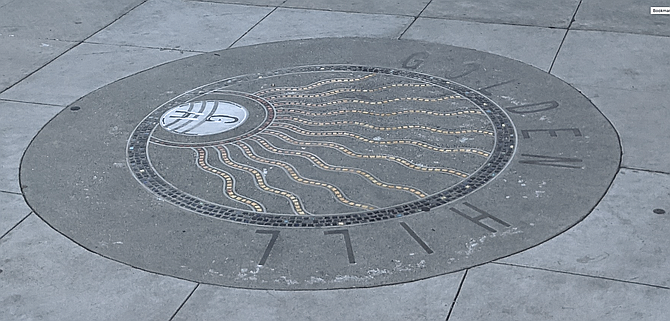
Magic emanations or just the sun's golden rays?
San Diego has always been a city of hidden stories — murmured in the spaces between sun-bleached bungalows, whispered over backyard fences, and now, increasingly, shouted into the digital void of neighborhood apps. And nowhere are these narratives more brutally and hilariously exposed than on Nextdoor, the social media platform that has become the city's most unfiltered confessional.
Golden Hill stands as a living museum of San Diego's architectural and social transformation. Originally platted in the 1870s, the neighborhood was once home to the city's most prestigious residents, featuring elaborate Victorian and Craftsman homes perched along its steep, winding streets. The area's historical significance runs deep — Golden Hill Park, for instance, isn't just a green space, but the hallowed ground where San Diego's first baseball game was played in 1886, marking an early chapter in the city's sporting history.
Today, the neighborhood is a complex mosaic of preservation and reinvention. Meticulously restored Victorians sit alongside sleek modern condos, telling a story of urban evolution. The spirit of reinvention is strong here — and perhaps other spirits as well.
The Original Post
"White male, soul patch beard, wearing a black cloak with skeleton markings. Making odd gestures to cars and people, almost pretending to cast spells. Heading towards the Starbucks on the corner."
Comments/Observations
1. "Oh, that's just Death"
Et in Arcadia Ego, eh, Golden Hill?
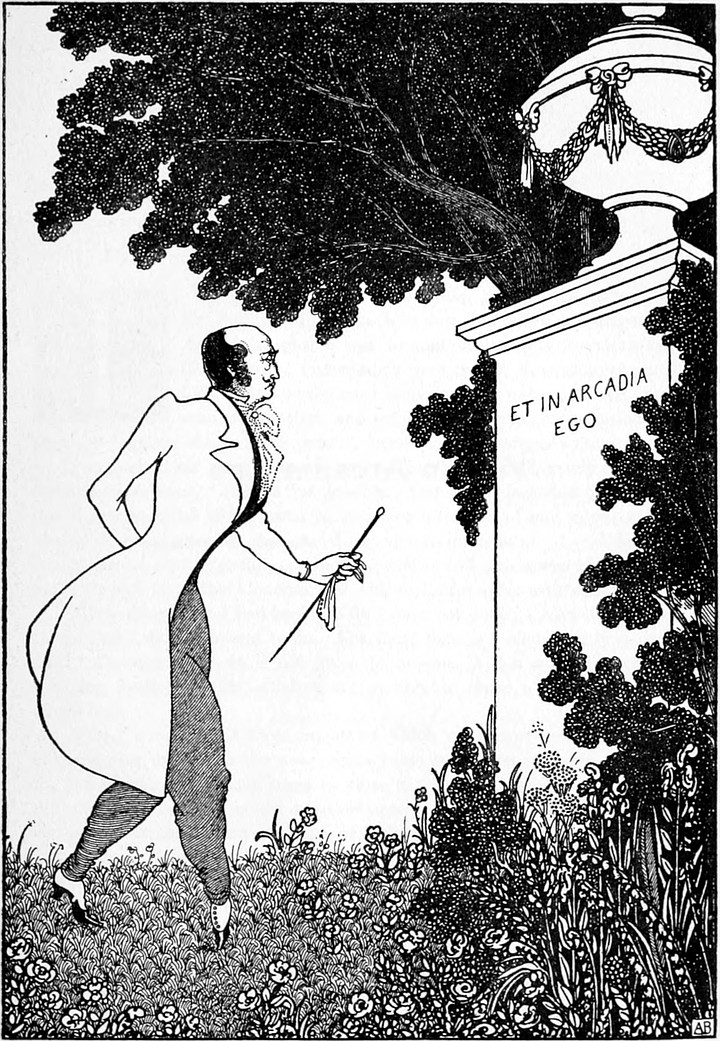
Aubrey Beardsley's portrait of an olde-timey hipster encountering a sobering reminder of his mortality, and what is worse, his looming irrelevance.
2. A knowing reference to the "D&D satanic panic."

Tom Hanks' first starring role, inspired by the wild fantastical story that built up around the sad true story of James Dallas Egbert III.
3. “It’s not a crime to be weird."
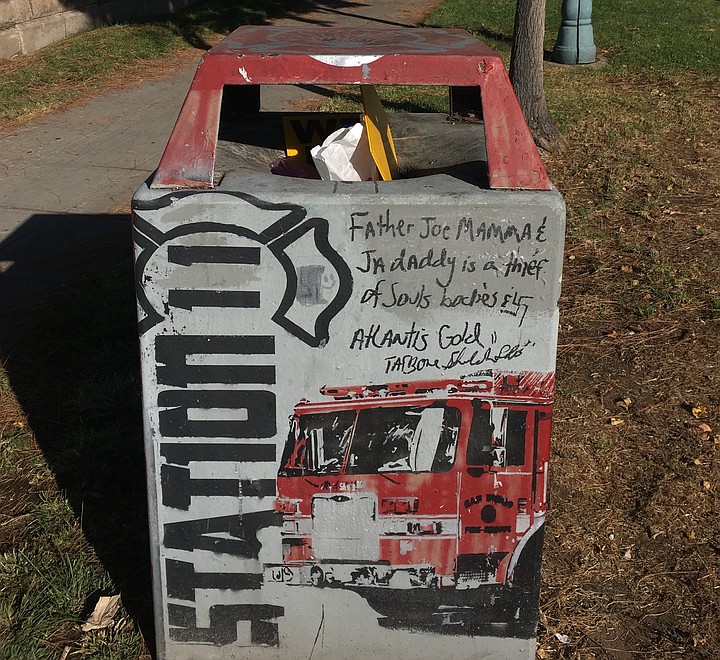
Stealing souls, on the other hand, might be?
Final Thoughts
While the post might seem like pure comedy, it reflects Golden Hill's deeper social dynamics. Several of those grand Victorians, and even a few of the more modern structures, have been converted to rehab centers over the years, and so you still get, er, characters wandering among the Bright Young Things on their way to yoga. This is a neighborhood where long-time residents, tech workers, artists, and more recent transplants coexist—sometimes uncomfortably, often hilariously. The ability to laugh at the absurd is a survival mechanism in a rapidly changing urban landscape.
Here's something you might be interested in.
Nextdoor Wars: A wizard heads out for coffee in Golden Hill
Abracappuccino macchiato frappe!

Nextdoor Wars: A wizard heads out for coffee in Golden Hill
Abracappuccino macchiato frappe!
Magic emanations or just the sun's golden rays?
San Diego has always been a city of hidden stories — murmured in the spaces between sun-bleached bungalows, whispered over backyard fences, and now, increasingly, shouted into the digital void of neighborhood apps. And nowhere are these narratives more brutally and hilariously exposed than on Nextdoor, the social media platform that has become the city's most unfiltered confessional.
Golden Hill stands as a living museum of San Diego's architectural and social transformation. Originally platted in the 1870s, the neighborhood was once home to the city's most prestigious residents, featuring elaborate Victorian and Craftsman homes perched along its steep, winding streets. The area's historical significance runs deep — Golden Hill Park, for instance, isn't just a green space, but the hallowed ground where San Diego's first baseball game was played in 1886, marking an early chapter in the city's sporting history.
Today, the neighborhood is a complex mosaic of preservation and reinvention. Meticulously restored Victorians sit alongside sleek modern condos, telling a story of urban evolution. The spirit of reinvention is strong here — and perhaps other spirits as well.
The Original Post
"White male, soul patch beard, wearing a black cloak with skeleton markings. Making odd gestures to cars and people, almost pretending to cast spells. Heading towards the Starbucks on the corner."
Comments/Observations
1. "Oh, that's just Death"
Et in Arcadia Ego, eh, Golden Hill?
Aubrey Beardsley's portrait of an olde-timey hipster encountering a sobering reminder of his mortality, and what is worse, his looming irrelevance.
2. A knowing reference to the "D&D satanic panic."
Tom Hanks' first starring role, inspired by the wild fantastical story that built up around the sad true story of James Dallas Egbert III.
3. “It’s not a crime to be weird."
Stealing souls, on the other hand, might be?
Final Thoughts
While the post might seem like pure comedy, it reflects Golden Hill's deeper social dynamics. Several of those grand Victorians, and even a few of the more modern structures, have been converted to rehab centers over the years, and so you still get, er, characters wandering among the Bright Young Things on their way to yoga. This is a neighborhood where long-time residents, tech workers, artists, and more recent transplants coexist—sometimes uncomfortably, often hilariously. The ability to laugh at the absurd is a survival mechanism in a rapidly changing urban landscape.
Comments