

Here's something you might be interested in.
Ask a Hipster — Advice you didn't know you needed
Big Screen — Movie commentary
Blurt — Music's inside track
Booze News — San Diego spirits
Classical Music — Immortal beauty
Classifieds — Free and easy
Close to Home — What it’s like on the street where you live
Cover Stories — Front-page features
Drinks All Around — Bartenders' drink recipes
Excerpts — Literary and spiritual excerpts
Feast! — Food & drink reviews
Feature Stories — Local news & stories
Fishing Report — What’s getting hooked from ship and shore
From the Archives — Spotlight on the past
Golden Dreams — Talk of the town
The Gonzo Report — Making the musical scene, or at least reporting from it
Letters — Our inbox
Movies@Home — Local movie buffs share favorites
Movie Reviews — Our critics' picks and pans
Musician Interviews — Up close with local artists
Neighborhood News from Stringers — Hyperlocal news
News Ticker — News & politics
Obermeyer — San Diego politics illustrated
Outdoors — Weekly changes in flora and fauna
Overheard in San Diego — Eavesdropping illustrated
Poetry — The old and the new
Reader Travel — Travel section built by travelers
Reading — The hunt for intellectuals
Roam-O-Rama — SoCal's best hiking/biking trails
San Diego Beer — Inside San Diego suds
SD on the QT — Almost factual news
Sheep and Goats — Places of worship
Special Issues — The best of
Street Style — San Diego streets have style
Surf Diego — Real stories from those braving the waves
Theater — On stage in San Diego this week
Tin Fork — Silver spoon alternative
Under the Radar — Matt Potter's undercover work
Unforgettable — Long-ago San Diego
Unreal Estate — San Diego's priciest pads
Your Week — Daily event picks
Why love classical music?
Especially when love means the possibility of heartbreak?
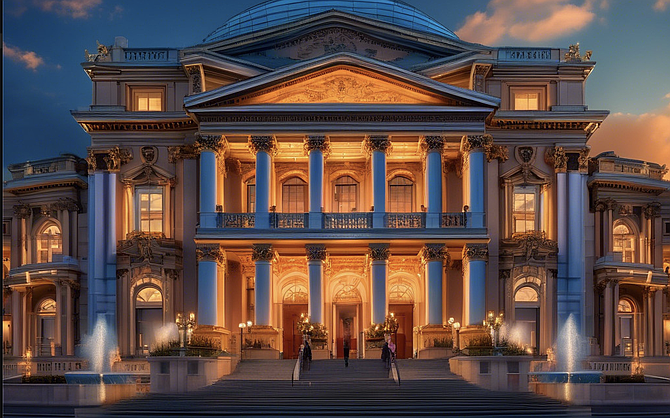
Image created by Chatbox Ai
From time to time, I wonder why I love classical music and opera. I do know it wasn’t a choice. My parents didn’t sit me down and present various types of music and then tell me to choose the one I liked the best and stick with it for the rest of my life. That’s not the way the world functions.
But the fact remains: I have a love of classical music. Why? Why did I listen to Pyotr Tchaikovsky’s Marche Slave, or Slavonic March, on repeat as a sixth grader? I wasn’t a music student. I didn’t have an instrument that I studied. All I had was children’s choir at church, and that only now and then.
Video:
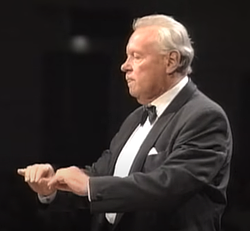
Tchaikovsky: Slavonic March
If classical music hadn’t been presented to me — accidentally, by the way — what music would have been my favorite? Would I be stuck with '80s Pop, sprinkled with a bit of Yacht Rock? Possibly — but it seems to me that my love for those genres would be based on a sense of nostalgia for the days when my young life was wide open to the world and full of possibilities.
For the record, in some ways, that’s still the case. In some ways, you and I both have as much potential as we’ve ever had; it’s just that our options have narrowed and our time has shortened. Any yearning for the good old days is a yearning for the time when we could do or be anything because it was all ahead of us. The world hasn’t really changed much, for better or for worse. What’s changed is my position in life.
Anyway, the philosopher Ludwig Wittgenstein would chastise me for asking questions to which there are no clear answers. And even if there were, the value of those answers would be dubious. It doesn’t matter why I love classical music. The fact is that I do. Ah, Wittgenstein: always encouraging people not to do philosophy.
The fact is that classical music has given me a lifelong experience of emotional blessings and curses. When you love something, you get angry when you perceive that it is being mistreated. That’s my current position on opera.
I have no worries about orchestral music. It is thriving and remains intact. It is now what it has always been, a group of high-level musicians performing complex and riveting music together.
But opera is not what it has always been. Opera is an experience of theater based on the voice and singing. Just like ballet is an experience of theater based on the body, and puppetry of the penis is an experience of theater based on the — well, you know. (Yes, it's real. No, I am not linking to it.) Today, opera has become something besides a voice and singing-based art form, and I fear that it is in its sunset years.
Here's something you might be interested in.
Why love classical music?
Especially when love means the possibility of heartbreak?

Why love classical music?
Especially when love means the possibility of heartbreak?
Image created by Chatbox Ai
From time to time, I wonder why I love classical music and opera. I do know it wasn’t a choice. My parents didn’t sit me down and present various types of music and then tell me to choose the one I liked the best and stick with it for the rest of my life. That’s not the way the world functions.
But the fact remains: I have a love of classical music. Why? Why did I listen to Pyotr Tchaikovsky’s Marche Slave, or Slavonic March, on repeat as a sixth grader? I wasn’t a music student. I didn’t have an instrument that I studied. All I had was children’s choir at church, and that only now and then.
Video:
Tchaikovsky: Slavonic March
If classical music hadn’t been presented to me — accidentally, by the way — what music would have been my favorite? Would I be stuck with '80s Pop, sprinkled with a bit of Yacht Rock? Possibly — but it seems to me that my love for those genres would be based on a sense of nostalgia for the days when my young life was wide open to the world and full of possibilities.
For the record, in some ways, that’s still the case. In some ways, you and I both have as much potential as we’ve ever had; it’s just that our options have narrowed and our time has shortened. Any yearning for the good old days is a yearning for the time when we could do or be anything because it was all ahead of us. The world hasn’t really changed much, for better or for worse. What’s changed is my position in life.
Anyway, the philosopher Ludwig Wittgenstein would chastise me for asking questions to which there are no clear answers. And even if there were, the value of those answers would be dubious. It doesn’t matter why I love classical music. The fact is that I do. Ah, Wittgenstein: always encouraging people not to do philosophy.
The fact is that classical music has given me a lifelong experience of emotional blessings and curses. When you love something, you get angry when you perceive that it is being mistreated. That’s my current position on opera.
I have no worries about orchestral music. It is thriving and remains intact. It is now what it has always been, a group of high-level musicians performing complex and riveting music together.
But opera is not what it has always been. Opera is an experience of theater based on the voice and singing. Just like ballet is an experience of theater based on the body, and puppetry of the penis is an experience of theater based on the — well, you know. (Yes, it's real. No, I am not linking to it.) Today, opera has become something besides a voice and singing-based art form, and I fear that it is in its sunset years.
Comments