

Here's something you might be interested in.
Ask a Hipster — Advice you didn't know you needed
Big Screen — Movie commentary
Blurt — Music's inside track
Booze News — San Diego spirits
Classical Music — Immortal beauty
Classifieds — Free and easy
Close to Home — What it’s like on the street where you live
Cover Stories — Front-page features
Drinks All Around — Bartenders' drink recipes
Excerpts — Literary and spiritual excerpts
Feast! — Food & drink reviews
Feature Stories — Local news & stories
Fishing Report — What’s getting hooked from ship and shore
From the Archives — Spotlight on the past
Golden Dreams — Talk of the town
The Gonzo Report — Making the musical scene, or at least reporting from it
Letters — Our inbox
Movies@Home — Local movie buffs share favorites
Movie Reviews — Our critics' picks and pans
Musician Interviews — Up close with local artists
Neighborhood News from Stringers — Hyperlocal news
News Ticker — News & politics
Obermeyer — San Diego politics illustrated
Outdoors — Weekly changes in flora and fauna
Overheard in San Diego — Eavesdropping illustrated
Poetry — The old and the new
Reader Travel — Travel section built by travelers
Reading — The hunt for intellectuals
Roam-O-Rama — SoCal's best hiking/biking trails
San Diego Beer — Inside San Diego suds
SD on the QT — Almost factual news
Sheep and Goats — Places of worship
Special Issues — The best of
Street Style — San Diego streets have style
Surf Diego — Real stories from those braving the waves
Theater — On stage in San Diego this week
Tin Fork — Silver spoon alternative
Under the Radar — Matt Potter's undercover work
Unforgettable — Long-ago San Diego
Unreal Estate — San Diego's priciest pads
Your Week — Daily event picks
San Diego's animals buffetted by flooding, pollution, construction
And the Murphy Canyon plane crash
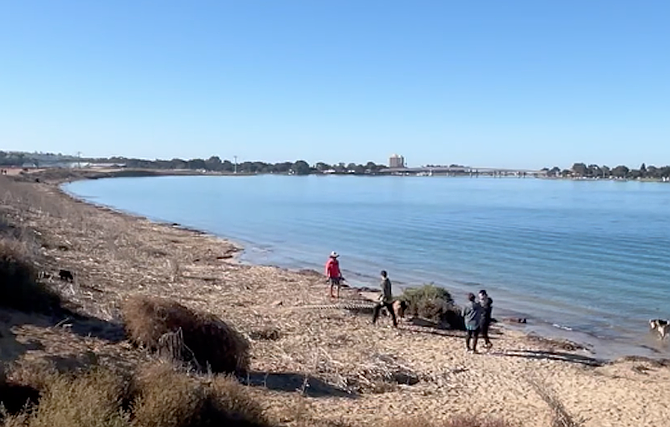
Fiesta Island dogg walkers resorted to nearby Mission Bay Park and even bent the rules at Dog Beach.
Over the past year, San Diego County has become an unlikely backdrop for a series of unsettling animal displacements.
On May 22, the Murphy Canyon plane crash claimed six lives—all passengers aboard the aircraft. While no one on the ground was killed, the destruction displaced pets. According to the San Diego Humane Society, “13 dogs, one cat, eight puppies, and five geckos were displaced” as a result. “12 of the dogs were exposed to jet fuel, and our medical team immediately examined them and performed a critical decontamination process,” said the animal rescue organization.
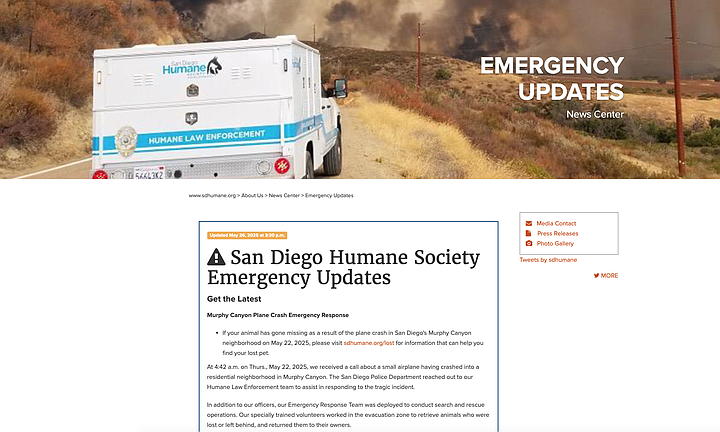
13 dogs, one cat, eight puppies, and five geckos were displaced by Murphy Canyon crash.
Meanwhile, coyotes have been increasingly spotted in recent months, including in Tierrasanta, where residents are growing uneasy. One local, Bill M., posted to his neighborhood group: “Coyotes are [like] wolves ..... apex predators. When we remove apex predators from the equation, we have to step in in the form of hunters to keep the populations in check. If we don't, then overpopulation occurs, like we're seeing now with the coyotes."
The increased construction activities countywide have brought about a rise in coyote sightings within our urban neighborhoods. Residents reported that these animals are getting braver and walking closer to human habitats in search of food and shelter due to their habitat loss due to the new developments.
Bill added, “It doesn't matter who was here first; each species has to adapt to the other's presence.”
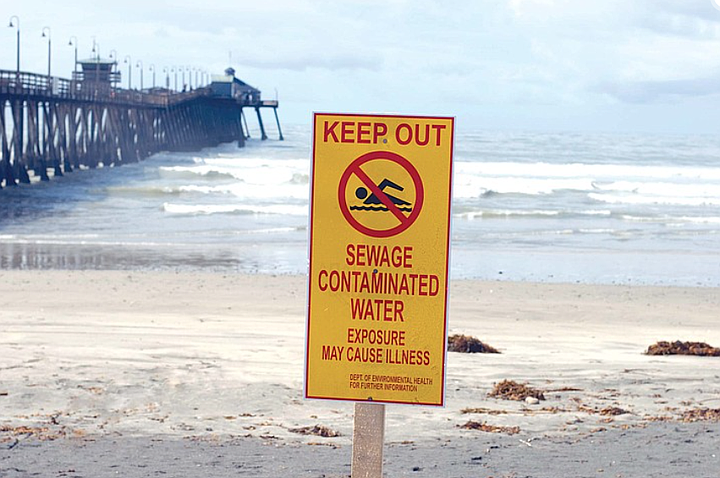
Pollution from the controversial river introduces low oxygen levels and toxins that can disrupt nearby marine life's nervous systems.
Interestingly, it’s not just wildlife doing the adapting—humans have been forced to adjust alongside them, especially in the face of natural disasters. In both March and January, people across San Diego County stepped in to relocate and care for over 200 animals displaced by extreme weather events.
In March, when flooding overtook parts of Fiesta Island, dog walkers had nowhere to bring their pets. Many resorted to nearby Mission Bay Park and even bent the rules at Dog Beach in Ocean Beach just to give their dogs space to run.
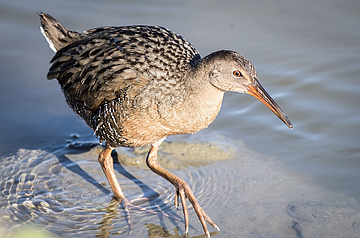
light-footed Ridgway’s rail birds are said by IB birdwatchers that they could have shifted away from their usual nesting grounds.
Earlier, in January, the Lilac Fire in Bonsall triggered the emergency evacuation of more than 200 horses from the San Luis Rey Downs to the Del Mar Thoroughbred Club—a quick and vital move.
Then, the massive pollution from the Tijuana River directly into Imperial Beach's waves scared away the fishermen and anglers, surfers, and some of the creatures in the water.
Pollution from the controversial river introduces low oxygen levels and toxins that can disrupt nearby marine life's nervous systems and behaviors. As Scripps Institution of Oceanography explained in 2024, some species may adapt to these fast-changing conditions—while others may be more vulnerable and unable to survive.
Even a year and a half after the record-breaking early 2024 floods in San Diego County, some ecosystems may still be feeling the aftershocks. In spots like the Tijuana River Valley, Los Peñasquitos Lagoon, and Otay River estuary, it’s possible that particular species—especially small amphibians like Pacific tree frogs or western toads—have not fully returned, especially if their shallow breeding pools were disrupted by chemical runoff or buried under silt. Then, there are freshwater mussels or small crustaceans that may have struggled to reestablish in creek beds. And the endangered light-footed Ridgway’s rail birds are said by IB birdwatchers that they could have shifted away from their usual nesting grounds in their nearby habitats, which were significantly degraded.
Here's something you might be interested in.
San Diego's animals buffetted by flooding, pollution, construction
And the Murphy Canyon plane crash

San Diego's animals buffetted by flooding, pollution, construction
And the Murphy Canyon plane crash
Fiesta Island dogg walkers resorted to nearby Mission Bay Park and even bent the rules at Dog Beach.
Over the past year, San Diego County has become an unlikely backdrop for a series of unsettling animal displacements.
On May 22, the Murphy Canyon plane crash claimed six lives—all passengers aboard the aircraft. While no one on the ground was killed, the destruction displaced pets. According to the San Diego Humane Society, “13 dogs, one cat, eight puppies, and five geckos were displaced” as a result. “12 of the dogs were exposed to jet fuel, and our medical team immediately examined them and performed a critical decontamination process,” said the animal rescue organization.
13 dogs, one cat, eight puppies, and five geckos were displaced by Murphy Canyon crash.
Meanwhile, coyotes have been increasingly spotted in recent months, including in Tierrasanta, where residents are growing uneasy. One local, Bill M., posted to his neighborhood group: “Coyotes are [like] wolves ..... apex predators. When we remove apex predators from the equation, we have to step in in the form of hunters to keep the populations in check. If we don't, then overpopulation occurs, like we're seeing now with the coyotes."
The increased construction activities countywide have brought about a rise in coyote sightings within our urban neighborhoods. Residents reported that these animals are getting braver and walking closer to human habitats in search of food and shelter due to their habitat loss due to the new developments.
Bill added, “It doesn't matter who was here first; each species has to adapt to the other's presence.”
Pollution from the controversial river introduces low oxygen levels and toxins that can disrupt nearby marine life's nervous systems.
Interestingly, it’s not just wildlife doing the adapting—humans have been forced to adjust alongside them, especially in the face of natural disasters. In both March and January, people across San Diego County stepped in to relocate and care for over 200 animals displaced by extreme weather events.
In March, when flooding overtook parts of Fiesta Island, dog walkers had nowhere to bring their pets. Many resorted to nearby Mission Bay Park and even bent the rules at Dog Beach in Ocean Beach just to give their dogs space to run.
light-footed Ridgway’s rail birds are said by IB birdwatchers that they could have shifted away from their usual nesting grounds.
Earlier, in January, the Lilac Fire in Bonsall triggered the emergency evacuation of more than 200 horses from the San Luis Rey Downs to the Del Mar Thoroughbred Club—a quick and vital move.
Then, the massive pollution from the Tijuana River directly into Imperial Beach's waves scared away the fishermen and anglers, surfers, and some of the creatures in the water.
Pollution from the controversial river introduces low oxygen levels and toxins that can disrupt nearby marine life's nervous systems and behaviors. As Scripps Institution of Oceanography explained in 2024, some species may adapt to these fast-changing conditions—while others may be more vulnerable and unable to survive.
Even a year and a half after the record-breaking early 2024 floods in San Diego County, some ecosystems may still be feeling the aftershocks. In spots like the Tijuana River Valley, Los Peñasquitos Lagoon, and Otay River estuary, it’s possible that particular species—especially small amphibians like Pacific tree frogs or western toads—have not fully returned, especially if their shallow breeding pools were disrupted by chemical runoff or buried under silt. Then, there are freshwater mussels or small crustaceans that may have struggled to reestablish in creek beds. And the endangered light-footed Ridgway’s rail birds are said by IB birdwatchers that they could have shifted away from their usual nesting grounds in their nearby habitats, which were significantly degraded.