

Here's something you might be interested in.
Ask a Hipster — Advice you didn't know you needed
Big Screen — Movie commentary
Blurt — Music's inside track
Booze News — San Diego spirits
Classical Music — Immortal beauty
Classifieds — Free and easy
Close to Home — What it’s like on the street where you live
Cover Stories — Front-page features
Drinks All Around — Bartenders' drink recipes
Excerpts — Literary and spiritual excerpts
Feast! — Food & drink reviews
Feature Stories — Local news & stories
Fishing Report — What’s getting hooked from ship and shore
From the Archives — Spotlight on the past
Golden Dreams — Talk of the town
The Gonzo Report — Making the musical scene, or at least reporting from it
Letters — Our inbox
Movies@Home — Local movie buffs share favorites
Movie Reviews — Our critics' picks and pans
Musician Interviews — Up close with local artists
Neighborhood News from Stringers — Hyperlocal news
News Ticker — News & politics
Obermeyer — San Diego politics illustrated
Outdoors — Weekly changes in flora and fauna
Overheard in San Diego — Eavesdropping illustrated
Poetry — The old and the new
Reader Travel — Travel section built by travelers
Reading — The hunt for intellectuals
Roam-O-Rama — SoCal's best hiking/biking trails
San Diego Beer — Inside San Diego suds
SD on the QT — Almost factual news
Sheep and Goats — Places of worship
Special Issues — The best of
Street Style — San Diego streets have style
Surf Diego — Real stories from those braving the waves
Theater — On stage in San Diego this week
Tin Fork — Silver spoon alternative
Under the Radar — Matt Potter's undercover work
Unforgettable — Long-ago San Diego
Unreal Estate — San Diego's priciest pads
Your Week — Daily event picks
Now Playing: ONE FLEW OVER THE CUCKOO'S NEST (1975)
Here are 10 things you may not know about life in an Oregon mental institution

The cuckoos flee the nest.
10 things you might not know about ONE FLEW OVER THE CUCKOO’S NEST (1975)
10) The first actor considered to play Randle P. McMurphy was the same man who, in 1962, acquired the rights to the novel. Alas, by the time they got around to committing it to celluloid, Kirk Douglas was deemed too old for the role by his son/producer Michael. The decision drove a shiv between them that lasted for years. Before his leading man fame came close to eclipsing his dad’s, Michael Douglas was pounding a beat on The Streets of San Francisco. It was around this time that Kirk handed over the rights, with his blessing.
Video:
Trailer: ONE FLEW OVER THE CUCKOO'S NEST
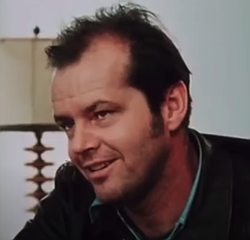
9) After directing a series of well-received dark comedies in Czechoslovakia (Black Peter, Loves of a Blonde, The Fireman’s Ball), Milos Forman tried his hand at an American film, the charmingly caustic generation gap comedy Taking Off. Perhaps it was the subject matter of mental illness or his willingness to give American audiences what he thought we wanted by relying so heavily on tight shots. Each character is sharply delineated by the script, making the film’s unremitting use of closeups all the more condescending — as if the proximity of the camera would somehow allow us a closer look inside the characters’ souls.
8) Cinematographer Haskell Wexler was fired and replaced by Bill Butler, who in turn was replaced by William A. Fraker, (the ‘A’ stands for apogee), who lensed the great fishing boat robbery. Wexler was one of the finest cameramen who ever lived. Just ask him. He told The New York Times there was, "only about a minute or two minutes in that film that I didn't shoot."
7) Filming took place not on a Hollywood soundstage, but in the still-extant Salem, Oregon mental hospital in which the novel is set. It was a bold move that tethered the setting to reality by transforming the rustic facility into an all-imposing character.
6) No tune better expresses the lobotomized mood of a mental institution than Charmaine, an antipsychotic frappe for the ears that results in rapid, restful tranquilization.
5) A flock of soon-to-be familiar faces round out the supporting players. The film marked the film debuts of Christopher Lloyd (Taber) and Brad Dourif (Billy Bibbit). Danny DeVito played Martini in the original stage production, so it stood to reason he would be the first to be cast. Sidney Lassisk had been cooling his heels after a couple of uncredited bits in the '50s failed to ignite a career. His role as the finicky Cheswick led to steady work until his death in 2003. Michael Berryman’s second film found him one picture away from his crowning role as the bald guy with the pointy head and hollowed-out sockets in The Hills Have Eyes, a performance as uniquely identifiable as a thumbprint.
4) Louise Fletcher deserved all the accolades heaped upon her performance, but there’s something inside me that couldn’t help but think of Colleen Dewhurst, Piper Laurie, or Shirley Stoler for the lead. Perhaps it’s the nurse's uniform the latter wore in The Honeymoon Killers that gave Stoler the edge in my mind.
3) The filmmakers argued that the Chief’s narration, as written by Kesey, would be too psychedelic for the good of the film. (Kesey volunteered to be an LSD guinea pig while in college, hence the novel's flights of surreal fancy.) That was Forman’s reason behind cutting Chief’s first-person narration from the script, but there's at least one more (spoiler alert): hearing Will Samson’s distinct voice reading the narration would have spoiled the film's big reveal.
2) The film’s tagline is: ”If he's crazy, what does that make you?” It was a different time when the film was first released in 1975: a time when a sex offender —guilty of “consensual” sex with a 15-year-old (McMurphy argues that his victim looked 18) and playing crazy in order to serve his time in more agreeable surroundings than a work farm — could pass as an anti-hero. Ken Kesey’s novel — the basis for Lawrence Hauben’s stage adaptation, which in tern served as the basis for the movie — was required reading in my senior year high school English class. The character as written by Kesey was much darker than the one Nicholson would eventually play. Ms. Joanne Rosow, my senior high English teacher and the first feminist I recall knowing, made the reason behind McMurphy’s conviction clear to her students. And talk about the perks of being an upperclassman: the school chartered a bus that deposited our class at the steps of Chicago’s 11th Street Theatre, where we were fortunate enough to witness the powerful character actor Jack Wallace as McMurphy. His performance not only helped him conquer his battle with alcoholism, it served as his calling card to the movies. His McMurphy was much closer in spirit to Kesey’s original, but Hollywood was in the market for a superstar, not a downer. (If he hadn't gotten Jack, the producer’s second choice was Burt Reynolds.) Soon after the play closed, it was off to Hollywood for Wallace. A bit part in Death Wish was soon followed by over 100 subsequent roles in movies and television.
1) Did you know that One Flew Over the Cuckoo’s Nest celebrates a milestone this year? Here’s your chance to see it on the big screen when the film celebrates the big Five-0 July 13 and July 16 at a theatre near you.
Here's something you might be interested in.
Now Playing: ONE FLEW OVER THE CUCKOO'S NEST (1975)
Here are 10 things you may not know about life in an Oregon mental institution

Now Playing: ONE FLEW OVER THE CUCKOO'S NEST (1975)
Here are 10 things you may not know about life in an Oregon mental institution
The cuckoos flee the nest.
10 things you might not know about ONE FLEW OVER THE CUCKOO’S NEST (1975)
10) The first actor considered to play Randle P. McMurphy was the same man who, in 1962, acquired the rights to the novel. Alas, by the time they got around to committing it to celluloid, Kirk Douglas was deemed too old for the role by his son/producer Michael. The decision drove a shiv between them that lasted for years. Before his leading man fame came close to eclipsing his dad’s, Michael Douglas was pounding a beat on The Streets of San Francisco. It was around this time that Kirk handed over the rights, with his blessing.
Video:
Trailer: ONE FLEW OVER THE CUCKOO'S NEST
9) After directing a series of well-received dark comedies in Czechoslovakia (Black Peter, Loves of a Blonde, The Fireman’s Ball), Milos Forman tried his hand at an American film, the charmingly caustic generation gap comedy Taking Off. Perhaps it was the subject matter of mental illness or his willingness to give American audiences what he thought we wanted by relying so heavily on tight shots. Each character is sharply delineated by the script, making the film’s unremitting use of closeups all the more condescending — as if the proximity of the camera would somehow allow us a closer look inside the characters’ souls.
8) Cinematographer Haskell Wexler was fired and replaced by Bill Butler, who in turn was replaced by William A. Fraker, (the ‘A’ stands for apogee), who lensed the great fishing boat robbery. Wexler was one of the finest cameramen who ever lived. Just ask him. He told The New York Times there was, "only about a minute or two minutes in that film that I didn't shoot."
7) Filming took place not on a Hollywood soundstage, but in the still-extant Salem, Oregon mental hospital in which the novel is set. It was a bold move that tethered the setting to reality by transforming the rustic facility into an all-imposing character.
6) No tune better expresses the lobotomized mood of a mental institution than Charmaine, an antipsychotic frappe for the ears that results in rapid, restful tranquilization.
5) A flock of soon-to-be familiar faces round out the supporting players. The film marked the film debuts of Christopher Lloyd (Taber) and Brad Dourif (Billy Bibbit). Danny DeVito played Martini in the original stage production, so it stood to reason he would be the first to be cast. Sidney Lassisk had been cooling his heels after a couple of uncredited bits in the '50s failed to ignite a career. His role as the finicky Cheswick led to steady work until his death in 2003. Michael Berryman’s second film found him one picture away from his crowning role as the bald guy with the pointy head and hollowed-out sockets in The Hills Have Eyes, a performance as uniquely identifiable as a thumbprint.
4) Louise Fletcher deserved all the accolades heaped upon her performance, but there’s something inside me that couldn’t help but think of Colleen Dewhurst, Piper Laurie, or Shirley Stoler for the lead. Perhaps it’s the nurse's uniform the latter wore in The Honeymoon Killers that gave Stoler the edge in my mind.
3) The filmmakers argued that the Chief’s narration, as written by Kesey, would be too psychedelic for the good of the film. (Kesey volunteered to be an LSD guinea pig while in college, hence the novel's flights of surreal fancy.) That was Forman’s reason behind cutting Chief’s first-person narration from the script, but there's at least one more (spoiler alert): hearing Will Samson’s distinct voice reading the narration would have spoiled the film's big reveal.
2) The film’s tagline is: ”If he's crazy, what does that make you?” It was a different time when the film was first released in 1975: a time when a sex offender —guilty of “consensual” sex with a 15-year-old (McMurphy argues that his victim looked 18) and playing crazy in order to serve his time in more agreeable surroundings than a work farm — could pass as an anti-hero. Ken Kesey’s novel — the basis for Lawrence Hauben’s stage adaptation, which in tern served as the basis for the movie — was required reading in my senior year high school English class. The character as written by Kesey was much darker than the one Nicholson would eventually play. Ms. Joanne Rosow, my senior high English teacher and the first feminist I recall knowing, made the reason behind McMurphy’s conviction clear to her students. And talk about the perks of being an upperclassman: the school chartered a bus that deposited our class at the steps of Chicago’s 11th Street Theatre, where we were fortunate enough to witness the powerful character actor Jack Wallace as McMurphy. His performance not only helped him conquer his battle with alcoholism, it served as his calling card to the movies. His McMurphy was much closer in spirit to Kesey’s original, but Hollywood was in the market for a superstar, not a downer. (If he hadn't gotten Jack, the producer’s second choice was Burt Reynolds.) Soon after the play closed, it was off to Hollywood for Wallace. A bit part in Death Wish was soon followed by over 100 subsequent roles in movies and television.
1) Did you know that One Flew Over the Cuckoo’s Nest celebrates a milestone this year? Here’s your chance to see it on the big screen when the film celebrates the big Five-0 July 13 and July 16 at a theatre near you.