

Here's something you might be interested in.
Ask a Hipster — Advice you didn't know you needed
Big Screen — Movie commentary
Blurt — Music's inside track
Booze News — San Diego spirits
Classical Music — Immortal beauty
Classifieds — Free and easy
Close to Home — What it’s like on the street where you live
Cover Stories — Front-page features
Drinks All Around — Bartenders' drink recipes
Excerpts — Literary and spiritual excerpts
Feast! — Food & drink reviews
Feature Stories — Local news & stories
Fishing Report — What’s getting hooked from ship and shore
From the Archives — Spotlight on the past
Golden Dreams — Talk of the town
The Gonzo Report — Making the musical scene, or at least reporting from it
Letters — Our inbox
Movies@Home — Local movie buffs share favorites
Movie Reviews — Our critics' picks and pans
Musician Interviews — Up close with local artists
Neighborhood News from Stringers — Hyperlocal news
News Ticker — News & politics
Obermeyer — San Diego politics illustrated
Outdoors — Weekly changes in flora and fauna
Overheard in San Diego — Eavesdropping illustrated
Poetry — The old and the new
Reader Travel — Travel section built by travelers
Reading — The hunt for intellectuals
Roam-O-Rama — SoCal's best hiking/biking trails
San Diego Beer — Inside San Diego suds
SD on the QT — Almost factual news
Sheep and Goats — Places of worship
Special Issues — The best of
Street Style — San Diego streets have style
Surf Diego — Real stories from those braving the waves
Theater — On stage in San Diego this week
Tin Fork — Silver spoon alternative
Under the Radar — Matt Potter's undercover work
Unforgettable — Long-ago San Diego
Unreal Estate — San Diego's priciest pads
Your Week — Daily event picks
From San Diego you have to go east for desert stories
The Great Basin, the Mojave, Arizona
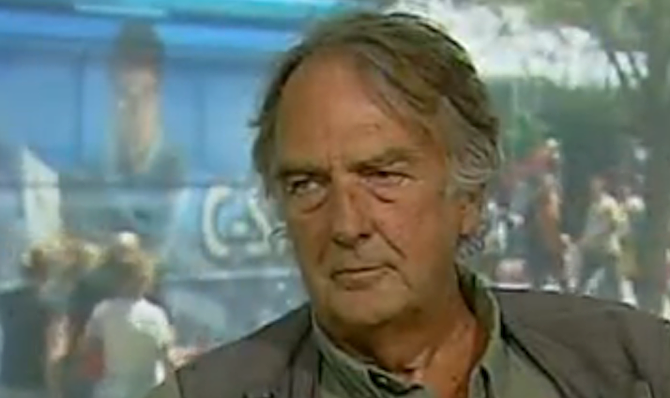
Charles Bowden, author of The Red Line
The Reader has started this series of its best stories from the past 52 years — 2600 cover stories and some remarkable interior features — to help make up for the loss of its physical edition, which was once large enough to hold whole oceans of print. These stories will feature all the original illustrations and photos (plus easy-to-read typography).
^^^^^^^^^^^
It is only a small irony that we, living in the southwestern most city in the land, have to go east to find the real Southwest. Accidents of nature and population have combined to create in San Diego the anomaly of a western East Coast metropolis with good weather. But the Southwest is out there, and "there'' is in the desert.
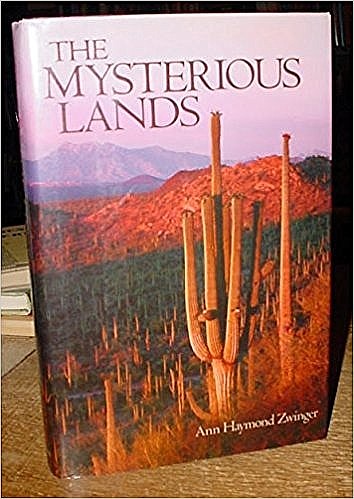
Mysterious Lands: the four great deserts of the Southwest; the Chihuahuan. Sonoran. Mojave, and the Great Basin
To me and many others, the desert is where things happen; the rest of life is filler between trips. Part of what spans the empty times for us — if the profusion of books published about our deserts in the last couple of years is any indication — is reading about where we'd rather be. More than armchair adventure, these books enhance the enjoyment of our trips by helping us identify the desert's unique flora and fauna and giving us historical perspective on the places we’ll see. They tell us what to expect there and warn us of potential dangers. And the books inspire new ideas and try to find answers to the questions that most of us ask ourselves. Why do we go out? Why the desert?
Ann Haymond Zwinger's point of view, in her book The Mysterious Lands (Dutton. 1989, $22.50), is that of the dedicated naturalist. Her scope is broad; she takes as her topic the four great deserts of the Southwest; the Chihuahuan. Sonoran. Mojave, and the Great Basin deserts. She covers them in sweeping detail, never losing sight of the fact that they all interact with one another and share as many common bonds as they have differences.
The book's 300 pages brim with facts.
Zwinger is adept at disguising information in lyrical language, and you enjoy the experience so much you don’t realize it was good for you. like medicine hidden in a sugar cube. While covering such scholarly subjects as how the deserts were formed, why they're hot in the daytime and cold at night, and how plants and animals adapt, she teaches fascinating survival lessons. Shrikes, for example, "cursed with a raptor's beak but a perching bird’s untaloned V feet" manage to eat what they can't hang on to by impaling their prey, mostly horned lizards, on the sharp terminating spines of yucca leaves.
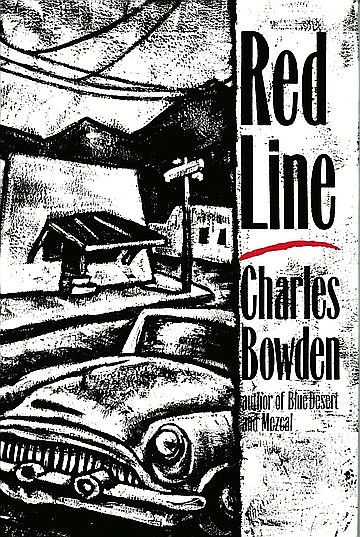
Red Line is reporting, not nature writing. It gets underway with the birth of Bowden's son in a Tucson hospital.
And century plants may not survive; they're endangered because the bats that pollinate them are being diminished through human encroachment on their habitat.
While the sheer weight of the information in The Mysterious Lands might be overwhelming at a single sitting, the book can replace half a dozen specialized field guides. The desert plants are here, vividly described (some even illustrated in detailed, multiple-viewpoint pencil drawings by the author), as are the reptiles, birds, insects, and mammals. And while ihe language of most field guides calls to mind high school biology textbooks. Zwinger’s is clear and frequently poetic.
I reach the band of creosote bushes, soaked Cymbals of lightning flare, sound made light. light made sound. Drops saucer the sand about me. sending up minute sprays of sand when they strike, each interrupting the last perfect depression until the sand is a senes of tiny puckered peaks. Despite the sound of the thunder, the rain is almost silent, absorbed by the sand, falling through the open creosote-bush branches, absorbed by the granular dryness.
Zwinger presents each chapter as a separate trip into the desert. Her forays have many goals, or perhaps excuses; counting bighorn sheep, studying lizards, or following a 16th-century trail linking Santa Fe with Chihuahua. Mexico. She weaves the natural history around the details of the trip, so the reader discovers the desert with her rather than being lectured to about it.
Zwinger is aware of the desert’s human history as well. She writes about the native inhabitants, the early white explorers, and the inroads made by technology, agriculture, and greed. She’s rarely overtly critical, but the subject of human impact upon the land arises repeatedly, in varying contexts. Her lesson is that improper management of desert lands isn't even good for those who might seem to benefit the most.
Close to home, agribusiness concerns in the Imperial Valley have "made the desert bloom" but at the price of oversalinated soils, hungry insect pests that breed and adapt quickly, and poisoned water supplies. "The gloomiest estimates are for only 20 years more life before the valley is no longer fit for crops and the desert takes back its own."
The book closes with 60 pages of notes, keyed to text pages and divided by chapter, plus an annotated bibliography. Although there’s enough natural history in our four deserts to stuff an encyclopedia, Zwinger. through careful selection, distills it into a readable, informative brew that won't soon be bettered.
For Charles Bowden, author of Red Line, (Norton, 1989, $16.95). the desert is background, fixation; his subject is himself. Bowden is committing self-therapy in print, usually among the most heinous of literary crimes, but his writing is so meaty, he earns the reader's forgiveness. There’s something elemental about his writing, raging with the force of a flash flood.
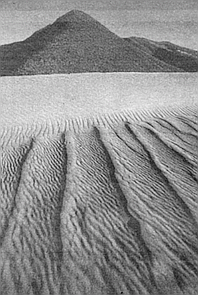
Eureka Valley in Time's Island. Time's Island rises above its uninspired prose and sometimes lackluster photography to present a landscape worth saving.
Red Line is reporting, not nature writing. It gets underway with the birth of Bowden's son in a Tucson hospital. “I think, what a place to begin life, in a huge building devoted to proving life is hardly worth all the risks. All the wings are named for crushed Indian tribes." The next morning, two drug dealers are found dead. A friend, a retired cop, comes to Bowden (who at the time of the book’s writing was editor in chief of Tucson's City Magazine) and convinces him that they should team up to investigate the deaths, particularly that of the notorious Ignacio Robles Valencia. a.k.a. “Nacho." Bowden knows there’s no way to sell the story of the murder of a drug-dealing Mexican psychopath, and the retired cop has no formal authority anymore. But that doesn't stop them. “I am going after Nacho because I am as hungry and empty as he is," Bowden writes. "The details of my life have begun to catch up with me."
The hunt for the truth about Nacho gives the book its narrative structure. Bowden and the cop travel to barrios in Tucson and Nogales, talk to people who knew Nacho, are warned off by cops on both sides of the fence and finally by some of Nacho’s associates. Since this isn’t a true crime book or a detective story, they don't turn up the murderer. “A year after Nacho's death, a Mexican is indicted for the killing. The man has the usual past.” Details don’t matter. The Nacho story is a metaphor and a framework. Wrapped around it in constantly shifting layers are other stories, other times and places. Desert trips, political meetings, relationships with women, pets, wetbacks, strangers in bars, and meditations on urban sprawl and bureaucrats and the author himself fill the pages, always in the presence of the desert.
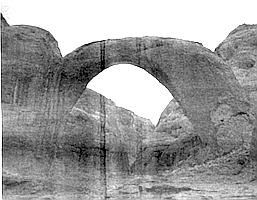
Rainbow Ridge from Coyote's Canyon. "Pull out your pocket-knife, open the blade, and run it across your arm. If you draw blood, you are human."
Bowden is less awed by nature than Zwinger. "The desert is flat in this weak light, a pan of creosote punctured here and there by skinny towers of the saguaro.” His desert is today’s desert, straining under the burden of humanity's presence. One wonders if his desert can coexist with hers. Not that he loves it any less or is any less concerned about its future. “I can remember when the ground was pretty much the way it had been the day Cortes burned his ships and left his men on the beach to win Mexico or die. Which is to say, I can remember back four or five years" It may be his bleak view of the desert’s future that drives him into it now, seeking to crowd as much of it as possible into his experience.
Gibbs Smith, based in Utah, publishes a line of beautifully made books about the desert Southwest. Typically, these are short books, paperback, expensive-looking but a bargain when you see what you get. Great care is taken with the color reproduction, and the photographers are among the best working with the Western landscape today.:
Gibbs Smith's Coyote's Canyon (1989, $15.95) combines the photographs of John Telford with the words of naturalist Terry-Tempest Williams. In this book, though, Williams assumes the role of myth-maker. Her seven stories are exercises in creating "a new mythology for desert-goers, one that acknowledges the power of story and ritual, yet lies within the integrity of our own cultures." She has a clear, if unique vision of her audience. "Pull out your pocket-knife, open the blade, and run it across your arm. If you draw blood, you are human. If you draw wet sand that dries quickly, then you will know that you have become part of the desert. Not until then can you claim ownership."
Her stories are short, four or five pages, and range from a tale of a woman's rebirth to a creation myth about a couple who create all the animals, the stars, and their families from riverbed stones. Along the way. we are exposed to a smattering of natural history, some Indian lore, and conflicts between those who understand the desert and those who don't.
Telford's photographs, surrounding the stories and sandwiched between them, elucidate the text without trying to illustrate it. Both photographs and text benefit from the layout of the book; the text is presented in clean, well-spaced. uncluttered pages. The photos take as much space as they need, up to a full page, maintaining the integrity of the photographer's original vision.
Another recent book from Gibbs Smith is Time's Island (1989. $16.95) by T.H. Watkins, illustrated with photographs from a number of sources, including the author. But the book is awkwardly designed, making it hard to read; this is unfortunate, because its message is worthwhile and important. The most blatantly political of the books under discussion. Time's Island examines in detail some of the environmental problems facing California's deserts and offers as part of the solution Senator Cranston’s Desert Protection Act. Ultimately, Time's Island rises above its uninspired prose and sometimes lackluster photography to present a landscape worth saving, a concise look at the difficulties ahead, and some hope for the future.
Implicit in all these books is the fact that unless we change the way we treat our deserts, before long the books will be all we have left. Meanwhile, those of us who love the desert will continue to seek that magical culmination of sand and smoke tree, cactus and kit fox, the sharp scent of creosote bush, and the whisper of wind rustling mesquite branches.
This story first appeared in the Reader on December 21, 1989.
Here's something you might be interested in.
From San Diego you have to go east for desert stories
The Great Basin, the Mojave, Arizona

From San Diego you have to go east for desert stories
The Great Basin, the Mojave, Arizona
Charles Bowden, author of The Red Line
The Reader has started this series of its best stories from the past 52 years — 2600 cover stories and some remarkable interior features — to help make up for the loss of its physical edition, which was once large enough to hold whole oceans of print. These stories will feature all the original illustrations and photos (plus easy-to-read typography).
^^^^^^^^^^^
It is only a small irony that we, living in the southwestern most city in the land, have to go east to find the real Southwest. Accidents of nature and population have combined to create in San Diego the anomaly of a western East Coast metropolis with good weather. But the Southwest is out there, and "there'' is in the desert.
Mysterious Lands: the four great deserts of the Southwest; the Chihuahuan. Sonoran. Mojave, and the Great Basin
To me and many others, the desert is where things happen; the rest of life is filler between trips. Part of what spans the empty times for us — if the profusion of books published about our deserts in the last couple of years is any indication — is reading about where we'd rather be. More than armchair adventure, these books enhance the enjoyment of our trips by helping us identify the desert's unique flora and fauna and giving us historical perspective on the places we’ll see. They tell us what to expect there and warn us of potential dangers. And the books inspire new ideas and try to find answers to the questions that most of us ask ourselves. Why do we go out? Why the desert?
Ann Haymond Zwinger's point of view, in her book The Mysterious Lands (Dutton. 1989, $22.50), is that of the dedicated naturalist. Her scope is broad; she takes as her topic the four great deserts of the Southwest; the Chihuahuan. Sonoran. Mojave, and the Great Basin deserts. She covers them in sweeping detail, never losing sight of the fact that they all interact with one another and share as many common bonds as they have differences.
The book's 300 pages brim with facts.
Zwinger is adept at disguising information in lyrical language, and you enjoy the experience so much you don’t realize it was good for you. like medicine hidden in a sugar cube. While covering such scholarly subjects as how the deserts were formed, why they're hot in the daytime and cold at night, and how plants and animals adapt, she teaches fascinating survival lessons. Shrikes, for example, "cursed with a raptor's beak but a perching bird’s untaloned V feet" manage to eat what they can't hang on to by impaling their prey, mostly horned lizards, on the sharp terminating spines of yucca leaves.
Red Line is reporting, not nature writing. It gets underway with the birth of Bowden's son in a Tucson hospital.
And century plants may not survive; they're endangered because the bats that pollinate them are being diminished through human encroachment on their habitat.
While the sheer weight of the information in The Mysterious Lands might be overwhelming at a single sitting, the book can replace half a dozen specialized field guides. The desert plants are here, vividly described (some even illustrated in detailed, multiple-viewpoint pencil drawings by the author), as are the reptiles, birds, insects, and mammals. And while ihe language of most field guides calls to mind high school biology textbooks. Zwinger’s is clear and frequently poetic.
I reach the band of creosote bushes, soaked Cymbals of lightning flare, sound made light. light made sound. Drops saucer the sand about me. sending up minute sprays of sand when they strike, each interrupting the last perfect depression until the sand is a senes of tiny puckered peaks. Despite the sound of the thunder, the rain is almost silent, absorbed by the sand, falling through the open creosote-bush branches, absorbed by the granular dryness.
Zwinger presents each chapter as a separate trip into the desert. Her forays have many goals, or perhaps excuses; counting bighorn sheep, studying lizards, or following a 16th-century trail linking Santa Fe with Chihuahua. Mexico. She weaves the natural history around the details of the trip, so the reader discovers the desert with her rather than being lectured to about it.
Zwinger is aware of the desert’s human history as well. She writes about the native inhabitants, the early white explorers, and the inroads made by technology, agriculture, and greed. She’s rarely overtly critical, but the subject of human impact upon the land arises repeatedly, in varying contexts. Her lesson is that improper management of desert lands isn't even good for those who might seem to benefit the most.
Close to home, agribusiness concerns in the Imperial Valley have "made the desert bloom" but at the price of oversalinated soils, hungry insect pests that breed and adapt quickly, and poisoned water supplies. "The gloomiest estimates are for only 20 years more life before the valley is no longer fit for crops and the desert takes back its own."
The book closes with 60 pages of notes, keyed to text pages and divided by chapter, plus an annotated bibliography. Although there’s enough natural history in our four deserts to stuff an encyclopedia, Zwinger. through careful selection, distills it into a readable, informative brew that won't soon be bettered.
For Charles Bowden, author of Red Line, (Norton, 1989, $16.95). the desert is background, fixation; his subject is himself. Bowden is committing self-therapy in print, usually among the most heinous of literary crimes, but his writing is so meaty, he earns the reader's forgiveness. There’s something elemental about his writing, raging with the force of a flash flood.
Eureka Valley in Time's Island. Time's Island rises above its uninspired prose and sometimes lackluster photography to present a landscape worth saving.
Red Line is reporting, not nature writing. It gets underway with the birth of Bowden's son in a Tucson hospital. “I think, what a place to begin life, in a huge building devoted to proving life is hardly worth all the risks. All the wings are named for crushed Indian tribes." The next morning, two drug dealers are found dead. A friend, a retired cop, comes to Bowden (who at the time of the book’s writing was editor in chief of Tucson's City Magazine) and convinces him that they should team up to investigate the deaths, particularly that of the notorious Ignacio Robles Valencia. a.k.a. “Nacho." Bowden knows there’s no way to sell the story of the murder of a drug-dealing Mexican psychopath, and the retired cop has no formal authority anymore. But that doesn't stop them. “I am going after Nacho because I am as hungry and empty as he is," Bowden writes. "The details of my life have begun to catch up with me."
The hunt for the truth about Nacho gives the book its narrative structure. Bowden and the cop travel to barrios in Tucson and Nogales, talk to people who knew Nacho, are warned off by cops on both sides of the fence and finally by some of Nacho’s associates. Since this isn’t a true crime book or a detective story, they don't turn up the murderer. “A year after Nacho's death, a Mexican is indicted for the killing. The man has the usual past.” Details don’t matter. The Nacho story is a metaphor and a framework. Wrapped around it in constantly shifting layers are other stories, other times and places. Desert trips, political meetings, relationships with women, pets, wetbacks, strangers in bars, and meditations on urban sprawl and bureaucrats and the author himself fill the pages, always in the presence of the desert.
Rainbow Ridge from Coyote's Canyon. "Pull out your pocket-knife, open the blade, and run it across your arm. If you draw blood, you are human."
Bowden is less awed by nature than Zwinger. "The desert is flat in this weak light, a pan of creosote punctured here and there by skinny towers of the saguaro.” His desert is today’s desert, straining under the burden of humanity's presence. One wonders if his desert can coexist with hers. Not that he loves it any less or is any less concerned about its future. “I can remember when the ground was pretty much the way it had been the day Cortes burned his ships and left his men on the beach to win Mexico or die. Which is to say, I can remember back four or five years" It may be his bleak view of the desert’s future that drives him into it now, seeking to crowd as much of it as possible into his experience.
Gibbs Smith, based in Utah, publishes a line of beautifully made books about the desert Southwest. Typically, these are short books, paperback, expensive-looking but a bargain when you see what you get. Great care is taken with the color reproduction, and the photographers are among the best working with the Western landscape today.:
Gibbs Smith's Coyote's Canyon (1989, $15.95) combines the photographs of John Telford with the words of naturalist Terry-Tempest Williams. In this book, though, Williams assumes the role of myth-maker. Her seven stories are exercises in creating "a new mythology for desert-goers, one that acknowledges the power of story and ritual, yet lies within the integrity of our own cultures." She has a clear, if unique vision of her audience. "Pull out your pocket-knife, open the blade, and run it across your arm. If you draw blood, you are human. If you draw wet sand that dries quickly, then you will know that you have become part of the desert. Not until then can you claim ownership."
Her stories are short, four or five pages, and range from a tale of a woman's rebirth to a creation myth about a couple who create all the animals, the stars, and their families from riverbed stones. Along the way. we are exposed to a smattering of natural history, some Indian lore, and conflicts between those who understand the desert and those who don't.
Telford's photographs, surrounding the stories and sandwiched between them, elucidate the text without trying to illustrate it. Both photographs and text benefit from the layout of the book; the text is presented in clean, well-spaced. uncluttered pages. The photos take as much space as they need, up to a full page, maintaining the integrity of the photographer's original vision.
Another recent book from Gibbs Smith is Time's Island (1989. $16.95) by T.H. Watkins, illustrated with photographs from a number of sources, including the author. But the book is awkwardly designed, making it hard to read; this is unfortunate, because its message is worthwhile and important. The most blatantly political of the books under discussion. Time's Island examines in detail some of the environmental problems facing California's deserts and offers as part of the solution Senator Cranston’s Desert Protection Act. Ultimately, Time's Island rises above its uninspired prose and sometimes lackluster photography to present a landscape worth saving, a concise look at the difficulties ahead, and some hope for the future.
Implicit in all these books is the fact that unless we change the way we treat our deserts, before long the books will be all we have left. Meanwhile, those of us who love the desert will continue to seek that magical culmination of sand and smoke tree, cactus and kit fox, the sharp scent of creosote bush, and the whisper of wind rustling mesquite branches.
This story first appeared in the Reader on December 21, 1989.