

Here's something you might be interested in.
Ask a Hipster — Advice you didn't know you needed
Big Screen — Movie commentary
Blurt — Music's inside track
Booze News — San Diego spirits
Classical Music — Immortal beauty
Classifieds — Free and easy
Close to Home — What it’s like on the street where you live
Cover Stories — Front-page features
Drinks All Around — Bartenders' drink recipes
Excerpts — Literary and spiritual excerpts
Feast! — Food & drink reviews
Feature Stories — Local news & stories
Fishing Report — What’s getting hooked from ship and shore
From the Archives — Spotlight on the past
Golden Dreams — Talk of the town
The Gonzo Report — Making the musical scene, or at least reporting from it
Letters — Our inbox
Movies@Home — Local movie buffs share favorites
Movie Reviews — Our critics' picks and pans
Musician Interviews — Up close with local artists
Neighborhood News from Stringers — Hyperlocal news
News Ticker — News & politics
Obermeyer — San Diego politics illustrated
Outdoors — Weekly changes in flora and fauna
Overheard in San Diego — Eavesdropping illustrated
Poetry — The old and the new
Reader Travel — Travel section built by travelers
Reading — The hunt for intellectuals
Roam-O-Rama — SoCal's best hiking/biking trails
San Diego Beer — Inside San Diego suds
SD on the QT — Almost factual news
Sheep and Goats — Places of worship
Special Issues — The best of
Street Style — San Diego streets have style
Surf Diego — Real stories from those braving the waves
Theater — On stage in San Diego this week
Tin Fork — Silver spoon alternative
Under the Radar — Matt Potter's undercover work
Unforgettable — Long-ago San Diego
Unreal Estate — San Diego's priciest pads
Your Week — Daily event picks
Maligned Netrebko returns to Covent Garden
Naturally, the off-stage drama is overshadowing the music
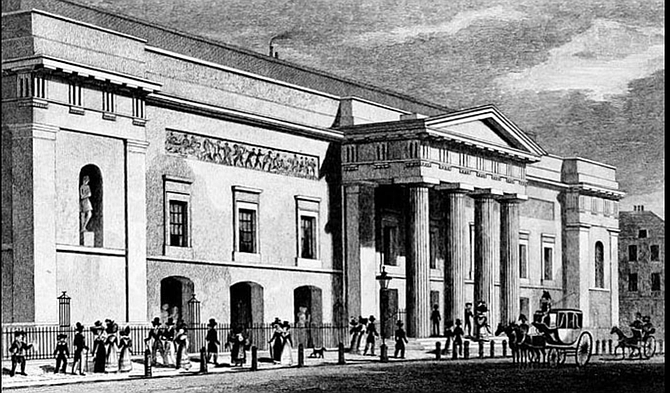
Covent Garden in 1820.
After a six-year hiatus, renowned Russian soprano Anna Netrebko is set to make a highly anticipated — and deeply divisive — return to London’s Royal Opera House at Covent Garden. The 53-year-old opera star will open the 2025-26 season in a new production of Giacomo Puccini’s Tosca, portraying the titular role from September 11 to 21, 2025. This marks her first appearance at the venue since 2019.
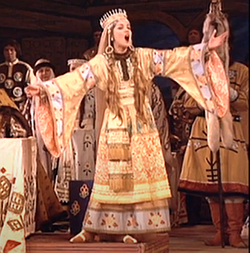
Once upon a time, Netrebko was hailed as one of the greatest sopranos of her generation. She built a stellar career with performances across the world’s premier stages. Born in Krasnodar, Russia, Netrebko gained international fame in the early 2000s. She first became known to Western audiences thanks to her performance in a 1995 movie production of Mikhail Glinka’s Ruslan and Lyudmilla. A few years back, I was invited to a screening of that production at the home of a local opera supporter. It was obvious that Netrebko was bound to be a star.
Video:
Anna Netrebko - Ruslan and Lyudmila
As her career progressed, she moved from lyric roles such as Mimi in La Boheme to dramatic roles such as Tosca. However, her return to Covent Garden comes amid ongoing scrutiny over her ties to Russian President Vladimir Putin and her initial reluctance to condemn Russia’s invasion of Ukraine in 2022.
In 2012, she served as a trusted supporter in Putin’s election campaign. Two years later, she was photographed holding a flag of the self-proclaimed “Novorossiya” in occupied Donetsk, a move that drew widespread criticism. Following the 2022 invasion of Ukraine, several Western opera houses, including New York’s Metropolitan Opera, severed ties with her. Met General Manager Peter Gelb has remained steadfast in his opposition, recently warning Covent Garden against the current booking.
Ukrainian officials and activists have vocally protested Netrebko’s comeback. Andriy Yermak, head of Ukraine’s Presidential Office, highlighted her pro-Putin stance on X, while diplomat Sergiy Kyslytsya accused the Royal Opera House of a “self-inflicted 9/11” to its reputation — a statement that is quite operatic in scale.
An open letter published in The Guardian, signed by Ukrainian cultural figures, urged the venue to reconsider, arguing it prioritizes profit over values amid ongoing Russian attacks on Ukraine. But Royal Opera House CEO Alex Beard defended the decision, stating that the institution’s support for Ukraine aligned with global consensus initially, but has evolved as “geopolitics have become more complex.”
Defenders of Netrebko point out that she has since condemned the war, albeit belatedly, and that she holds Austrian citizenship. Tenor Joseph Calleja praised her return, calling bans on artists “nonsense” unless they actively support aggression. Critics like The Spectator’s Stephen Pollard argue that boycotts should target explicit Putin backers like conductor Valery Gergiev, not performers who have distanced themselves.
The production itself promises artistic fireworks. Directed by a fresh creative team, it features Netrebko sharing the stage with emerging talents, potentially revitalizing Puccini’s tragic tale of love, jealousy, and political intrigue.
Of course, it could also potentially be a re-imagined piece of junk. It might work to set the production in the current day and have Scarpia, the brutal police chief of Rome, portrayed as Putin. Tosca, an opera singer, could be portrayed as Netrebko herself. That’s a little bit silly, but I’ve definitely seen worse.
Naturally, the off-stage drama is overshadowing the music: sold-out performances indicate strong audience demand, but protests loom, with calls for boycotts echoing on social media.
Interestingly, none of this stops any bombs from falling on Ukraine. Netrebko’s Covent Garden return does nothing to thwart or promote a peace treaty. This is members of the arts community masquerading as geopolitical players, which they are not.
Netrebko's return is a far cry from the use of the arts as propaganda in mid-20th-century fascist states. It’s not propaganda at all. The fact of the matter is that opera needs opera stars, and Netrebko is one of the biggest.
Here's something you might be interested in.
Maligned Netrebko returns to Covent Garden
Naturally, the off-stage drama is overshadowing the music

Maligned Netrebko returns to Covent Garden
Naturally, the off-stage drama is overshadowing the music
Covent Garden in 1820.
After a six-year hiatus, renowned Russian soprano Anna Netrebko is set to make a highly anticipated — and deeply divisive — return to London’s Royal Opera House at Covent Garden. The 53-year-old opera star will open the 2025-26 season in a new production of Giacomo Puccini’s Tosca, portraying the titular role from September 11 to 21, 2025. This marks her first appearance at the venue since 2019.
Once upon a time, Netrebko was hailed as one of the greatest sopranos of her generation. She built a stellar career with performances across the world’s premier stages. Born in Krasnodar, Russia, Netrebko gained international fame in the early 2000s. She first became known to Western audiences thanks to her performance in a 1995 movie production of Mikhail Glinka’s Ruslan and Lyudmilla. A few years back, I was invited to a screening of that production at the home of a local opera supporter. It was obvious that Netrebko was bound to be a star.
Video:
Anna Netrebko - Ruslan and Lyudmila
As her career progressed, she moved from lyric roles such as Mimi in La Boheme to dramatic roles such as Tosca. However, her return to Covent Garden comes amid ongoing scrutiny over her ties to Russian President Vladimir Putin and her initial reluctance to condemn Russia’s invasion of Ukraine in 2022.
In 2012, she served as a trusted supporter in Putin’s election campaign. Two years later, she was photographed holding a flag of the self-proclaimed “Novorossiya” in occupied Donetsk, a move that drew widespread criticism. Following the 2022 invasion of Ukraine, several Western opera houses, including New York’s Metropolitan Opera, severed ties with her. Met General Manager Peter Gelb has remained steadfast in his opposition, recently warning Covent Garden against the current booking.
Ukrainian officials and activists have vocally protested Netrebko’s comeback. Andriy Yermak, head of Ukraine’s Presidential Office, highlighted her pro-Putin stance on X, while diplomat Sergiy Kyslytsya accused the Royal Opera House of a “self-inflicted 9/11” to its reputation — a statement that is quite operatic in scale.
An open letter published in The Guardian, signed by Ukrainian cultural figures, urged the venue to reconsider, arguing it prioritizes profit over values amid ongoing Russian attacks on Ukraine. But Royal Opera House CEO Alex Beard defended the decision, stating that the institution’s support for Ukraine aligned with global consensus initially, but has evolved as “geopolitics have become more complex.”
Defenders of Netrebko point out that she has since condemned the war, albeit belatedly, and that she holds Austrian citizenship. Tenor Joseph Calleja praised her return, calling bans on artists “nonsense” unless they actively support aggression. Critics like The Spectator’s Stephen Pollard argue that boycotts should target explicit Putin backers like conductor Valery Gergiev, not performers who have distanced themselves.
The production itself promises artistic fireworks. Directed by a fresh creative team, it features Netrebko sharing the stage with emerging talents, potentially revitalizing Puccini’s tragic tale of love, jealousy, and political intrigue.
Of course, it could also potentially be a re-imagined piece of junk. It might work to set the production in the current day and have Scarpia, the brutal police chief of Rome, portrayed as Putin. Tosca, an opera singer, could be portrayed as Netrebko herself. That’s a little bit silly, but I’ve definitely seen worse.
Naturally, the off-stage drama is overshadowing the music: sold-out performances indicate strong audience demand, but protests loom, with calls for boycotts echoing on social media.
Interestingly, none of this stops any bombs from falling on Ukraine. Netrebko’s Covent Garden return does nothing to thwart or promote a peace treaty. This is members of the arts community masquerading as geopolitical players, which they are not.
Netrebko's return is a far cry from the use of the arts as propaganda in mid-20th-century fascist states. It’s not propaganda at all. The fact of the matter is that opera needs opera stars, and Netrebko is one of the biggest.
Comments