

Here's something you might be interested in.
Ask a Hipster — Advice you didn't know you needed
Big Screen — Movie commentary
Blurt — Music's inside track
Booze News — San Diego spirits
Classical Music — Immortal beauty
Classifieds — Free and easy
Close to Home — What it’s like on the street where you live
Cover Stories — Front-page features
Drinks All Around — Bartenders' drink recipes
Excerpts — Literary and spiritual excerpts
Feast! — Food & drink reviews
Feature Stories — Local news & stories
Fishing Report — What’s getting hooked from ship and shore
From the Archives — Spotlight on the past
Golden Dreams — Talk of the town
The Gonzo Report — Making the musical scene, or at least reporting from it
Letters — Our inbox
Movies@Home — Local movie buffs share favorites
Movie Reviews — Our critics' picks and pans
Musician Interviews — Up close with local artists
Neighborhood News from Stringers — Hyperlocal news
News Ticker — News & politics
Obermeyer — San Diego politics illustrated
Outdoors — Weekly changes in flora and fauna
Overheard in San Diego — Eavesdropping illustrated
Poetry — The old and the new
Reader Travel — Travel section built by travelers
Reading — The hunt for intellectuals
Roam-O-Rama — SoCal's best hiking/biking trails
San Diego Beer — Inside San Diego suds
SD on the QT — Almost factual news
Sheep and Goats — Places of worship
Special Issues — The best of
Street Style — San Diego streets have style
Surf Diego — Real stories from those braving the waves
Theater — On stage in San Diego this week
Tin Fork — Silver spoon alternative
Under the Radar — Matt Potter's undercover work
Unforgettable — Long-ago San Diego
Unreal Estate — San Diego's priciest pads
Your Week — Daily event picks
The lack-buster motion picture score
With my last breath, I will urge whoever is in the room to write a good melody first.
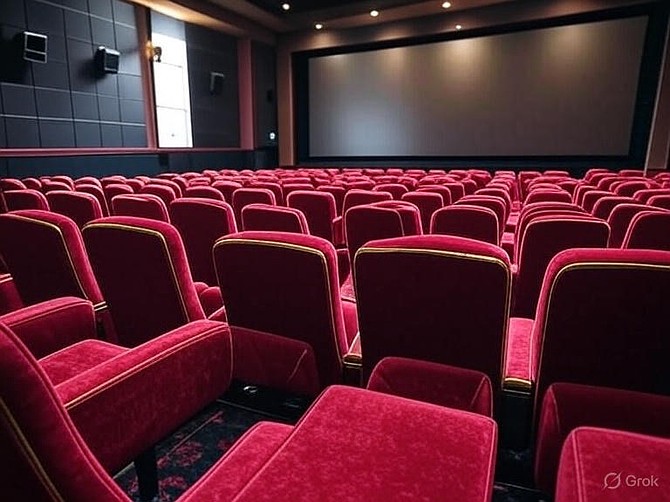
Image created by Grok 4 AI
Once upon a time, we went to the movies during the summer and enjoyed a blockbuster movie, the theater's AC, and some junk food. The AC and junk food are still a treat, but the summer blockbuster has become the summer lack-buster.
An integral part of the blockbuster movie was the motion picture score. Those of us who love classical music used to claim that true classical music left the concert hall and entered the movie theater after WWII. This was partly because movie scores continued to use a thing called melody — you know, that part of music that sticks in your ear and lodges in your heart.
A good melody is what makes us love a piece of music. The harmony and tonal color support the melody, but it is the melody that sticks.
Well, the movies have also given up on melody. The lack-busters of the past 10 years have lacked any type of melody that would allow audiences to love the score. Even a successful movie such as Oppenheimer failed to make audiences remember, let alone love, the score. From what I can remember, the music in Oppenheimer was effective but forgettable.
The same could be said for 2022’s The Batman. I remember thinking the score was remarkable, but I’ve never been compelled to listen to it outside of watching the movie. Do you remember that? We used to listen to motion picture scores without watching the movie. That was real. I’m not making it up.
I’m not sure why it’s so difficult for the composers of our current era to understand that a great melody is what makes a great piece of music. I know I sound like a musical simpleton when I make such statements. However, I will not be budged from this position. With my last breath, I will urge whoever is in the room to write a good melody first.
It’s truly infuriating that composers refuse to write and develop a functional melody. I don’t expect it from composers writing for the concert hall, because the nonprofit aspect of the concert hall underwrites their efforts. But the movies are in it for the money; therefore, you might assume they’d want music that appeals to the market. Apparently not.
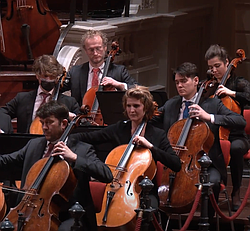
Let’s take one of my favorite movie overtures, The Sea Hawk by Erich Korngold. After the initial fanfares, Korngold introduces an excessively sentimental melody that I adore. Some might even call it schmaltzy. He then goes on to develop that tune with different tone colors and dynamics. It’s fantastic and stands alone as a piece of music I can love even if I’ve never seen the movie.
Video:
Korngold: The Sea Hawk
No, no. We can’t have the audience loving music. We need to challenge the audience to lose their bourgeois taste in simple melody supported by a major triad. Music is an instrument of challenge, not love.
It makes me want to puke.
Here's something you might be interested in.
The lack-buster motion picture score
With my last breath, I will urge whoever is in the room to write a good melody first.

The lack-buster motion picture score
With my last breath, I will urge whoever is in the room to write a good melody first.
Image created by Grok 4 AI
Once upon a time, we went to the movies during the summer and enjoyed a blockbuster movie, the theater's AC, and some junk food. The AC and junk food are still a treat, but the summer blockbuster has become the summer lack-buster.
An integral part of the blockbuster movie was the motion picture score. Those of us who love classical music used to claim that true classical music left the concert hall and entered the movie theater after WWII. This was partly because movie scores continued to use a thing called melody — you know, that part of music that sticks in your ear and lodges in your heart.
A good melody is what makes us love a piece of music. The harmony and tonal color support the melody, but it is the melody that sticks.
Well, the movies have also given up on melody. The lack-busters of the past 10 years have lacked any type of melody that would allow audiences to love the score. Even a successful movie such as Oppenheimer failed to make audiences remember, let alone love, the score. From what I can remember, the music in Oppenheimer was effective but forgettable.
The same could be said for 2022’s The Batman. I remember thinking the score was remarkable, but I’ve never been compelled to listen to it outside of watching the movie. Do you remember that? We used to listen to motion picture scores without watching the movie. That was real. I’m not making it up.
I’m not sure why it’s so difficult for the composers of our current era to understand that a great melody is what makes a great piece of music. I know I sound like a musical simpleton when I make such statements. However, I will not be budged from this position. With my last breath, I will urge whoever is in the room to write a good melody first.
It’s truly infuriating that composers refuse to write and develop a functional melody. I don’t expect it from composers writing for the concert hall, because the nonprofit aspect of the concert hall underwrites their efforts. But the movies are in it for the money; therefore, you might assume they’d want music that appeals to the market. Apparently not.
Let’s take one of my favorite movie overtures, The Sea Hawk by Erich Korngold. After the initial fanfares, Korngold introduces an excessively sentimental melody that I adore. Some might even call it schmaltzy. He then goes on to develop that tune with different tone colors and dynamics. It’s fantastic and stands alone as a piece of music I can love even if I’ve never seen the movie.
Video:
Korngold: The Sea Hawk
No, no. We can’t have the audience loving music. We need to challenge the audience to lose their bourgeois taste in simple melody supported by a major triad. Music is an instrument of challenge, not love.
It makes me want to puke.
Comments