

Here's something you might be interested in.
Ask a Hipster — Advice you didn't know you needed
Big Screen — Movie commentary
Blurt — Music's inside track
Booze News — San Diego spirits
Classical Music — Immortal beauty
Classifieds — Free and easy
Close to Home — What it’s like on the street where you live
Cover Stories — Front-page features
Drinks All Around — Bartenders' drink recipes
Excerpts — Literary and spiritual excerpts
Feast! — Food & drink reviews
Feature Stories — Local news & stories
Fishing Report — What’s getting hooked from ship and shore
From the Archives — Spotlight on the past
Golden Dreams — Talk of the town
The Gonzo Report — Making the musical scene, or at least reporting from it
Letters — Our inbox
Movies@Home — Local movie buffs share favorites
Movie Reviews — Our critics' picks and pans
Musician Interviews — Up close with local artists
Neighborhood News from Stringers — Hyperlocal news
News Ticker — News & politics
Obermeyer — San Diego politics illustrated
Outdoors — Weekly changes in flora and fauna
Overheard in San Diego — Eavesdropping illustrated
Poetry — The old and the new
Reader Travel — Travel section built by travelers
Reading — The hunt for intellectuals
Roam-O-Rama — SoCal's best hiking/biking trails
San Diego Beer — Inside San Diego suds
SD on the QT — Almost factual news
Sheep and Goats — Places of worship
Special Issues — The best of
Street Style — San Diego streets have style
Surf Diego — Real stories from those braving the waves
Theater — On stage in San Diego this week
Tin Fork — Silver spoon alternative
Under the Radar — Matt Potter's undercover work
Unforgettable — Long-ago San Diego
Unreal Estate — San Diego's priciest pads
Your Week — Daily event picks
Why not put the Pangaea Sports Complex east of I-5?
Defenders of J Street Marsh's sea turtles and eelgrass speak out
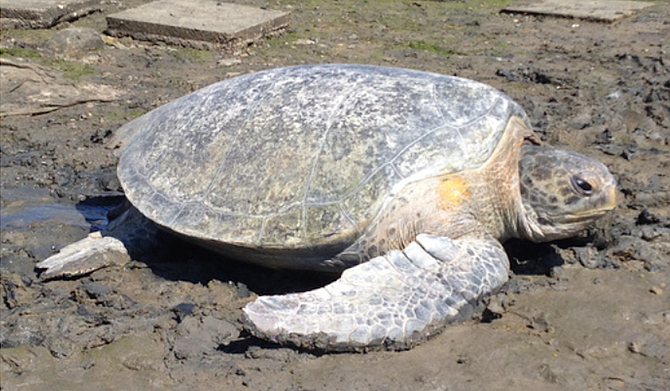
Green sea turle at old power plant on San Diego Bay
A major sporting venue proposed for the Chula Vista bayfront promises jobs, tourists, local visitors, and recreation — but what will it bring to the Bay itself? Environmental advocates fear the answer to that question will be lights, noise and pollution.
Pangaea, a proposed sports and entertainment district at 990 Bay Boulevard, would sit immediately adjacent on two sides to the J Street marsh, which environmentalists say is one of the most important wildlife areas in San Diego Bay.
Last month, San Diego port commissioners unanimously approved a six-month negotiating agreement with the McGarey Group to develop 124 waterfront acres into the Pangaea Chula Vista Sports Entertainment District, as the proposal is called.
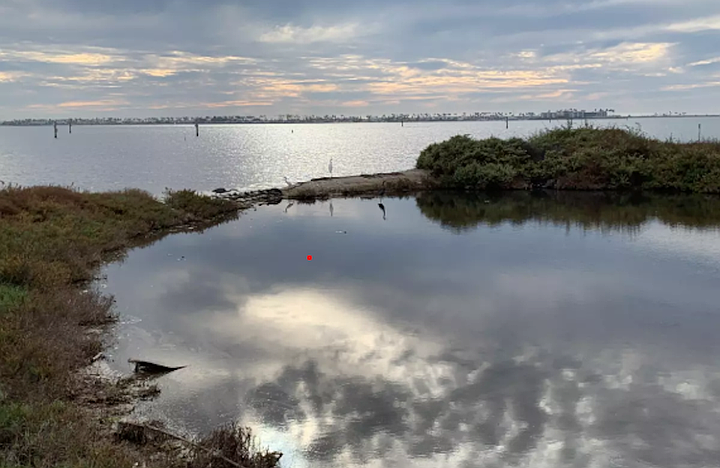
Wildlife refuge pond in disputed area
Environmental advocates saw it as an unreasonable starting point for negotiations, and one they claimed didn’t adhere to a 2010 settlement agreement involving Chula Vista bayfront development. (The 2010 agreement resolved a long-standing dispute over the development of the Chula Vista Bayfront and involved the port, the city of Chula Vista, and other stakeholders.)
“Someone needs to speak for the Bay, and I guess I’m the one,” said Dan McKirnan, representing the Environmental Health Coalition, which has been working to clean up San Diego Bay since 1985.
McKirnan is a member of the Wildlife Advisory Group formed by the settlement agreement to advise the port on the development and implementation of the Natural Resources Management Plan for the Chula Vista Bayfront.
The J Street marsh, part of the Sweetwater marsh within the San Diego Bay National Wildlife Refuge, provides vital habitat for migratory birds and many endangered and threatened species. It’s a key component of the Chula Vista Bayfront Master Plan, which aims to balance development with environmental protection, according to the Port of San Diego.
McKirnan argued the proposed buffers between Pangaea and the refuge, including the saltworks, won’t block light and noise pollution from the two arenas, multiple lighted courts, and athletic field. Inappropriate lighting can leave wildlife vulnerable to nocturnal predators while noise disrupts communication, navigation, and foraging behaviors. “This will significantly impact the refuge and migratory birds on the pacific flyway," he said, adding that recreation facilities are needed in the underserved South Bay, “but these are not bayfront-dependent uses. Clearly, arenas are not wildlife-friendly and they're better located east of I-5.”
Recent bayfront development includes significant milestones, like the opening of the Sweetwater Park and the Gaylord Pacific Resort and Convention Center, located about a mile north of the proposed project. For these developments, Bay and refuge protection was achieved with the oversight of the port environment staff and the wildlife advisory group, McKirnan said. “This process works and must continue to protect the refuge and bay as agreed to in the settlement agreement.”
McKirnan wasn’t the only one to defend the bay from the urban forces closing in around it. Charles Rilli, with Sierra Club San Diego, said the project must do more to protect existing habitat reserves, home to species like the green sea turtle and vital eelgrass beds. “These ecosystems are not only ecologically rich, they’re incredibly fragile," said Rilli. He urged enhanced mitigation measures, runoff management, and setback requirements.
Jim Peuce, with San Diego Bird Alliance, asked the board to "please reject the current, very naïve” proposal. If poorly designed, implemented, managed, or operated, the complex would have serious negative impacts on the wildlife, wetlands and water quality of the bay, he said.
During discussion by the board, Rebecca Harrington, assistant general counsel, said the board could ask the developers to consider additional environmental measures as the process moves along.
Vice chair Anne Moore said she didn’t disagree with members of the Wildlife Advisory Group about protecting the environment, but it was still too early to dig into mitigation measures and design, and that changes are likely during the environmental review. “I want people to understand we would not be giving up our environmental stewardship," she said. "We would not be giving up public access. We would not be foregoing mitigation measures, and we certainly would not do anything that would violate the provisions of the settlement agreement. We know from years of experience that the plan as it starts out is not the plan as it ends up.”
Here's something you might be interested in.
Why not put the Pangaea Sports Complex east of I-5?
Defenders of J Street Marsh's sea turtles and eelgrass speak out

Why not put the Pangaea Sports Complex east of I-5?
Defenders of J Street Marsh's sea turtles and eelgrass speak out
Green sea turle at old power plant on San Diego Bay
A major sporting venue proposed for the Chula Vista bayfront promises jobs, tourists, local visitors, and recreation — but what will it bring to the Bay itself? Environmental advocates fear the answer to that question will be lights, noise and pollution.
Pangaea, a proposed sports and entertainment district at 990 Bay Boulevard, would sit immediately adjacent on two sides to the J Street marsh, which environmentalists say is one of the most important wildlife areas in San Diego Bay.
Last month, San Diego port commissioners unanimously approved a six-month negotiating agreement with the McGarey Group to develop 124 waterfront acres into the Pangaea Chula Vista Sports Entertainment District, as the proposal is called.
Wildlife refuge pond in disputed area
Environmental advocates saw it as an unreasonable starting point for negotiations, and one they claimed didn’t adhere to a 2010 settlement agreement involving Chula Vista bayfront development. (The 2010 agreement resolved a long-standing dispute over the development of the Chula Vista Bayfront and involved the port, the city of Chula Vista, and other stakeholders.)
“Someone needs to speak for the Bay, and I guess I’m the one,” said Dan McKirnan, representing the Environmental Health Coalition, which has been working to clean up San Diego Bay since 1985.
McKirnan is a member of the Wildlife Advisory Group formed by the settlement agreement to advise the port on the development and implementation of the Natural Resources Management Plan for the Chula Vista Bayfront.
The J Street marsh, part of the Sweetwater marsh within the San Diego Bay National Wildlife Refuge, provides vital habitat for migratory birds and many endangered and threatened species. It’s a key component of the Chula Vista Bayfront Master Plan, which aims to balance development with environmental protection, according to the Port of San Diego.
McKirnan argued the proposed buffers between Pangaea and the refuge, including the saltworks, won’t block light and noise pollution from the two arenas, multiple lighted courts, and athletic field. Inappropriate lighting can leave wildlife vulnerable to nocturnal predators while noise disrupts communication, navigation, and foraging behaviors. “This will significantly impact the refuge and migratory birds on the pacific flyway," he said, adding that recreation facilities are needed in the underserved South Bay, “but these are not bayfront-dependent uses. Clearly, arenas are not wildlife-friendly and they're better located east of I-5.”
Recent bayfront development includes significant milestones, like the opening of the Sweetwater Park and the Gaylord Pacific Resort and Convention Center, located about a mile north of the proposed project. For these developments, Bay and refuge protection was achieved with the oversight of the port environment staff and the wildlife advisory group, McKirnan said. “This process works and must continue to protect the refuge and bay as agreed to in the settlement agreement.”
McKirnan wasn’t the only one to defend the bay from the urban forces closing in around it. Charles Rilli, with Sierra Club San Diego, said the project must do more to protect existing habitat reserves, home to species like the green sea turtle and vital eelgrass beds. “These ecosystems are not only ecologically rich, they’re incredibly fragile," said Rilli. He urged enhanced mitigation measures, runoff management, and setback requirements.
Jim Peuce, with San Diego Bird Alliance, asked the board to "please reject the current, very naïve” proposal. If poorly designed, implemented, managed, or operated, the complex would have serious negative impacts on the wildlife, wetlands and water quality of the bay, he said.
During discussion by the board, Rebecca Harrington, assistant general counsel, said the board could ask the developers to consider additional environmental measures as the process moves along.
Vice chair Anne Moore said she didn’t disagree with members of the Wildlife Advisory Group about protecting the environment, but it was still too early to dig into mitigation measures and design, and that changes are likely during the environmental review. “I want people to understand we would not be giving up our environmental stewardship," she said. "We would not be giving up public access. We would not be foregoing mitigation measures, and we certainly would not do anything that would violate the provisions of the settlement agreement. We know from years of experience that the plan as it starts out is not the plan as it ends up.”
Comments