

Here's something you might be interested in.
Ask a Hipster — Advice you didn't know you needed
Big Screen — Movie commentary
Blurt — Music's inside track
Booze News — San Diego spirits
Classical Music — Immortal beauty
Classifieds — Free and easy
Close to Home — What it’s like on the street where you live
Cover Stories — Front-page features
Drinks All Around — Bartenders' drink recipes
Excerpts — Literary and spiritual excerpts
Feast! — Food & drink reviews
Feature Stories — Local news & stories
Fishing Report — What’s getting hooked from ship and shore
From the Archives — Spotlight on the past
Golden Dreams — Talk of the town
The Gonzo Report — Making the musical scene, or at least reporting from it
Letters — Our inbox
Movies@Home — Local movie buffs share favorites
Movie Reviews — Our critics' picks and pans
Musician Interviews — Up close with local artists
Neighborhood News from Stringers — Hyperlocal news
News Ticker — News & politics
Obermeyer — San Diego politics illustrated
Outdoors — Weekly changes in flora and fauna
Overheard in San Diego — Eavesdropping illustrated
Poetry — The old and the new
Reader Travel — Travel section built by travelers
Reading — The hunt for intellectuals
Roam-O-Rama — SoCal's best hiking/biking trails
San Diego Beer — Inside San Diego suds
SD on the QT — Almost factual news
Sheep and Goats — Places of worship
Special Issues — The best of
Street Style — San Diego streets have style
Surf Diego — Real stories from those braving the waves
Theater — On stage in San Diego this week
Tin Fork — Silver spoon alternative
Under the Radar — Matt Potter's undercover work
Unforgettable — Long-ago San Diego
Unreal Estate — San Diego's priciest pads
Your Week — Daily event picks
Why LIS Technologies and HALEU Demand Are rewriting the nuclear supply chain playbook
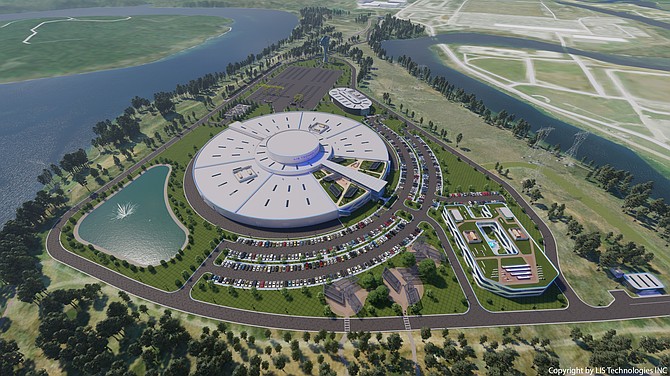
Modern nuclear energy is much different from what many imagine. Instead of creating blueprints for massive nuclear power plants, today’s engineers are designing small modular reactors (SMRs). These reactors require specialized, concentrated fuel, and the Oak Ridge, Tennessee-based company LIS Technologies is working toward building a reliable pipeline.
Most nuclear power plants and older reactors are fueled by low-enriched uranium, or LEU. Natural uranium is about 0.7% U-235, the specific isotope needed to power nuclear reactors. LEU contains up to 5% U-235.
However, newer, ultra-efficient reactors require an even higher concentration of U-235. Most run on high-assay low-enriched uranium (HALEU), which is up to 20% U-235.
Many outmoded industry commentators believe that further uranium mining is the key to securing fuel for these high-efficiency reactors. The answer to guaranteeing an ongoing supply of HALEU, though, isn’t increased mining. It’s an efficient, scalable enrichment process.
However, the process of uranium enrichment is complex and time-consuming. Gas centrifuge enrichment is currently the most widespread enrichment technology, and it requires “cascades” of hundreds of centrifuges that gradually increase U-235 concentration.
LIS Technologies has created a fast, elegant alternative that can keep up with the fuel needs of a growing fleet of advanced reactors. Instead of relying on hundreds of centrifuges, it uses something far simpler: lasers.
LIS Technologies was co-founded by Laser Scientist Christo Liebenberg and Dr. Jeff Eerkens, who is widely considered the “Father of Laser Enrichment.” The company uses finely calibrated lasers to separate U-235 from other uranium isotopes. Its process creates LEU and HALEU in a fraction of the time it takes other technologies. The company’s current laser can create LEU in a single stage, and HALEU in two stages.
“Single-stage means you irradiate the uranium only once, and it's enriched all the way from natural to the LEU level,” Liebenberg explains. “If you irradiate the product a second time, you can go all the way to HALEU, or 20%.”
Laser enrichment in itself isn’t new. LIS Technologies' method evolved from the Condensation Repression Isotope Selective Laser Activation (CRISLA) process that Dr. Eerkens first developed in the 1970s. Laser enrichment has long been recognized as an effective enrichment technology, but until now, no one has managed to implement it on a large scale.
“Laser enrichment has been around for 55 years, and no one has been able to successfully scale it to take it to commercialization. Not one out of 26-plus countries,” says Liebenberg. “Now, we’re using a laser and a process that is very different from what has been used in the past. It’s much more scalable, with significantly higher reliability. We can now scale the entire process.”
The technology is there, but it will still be several years before we see an established HALEU pipeline. The NRC (Nuclear Regulatory Commission) imposes strict safety regulations, and LIS Technologies is currently in the midst of a multi-stage approval process.
“Phase one is demonstration. That's almost the most important phase. It's about repeating results, optimizing conditions, and showing we can do single-stage LEU and double-stage HALEU. Then, for the next two years, we have to scale the equipment and repeat the enrichment results with the scaled equipment,” Liebenberg says.
“In phase three, another two years, that's where we basically build a plant or commercial facility,” he continues. “So that's the timeline. At least six years, maybe seven years, before we have the product ready.”
While the infrastructure may not yet be in place, LIS Technologies is blazing a bold path forward. Alongside SMR developers, the company is opening up a critical avenue for sustainable nuclear growth.
Here's something you might be interested in.
Why LIS Technologies and HALEU Demand Are rewriting the nuclear supply chain playbook

Why LIS Technologies and HALEU Demand Are rewriting the nuclear supply chain playbook
Modern nuclear energy is much different from what many imagine. Instead of creating blueprints for massive nuclear power plants, today’s engineers are designing small modular reactors (SMRs). These reactors require specialized, concentrated fuel, and the Oak Ridge, Tennessee-based company LIS Technologies is working toward building a reliable pipeline.
Most nuclear power plants and older reactors are fueled by low-enriched uranium, or LEU. Natural uranium is about 0.7% U-235, the specific isotope needed to power nuclear reactors. LEU contains up to 5% U-235.
However, newer, ultra-efficient reactors require an even higher concentration of U-235. Most run on high-assay low-enriched uranium (HALEU), which is up to 20% U-235.
Many outmoded industry commentators believe that further uranium mining is the key to securing fuel for these high-efficiency reactors. The answer to guaranteeing an ongoing supply of HALEU, though, isn’t increased mining. It’s an efficient, scalable enrichment process.
However, the process of uranium enrichment is complex and time-consuming. Gas centrifuge enrichment is currently the most widespread enrichment technology, and it requires “cascades” of hundreds of centrifuges that gradually increase U-235 concentration.
LIS Technologies has created a fast, elegant alternative that can keep up with the fuel needs of a growing fleet of advanced reactors. Instead of relying on hundreds of centrifuges, it uses something far simpler: lasers.
LIS Technologies was co-founded by Laser Scientist Christo Liebenberg and Dr. Jeff Eerkens, who is widely considered the “Father of Laser Enrichment.” The company uses finely calibrated lasers to separate U-235 from other uranium isotopes. Its process creates LEU and HALEU in a fraction of the time it takes other technologies. The company’s current laser can create LEU in a single stage, and HALEU in two stages.
“Single-stage means you irradiate the uranium only once, and it's enriched all the way from natural to the LEU level,” Liebenberg explains. “If you irradiate the product a second time, you can go all the way to HALEU, or 20%.”
Laser enrichment in itself isn’t new. LIS Technologies' method evolved from the Condensation Repression Isotope Selective Laser Activation (CRISLA) process that Dr. Eerkens first developed in the 1970s. Laser enrichment has long been recognized as an effective enrichment technology, but until now, no one has managed to implement it on a large scale.
“Laser enrichment has been around for 55 years, and no one has been able to successfully scale it to take it to commercialization. Not one out of 26-plus countries,” says Liebenberg. “Now, we’re using a laser and a process that is very different from what has been used in the past. It’s much more scalable, with significantly higher reliability. We can now scale the entire process.”
The technology is there, but it will still be several years before we see an established HALEU pipeline. The NRC (Nuclear Regulatory Commission) imposes strict safety regulations, and LIS Technologies is currently in the midst of a multi-stage approval process.
“Phase one is demonstration. That's almost the most important phase. It's about repeating results, optimizing conditions, and showing we can do single-stage LEU and double-stage HALEU. Then, for the next two years, we have to scale the equipment and repeat the enrichment results with the scaled equipment,” Liebenberg says.
“In phase three, another two years, that's where we basically build a plant or commercial facility,” he continues. “So that's the timeline. At least six years, maybe seven years, before we have the product ready.”
While the infrastructure may not yet be in place, LIS Technologies is blazing a bold path forward. Alongside SMR developers, the company is opening up a critical avenue for sustainable nuclear growth.
Comments
Members of the editorial staff of San Diego Reader were not involved in the creation of this content.