

Here's something you might be interested in.
Ask a Hipster — Advice you didn't know you needed
Big Screen — Movie commentary
Blurt — Music's inside track
Booze News — San Diego spirits
Classical Music — Immortal beauty
Classifieds — Free and easy
Close to Home — What it’s like on the street where you live
Cover Stories — Front-page features
Drinks All Around — Bartenders' drink recipes
Excerpts — Literary and spiritual excerpts
Feast! — Food & drink reviews
Feature Stories — Local news & stories
Fishing Report — What’s getting hooked from ship and shore
From the Archives — Spotlight on the past
Golden Dreams — Talk of the town
The Gonzo Report — Making the musical scene, or at least reporting from it
Letters — Our inbox
Movies@Home — Local movie buffs share favorites
Movie Reviews — Our critics' picks and pans
Musician Interviews — Up close with local artists
Neighborhood News from Stringers — Hyperlocal news
News Ticker — News & politics
Obermeyer — San Diego politics illustrated
Outdoors — Weekly changes in flora and fauna
Overheard in San Diego — Eavesdropping illustrated
Poetry — The old and the new
Reader Travel — Travel section built by travelers
Reading — The hunt for intellectuals
Roam-O-Rama — SoCal's best hiking/biking trails
San Diego Beer — Inside San Diego suds
SD on the QT — Almost factual news
Sheep and Goats — Places of worship
Special Issues — The best of
Street Style — San Diego streets have style
Surf Diego — Real stories from those braving the waves
Theater — On stage in San Diego this week
Tin Fork — Silver spoon alternative
Under the Radar — Matt Potter's undercover work
Unforgettable — Long-ago San Diego
Unreal Estate — San Diego's priciest pads
Your Week — Daily event picks
Rethinking Machine Learning: Stuart Frost Makes the Case for Causal AI in Manufacturing
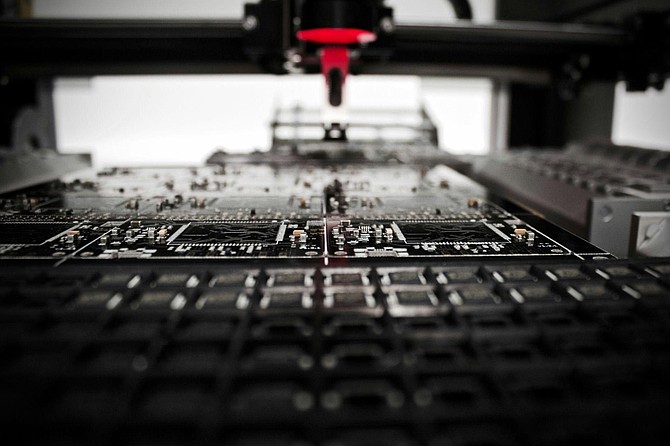
The manufacturing landscape is evolving rapidly, with intelligent systems increasingly promising to boost efficiency, quality, and overall competitiveness. Traditional machine learning (ML) has already delivered notable improvements by identifying patterns and generating predictive insights, such as early warnings for equipment failure, forecasts of quality deviations based on environmental sensor data, or anticipatory detection of bottlenecks in production flows.
But despite these strengths, standard ML often falls short when it comes to explaining why specific outcomes happen. Without a deeper understanding of causality, that is, how one variable actually drives another, companies can struggle to translate ML predictions into effective, reliable interventions.
It’s this gap that highlights the need to rethink the current reliance on correlation-based models and to explore the transformative potential of causal AI in the manufacturing domain. Stuart Frost, CEO of Geminos and a respected innovator, explores the benefits of Causal AI in the manufacturing sector.
The Limits of Conventional Machine Learning
Conventional machine learning excels at uncovering correlations hidden within large datasets. By leveraging historical data, these systems can determine that certain variables tend to occur together: perhaps a rise in motor vibration often accompanies imminent breakdowns, or a shift in humidity correlates with defects in paint adhesion.
And on the supply chain side, classical ML can flag conditions tied to delays or quality dips. However, because these models are inherently observational, their recommendations remain descriptive and probabilistic. Even when an ML model predicts a failure with 90% confidence, it doesn't necessarily tell you which control lever to pull to avoid that outcome.
Without an explicit understanding of causation, decision-makers can’t be confident that changing X will lead to Y; they only know X and Y tend to occur together. Consequently, well-intentioned interventions may miss the mark, introducing inefficiency, unexpected side effects, or even losses, turning AI initiatives into cautionary tales with disappointing returns on investment.
Causal AI offers a more sophisticated alternative by modeling the underlying cause‑and‑effect relationships that define manufacturing systems. Rather than treating variables as merely correlated, causal AI builds structural causal models to identify directional influences grounded in domain knowledge and experimental evidence.
“Causal AI answers questions such as, How does feed temperature actually cause shifts in reaction yield? To what extent do pressure variations drive downstream quality defects? Which step in the process chain hierarchically triggers failures?” says Stuart Frost. “These models embody what relationships exist, but also why they exist.”
Armed with that insight, users can pose conditional questions like, "If we lower the temperature by 5 °C, how will the yield respond?" and receive actionable, quantitatively supported answers, rather than mere statistical associations.
The implications of causal AI for manufacturing are profound. First, it enables precision in intervention design. Instead of executing sweeping blanket changes based on surface-level correlations, managers can focus on variables proven to cause business-critical outcomes, spending time and resources only where they matter.
Second, causal models generalize more effectively across different environments. Unlike purely statistical associations, which may vary substantially from one setting to another, cause‑and‑effect relationships typically hold steady, whether you're in a pilot line in Germany or a full-scale automotive facility in Indiana. This makes causal insights portable and resilient.
Third, causal AI supports experimentation and simulation. By embedding causal models within digital twins or simulation environments, teams can explore multiple “what‑if” scenarios in silico, adding agility and efficiency by reducing the need for costly and time-intensive physical experiments. And finally, causal AI fosters explainability and compliance: the relationships are explicit, assumptions are transparent, and interventions can be traced to their causal roots, essential for both stakeholders and regulators seeking to validate AI-driven decisions.
Causal AI transforms key areas of manufacturing by revealing what happens and why. In predictive maintenance, it shifts focus from forecasting failures to understanding how maintenance strategies impact uptime and cost. For process optimization, it identifies true defect drivers, enabling targeted, effective interventions.
In supply chains, causal models simulate how changes, like dual sourcing or inventory buffers, affect timelines, allowing proactive risk management. And in energy control, it pinpoints actual causes of consumption spikes, guiding precise corrective actions. By replacing surface-level correlations with system-level insight, causal AI turns complexity into clarity and reactive fixes into strategic improvements.
Overcoming the Hurdles
Of course, building and adopting causal AI in manufacturing isn't a turnkey process. It requires facing a series of interdependent challenges. First, building the causal model demands domain expertise and organizational effort: engineers and data scientists must collaborate to formulate plausible causal graphs, identifying which variables influence which, and how.
Notes Frost, “Structured, labeled data is also essential, annotated with observations as well as interventions, events, and timestamps.”
Second, causal inference depends on data sufficiency: ideally, data that includes purposeful interventions (A/B tests, randomized control trials, or designed experiments) to validate causal links. Without controlled inputs, causal identification remains speculative.
Third, organizations must undergo a cultural shift: stakeholders need to evolve from trusting traditional correlation-based models toward demanding causal reasoning. That transition may involve training, change management, and a shift in expectations.
Finally, tooling barriers remain: mainstream ML platforms are still catching up on integrating causal reasoning capabilities. Firms may require extensions or entirely new systems built for causal AI, a significant investment in software architecture and staff capability.
Practical Steps to Adoption
The good news is that these barriers are surmountable. With the right approach, causal AI can be phased in and scaled effectively. A practical roadmap starts with selecting high‑value pilot cases, whether it's reducing defect rates in a bottling plant or optimizing cycle times in a high-mix assembly line.
By focusing on a single process area or factory, teams can limit complexity and demonstrate clear results. Pairing causal modeling with design of experiments (DoE) amplifies results: controlled parameter sweeps can validate cause‑and‑effect relationships and populate the causal graph with numeric estimates. As models mature, embedding them within digital twins or advanced control systems enables simulation, live monitoring, and real-time decision support across the enterprise.
Upskilling, meanwhile, is essential. Cross-functional teams, including engineers, data scientists, and quality managers, should be trained in causal inference methods, causal graph creation, and the limitations of passive observation. Workshops and pilot studies can build literacy, support buy-in, and align stakeholders on the meaning of intervention-based results.
“Over time, teams can iteratively refine causal models, incorporate multi-modal data (e.g., sensors, instrument logs, SCADA systems, ERP data), and enhance model confidence through new rounds of experiments or simulated feedback,” says Frost.
When deployed at scale, causal AI delivers end-to-end impact, enabling real-time alerts, predictive interventions, and KPI-driven oversight grounded in cause-and-effect. It supports sustainability through targeted efficiency gains and reduces risk by strengthening process resilience.
In an era of regulatory pressure and rapid change, manufacturing leaders need more than pattern detection; they need explainable, actionable intelligence. Causal AI steps beyond prediction into prescription, turning insight into decisive action. It empowers organizations to shape outcomes, not just respond to them. With greater ROI, faster learning, and future-proofed operations, causal AI is a foundational pillar of modern manufacturing strategy.
Here's something you might be interested in.
Rethinking Machine Learning: Stuart Frost Makes the Case for Causal AI in Manufacturing

Rethinking Machine Learning: Stuart Frost Makes the Case for Causal AI in Manufacturing
The manufacturing landscape is evolving rapidly, with intelligent systems increasingly promising to boost efficiency, quality, and overall competitiveness. Traditional machine learning (ML) has already delivered notable improvements by identifying patterns and generating predictive insights, such as early warnings for equipment failure, forecasts of quality deviations based on environmental sensor data, or anticipatory detection of bottlenecks in production flows.
But despite these strengths, standard ML often falls short when it comes to explaining why specific outcomes happen. Without a deeper understanding of causality, that is, how one variable actually drives another, companies can struggle to translate ML predictions into effective, reliable interventions.
It’s this gap that highlights the need to rethink the current reliance on correlation-based models and to explore the transformative potential of causal AI in the manufacturing domain. Stuart Frost, CEO of Geminos and a respected innovator, explores the benefits of Causal AI in the manufacturing sector.
The Limits of Conventional Machine Learning
Conventional machine learning excels at uncovering correlations hidden within large datasets. By leveraging historical data, these systems can determine that certain variables tend to occur together: perhaps a rise in motor vibration often accompanies imminent breakdowns, or a shift in humidity correlates with defects in paint adhesion.
And on the supply chain side, classical ML can flag conditions tied to delays or quality dips. However, because these models are inherently observational, their recommendations remain descriptive and probabilistic. Even when an ML model predicts a failure with 90% confidence, it doesn't necessarily tell you which control lever to pull to avoid that outcome.
Without an explicit understanding of causation, decision-makers can’t be confident that changing X will lead to Y; they only know X and Y tend to occur together. Consequently, well-intentioned interventions may miss the mark, introducing inefficiency, unexpected side effects, or even losses, turning AI initiatives into cautionary tales with disappointing returns on investment.
Causal AI offers a more sophisticated alternative by modeling the underlying cause‑and‑effect relationships that define manufacturing systems. Rather than treating variables as merely correlated, causal AI builds structural causal models to identify directional influences grounded in domain knowledge and experimental evidence.
“Causal AI answers questions such as, How does feed temperature actually cause shifts in reaction yield? To what extent do pressure variations drive downstream quality defects? Which step in the process chain hierarchically triggers failures?” says Stuart Frost. “These models embody what relationships exist, but also why they exist.”
Armed with that insight, users can pose conditional questions like, "If we lower the temperature by 5 °C, how will the yield respond?" and receive actionable, quantitatively supported answers, rather than mere statistical associations.
The implications of causal AI for manufacturing are profound. First, it enables precision in intervention design. Instead of executing sweeping blanket changes based on surface-level correlations, managers can focus on variables proven to cause business-critical outcomes, spending time and resources only where they matter.
Second, causal models generalize more effectively across different environments. Unlike purely statistical associations, which may vary substantially from one setting to another, cause‑and‑effect relationships typically hold steady, whether you're in a pilot line in Germany or a full-scale automotive facility in Indiana. This makes causal insights portable and resilient.
Third, causal AI supports experimentation and simulation. By embedding causal models within digital twins or simulation environments, teams can explore multiple “what‑if” scenarios in silico, adding agility and efficiency by reducing the need for costly and time-intensive physical experiments. And finally, causal AI fosters explainability and compliance: the relationships are explicit, assumptions are transparent, and interventions can be traced to their causal roots, essential for both stakeholders and regulators seeking to validate AI-driven decisions.
Causal AI transforms key areas of manufacturing by revealing what happens and why. In predictive maintenance, it shifts focus from forecasting failures to understanding how maintenance strategies impact uptime and cost. For process optimization, it identifies true defect drivers, enabling targeted, effective interventions.
In supply chains, causal models simulate how changes, like dual sourcing or inventory buffers, affect timelines, allowing proactive risk management. And in energy control, it pinpoints actual causes of consumption spikes, guiding precise corrective actions. By replacing surface-level correlations with system-level insight, causal AI turns complexity into clarity and reactive fixes into strategic improvements.
Overcoming the Hurdles
Of course, building and adopting causal AI in manufacturing isn't a turnkey process. It requires facing a series of interdependent challenges. First, building the causal model demands domain expertise and organizational effort: engineers and data scientists must collaborate to formulate plausible causal graphs, identifying which variables influence which, and how.
Notes Frost, “Structured, labeled data is also essential, annotated with observations as well as interventions, events, and timestamps.”
Second, causal inference depends on data sufficiency: ideally, data that includes purposeful interventions (A/B tests, randomized control trials, or designed experiments) to validate causal links. Without controlled inputs, causal identification remains speculative.
Third, organizations must undergo a cultural shift: stakeholders need to evolve from trusting traditional correlation-based models toward demanding causal reasoning. That transition may involve training, change management, and a shift in expectations.
Finally, tooling barriers remain: mainstream ML platforms are still catching up on integrating causal reasoning capabilities. Firms may require extensions or entirely new systems built for causal AI, a significant investment in software architecture and staff capability.
Practical Steps to Adoption
The good news is that these barriers are surmountable. With the right approach, causal AI can be phased in and scaled effectively. A practical roadmap starts with selecting high‑value pilot cases, whether it's reducing defect rates in a bottling plant or optimizing cycle times in a high-mix assembly line.
By focusing on a single process area or factory, teams can limit complexity and demonstrate clear results. Pairing causal modeling with design of experiments (DoE) amplifies results: controlled parameter sweeps can validate cause‑and‑effect relationships and populate the causal graph with numeric estimates. As models mature, embedding them within digital twins or advanced control systems enables simulation, live monitoring, and real-time decision support across the enterprise.
Upskilling, meanwhile, is essential. Cross-functional teams, including engineers, data scientists, and quality managers, should be trained in causal inference methods, causal graph creation, and the limitations of passive observation. Workshops and pilot studies can build literacy, support buy-in, and align stakeholders on the meaning of intervention-based results.
“Over time, teams can iteratively refine causal models, incorporate multi-modal data (e.g., sensors, instrument logs, SCADA systems, ERP data), and enhance model confidence through new rounds of experiments or simulated feedback,” says Frost.
When deployed at scale, causal AI delivers end-to-end impact, enabling real-time alerts, predictive interventions, and KPI-driven oversight grounded in cause-and-effect. It supports sustainability through targeted efficiency gains and reduces risk by strengthening process resilience.
In an era of regulatory pressure and rapid change, manufacturing leaders need more than pattern detection; they need explainable, actionable intelligence. Causal AI steps beyond prediction into prescription, turning insight into decisive action. It empowers organizations to shape outcomes, not just respond to them. With greater ROI, faster learning, and future-proofed operations, causal AI is a foundational pillar of modern manufacturing strategy.
Members of the editorial staff of San Diego Reader were not involved in the creation of this content.