


Here's something you might be interested in.
Ask a Hipster — Advice you didn't know you needed
Big Screen — Movie commentary
Blurt — Music's inside track
Booze News — San Diego spirits
Classical Music — Immortal beauty
Classifieds — Free and easy
Close to Home — What it’s like on the street where you live
Cover Stories — Front-page features
Drinks All Around — Bartenders' drink recipes
Excerpts — Literary and spiritual excerpts
Feast! — Food & drink reviews
Feature Stories — Local news & stories
Fishing Report — What’s getting hooked from ship and shore
From the Archives — Spotlight on the past
Golden Dreams — Talk of the town
The Gonzo Report — Making the musical scene, or at least reporting from it
Letters — Our inbox
Movies@Home — Local movie buffs share favorites
Movie Reviews — Our critics' picks and pans
Musician Interviews — Up close with local artists
Neighborhood News from Stringers — Hyperlocal news
News Ticker — News & politics
Obermeyer — San Diego politics illustrated
Outdoors — Weekly changes in flora and fauna
Overheard in San Diego — Eavesdropping illustrated
Poetry — The old and the new
Reader Travel — Travel section built by travelers
Reading — The hunt for intellectuals
Roam-O-Rama — SoCal's best hiking/biking trails
San Diego Beer — Inside San Diego suds
SD on the QT — Almost factual news
Sheep and Goats — Places of worship
Special Issues — The best of
Street Style — San Diego streets have style
Surf Diego — Real stories from those braving the waves
Theater — On stage in San Diego this week
Tin Fork — Silver spoon alternative
Under the Radar — Matt Potter's undercover work
Unforgettable — Long-ago San Diego
Unreal Estate — San Diego's priciest pads
Your Week — Daily event picks
From Speculation to Strategy: Why Institutions Are Embracing Bitcoin as a Core Portfolio Asset
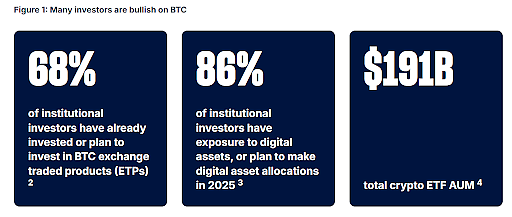
Adoption of digital assets by institutions has reinforced Bitcoin's position as a new asset class. What once existed as a speculative investment asset has transitioned into a strategic investment purchase for institutions in a multi-asset portfolio. Data indicates a significant shift toward mainstream acceptance, with 86% of institutional investors in 2025 having exposure to Bitcoin.
The drivers are structural: expanding regulatory clarity, the rise of institutional-grade infrastructure, and growing comfort with Bitcoin’s role as a non-sovereign, digitally scarce asset in diversified portfolios. On stage during the Binance Blockchain Week 2025 conference, Binance Co-CEO Richard Teng underscored the pace of that transition, "We’ve doubled institutional onboarding year-on-year — the long-term trend is crystal clear." The influx of institutional demand signals growing industry maturity, helping facilitate increased institutional Bitcoin adoption.
The Institutional Pivot
Growing conviction in Bitcoin is reinforcing institutional allocation. Institutional Bitcoin allocation has increased by 5% in one year, as large-scale entities hold over 12% of total BTC in circulation. According to data, 59% of institutional traders allocate more than 10% of their portfolio into digital assets.
The shift represents a reassessment of Bitcoin's investment potential. According to Ripple CEO Brad Garlinghouse during a panel discussion at Binance Blockchain Week, "institutional capital isn't spooked; it’s warming up," underscoring sustained market participation. As such, institutional capital allocation is showing dramatic year-over-year increases. US BTC ETFs have grown by 45% to $103B AUM, driven by increased access through traditional investment means.
The pivot is reflected in how institutions now gain exposure to Bitcoin. According to a CoinShares report, conversations have shifted from questions of access to questions of allocation size as real Bitcoin applications are starting to take shape. Through tokenized securities and real-world asset (RWA) integrations, institutions can structurally incorporate Bitcoin as a component of broader digital asset strategies.
From Gray Area To Green Light
Greater regulatory clarity has catalyzed institutional Bitcoin adoption. The adoption of Bitcoin ETFs in January 2024 and the passage of the GENIUS Act in July 2025 legitimized Bitcoin in the traditional finance sector. As ETF AUM reached $191 billion in November, large-scale institutional allocation became possible under a unified regulatory framework. As Ripple CEO Brad Garlinghouse noted at Binance Blockchain Week 2025, “Regulatory clarity in the world’s largest economy is a game-changer.”
The Genesis Act helped accelerate institutional access to digital assets through legitimate means. According to CoinShares, USDC and other regulated stablecoins are used as institutional-grade payment rails. Per a Binance 2025 report, the stablecoin market reached $277.8 billion, and JPMorgan projects it could expand to $2 trillion by 2028. Thus, stablecoin adoption has increased institutional adoption of Bitcoin and other digital assets.
“Industry regulations are creating conditions for more structured capital to replace speculative trading activity. As regulatory grey areas diminish, new institutional participants are entering the market. UBS, for example, increased its Bitcoin exposure by 24%, reflecting how clearer guidance is enabling easier access to Bitcoin.
Demand Outpacing Bitcoin Availability
Daily institutional purchases have outstripped mining output by significant margins. Institutions bought 545,579 BTC year-to-date through August 2025, compared to just 97,082 BTC newly mined, representing a demand multiple exceeding five times new supply.
Growing demand for Bitcoin is partially attributed to declining volatility, a trend linked to institutional preference for long-term strategic positioning rather than short-term speculative trading. Recent analysis indicates a gradual decrease in Bitcoin’s volatility, aligning with rising market liquidity and sustained capital inflows.
Industries that initially operate independently often begin to resemble one another as markets mature. Data shows that Bitcoin’s correlation with the S&P 500 has been increasing, reflecting its integration into broader macroeconomic trends. JPMorgan has noted this shift, characterizing Bitcoin as a macro asset and a store of value rather than a purely speculative trading instrument.
As the amount of Bitcoin circulating on the market declines, institutions continue to incorporate it into their portfolios. BlackRock, which currently holds more than 3% of Bitcoin’s supply, has allocated 1–2% of its portfolio to the asset. Bitwise notes that excessive demand accelerated since 2024, reflecting a broader institutional trend of combining Bitcoin with traditional portfolios as part of a diversified investment framework.
With clearer regulatory frameworks, a growing appetite for digital assets, and the payment rails to access Bitcoin, according to Richard Teng, "institutions are only just getting started in crypto."
Here's something you might be interested in.
From Speculation to Strategy: Why Institutions Are Embracing Bitcoin as a Core Portfolio Asset

From Speculation to Strategy: Why Institutions Are Embracing Bitcoin as a Core Portfolio Asset
Adoption of digital assets by institutions has reinforced Bitcoin's position as a new asset class. What once existed as a speculative investment asset has transitioned into a strategic investment purchase for institutions in a multi-asset portfolio. Data indicates a significant shift toward mainstream acceptance, with 86% of institutional investors in 2025 having exposure to Bitcoin.
The drivers are structural: expanding regulatory clarity, the rise of institutional-grade infrastructure, and growing comfort with Bitcoin’s role as a non-sovereign, digitally scarce asset in diversified portfolios. On stage during the Binance Blockchain Week 2025 conference, Binance Co-CEO Richard Teng underscored the pace of that transition, "We’ve doubled institutional onboarding year-on-year — the long-term trend is crystal clear." The influx of institutional demand signals growing industry maturity, helping facilitate increased institutional Bitcoin adoption.
The Institutional Pivot
Growing conviction in Bitcoin is reinforcing institutional allocation. Institutional Bitcoin allocation has increased by 5% in one year, as large-scale entities hold over 12% of total BTC in circulation. According to data, 59% of institutional traders allocate more than 10% of their portfolio into digital assets.
The shift represents a reassessment of Bitcoin's investment potential. According to Ripple CEO Brad Garlinghouse during a panel discussion at Binance Blockchain Week, "institutional capital isn't spooked; it’s warming up," underscoring sustained market participation. As such, institutional capital allocation is showing dramatic year-over-year increases. US BTC ETFs have grown by 45% to $103B AUM, driven by increased access through traditional investment means.
The pivot is reflected in how institutions now gain exposure to Bitcoin. According to a CoinShares report, conversations have shifted from questions of access to questions of allocation size as real Bitcoin applications are starting to take shape. Through tokenized securities and real-world asset (RWA) integrations, institutions can structurally incorporate Bitcoin as a component of broader digital asset strategies.
From Gray Area To Green Light
Greater regulatory clarity has catalyzed institutional Bitcoin adoption. The adoption of Bitcoin ETFs in January 2024 and the passage of the GENIUS Act in July 2025 legitimized Bitcoin in the traditional finance sector. As ETF AUM reached $191 billion in November, large-scale institutional allocation became possible under a unified regulatory framework. As Ripple CEO Brad Garlinghouse noted at Binance Blockchain Week 2025, “Regulatory clarity in the world’s largest economy is a game-changer.”
The Genesis Act helped accelerate institutional access to digital assets through legitimate means. According to CoinShares, USDC and other regulated stablecoins are used as institutional-grade payment rails. Per a Binance 2025 report, the stablecoin market reached $277.8 billion, and JPMorgan projects it could expand to $2 trillion by 2028. Thus, stablecoin adoption has increased institutional adoption of Bitcoin and other digital assets.
“Industry regulations are creating conditions for more structured capital to replace speculative trading activity. As regulatory grey areas diminish, new institutional participants are entering the market. UBS, for example, increased its Bitcoin exposure by 24%, reflecting how clearer guidance is enabling easier access to Bitcoin.
Demand Outpacing Bitcoin Availability
Daily institutional purchases have outstripped mining output by significant margins. Institutions bought 545,579 BTC year-to-date through August 2025, compared to just 97,082 BTC newly mined, representing a demand multiple exceeding five times new supply.
Growing demand for Bitcoin is partially attributed to declining volatility, a trend linked to institutional preference for long-term strategic positioning rather than short-term speculative trading. Recent analysis indicates a gradual decrease in Bitcoin’s volatility, aligning with rising market liquidity and sustained capital inflows.
Industries that initially operate independently often begin to resemble one another as markets mature. Data shows that Bitcoin’s correlation with the S&P 500 has been increasing, reflecting its integration into broader macroeconomic trends. JPMorgan has noted this shift, characterizing Bitcoin as a macro asset and a store of value rather than a purely speculative trading instrument.
As the amount of Bitcoin circulating on the market declines, institutions continue to incorporate it into their portfolios. BlackRock, which currently holds more than 3% of Bitcoin’s supply, has allocated 1–2% of its portfolio to the asset. Bitwise notes that excessive demand accelerated since 2024, reflecting a broader institutional trend of combining Bitcoin with traditional portfolios as part of a diversified investment framework.
With clearer regulatory frameworks, a growing appetite for digital assets, and the payment rails to access Bitcoin, according to Richard Teng, "institutions are only just getting started in crypto."
Comments
Members of the editorial staff of San Diego Reader were not involved in the creation of this content.