San Diego Reader

Stories Cover Story

Text size: A | A | A
E-mail the Editor
Bookmark and Share

She Hated Adverbs

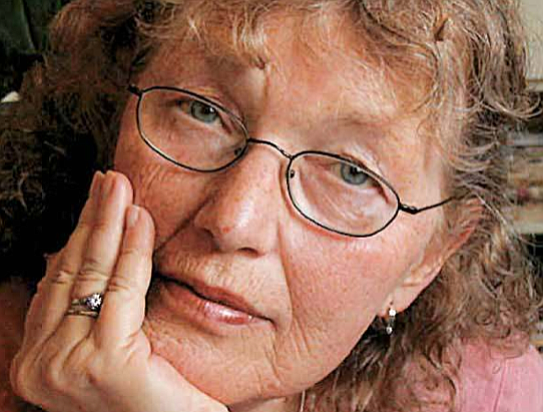
My long conversation with Judith Moore about writing began in 1980. We first met at a monthly campus ministry shindig for the faculty of Central Washington University, in Ellensburg, Washington. Judith was escaping the small-town tedium she describes in her book Never Eat Your Heart Out. I would drive 40 miles up from Yakima, where I taught philosophy at a community college. I wanted to meet professors I hoped could help me climb the academic ladder, a scheme Judith viewed with amusement. In personal conversation, you always had the feeling she was searching out things you were shy about telling the world. In the beginning we mostly talked books. But each of us scribbled as well. I was working on fiction and sending travel articles to the Yakima Herald Republic. Judith began doing book reviews several times weekly for the Ellensburg paper. Her work on those reviews led to the "Reading" column she kept up in this paper for over a decade. I showed Judith a short story I wrote in those years. "Well," she told me several days later, "it has a definite beginning, middle, and end." The assessment did not encourage me, and when she asked to see the novel I was writing, I demurred. The decision was bad and good. I never did receive insightful criticism she could have given me. But her honesty might have wrenched me to stick with my day job. As it was, I got the experience of at least finishing the attempt, though the novel still sits in a drawer unrevised.

In 1983, Judith left Washington to commit herself to a full-time writing life. Though she eventually went beyond writing about her personal life, she discovered the memoir as a way to get going, spilling out painful details about her childhood and childbearing years. Soon she left us would-be Ellensburg writers in the dust. For the rest of her life, writing was Judith's way to survive and live as happily as she could.

I came to San Diego in 1985. Seven years later I ran into Judith downtown. I was driving a taxi as a part-time job, and I spirited her around town for interviews she needed to do. By then she was an editor at the Reader. She wanted me to write about a painful and embarrassing episode in my life. I couldn't do it, I told her. But our paths crossed again in 1997. "Are you ready," she asked, "to write that story?" I relented and sent her 8000 words. She wrote back, asking what about this and what about that? She must have sent 25 queries. I expanded the story by another 10,000 words. It felt cathartic, but in the middle of it all, I told her over the phone how embarrassed I felt about the things I was confessing. "It's not like you murdered somebody," she replied.

After the story appeared, Judith gave me several assignments about philosophy and religion, the subjects I still was teaching. She even got me an indulgent series of six stories on the life of part-time professors, or "freeway fliers." The stories began a transition in my life, from abstraction to specifics in their own right and from simple self-expression to learning details I never imagined about the world.

One Sunday evening Judith called me and said, "Isn't it fun?" I had to say no, it wasn't fun, because I couldn't write and I felt depressed. "Busy fingers are happy fingers," she said lightheartedly, speaking to the childishness that was escaping me. But I couldn't find an angle to get my story started, I told her. "Forget all about angles," she then said with annoyance in her voice, "and write a sentence. Then write another sentence, and another." She knew whereof she spoke. Until the last week of her life, that's the way Judith Moore lived.

-- Joe Deegan

Mother Reader

Judith often referred to herself in the third person as "Mother Reader." An appropriate epithet, considering that after coming across my blog, she elicited a job offer from "Father Reader," thus giving birth to my career. Like a good mother, she paid close attention to my growth, nurtured and disciplined my writing, scolded and cajoled my ego, and groomed me for a life in publishing.

Judith believed that a writer is never perfect -- there is always room for improvement. To emphasize this point, she was miserly with words of praise. Each week I'd send her my column, and each week I would wait in agony for her feedback to arrive in my inbox. When she was pleased with my work, she'd spend one word: "Fun," "Interesting," or "Charming." The six days following such responses were glorious, the word-of-the-week cradled lovingly and with pride at the forefront of my consciousness. But a writer is never perfect, and there is always room for improvement.

"Barbarella, whom I greatly admire," Judith wrote in response to one of my stories, "I confess that this piece bored me." She was careful not to crush a fragile ego but always blunt with her advice. Many documents were returned to me with every adverb and "just" highlighted in green, followed by "DON'T EVER USE THIS WORD." Sometimes she'd tear through a story adding "CLICHÉ" at the end of most paragraphs.

"Don't self-publish anything; it makes you look like a slut," Judith once told me over the phone. She wanted to see me succeed and urged me to "work work work" and "write read read write. If you're reading a book a week now," Judith said, "then make it two books a week. And if you're reading two, make it three."

Judith would send me books, including James Agee's Let Us Now Praise Famous Men. "Mother Reader hopes that you take seriously the reading of Agee," she wrote. "I want you to read and study this book. My hope is that you will enjoy the book, but my hope is also that you will study what he has done and how. I want you to note especially his close attention to detail, the way he gives 'soul' to every door or dress or nose he describes. For people my age (ancient), this was one of those formative books that made us want to grow up and try to become writers."

Now, over a year later, I'm still trying to get past the third chapter of Agee's masterpiece. Judith once predicted, in a moment of unprecedented gushing, that I would "grow up to be a superb writer." She knew then, as I know now, that I have a long way to go. I am still striving in her death, as I strived in her life, to make Mother Reader proud.

-- Barbarella

Build Your Writing Muscles

"Writing is like a muscle, honey." Judith always called me honey, and her voice was warm like cinnamon tea. "The more you use the muscle, the stronger you get; the more you can write. Write in the mornings, honey. When you first wake up."

She called me that day because in our e-mail conversations I mentioned that I was stuck on a TV article, about 200 words short.

Her advice worked. My first column took me a week to write. A 400-word opening story followed by 10 capsules of 100 words each: 1200 to 1400 words total. I stopped and started again, edited and revised, and seven days later I was finished.

Now I can write one in four hours.

I write in the mornings. With a mind still frizzy from sleep and slowly popping alive with the help of coffee, I sit and write. Every morning. A short story about a dog and a bird on the sidewalk. An observation of a pregnant teen girl struggling to get aboard a bus. All crap. All of it. Stuff you'd conscript to the bottom drawer if not the bottom of a ravine.

But I talked with the page, and the conversations came easier.

I talked with Judith on the phone, and our conversations came harder. I didn't know she was dying of cancer and the treatments were causing her great grief. She never told me she was sick.

"Would you please let me finish what I was saying," Judith snapped during our last talk.

"Yes. Of course. I apologize, Judith. Go ahead. Wait. Judith?" I interrupted again.

"Yes, honey," cinnamon tea.

"Are you okay?"

"Yes, honey. You know...I'm going to be just fine."

-- Ollie

Let the Tape Recorder Do

the Work

I could almost be tempted to resent Judith for getting my hopes up. When she signed my copy of her food memoir Never Eat Your Heart Out back in 1997, she inscribed it, "To Matt (our big new talent)...With admiration, Judith."

I was 24, two years at the Reader. She was a two-time National Endowment for the Arts Fellowship winner (and later she would garner a Guggenheim). She had been published by Farrar, Straus and Giroux, the house that published Walker Percy and Flannery O'Connor, two of my literary idols. She had been reviewed, favorably, in the New York Times. "Big new talent"? "With admiration"? I would have been giddy, except I was incredulous.

It got better (worse). She encouraged me to apply for the NEA myself, telling me that they wouldn't even consider me for a Guggenheim unless I already had the NEA. (Well, of course not.) She dropped tidbits from the literary table -- "They used to call them Toyota grants, because every writer who got one went out and bought a new car." I couldn't hear enough of this sort of thing.

Then, in 2001, she called and asked me, "How would you like an agent?" One of the happier days of my life. I remember just where I stood in the kitchen as we talked on the phone, and my face retains the muscle memory of the goofy grin I sported. I had all sorts of literary aspirations, and I knew that an agent was crucial for getting them realized. Now Judith was offering a reference, the surest route to representation.

I sent the agent some samples. She liked them. When she called, we talked about first, second, and third books. After my first manuscript went out -- a collection of columns I'd written for the Reader about being a young father -- Judith called to advise me. "If Norton offers you $80,000 and FSG offers $50,000, take FSG. It guarantees you a review in the Times, and everybody will pay attention. You'll have a much better chance with the awards people." I swooned and supposed I could make do with $50K.

But FSG didn't offer anything. Neither did Norton. Nor any of the other publishers we tried. The agent detected something missing from the manuscript, some element with enough weight to give it gravitas. She was right, of course, but at the time, I couldn't figure out how to fix it. I sent the agent the raw material for the second book. And a chunk of the third. Nothing came of it. The agent and I parted company.

When, years later, I managed to land a book contract (for far less money), I did have Judith to thank. It was (once again) through the use of her good name that I started on my road to finding a publisher. But I'm 0 for 2 on the NEA, and something of a seasoned veteran on the literary-rejection front. The "big new talent," as it turns out, has nothing on the big old talent.

So as I said, I could almost be tempted to resent her for painting my future in such rosy hues. But only tempted, only almost tempted. Because along with the promises of future glory, she also gave me excellent counsel about the day job, the writing that actually paid.

My first story for the Reader came in at 12,000 words, which editorial promptly slashed to 8000. I'm pretty sure that the 4000 words that didn't make it were all mine -- as opposed to quotations from my interviews. Words I had slaved over, little creative outpourings amid the dry reportage -- this was my audition piece, after all. I was sad to see them go.

"Honey, let the tape recorder do the work." That was her consoling advice. I can see how it might sound like an encouragement toward laziness, or even a dismissal of the writer's craft, sort of like when my wife teases that I am a "word pusher." But it was neither of those things. Rather, it was an acknowledgment that the subject, together with the person who knows about the subject, was the center of the story -- not me, and certainly not my prose. The craft lay in introducing the subject, in providing structure and order to the quotations, in making something clear and focused out of meandering conversations and collected facts. And then getting out of the way.

When I thought about it, I realized that her advice was steering me back to Joseph Mitchell, the New Yorker writer who had long been my favorite when it came to long-form journalism. Mitchell didn't use a tape recorder, but he did reel off enormously long and rich quotations from his story subjects. I'll close with a bit from Old Mr. Flood, Mitchell's profile of a 93-year-old seafood lover who had refused to reconcile himself to the certainty of death. I hope Judith will appreciate the joke.

"Mr. Flood snorted again. 'Oh, shut up,' he said. 'Damn your doctor. I tell you what you do. You get right out of here and go over to Libby's oyster house and tell the man you want to eat some of his big oysters. Don't sit down. Stand up at that fine marble bar they got over there, where you can watch the man knife them open. And tell him you intend to drink the oyster liquor; he'll knife them open on the cup shell, so the liquor won't spill. And be sure you get the big ones. Get them so big you'll have to rear back to swallow, the size that most restaurants use for fries and stews; God forgive them, they don't know any better.... And don't put any of that red sauce on them, that cocktail sauce, that mess, that gurry. Ask the man for half a lemon, poke it a time or two to free the juice, and squeeze it over the oysters. And the first one he knifes, pick it up and smell it, the way you'd smell a rose, or a shot of brandy. That briny, seaweedy fragrance will clear your head; it'll make your blood run faster. And don't just eat six; take your time and eat a dozen, eat two dozen, eat three dozen, eat four dozen. And then leave the man a generous tip and buy yourself a fifty-cent cigar and put your hat on the side of your head and take a walk down to Bowling Green. Look at the sky! Isn't it blue? And look at the girls a-tap-tap-tapping past on their pretty little feet! Aren't they just the finest girls you ever saw, the bounciest, the rumpiest, the laughingest? Aren't you ashamed of yourself for even thinking about spending good money on a damned doctor?' "

-- Matthew Lickona

Faith

"Execrable."

And...

"You sound like a fluttering dilettante."

There were many more in a similar vein. I have all her editorial comments saved somewhere on the jittery hard drive of my old computer. The two above came toward the very end of things, before communication ceased altogether.

It didn't start this way.

These stories never do.

That things ended so badly makes any description of their beginnings difficult, suspect, open to question. Because things between us did begin well, exceptionally so. After I met Judith in the early 1980s, not long after she began to work for the Reader as a regular freelancer, we spent the next dozen or so years in close communication, either by phone or letter, or by spending long periods of time together at one or another of the apartments she rented in Berkeley. We read the same books and, generally, admired the same authors. We wrote and edited a number of stories together. That she was at least 20 years my senior never mattered. I'd always had older friends. I'd always enjoyed having friends whose counsel I could seek, friends I could admire, friends I could look up to.

That last point needs to be emphasized because few people outside the trade understand what writers do or, more significantly, what writers need in order to do what they do. You of course need a better-than-competent command of the language, a good feel for what it can and can't do, a sense for which rules can be broken or finessed and which are best left unchallenged. All of that of course matters. But Judith was never at ease with, or didn't know or care to know, terms for even the commonest pitfalls -- "dangling modifier," "comma splicing," "ambiguous pronoun reference," etc. Judith's strengths were elsewhere, and were far greater.

What a writer needs in order to write is the faith that he can tell whatever the story is that he wants or needs to tell. This faith is difficult to come by. That you have written in the past, even written well, is no guarantee that you can write now or ever again in the future. The faith that you can write can be summoned only unreliably from within. Most often, if you are lucky, this faith is inspired steadily, in larger and smaller doses, by an editor, or by a close friend who acts as an editor. This inspiration is elusive. It never takes the form of pep talks or literal hand-holding. It's more a matter of general tone, a manner of talking and being with the writer that encourages enthusiasm for writing itself. It's an attitude that tells the writer, "You can write because you love writing." In this, Judith excelled. Perhaps more than anyone I've ever met, she understood the importance of this faith and how to inspire it in another writer. And because her understanding of this faith was remarkable, she also understood perfectly how damaging it could be for a writer, even dangerous, were this inspiration abused or entirely withheld.

-- Abe Opincar

Make Something Better

I never met Judith Moore. To me she was a voice over the phone: slangy, half-cynical, eager to talk about her dog, and passionate about writing. I first talked to her in the summer of 1995, when I flew to San Diego from Boston to do several stories and learned she lived in Berkeley. She was polite but hesitant. After all, she might end up hating what I wrote. Luckily, she liked my stories, and our telephone conversations grew friendlier and longer, easily lasting an hour. She didn't give me assignments but assumed I could find stories on my own. When I told her my ideas, she might say, "So-and-So did that three years ago" or "That sounds like a one-trick pony" or "Jim doesn't want any more stories about the zoo," before settling on something she thought might work.

She was fierce about writers she didn't like, fierce about writers she said had done a bad job or were lazy. So I felt fortunate I didn't fall into that category. She never said much about my stories, never asked me to change anything. At times she might laugh at a detail or say that Jim liked something in particular. Now and then I wanted a more substantial compliment, but usually the most she said was, "Oh, you get it," meaning, I supposed, that I understood what she understood about writing.

More often Judith would talk about what books she was reading or ask what I was reading, and there would follow an excited exchange. Or she would talk about friends we had in common, and again her enthusiasm would take charge. "Oh, I simply love him," she might say. Or she would talk about Jim Holman, talk about his shyness, his idiosyncrasies, and how much she respected him. And again: "I simply love him!"

After several years I came to realize that "to have gotten it" was the greatest of her compliments. She held writers to a high standard, but once she felt a writer had gotten it, she stopped worrying about him or her. She took all writing extremely seriously -- nonfiction, fiction, and poetry. And she assumed that if someone else took it seriously, then that person would work hard to make it right. So she scorned poseurs and triflers. And while I've always thought I took writing seriously, Judith's attitude led me to work harder. Hearing her, I would think, "So writing really is a serious business after all," even though I'd never really doubted it, except sometimes during "the 4:00 a.m. oh-my-Gods," as Ray Carver used to call them.

Luckily, I still often hear Judith's voice in my head, urging me to make something better, to respect the medium, or simply to work harder. It also urges me to fight my own propensity for self-deception, to think a phrase, paragraph, or page is finished when it's not. During the ten years she read my work, she made me a better writer. And she keeps making me a better writer. I ask myself, "What would Judith think of this?" and right away I feel her passion to make a piece of writing as good as one can make it. I don't know if this keeps me honest, but it surely makes me work harder.

-- Stephen Dobyns

How Truth Can Be Told

I was 26 and unemployed when a friend told me about the San Diego Reader and its editor, Judith Moore. I had published a few essays and stories in small literary journals while amassing a file of rejection letters, including one that declined my autobiographical essay on the grounds that "some subjects are untranscendable." I had taken to sending proposals for nonfiction essays to children's magazines. At least then the material I had failed to transcend would not be my own life.

With the usual mixture of hope and dread, I sent Judith a sample of my work: a published review of a photography book called Sleeping Beauty that contained black-and-white portraits of dead children -- 19th-century memento mori of the grimmest sort. Luckily for me, Judith was not a flincher. She asked me about where I lived and what I was interested in (besides death), and she began to give me story assignments based on those things.

For the next 12 years, she kept feeding me ideas and letting me write. Some editors rewrite your work so that you sound more like them, and some want you to adopt the generic voice of the magazine, but Judith did neither of those things. She proposed an idea -- diary of an orange grove, say, or the evolution of home economics classes -- and then, when I had written the whole story, gave suggestions for additional development. The line-by-line tinkering she left to me and the copy editor, which allowed me to feel she trusted my instincts.

I trusted her instincts too, because she was the kind of writer I wanted to be. If she liked something I did, I felt hope. If she made even the smallest criticism, I sat back down at the desk.

"I hate flattery, don't you?" she said to me once. I didn't, but I said I did. I wanted to hate flattery.

But mostly I wanted to write well enough to earn flattery from a writer who proved that no subject is untranscendable. When she describes her young self standing in a circle of children who are chanting, "I don't want her, you can have her, she's too fat for me," it's like staring into those voids in the volcanic ash that Giuseppe Fiorelli found during the excavation of Pompeii. Fiorelli injected plaster into the voids and discovered he could make casts of the dead. Judith did the same thing with her childhood, preserving in her books every vanished corporeal detail, and whenever I feel that my writing has become lifeless and vague, I open one of her books to see how truth can be told.

-- Laura McNeal

She Got Me to Think Out Loud

Though I never met Judith Moore, she was one of the most significant people who's ever entered my life. She believed in and nurtured my writing abilities even before I really did. She liked my poetry, and she brought me into the world of journalism and made me feel I belonged here.

Judith and I spoke on the telephone perhaps nine or ten times. I wish I had recordings of those lengthy conversations -- they were funny and full of wit, relaxed and meandering. We'd talk about journalism ideas, and poetry-world issues, and things going on in our lives, and books we'd read and movies we'd seen, and it would always be Judith getting me to think out loud and then making me feel smart. She was incredibly well spoken and had a kind voice, a little-old-lady-type voice, which made her astonishing range of knowledge seem even more astonishing (since you didn't expect such range to come from someone whose voice was so small and fragile sounding), and it made her often risqué sense of humor seem even funnier.

I remember the first time we spoke, when she called me out of the blue and hired me to write for the Reader. We'd been chatting for over half an hour when she suddenly said, "I'm always trying to think of ways to make the Reader more popular. I wish we could put the headline 'Hot Slut' on the cover. 'Hot Slut' would be a popular issue." It made me more comfortable talking to this person I didn't know, this person who was about to become my boss. She'd won a Guggenheim and two National Endowment for the Arts Fellowships, she was smarter than anyone I'd talked with in years, and she sounded like my grandmother, but she could also deliver a bawdy tidbit like "Hot Slut."

Over the three years that I knew her, Judith sent me 197 e-mails. Most of them were as short as our phone conversations were long. When I finished my first piece for the Reader, she wrote: "I like this, Mr. Geoff. You are so good. Thank you."

When I was going through a divorce, she sent this little note: "I think of you. Sometimes a person feels he will just fall off the edge of the world; you won't. J."

When my first book of poetry was accepted for publication: "Congratulations, sweetheart, J."

Or sometimes she'd send sweet nothings: "I think of you every day. J."

The last e-mail I got from her, two weeks before she died, contained this ominous message, referring to Reader editor Jim Holman: "From now on address all correspondence to Mr. Holman. J."

But I never even knew that she was sick, or at least I didn't hear it from her. My coworkers at the Reader told me that the subjects of death and sickness bored Judith and she didn't want to talk about her condition. But they did warn me that her condition was becoming very grave. In the end, it seemed fitting: Judith Moore had talked me through so much, but she didn't need to be talked through anything herself.

-- Geoff Bouvier

Don't Pretend You Know More Than You Do

Judith made this whole gig happen, I mean "Tin Fork" and the cheap-eats world she gave me. Actually, it wouldn't have happened without Carla either. She met Judith first and must have mentioned this layabout guy she lived with, because next thing I know here's this lady, looking like Annette Bening but a little plumper, rocking away in our apartment's rocking chair with her knees up under a blue-gray flowered granny dress.

She asked me what kind of places I ate at when I was out. I told her whatever's cheap enough. I liked burgers, burritos, curries, Cambodian, Middle Eastern, Chinese, French if the price is right. I tried to explain I was your original San Diego-on-five-bucks-a-day guy.

She seemed satisfied. It turned out she had an idea. "How would you like to write about them?" she asked. That threw me. "Haute cuisine à la hamburger?" Judith didn't laugh. She wasn't one to waste time with throwaway chat.

"Can you do it?" was all she said.

It took a moment. Me? Write about food?

"It's not just food you're writing about," she said. "It's the people, the bargains, the atmosphere, whatever happens. We're an alternative paper. These are places the mainstream press leaves out. But it's where most San Diegans go. Mom-and-pop cafés, college cafeterias, taco joints, sushi bars, Father Joe's..."

"No problem," I said. "They're my hangouts anyway. But the writing?"

"Just remember this," said Judith. "What interests you probably interests others."

Huh. Amazing how that one little thought helped my confidence. Judith rocked on, back and forth, and then got up. Such a little woman. Such clear eyes. It seemed we had a deal. "But keep it honest," she said. "Never accept a free meal, and don't pretend you know more than you do. Our readers will see through it, and so will I."

And that's how "Tin Fork" was born.

Thanks, Judith.

-- Ed Bedford

Ask Them How They Vote

Aside from my father, the only real, if informal, writing teacher I've ever had was Judith Moore. I met her in 1989, when I was working at Hunter's Books in La Jolla, one of the last great independent bookstores in San Diego and now defunct. In the summer of that year, my first novel, out in Doubleday hardcover for two years, appeared in paperback from Pocket Books with a gaudy cover but a neat little blurb from the New York Times. I was in an R&B band at the time called the Caucasians, and the other guitarist was Jan Tonnesen, who has worked at Wahrenbrock's Book House for many years. Judith apparently was in the habit of visiting Jan when she was in town and asking him what he was reading and whether there were any writers of interest emerging in San Diego. Jan mentioned my book. Judith read it and liked it. Jan told her where to find me.

The boss at Hunter's was Jeff Mariotte, now also a novelist and owner of Mysterious Galaxy Books in Clairemont Mesa. It was Jeff who told me Judith Moore had called and wanted to interview me. I had only vaguely heard of her (it turned out later I had read her), and Mariotte assured me she was a classy writer even if I wasn't. That I was lucky.

Judith allowed me to collaborate on the editing of the interview and then quickly instructed me never to do the same for any interview subjects of my own. I thought she was joking, and I told her, "I only write fiction anyway."

"Oh?" she said, and the conversation that led to my writing for this paper had begun.

"Don't be afraid to fail" is the first thing I remember her telling me, and I should be surprised if I don't see that repeated here and there in this issue. That is probably the single most important advice any writer can hear, because I was nothing if not fearful of failing at my father's racket: journalism. "Bleed on the page" became an invitation for an already self-loathing and pained 38-year-old, recently divorced and new from cancer treatment. "Write everything as if it will be the last chance you have to write anything." I don't always do that, but I do so more often than I thought I would, because I remember it as good advice. "I want to see stains, smell smells. I want the reader to taste this person with all their senses."

When it came to interviews, she would suggest offbeat questions such as, "Ask them how they vote. That will lead you toward much in the way of their sensibilities." Another was, "Ask them about their mommies, and always say 'mommies,' especially with men. That will open up floodgates of stuff you won't expect."

Finally, as far as journalist versus reporter goes, I remember her telling me to "use this work as a notebook for your other work. Most journalists have some kind of book going." And "Never call yourself a reporter. They'll stick you down at city administration all day going through public records."

-- John Brizzolara

She Knew How Fragile Writers Could Be

I used to send Judith gifts around Mother's Day. Not on, but around -- because she wasn't my mother. But among her many titles -- mentor, boss, friend -- there was also this: the mysterious figure who wore the mantle of Mother Reader.

She guarded the Reader the way a mother bear guards its cub and was forever popping out new ideas for stories, new directions for the paper to take. I was one of those new directions. She had ferreted out my husband from the same liberal-arts college I attended. Perhaps because my background was similar to his, she decided to take a chance on me. I was delighted to find that she liked my writing and tried to follow the advice she dispensed in her low voice over the telephone: "Show, don't tell." "Write what you know." "Use strong verbs." "Honey, don't worry."

Judith was a writer herself, and she knew how fragile writers could be. She knew when to praise, when to cajole, when to discipline. What astounded me was that she could do it with so few words. E-mails were short, sometimes five words. Phone calls ended abruptly, either with a "Bye" or a click. Words were precious to Judith; she didn't waste them. It was part of what kept her mysterious.

As the years rolled by, she kept that mystery (and the power that came with it), but we still managed to grow closer. I wrote more pieces for the paper, and Judith's confidence in me grew. She assigned me to write a 1500-word story profiling a homeless woman. When I decided to try helping out my story subject (with unfortunate results), she let me turn that assignment into a 14,000-word cover story chronicling the experience. Later, I wrote other covers (diamonds, bras, mustaches), usually at her suggestion.

She sent poems:

It could happen any time, tornado,

earthquake, Armageddon. It could happen.

Or sunshine, love, salvation....

-- from "Yes"

by William Stafford

What happened to Judith was cancer. And when she became ill, she pulled back the curtain a bit and started sharing anecdotes from her life. I grew more loyal to her every day, amazed I could be so fiercely attached to someone I did not know well. I wanted so much to help her, and I prayed with great fervor for her healing.

As death grew closer, she opened up even more. During the years that I knew her, she wrote me only five pen-and-paper letters. This one came near the end: "I have been so sick so much of the time -- from the chemotherapy, not the cancer itself -- that I have answered no mail. What I do with the energy I have is to try to keep up with my Reader work and help Jim. I enjoy the work, in part because it takes my mind off of how nauseated I am, and naturally -- or 'natch,' as Scott Fitzgerald-types must have said -- I enjoy helping Jim. I have worked for him now for a few months more than twenty years. I am so proud of how far this paper has come. I want so badly to get well, if only to keep going on making that cover look better."

She was still Mother Reader.

-- Deirdre Lickona

"You Don't Do Anger"

Judith came out of nowhere. She called one evening and asked if I'd like to write something for the Reader. I'd read the Reader enough to feel flattered, since the writers I'd encountered in it were, at least to my taste, way above most journalists.

But I was a novelist and a sometime writer of short stories. I said, "Do you want fiction?"

She replied that fiction might work later, but now the Reader wanted nonfiction feature stories. I told her the only nonfiction I had written besides college papers was book reviews. Then she mentioned what the Reader could pay. She knew one way to my heart.

Judith convinced me I could write these features. And though I pitched her some ideas, the ideas for the stories that have meant the most to me came from Judith. She seemed to know more about me than I knew about myself.

She sent me to Tijuana to gather the story of Mother Teresa's seminary students who live in a compound near the bus station at the foot of Otay Mesa. She gave me the arduous task of hanging out with ballplayers in Peoria, Arizona, during spring training and writing about the Major League Baseball strike. And she suggested I'd be the guy to write a column about people and their cars, though I still have no idea what clued her to my love/hate affair with cars.

Best of all, she was willing to bawl me out. On one such occasion, I'd sent her a draft of a story about a church in the wake of the Dale Akiki scandal. Akiki had gotten accused of molesting kids in this church's nursery. On account of bizarre tales worthy of Tolkien, which kids had told therapists and which got repeated at the trial, the church suffered daily ridicule on talk shows, in newspapers, and no doubt in saloons, cafés, and locker rooms all over the city.

My cousin belonged to that church. I started attending. I met parents, pastors, friends of the accused and accusers, and observed that these people, whom local media painted as demon-chasing fruitcakes, were no crazier than anybody.

While researching and writing the article, I became ever more furious. At defense attorneys for portraying the church as a haven for loonies. At therapists for allowing kids' fantasies, such as the ritual slaughtering of elephants, to get publicly aired.

The draft I sent Judith had many vehement pages.

Judith phoned. All she had to say was "Ken, you don't do anger."

I'll remember that line as long as I write, maybe longer.

The best a writer could hope for is an editor like Judith.

-- Ken Kuhlken

She Hated Adverbs

I knew Judith Moore only through her voice: a baritone with a slight Southern accent. And I knew her writing.

The first time I spoke to Judith -- in early 1997 -- she called me because she was reviewing my second novel, which she liked enough that she asked me, a month or so later, if I would be interested in writing for the Reader. (My book was about scientists in a rock band in New York City.) I started with the Reader's "event highlight" and moved on to music.

Judith liked the story I had on my website about my pet pig Sporky. I had tried to sell this to the Reader six years before, but not knowing much about getting published, I had sent it to a Reader writer who sent me back a letter that read, "There is no way my boss would ever run a story about someone's pet." This was handwritten in thick felt pen; the two-inch-high letters took the entire eight-and-a-half-by-eleven-inch page. "Ever" was underlined.

Six years later, however, Judith was asking me if the Reader could publish my Sporky story. I said of course, but she could tell there was something hesitant in my voice. She asked, "You sent this to us before, didn't you?" I admitted I had and told her about the letter. Judith sighed a deep, drawling sigh. She even apologized, though she hadn't known anything about it. She didn't suffer fools gladly, and she hated adverbs. That was the first instruction that I remember her telling me: get rid of them. I thought it seemed severe, but the Reader paid well, so what did I care about words ending in "-ly"?

When I moved to the Bay Area two years ago, after working for the Reader nearly eight years -- seven and a half as the music editor -- I was looking forward to meeting Judith and taking her to lunch in Berkeley, where she lived. I wanted to thank her for giving me a career in journalism. (Makes me cry for a moment as I write this because it's so true.)

But she declined. I didn't know she was sick. I was shocked when I saw the obituary on the front of the "Datebook" section of the San Francisco Chronicle. (They ran another long one a few days later by a different writer.) Reading the eulogies, I learned about a woman I had never met, a woman who had made me a pithier writer. Now that I've been an editor and been trained in the constant search for redundancy, I wish I could go back and reedit my novels. Instead, I'm working on a new one and trying to make it lean. I would have welcomed Judith's input.

-- Jennifer Ball

"It's a Good Story for You"

Though she was my editor, I never met Judith. I knew her instead via calls and e-mail. When she phoned, there'd be that throaty alto, so sure, so self-possessed. I'd grab a pen, and she'd dictate my assignment, then say, "It's a good story for you." Why that was so I never asked. I was grateful just to be called, to be trusted. She knew the story would find its disposition in me as I wrote it.

Judith's writing is what enticed me to want to write for the Reader. During the 1980s, I devoured her profiles, whether on Herbert Marcuse or a dwarf. How shapely the prose, how fascinated the author. In 1987, a dozen were collected in The Left Coast of Paradise, a book I often reread. In the 1990s, I cherished those sections from her novel-in-progress and especially her review-essays, pieces I razored out and saved.

For example, her fantasy-essay on the left-wing memoirist Sally Belfrage. Judith conjures a man in an airport bar who is attracted to the aging blonde: "Still gorgeous. Built nice." The red-diaper baby spills the spicy details, rebelling against her libertine parents, grieving over an abortion. The point-of-view shifts are flawless, even when Judith confesses, "I stayed up half a night reading Belfrage's memoir." Judith made reading as imaginative an enterprise for us as it was for her.

It was her personal voice on the page I treasured. So like Annie Dillard's in Teaching a Stone to Talk. Short sentences in series with diamond-hard nouns and snap-to-attention verbs; the spark of originality in such lines as "Don't be afraid to get mired in minutiae," from her encomium to the craft of newsy Christmas notes. Taken together, her sentences name their own minutiae, then gallop on with equestrian ease.

She once wrote, "Life is not literature." But in each of her pieces I found just the opposite: her literate portraits were abuzz with style and daring. So, too, was her "Reading" column, where the smartness of her questions provoked an often-desultory writer to focus.

Editorially, Judith elevated the Reader. She stopped my page flipping. Her writing wasn't reportorial; it was authorial. When I got a paper, I hoped she'd appear. And so in 1998, when she phoned about my submission -- a memoir piece called "Everlasting Uncertainty: How I Became a UC San Diego Marxist" -- and said in whiskey tones, "We like this and we'll pay you for it, and send me some ideas for stories," I thought, this is it. I'm quitting my day job to write. If one editor values my work, others will too. Judith's confidence birthed mine, as I'm sure it did many an author's.

That was almost ten years ago. Thanks to Judith and a few others like her, it's been my most creative decade. People think writers get somewhere via tenacity. Tenacity helps. What really helps is when an editor whose critical-creative voice you trust believes in you, prints you, and pays you. After that, the deadline is easy. A world minus such a rare begetter is what's hard.

-- Thomas Larson

More Blood, More Pus, More Mucus

"This is horrible, this stuff about your mother. Just awful, Susie."

Not since my father had someone called me Susie. And not since my father had the endearment arrived with such menace.

"It's what I call 'writing writing,' and you simply must not do it. It's beneath you."

Though it was my first writing submission to Judith, she'd tasked me with assistant duties well before I worked for the Reader. Each Thursday I'd load my arms with foot-tall stacks of inky issues to send her friends and family tear sheets of her stories.

"None of this PR crap anymore. It's a bad habit, and I'll be the one to break you of it, by God. Stop watching that loathsome thirtysomething and read a book."

Deemed undereducated and functionally illiterate, I was to begin "at once" my supplementary education. "You might as well start at the beginning of the alphabet," she sighed. "Jane Austen will hold your interest. She talks about clothes and class." (Years later, when I mentioned reading Proust -- proud to be well into the ps -- she dismissed it as "decorative" and hung up the phone without saying good-bye.)

Over the years, my editing remained inconsistent at best, the ragged graph of remedial learning made public on the paper's weekly pages. Misspelled proper names, unnecessary articles, egregious "-ly" endings filled a bottomless repository. For every seamless rewrite or "good catch," two mistakes were missed. When the final misdeed toppled a tower of carelessness, the tone chilled, the message clipped, the phone grew silent.

One more grammar checklist instigated, another poetry course suggested. Hadn't I parsed a sentence in grade school?

When I did write, pandering to her prurience became the subtext of every assignment. More blood, more pus, more viscous yellow mucus, more fetid, familiar body odor of unwashed armpits and "lady parts," as she called them. The more baroque and visceral my description, the better the shame on the page.

"I want praise," she'd demand after finessing a feature or teasing out a recalcitrant story subject. I was often second if not first reader, losing myself in story and style instead of corralling wayward words and errant commas. "We don't pay you to read, Susie. We pay you to find my mistakes."

Fifteen years later, when good reviews of her third book Fat Girl surfaced early and often, daily dispatches arrived in lieu of other communication. As blurbs increased in number and status, I struggled to find fresh ways to respond. "This is wonderful!" and "You should be so pleased..." reduced to "Bravo!" and "WOW."

I couldn't finish the book, and by then our story had soured. I'd grown tiresome and untenable, and she was done with all that.

-- Sue Greenberg

She Let Me Know What She Didn't Want

Judith Moore remains an enigma to me.

When first asked to write for the Reader, I was instructed to run everything by Judith. Who was this lady? Why did she live in Berkeley if she edited a San Diego paper?

I no longer remember the first piece I wrote for the Reader, but I still remember the first time I spoke to Judith. Her aloof tone made me feel like a fool. I like to know the people I work with, but Judith projected a barrier not to be crossed. I wanted to ask her about herself, but I didn't dare. I also wanted to be published and improve my skills. Judith helped me by letting me know what she didn't want.

She never told me my introductions were unnecessary. She just slashed them. If I had an idea for a story that didn't work, she said, "That's not what we're looking for," and it was over.

I made the mistake of testing her once. Someone approached me with information about a corrupt doctor. I e-mailed the idea to her. She responded with "That's a good way to get sued." I tried to go over her head by e-mailing the editor-in-chief and in five minutes found my e-mail returned by her, reiterating that I should leave the story alone. I was convinced that she would stop sending me work. I was wrong.

But she didn't give me much advice either. Once, when I had a story idea that was loaded with irony, she told me that she was "not interested in O. Henry stories." She made me feel foolish so often I could have hated her, but I knew she didn't hold her position on the strength of her pithy comebacks. Talent deserves respect. Still, I communicated with her only when necessary. I finally saw another side when I sent her a sincere compliment on a piece she had written about poet Edna St. Vincent Millay. She e-mailed me her thanks. Then she called. She was warm and appreciative. I was even more confused.

When she died, many of my writing peers expressed a great sense of loss, so I was determined to learn more about her. I read her memoir Fat Girl. It was sad to know how much she suffered. I had a fat period as a preteen that still haunts me, so I empathized -- but it was too late. Judith was a talented writer and editor. She knew what she was looking for. For some, she was a mentor. For me, she was a boss, and I regret that I never got to know her better. Of those who knew her as a mentor, I remain jealous.

-- Robert Kumpel

Judith's Creed was Read, Read, Read

A friend once told me, "Nothing ruins a bird but its beak." It wasn't until Judith told me that the biggest mistakes a writer can make are (a) talking about what he or she is writing and (b) having another person review his or her work that I realized the true meaning of that phrase.

Judith taught me to trust my instincts and to realize that writing comes from within. Writing is not like buying a new pair of shoes or a car or even a house. A true writer comes from the heart and doesn't worry about hurt feelings or how the writing will be construed. A true writer doesn't care what other people think.

Judith's creed was "read, read, read." I, like Judith, learned to read when I was four. She said that if you aren't a good reader, you won't be a good writer. And to be particular about what you read. While I do fall prey to the occasional summer chick lit, I read more nonfiction since taking "Ms. Moore's Writing 101."

When I sit down to write, the first thing I do is put on the black flax floods from Judith (for inspiration), and I make sure that no one else is around except for my dog Puffy, and I never discuss what I'm working on with anyone. In fact, I get this weird cheap "thrill" when my sister, after reading my byline in the paper, calls me up and says, "You didn't tell me you were working on this!"

However, my greatest lessons in writing were learned near the end of Judith's life, when she graciously allowed me to sit at her feet and watch her work. This meant sitting very quietly, with Lily the dachshund nearby, as Judith's head did its thing and her fingers flew on the computer.

-- Dorothy Stewart

More Was Her Thing

Point-blank, Judith is the reason I'm here. When she found out that I, at 20 years old, had a love for writing, she wanted to see for herself. A piece I'd written for another magazine some years before fell into her hands, and she promptly programmed it as a reprint for inclusion in one of the Reader's collaborative features. From then on, whenever I'd visit her, we'd sit on her couch and talk shop. Dizzy from jet lag and the gorgeous air that streamed through her window, I'd listen as she made lists of things she wanted me to write. An article on an album I really love. A piece about my favorite teachers. On and on.

So, with Judith as my editor, I began to write.

She always wanted more from me, Judith did, more, more, more. "More middle, more activity," she'd say, in the comments she'd send back to me. I knew what she meant by this, what she wanted. Nothing extraneous, just...More. "Moore wants more," I would joke to myself, sitting back down at my desk, a makeshift, graffiti-covered plank from IKEA I'd bought off a girl in Brooklyn. I was in Boston then, writing as I finished up my last year of college. Judith, dying slowly in Berkeley, communicated to me almost exclusively via e-mail, though sometimes we'd talk over the phone. Her slow, Southern-laced voice would lull me as I lay on my futon bed, night dark outside; three hours earlier, dusk would be just beginning for her in California. But it was mostly e-mail between us, sometimes four or five a day. There were quick ones to see how I was doing, loving ones peppered with kisses, and business ones declaring deadlines, but they all blended together, all distinctly hers. Her notes would come at all hours, computer chiming as they zipped in from the Internet ether.

But that was her thing, more. I have a vision of her as a small child, hand outstretched, blue eyes waiting as though to ask a patient question, make a silent request. And her desire was genuine; she truly wanted it, wanted to hear more of what went on, what was said, done, eaten, drunk, spilled, tripped over, who was repulsed, enraptured, or simply left behind. A piece I wrote about a nightclub in Boston elicited this response: "Great atmosphere, great suspense, write more. Tell us about what went on, who got laid or didn't, anyone weeping in despair, conversations, more drinks, your own longings for the perfect flame, etc." And back to the computer I would go.

It was this that shone through from her, that made me do more, that made me think about it. I'd sit back and roll through the day, the night, the experience, whatever it was I was writing and pick out things to put down, little things I'd missed at first pass. The color of a cocktail, how it caught the light on the dance floor and made a reflection. The way the little spokes on a film uptake reel looked like teeth. How my grandmother's eyes watered. Things that picked up the story, filled it in. "Just go nuts on the page," she said, "just close your eyes and type, sweetheart."

-- Rosa Jurjevics

Always Read Poetry

Judith and I shared an October 14 birthday. We met when a mutual friend threw a party for us both, 30 years ago. I was freshly graduated from a state teachers' college, where I had managed to avoid any meaningful encounters with literacy. She was married, raising her two teenaged daughters and a stepson, and going stir-crazy in a quiet, dusty town in eastern Washington. Her tone, that first evening, was conspiratorial. We sat in a corner and gossiped, venomously, about everyone else in the room. By the end of the evening we decided we had been separated, somehow, at birth. Three months later, I went to visit her and her husband and family for a weekend and remained, in a spare room off the kitchen, for five years.

Judith's influence began that first evening, when she gave me Michael Holroyd's two-volume biography of Lytton Strachey. She was reading her way through all of the letters and diaries of Virginia Woolf at the time. The notion of an elect group of like-minded artists, writers, and thinkers all living and working in close society was a heady new concept to someone raised in a red-necked logging town on the Washington coast. I was instantly swept up in Judith's enthusiasm and curiosity about the complex lives and loves of the Bloomsbury group.

To speak with Judith about a book was to learn the context in which the book was written -- what the author was up to at the time, who the author's influences were, what had been said to whom, and when, that led the author to write what he did. Judith's reading of text was intimate. Her ability to recall and connect details and, from them, to construct a rich criticism was something I have yet to experience with anyone else in casual conversation.

Poetry had always seemed beyond my powers of comprehension and outside my sphere of interest. No one could remain aloof, though, on hearing Judith read. She would deepen her voice, soften and elongate her vowels, and breathe life into any poem, from Emily Dickinson ("The soul selects her own society,/ Then shuts the door./ On her divine majority/ Obtrude no more") to Robert Penn Warren ("God's goose, neck neatly wrung, is being plucked") to T.S. Eliot ("Lady of silences/ Calm and distressed/ Torn and most whole/ Rose of memory/ Rose of forgetfulness"). One of the most useful pieces of advice she gave me was to read poetry for a half hour before setting down to write.

When it came to a new author or a new poem, or even a new translation of a classic, such as David Ferry's Georgics of Virgil, Judith's excitement neared campaign status. Friends received copies from Amazon. She talked about it via e-mail or brought the book along to lunch in order to share snippets between courses. Then, in the evening after supper, she'd sit on her couch, with Lily the dachshund ever in attendance, and read whole chapters to her guests. And interspersed throughout the reading, gossip, even about Homer.

-- Jerry Miller

Pay Attention to the Details

Her first order to me, sent by fax, was to buy and read Joan Didion's Slouching towards Bethlehem. I was 23 and recently graduated from Thomas Aquinas College, a Catholic liberal arts school where the nonfiction we read was academic in nature. Judith knew where I'd gone to school, and she had a hunch that the commitment to the idea of objective truth that defined my alma mater would translate into good journalism. I think she was right. She was also right to start me on Didion's clean-yet-detailed prose.

For a rainy January week in 1995, I reclined on the queen-sized bed in my hotel room across the street from the Reader, drank acrid instant coffee, and read Joan Didion's stories of San Francisco hippies, desperate suburbanites in Pomona, and the provincial snobs of Sacramento. Every other day, Judith called and asked in a husky voice that made my young hormones tingle, "How's your reading coming, honey?"

"Fine. I really love how Didion gets across the idea that these hippies..."

"Honey," she interrupted, "I want you to pay attention to the details she gets: the size of rooms she's in, the temperature of the air, the color of eyes and clothes, sounds, smells, and mannerisms. All of that observation makes good writing."

Those first two weeks, the only time I'd been alone in my life, Judith and Joan Didion were my chief connections to the rest of humanity. So much so that my mental picture of Judith became the dust jacket photo of Joan Didion. I was disappointed a few years later when I realized that the photograph on an editor's desk of a matronly woman sporting a bad '80s perm and holding a dachshund was Judith. Thereafter, I tried not to look at the photo when I talked to the editor, and I let my mind reform its image of Judith as the pretty, petite lady wearing oversized shades and a Jackie Kennedy silk scarf. I still think of her that way.

-- Ernie Grimm

Too Many Passive Verbs

Judith Moore called me in the fall of 1995, when I was living temporarily in Laguna Beach and teaching at UC Irvine for a semester. Judith was familiar with my poems and deduced from some of them that I'd grown up on a dairy farm. She wanted me to write an article for the Reader on one of the last remaining dairymen in San Diego County, a man named Pete Verboom. He lived in the Pauma Valley, only 40 or 50 miles from Laguna but an entirely different world.

She said the article had to be at least 6000 words long. Then she said something I hadn't heard before in my writing life and haven't heard much since: the Reader would pay me! I said, "Sure" to Judith. To myself, I said, "How hard can this be?"

A few days later, I said to myself, "I don't have the slightest idea how to do this!" I visited Mr. Verboom's farm for a few days -- put on the rubber boots, watched him and his brother pull some calves, interviewed him and his wife at length. Mr. Verboom gave me a journal that his father had written on the voyage from postwar Holland to a new life in the USA, an aid to the assignment. I tried to write the article -- it was a miserable mess, with awkward, dopey sentences. Nonfiction is a craft, and even though I've read a great deal of it, I had no idea how to write it.

And over and over again Judith helped. I was back in the East, living in Boston (where my daughter was) and commuting to New York (where I taught). Judith gave me tips: "The people you interview write a lot of the article for you!" She cajoled me. She encouraged me. She got tough on my ass. I remember once saying something like "So you're giving me permission to..." and she said, "No, I'm telling you to!" She beat me over the head for using too many passive verbs, the same thing for which I beat my poetry students over the head. We'd often talk for two or three hours at a time -- about this article and others that followed. She spent a huge amount of energy trying to help me write decent prose sentences.

We became friends during these talks too, telling each other our sad and our happy stories. She was my teacher -- getting me up to maybe a B- level. Not bad, considering where I began: sub-F.

Judith was a wonderful writer. I loved her long and beautifully (a word she forbade me to use!) written series on the San Diego mob figure Frank Bompensiero. I hope these articles get published in a book someday. They should have been in the running for a Pulitzer. I loved her book Never Eat Your Heart Out. I loved her last book, Fat Girl. She was just beginning to get major recognition for her own work. I was delighted when she got a Guggenheim Fellowship before she became ill. We must have talked and (later) e-mailed for hundreds of hours in the nearly ten years I knew her. Judith Moore was my friend. I loved her. We never once met in person.

-- Thomas Lux

She Gave More Than She Took

Judith was a ghost to me. She was present, but never corporeally. It strikes me as ironic that I never met her, considering that the body -- her body -- was one of her principal concerns. We talked on the phone a lot, though. I heard a warm voice and robust laugh. She talked dirty too. She swore. But she also talked like a kid; she said "Ooh!" sometimes. We had long conversations on the phone, and she always spoke her piece with flair. I wasn't able to always, but I believe that made me a better writer because I wanted to show her that I too had a distinct voice. Many of the pieces I wrote for the Reader were written for Judith, and if I turned out a good one it was likely because she talked me into it.

Judith found me through my family, and she found me at a time when I desperately needed to be found. My father wrote a cover story for Judith about visiting his father in La Jolla, and my brother wrote a cover story for her about a wooden boat. Then she asked me if I could write for her. This was in the winter of 1997. A cliché, I know, but I was a graduate student working on a dissertation and recently deserted by a longtime girlfriend who -- if you can believe it -- had been cheating on me with a guy named Randy. Judith persuaded the Reader to fly me to San Diego, put me up in a downtown hotel, and pay me to drink in bars and clubs for a week, research for a story on the local music scene. She did this for me I don't know why -- because my father and my brother write well? This was an editor who gave more than she took away.

I let Judith down by taking a job as a staff writer at another weekly paper. She paid me back by hiring me to work full-time for the Reader and then asking me to write a lot. She never said "Hi" when I answered the phone; she just started talking, taking an idea or a joke somewhere. For nearly ten years, Judith was a thread in my life, holding me together and leading me here.

-- Justin Wolff

Late Have I Loved You

Our dealings from the beginning had a mother-daughter feel. Judith played the loving, nurturing mother; I, the eager-to-please daughter. It was curious, because we never met. But she headed her e-mails "Dear heart," "Cream puff," and "Dear angel" and filled them with encouraging and pithy tips, such as "Don't ever describe something that you can get an expert to describe" and "Give me all five senses."

When Judith got sick, I knew she didn't want to talk about it. We carried on as before, but my own motherly intuition could sense loneliness and suffering in her short e-mails. So I took a chance and sent her a book of prayers and some coloring creations from my kids. We enclosed a note telling her we were all praying for her. She sent an e-mail thanking us and signed it, "In your love's warmth."

Over her last months, this lady who had been a work mother to me became in her own words a "scared little girl." I was humbled and honored when she wrote me saying I had become "a spiritual mother" to her. Another note said that she could feel our prayers holding her spirit high.

She wrote of her suffering, how it demanded patience and humility. "I am not accustomed to needing so much help, and that humbles me every day," she stated. "My body, some nights, is its own cross, and my mind remains too lively." But other correspondence was hopeful. "I have been singing the beginning of the Magnificat a lot. 'My Spirit doth rejoice in God my Savior.' "

Even in her dark hours, she still showed me love, warmth, and encouragement. As a good mother does, she taught me how to find joy through suffering, prayer, humility, and love. For that, I will always be grateful.

Toward the very end, she sent poems and prayers in which she found inspiration and solace -- poems such as "Life of Sundays" by Rodney Jones and Wordsworth's "Nuns Fret Not at Their Convent's Narrow Room." The last poem she sent me was a prayer of Saint Augustine's: "Late I have loved you, O Beauty, so ancient and so new; late have I loved you. For behold you were within me, and I outside; and I sought you outside and in my unloveliness fell upon those lovely things which you have made. You were with me, and I was not with you. I was kept from you by those things, yet had they not been in you, they would not have been at all. You called and cried to me to break open my deafness and you sent forth your beams and you shone upon me and chased away my blindness. You breathed fragrance upon me, and I drew in my breath and do now pant for you. I tasted you, and now hunger and thirst for you. You touched me, and I have burned for your peace."

-- Mary Grimm

Comments

No Comments

You must be a registered member to post comments.

Not a member? Sign up here!

Username:
Password: (Forgotten your password?)

Comment:

Search

New & Improved Coupons

Classifieds

Contests

Win Movie Passes to Armored!

A crew of officers at an armored transport security firm risk their lives when they embark on the ultimate heist ... More

Subscribe & Win!

Enter your e-mail: