

Here's something you might be interested in.
Ask a Hipster — Advice you didn't know you needed
Big Screen — Movie commentary
Blurt — Music's inside track
Booze News — San Diego spirits
Classical Music — Immortal beauty
Classifieds — Free and easy
Close to Home — What it’s like on the street where you live
Cover Stories — Front-page features
Drinks All Around — Bartenders' drink recipes
Excerpts — Literary and spiritual excerpts
Feast! — Food & drink reviews
Feature Stories — Local news & stories
Fishing Report — What’s getting hooked from ship and shore
From the Archives — Spotlight on the past
Golden Dreams — Talk of the town
The Gonzo Report — Making the musical scene, or at least reporting from it
Letters — Our inbox
Movies@Home — Local movie buffs share favorites
Movie Reviews — Our critics' picks and pans
Musician Interviews — Up close with local artists
Neighborhood News from Stringers — Hyperlocal news
News Ticker — News & politics
Obermeyer — San Diego politics illustrated
Outdoors — Weekly changes in flora and fauna
Overheard in San Diego — Eavesdropping illustrated
Poetry — The old and the new
Reader Travel — Travel section built by travelers
Reading — The hunt for intellectuals
Roam-O-Rama — SoCal's best hiking/biking trails
San Diego Beer — Inside San Diego suds
SD on the QT — Almost factual news
Sheep and Goats — Places of worship
Special Issues — The best of
Street Style — San Diego streets have style
Surf Diego — Real stories from those braving the waves
Theater — On stage in San Diego this week
Tin Fork — Silver spoon alternative
Under the Radar — Matt Potter's undercover work
Unforgettable — Long-ago San Diego
Unreal Estate — San Diego's priciest pads
Your Week — Daily event picks
Riedel Medical Center: A Blueprint of Logic and Faith
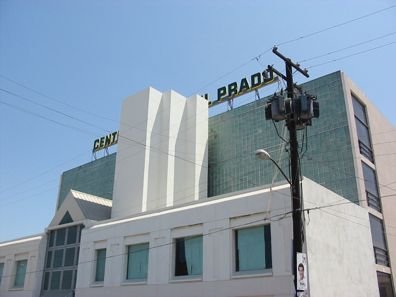
Del Prado Medical Center: This Tijuana landmark reflects the desires of three personalities — three young architects who saw the city as a frontier.
All buildings begin as ideas. Yet, not all have an aura to develop into a story of their own, a story uninhibited from the architect’s will and its client’s desires. Like the houses we dwell in, some buildings become our first universe; as the French philosopher Gaston Bachelard mentioned, “a real cosmos in every sense of the word.” Few buildings retain their literary sense and inspire a virtual travel through its space and materiality. But there is a building in Tijuana that reflects the desires of three personalities — that through their will and faith they construct the blueprint of not only a physical space but create a universe of emotions that even today resonates as you walk through its doors. This is the story of a doctor, a nun, and three young architects who gave birth to architecture.
Tijuana’s Temporary Monument
The Riedel Medical Building (known today as Del Prado Medical Center) in Tijuana became transformed by spiritual will and a desire to create a state-of-the art cardiology center, open to all who might need specialized care, despite their economic background. A building that today has become one of the leading health centers in the city, yet it has been camouflaged by the rampant urbanization and obscured by a more recent and controversial addition to its principal façade.
The creation of the medical center in 1963 was the effort of Maria Luisa Riedel Betancourt, a tijuanense from a prominent family who financed a small private two-story hospital in what was considered the outskirts of the city, near the Agua Caliente racetrack and the silos of the local flour company, El Rosal.
By the 1970s, the hospital became well known around the region for its outstanding medical care. Riedel Betancourt decided to expand the facilities and build a center with medical offices for the doctors. Riedel Betancourt gave the task of designing the new wing to a member of her family, Livio Santini, a young architect who helped form the first generation of architects who studied in Los Angeles at the newly created Southern California Institute of Architecture (SCI-Arc). Santini invited Michael Rotondi (also part of that first generation) and Thom Mayne, principal of the firm Morphosis and instrumental in forming the school.
During the late ’70s, Tijuana was going through radical urban changes — a new downtown was being built, and the manufacturing industry was becoming the major economic sector of the city. The three architects, who were in their late 20s and early 30s, took on the task of designing the medical center in a city that was to them a frontier.
Santini and Rotondi joined Thom Mayne and his firm Morphosis to design and build the medical center. Morphosis was then a young firm creating an oeuvre via competitions and small commissions; their design process was known for its provocative drawings and minuscule, detailed models.
In 1977, the firm entered the medical center’s design into the Progressive Architecture Awards and was awarded a citation for the building. The jury hailed the design for its elegance, articulation of spaces, and its sensitivity. One of the jurors, John Dinkeloo, saw it as a futuristic design and mentioned, “It’ll never be built. It will take at least 20 years.” Yet, the architects began construction three years later, in 1980.
It’s a simple building separated into three functional areas and four floors above ground; the building is orientated west and sheathed in green glass block. Constructing an elegantly designed building in Tijuana presented challenges for the young firm. Using local contractors, builders, and all materials from Tijuana (except for some specialty hardware from the U.S.), the building was completed in 1983. After the completion of the new wing, the medical center continued to be a premiere clinic in the region.
Coincidence Became Divine Providence
By the 1980s, one of Riedel Betancourt’s daughters, Patricia Aubanel, had become a cardiologist and returned from the United States to work again in her native Tijuana. Aubanel had a desire to bring modern cardiology back to her country. After studying at Boston University, the University of Massachusetts, and Harvard and specializing in interventional cardiology, she found it difficult to practice her specialty in her hometown due to the lack of resources to do so. So, she began to work at Scripps Clinic in La Jolla.
In 1991, Aubanel embarked on a personal and professional journey that would lead her back to what she most desired: a specialized cardiology center in Tijuana. During this time she met a Catholic nun by the name of Agnes Gonxha Bojaxhiu, who would become her spiritual guide. She was known to the rest of the world as Mother Teresa of Calcutta. In Tijuana, Mother Teresa had founded three homes for the poor with her Missionaries of Charity organization and during 1991 had returned to oversee the charity’s work with the city’s poor and elderly.
Aubanel was still working for Scripps Clinic and was making frequent trips to Tijuana, where she cared for patients at the medical center. It was a late December morning of the same year when the doctor received a call from Tijuana’s Bishop Emilio Carlos Berlie Belauzarán, who told her that a special friend was sick and needed a cardiologist to evaluate her condition when she came to visit. The bishop made it clear that he would respect the doctor’s decision if she refused to evaluate her after learning who the particular acquaintance was. When she found out it concerned Mother Teresa, it took Aubanel a couple of hours to contemplate a reply to the bishop’s plea. The doctor decided to go see the nun. After a brief examination, Aubanel realized the severity of her condition, one that could only be resolved and attended to by a handful of people in the world and she was one of them. Coincidence became Divine Providence.
Mother Teresa was immediately admitted to the Del Prado Medical Center, but her critical condition required her to go across the border to Scripps Clinic for heart surgery, a trip that she refused to make. “I won’t be attended to in a hospital that cares for the rich and privileged,” she told Aubanel. If the poor could not have this type of medical care, neither would she. Mother Teresa asked to be operated on at the medical center in Tijuana, but the center did not have the means to undergo such treatment.
Aubanel attempted to convince Mother Teresa by explaining that her vows of poverty would not be affected; that, on the contrary, it was because of her lifelong dedication to her work that she needed to be treated at any cost and in any place, in order to continue her mission. “There must be a reason why I am here to help you,” Aubanel told Mother Teresa. “I am one of very few experts in the world that can treat your condition. I’ve never known how to listen to God, but this time I feel a calling.” After a few days of trying to convince her, Mother Teresa still refused and told Aubanel that God was her doctor and he would decide her fate.
Mother Teresa immediately stopped her medical treatment and the following day left Tijuana for Los Angeles to continue with her work. On the third day in Los Angeles, Mother Teresa fell ill again and Aubanel got a call from Mother Teresa’s staff asking for advice. The doctor explained to them that in her condition she needed to be admitted to a hospital as soon as possible. Mother Teresa once again refused, saying she preferred to be treated in Tijuana. According to Aubanel, Mother Teresa had a special place in her heart for Tijuana; she felt closer to God there. Mother Teresa arrived in Tijuana the next morning. The doctor was made to wait while Mother Teresa visited the Christmas festivities at her homes in Tijuana, and it wasn’t until she returned at 10 p.m. that she allowed herself to be treated. She agreed to go to the hospital, but after Christmas.
On December 26, Mother Teresa was taken across the border to Scripps Clinic under the condition that she would not be accepted as Mother Teresa but by her real name, Agnes Bojaxhiu. After a laboratory test, Aubanel found out that Mother Teresa had five obstructed arteries and decided on angioplasty; one of the arteries required the placement of a stent. The operation was a success, yet, the stent procedure was still in clinical trials and required FDA approval to be used on Mother Teresa. After her successful surgery, the stent became known by some in the medical community as the “holy” stent.
Building Faith
The effort made to save Mother Teresa’s life was a profound experience for Aubanel. After the operation, Mother Teresa entrusted the doctor with two tasks: to create mobile health clinics to serve Tijuana’s underprivileged population; second, if Aubanel wished to bring back modern heart medicine to Mexico, she had to build a cardiovascular center that would serve the whole community, rich and poor. The hospital would be built on the grounds of the medical center Aubanel’s mother had built in Tijuana.
The doctor then went about raising funds for the center. She saved money, but the process was slow. Every time she flew around the world to see Mother Teresa for her checkup she would have to tell her of the difficulty she was having raising money. After every visit, the nun would ask if she had begun to build the center and the doctor would answer hesitantly, “I still don’t have enough funds.” Mother Teresa would reply, “You don’t need money; all you need is faith.”
Mother Teresa passed away in 1997, and Aubanel would not wait any longer. She decided to begin construction with the funds she had at that moment. For a last blessing, she asked permission to visit the nun’s grave in Calcutta. As she visited the site, she felt a deep spiritual approval to begin the task. Before leaving, the doctor made one more request to the Council of the Missionaries of Charity at the convent. She wanted to name the center after Mother Teresa. The nuns approved the request unanimously, and the Instituto de Ciencias Cardiovasculares Madre Teresa came to be.
Aubanel hired an unknown architect to design the building on what was part of the front plaza adjacent to the entrance of the medical center. Aubanel began the work without consulting or intending to work with Morphosis — it was she who had been entrusted to begin the project by one of the most devout spiritual leaders in the world; and due to Morphosis’ success in the architectural field, she thought they would be beyond her financial means.
By the late ’90s, the firm had matured and was becoming one of the most important practices in the Unites States and abroad, winning commissions and awards for high-profile projects. Another concern Aubanel had was that, according to Mother Teresa, everything the doctor did under her name and blessing had to be humble and unpretentious; Aubanel thought that by giving the project to a local architect, she would be true to this ideal. At the end the new wing, a bland white stucco box with a pitched roof was attached to the original Morphosis building. “A crime to the building designed by Livio, Michael, and Thom,” she explains, “but true to the needs of the new institute.”
Michael Rotondi thought the doctor’s preoccupation was reasonable, yet he felt that he would have considered working pro bono on the project. “If the project is important enough, then we always find a way to make it happen.” The architect felt that Aubanel’s speculation regarding the firm’s success was just a way to validate her predetermined decision. “Dr. Aubanel had other plans and commitments, I understand, but it’s too bad we never spoke. At least it would have dispelled her preconceptions.”
Glass Chimera
If you go and visit the building today, you can walk up the marble stairs to the fourth floor and see its metal structure. The building’s green glass block façade shimmers in the afternoon light and resembles Pierre Chareau’s glass house rather than the high modernism of James Stirling or Alvar Aalto. The building did not make it into any architectural history book because just like any other late-modern structure, it could just be “part of the platonic idea of building the ultimate glass box, one of many in the history of modernism,” as the British architectural historian Reyner Banham said. The young architects who designed the building are now renowned architects. Michael Rotondi has his own practice with projects worldwide. Thom Mayne still leads Morphosis and in 2005 received the Pritzker Architecture Prize for his lifetime achievement to the discipline of architecture.
Mother Teresa’s legacy was an important spiritual muse for the creation of the new wing of the cardiology medical center. Three young architects began with a dream to have the liberty to experiment with avant-garde architectural ideas in a city that was just learning to be modern. And a doctor found the faith and determination to provide world-class medical care in her home town. Tijuana once again becomes a place where faith and desire coalesce creating multiple and improbable myths.
Special thanks to architect Miguel Escobar for facilitating the interview with Dr. Aubanel; architect Michael Rotondi for being kind enough to elaborate on the commission and construction of the Riedel Medical Center. Finally, I want to thank Dr. Patricia Aubanel for her time and for sharing the story of her relationship with Mother Teresa.
To read this article in English, click here
Here's something you might be interested in.
Riedel Medical Center: A Blueprint of Logic and Faith

Riedel Medical Center: A Blueprint of Logic and Faith
Del Prado Medical Center: This Tijuana landmark reflects the desires of three personalities — three young architects who saw the city as a frontier.
All buildings begin as ideas. Yet, not all have an aura to develop into a story of their own, a story uninhibited from the architect’s will and its client’s desires. Like the houses we dwell in, some buildings become our first universe; as the French philosopher Gaston Bachelard mentioned, “a real cosmos in every sense of the word.” Few buildings retain their literary sense and inspire a virtual travel through its space and materiality. But there is a building in Tijuana that reflects the desires of three personalities — that through their will and faith they construct the blueprint of not only a physical space but create a universe of emotions that even today resonates as you walk through its doors. This is the story of a doctor, a nun, and three young architects who gave birth to architecture.
Tijuana’s Temporary Monument
The Riedel Medical Building (known today as Del Prado Medical Center) in Tijuana became transformed by spiritual will and a desire to create a state-of-the art cardiology center, open to all who might need specialized care, despite their economic background. A building that today has become one of the leading health centers in the city, yet it has been camouflaged by the rampant urbanization and obscured by a more recent and controversial addition to its principal façade.
The creation of the medical center in 1963 was the effort of Maria Luisa Riedel Betancourt, a tijuanense from a prominent family who financed a small private two-story hospital in what was considered the outskirts of the city, near the Agua Caliente racetrack and the silos of the local flour company, El Rosal.
By the 1970s, the hospital became well known around the region for its outstanding medical care. Riedel Betancourt decided to expand the facilities and build a center with medical offices for the doctors. Riedel Betancourt gave the task of designing the new wing to a member of her family, Livio Santini, a young architect who helped form the first generation of architects who studied in Los Angeles at the newly created Southern California Institute of Architecture (SCI-Arc). Santini invited Michael Rotondi (also part of that first generation) and Thom Mayne, principal of the firm Morphosis and instrumental in forming the school.
During the late ’70s, Tijuana was going through radical urban changes — a new downtown was being built, and the manufacturing industry was becoming the major economic sector of the city. The three architects, who were in their late 20s and early 30s, took on the task of designing the medical center in a city that was to them a frontier.
Santini and Rotondi joined Thom Mayne and his firm Morphosis to design and build the medical center. Morphosis was then a young firm creating an oeuvre via competitions and small commissions; their design process was known for its provocative drawings and minuscule, detailed models.
In 1977, the firm entered the medical center’s design into the Progressive Architecture Awards and was awarded a citation for the building. The jury hailed the design for its elegance, articulation of spaces, and its sensitivity. One of the jurors, John Dinkeloo, saw it as a futuristic design and mentioned, “It’ll never be built. It will take at least 20 years.” Yet, the architects began construction three years later, in 1980.
It’s a simple building separated into three functional areas and four floors above ground; the building is orientated west and sheathed in green glass block. Constructing an elegantly designed building in Tijuana presented challenges for the young firm. Using local contractors, builders, and all materials from Tijuana (except for some specialty hardware from the U.S.), the building was completed in 1983. After the completion of the new wing, the medical center continued to be a premiere clinic in the region.
Coincidence Became Divine Providence
By the 1980s, one of Riedel Betancourt’s daughters, Patricia Aubanel, had become a cardiologist and returned from the United States to work again in her native Tijuana. Aubanel had a desire to bring modern cardiology back to her country. After studying at Boston University, the University of Massachusetts, and Harvard and specializing in interventional cardiology, she found it difficult to practice her specialty in her hometown due to the lack of resources to do so. So, she began to work at Scripps Clinic in La Jolla.
In 1991, Aubanel embarked on a personal and professional journey that would lead her back to what she most desired: a specialized cardiology center in Tijuana. During this time she met a Catholic nun by the name of Agnes Gonxha Bojaxhiu, who would become her spiritual guide. She was known to the rest of the world as Mother Teresa of Calcutta. In Tijuana, Mother Teresa had founded three homes for the poor with her Missionaries of Charity organization and during 1991 had returned to oversee the charity’s work with the city’s poor and elderly.
Aubanel was still working for Scripps Clinic and was making frequent trips to Tijuana, where she cared for patients at the medical center. It was a late December morning of the same year when the doctor received a call from Tijuana’s Bishop Emilio Carlos Berlie Belauzarán, who told her that a special friend was sick and needed a cardiologist to evaluate her condition when she came to visit. The bishop made it clear that he would respect the doctor’s decision if she refused to evaluate her after learning who the particular acquaintance was. When she found out it concerned Mother Teresa, it took Aubanel a couple of hours to contemplate a reply to the bishop’s plea. The doctor decided to go see the nun. After a brief examination, Aubanel realized the severity of her condition, one that could only be resolved and attended to by a handful of people in the world and she was one of them. Coincidence became Divine Providence.
Mother Teresa was immediately admitted to the Del Prado Medical Center, but her critical condition required her to go across the border to Scripps Clinic for heart surgery, a trip that she refused to make. “I won’t be attended to in a hospital that cares for the rich and privileged,” she told Aubanel. If the poor could not have this type of medical care, neither would she. Mother Teresa asked to be operated on at the medical center in Tijuana, but the center did not have the means to undergo such treatment.
Aubanel attempted to convince Mother Teresa by explaining that her vows of poverty would not be affected; that, on the contrary, it was because of her lifelong dedication to her work that she needed to be treated at any cost and in any place, in order to continue her mission. “There must be a reason why I am here to help you,” Aubanel told Mother Teresa. “I am one of very few experts in the world that can treat your condition. I’ve never known how to listen to God, but this time I feel a calling.” After a few days of trying to convince her, Mother Teresa still refused and told Aubanel that God was her doctor and he would decide her fate.
Mother Teresa immediately stopped her medical treatment and the following day left Tijuana for Los Angeles to continue with her work. On the third day in Los Angeles, Mother Teresa fell ill again and Aubanel got a call from Mother Teresa’s staff asking for advice. The doctor explained to them that in her condition she needed to be admitted to a hospital as soon as possible. Mother Teresa once again refused, saying she preferred to be treated in Tijuana. According to Aubanel, Mother Teresa had a special place in her heart for Tijuana; she felt closer to God there. Mother Teresa arrived in Tijuana the next morning. The doctor was made to wait while Mother Teresa visited the Christmas festivities at her homes in Tijuana, and it wasn’t until she returned at 10 p.m. that she allowed herself to be treated. She agreed to go to the hospital, but after Christmas.
On December 26, Mother Teresa was taken across the border to Scripps Clinic under the condition that she would not be accepted as Mother Teresa but by her real name, Agnes Bojaxhiu. After a laboratory test, Aubanel found out that Mother Teresa had five obstructed arteries and decided on angioplasty; one of the arteries required the placement of a stent. The operation was a success, yet, the stent procedure was still in clinical trials and required FDA approval to be used on Mother Teresa. After her successful surgery, the stent became known by some in the medical community as the “holy” stent.
Building Faith
The effort made to save Mother Teresa’s life was a profound experience for Aubanel. After the operation, Mother Teresa entrusted the doctor with two tasks: to create mobile health clinics to serve Tijuana’s underprivileged population; second, if Aubanel wished to bring back modern heart medicine to Mexico, she had to build a cardiovascular center that would serve the whole community, rich and poor. The hospital would be built on the grounds of the medical center Aubanel’s mother had built in Tijuana.
The doctor then went about raising funds for the center. She saved money, but the process was slow. Every time she flew around the world to see Mother Teresa for her checkup she would have to tell her of the difficulty she was having raising money. After every visit, the nun would ask if she had begun to build the center and the doctor would answer hesitantly, “I still don’t have enough funds.” Mother Teresa would reply, “You don’t need money; all you need is faith.”
Mother Teresa passed away in 1997, and Aubanel would not wait any longer. She decided to begin construction with the funds she had at that moment. For a last blessing, she asked permission to visit the nun’s grave in Calcutta. As she visited the site, she felt a deep spiritual approval to begin the task. Before leaving, the doctor made one more request to the Council of the Missionaries of Charity at the convent. She wanted to name the center after Mother Teresa. The nuns approved the request unanimously, and the Instituto de Ciencias Cardiovasculares Madre Teresa came to be.
Aubanel hired an unknown architect to design the building on what was part of the front plaza adjacent to the entrance of the medical center. Aubanel began the work without consulting or intending to work with Morphosis — it was she who had been entrusted to begin the project by one of the most devout spiritual leaders in the world; and due to Morphosis’ success in the architectural field, she thought they would be beyond her financial means.
By the late ’90s, the firm had matured and was becoming one of the most important practices in the Unites States and abroad, winning commissions and awards for high-profile projects. Another concern Aubanel had was that, according to Mother Teresa, everything the doctor did under her name and blessing had to be humble and unpretentious; Aubanel thought that by giving the project to a local architect, she would be true to this ideal. At the end the new wing, a bland white stucco box with a pitched roof was attached to the original Morphosis building. “A crime to the building designed by Livio, Michael, and Thom,” she explains, “but true to the needs of the new institute.”
Michael Rotondi thought the doctor’s preoccupation was reasonable, yet he felt that he would have considered working pro bono on the project. “If the project is important enough, then we always find a way to make it happen.” The architect felt that Aubanel’s speculation regarding the firm’s success was just a way to validate her predetermined decision. “Dr. Aubanel had other plans and commitments, I understand, but it’s too bad we never spoke. At least it would have dispelled her preconceptions.”
Glass Chimera
If you go and visit the building today, you can walk up the marble stairs to the fourth floor and see its metal structure. The building’s green glass block façade shimmers in the afternoon light and resembles Pierre Chareau’s glass house rather than the high modernism of James Stirling or Alvar Aalto. The building did not make it into any architectural history book because just like any other late-modern structure, it could just be “part of the platonic idea of building the ultimate glass box, one of many in the history of modernism,” as the British architectural historian Reyner Banham said. The young architects who designed the building are now renowned architects. Michael Rotondi has his own practice with projects worldwide. Thom Mayne still leads Morphosis and in 2005 received the Pritzker Architecture Prize for his lifetime achievement to the discipline of architecture.
Mother Teresa’s legacy was an important spiritual muse for the creation of the new wing of the cardiology medical center. Three young architects began with a dream to have the liberty to experiment with avant-garde architectural ideas in a city that was just learning to be modern. And a doctor found the faith and determination to provide world-class medical care in her home town. Tijuana once again becomes a place where faith and desire coalesce creating multiple and improbable myths.
Special thanks to architect Miguel Escobar for facilitating the interview with Dr. Aubanel; architect Michael Rotondi for being kind enough to elaborate on the commission and construction of the Riedel Medical Center. Finally, I want to thank Dr. Patricia Aubanel for her time and for sharing the story of her relationship with Mother Teresa.
To read this article in English, click here