

Here's something you might be interested in.
Ask a Hipster — Advice you didn't know you needed
Big Screen — Movie commentary
Blurt — Music's inside track
Booze News — San Diego spirits
Classical Music — Immortal beauty
Classifieds — Free and easy
Cover Stories — Front-page features
Drinks All Around — Bartenders' drink recipes
Excerpts — Literary and spiritual excerpts
Feast! — Food & drink reviews
Feature Stories — Local news & stories
Fishing Report — What’s getting hooked from ship and shore
From the Archives — Spotlight on the past
Golden Dreams — Talk of the town
The Gonzo Report — Making the musical scene, or at least reporting from it
Letters — Our inbox
Movies@Home — Local movie buffs share favorites
Movie Reviews — Our critics' picks and pans
Musician Interviews — Up close with local artists
Neighborhood News from Stringers — Hyperlocal news
News Ticker — News & politics
Obermeyer — San Diego politics illustrated
Outdoors — Weekly changes in flora and fauna
Overheard in San Diego — Eavesdropping illustrated
Poetry — The old and the new
Reader Travel — Travel section built by travelers
Reading — The hunt for intellectuals
Roam-O-Rama — SoCal's best hiking/biking trails
San Diego Beer — Inside San Diego suds
SD on the QT — Almost factual news
Sheep and Goats — Places of worship
Special Issues — The best of
Street Style — San Diego streets have style
Surf Diego — Real stories from those braving the waves
Theater — On stage in San Diego this week
Tin Fork — Silver spoon alternative
Under the Radar — Matt Potter's undercover work
Unforgettable — Long-ago San Diego
Unreal Estate — San Diego's priciest pads
Your Week — Daily event picks
When aircraft carriers dock in Coronado
Too close for comfort
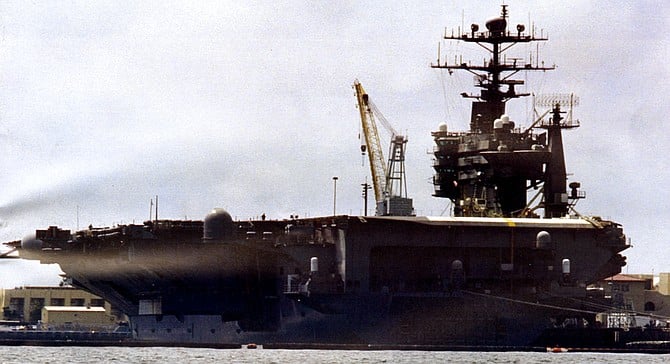
The USS Stennis is, once again, the only carrier in San Diego, having recently returned from a tour of duty for Operation Iraqi Freedom.
North Island Naval Air Station is impressive from the sky — 2600 acres dotted with buildings and trucks and cars. Looking at an aerial photo taken when 4 of the U.S.’s 12 aircraft carriers were in port, you would find more to be impressed about. There they are — the Constellation, the Carl Vinson, the Nimitz, and the John C. Stennis, parallel parked at pier side. How does one maneuver something so big into a space so small?
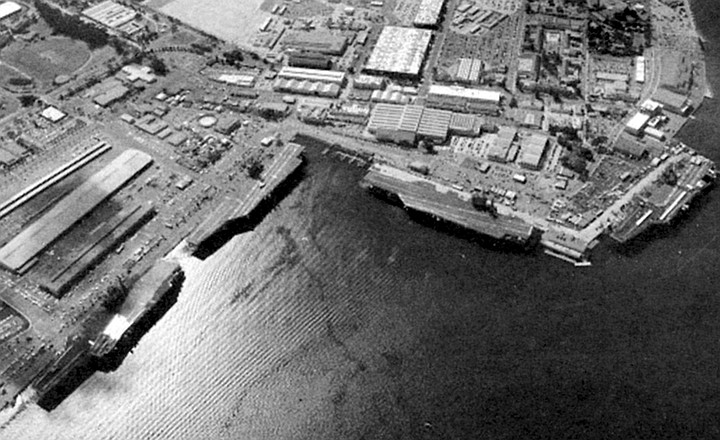
North Island. It’s believed that Nawaf Alhazmi and Khalid al Midhar who helped crash American Airlines Flight 77 into the Pentagon were part of an alternative plan, to attack the nuclear-powered Stennis.
Tom Fitzgerald, a retired Navy captain who lives in Coronado, is proud of his former employer, but he worries about it too. In early March, on the day after the Navy announced that its latest antiterrorist effort would be to erect small-boat barrier booms and expand the security zones in San Diego Bay, Fitzgerald said, “The Navy has taken a page from the Cole, but what about Oklahoma City?”
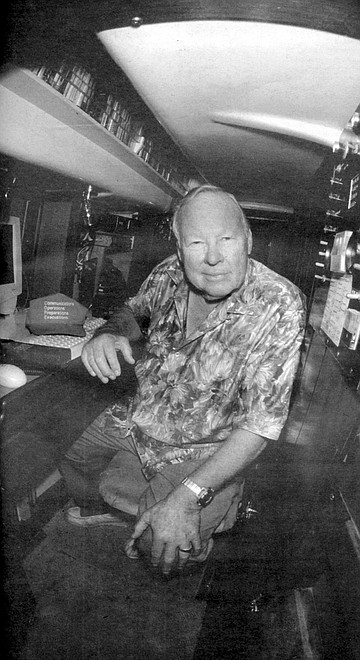
Ralph Hodges: There are 30 boats and skippers, members of the Coronado Cays Yacht Club, who would be “willing at a moment’s notice” to mobilize.
Fitzgerald’s Navy specialty was logistics, but he is not a military authority of any kind any longer. After 26 years of active duty, he is now merely one of those citizens with an idea, who attend public meetings and write letters to the editor. Frankly, Fitzgerald said, the vulnerability of the carriers from a land-based attack had not occurred to him until he gave a tour of the base to two friends from the Midwest who visited him and his wife a few years ago. This was not too long after the attack on the USS Cole on October 12, 2000, that killed 17 people, including seaman recruit Lakiba Nicole Palmer of San Diego, and well after the bombing of the Murrah Federal Building in Oklahoma City on April 19, 1997.
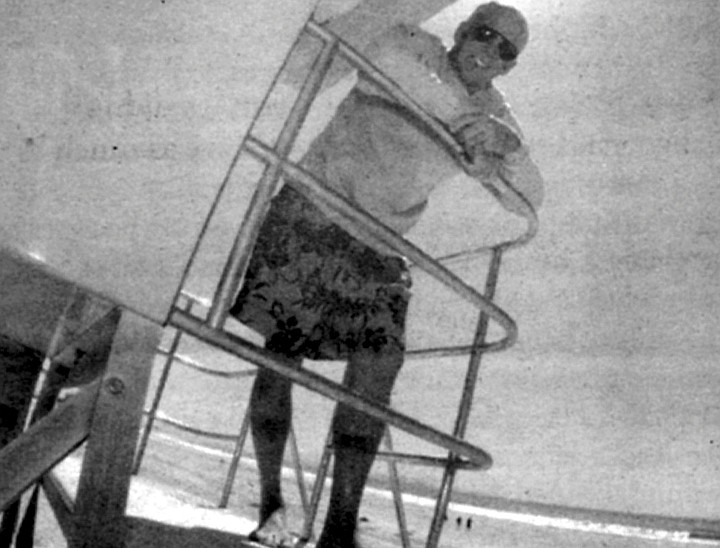
Lance Mann: "The worst is not going to happen."
It was also before Nawaf Alhazmi and Khalid al Midhar, who lived for a time in Clairemont’s Parkwood Apartments and later Lemon Grove, helped crash American Airlines Flight 77 into the Pentagon. It’s believed that the two were part of an alternative plan, to attack the nuclear-powered Stennis. Both men were observed by the Central Intelligence Agency in January 2000 at an al-Qaeda meeting in Kuala Lumpur.
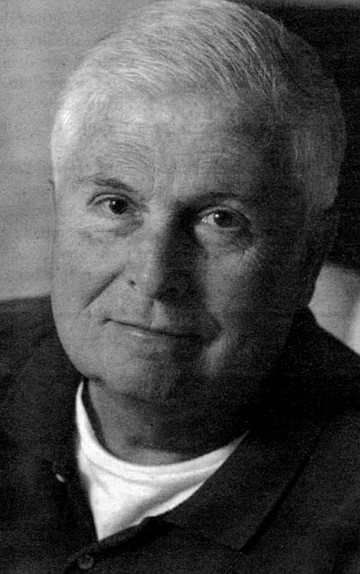
Tom Fitzgerald: "Norfolk has six aircraft carriers and submarines, and surface ships — everything on one base that we’ve got on North Island, Point Loma, and 32nd Street. The difference is that the gates are well away from the carriers."
“And so we drove up alongside one of the carriers. And in their naïveté or innocence or whatever it was, right out of the Midwest, my friends said, ‘Holy smoke! We could reach out and almost touch it. Isn’t that dangerous?’ Well, at the time, we went on our merry way, enjoying their visit. When something is so familiar to you, you tend not to notice it. But after they went home, I got to thinking, ‘My golly!’ What concerns me is the explosive power that can be packed into a small van, much less a large semi, and the damage that could be done.”
Fitzgerald said he began to “bug” the Navy about this worry of his. “I told them, ‘You really, really gotta do something. And you’re the experts. You decide what. But you oughta at least change the traffic pattern.’ ”
He stressed that he does not believe the carriers are vulnerable to being sunk at the pier. “They are built to withstand crashes from planes on deck, okay? But if something occurs that causes one of them to be sidelined for three weeks or a month or whatever, the implications!” — that is, in terms of our preparedness for war. “Most branches of the service go to great lengths to protect their assets. If you drive onto an Air Force base, I assure you that you would get nowhere near where the bombers are parked. If you were to drive into Miramar, you would not get near that flight line.”
Fitzgerald’s imagination conjures land-based attacks that would occur during the morning rush hour, when the gate is busiest. The modus operandi could be to use a combination of vehicles. He imagines, for example, a terrorist blowing up an 18-wheeler packed with explosives next to a tanker truck filled with gasoline. (The explosion of a fuel truck was what caused the damage and deaths at the U.S. Embassy in Nairobi on August 8, 1998, that killed more than 200 Kenyans and 46 Americans.)
He also worries about the way the carriers are opened up when they’re in port, making moored ones more vulnerable than ones at sea, in his opinion. “On the side, the carriers have those great big hangars.” The hangars are equipped with elevators that raise and lower the aircraft from the hangar deck up to the flight deck. “Well, when the ships are in port, they lower those wharf-side, hangar-deck elevators so that people, freight, and equipment can get on and off the ship on a gangway. So, goodness! Somebody could drive up alongside, and the blast, just going through the open side of the ship, into the interior would do — “ He stopped himself. “I’m not a marine architect. I’m not a marine engineer. And you can quibble about whether it would damage this or that. But I’m not going to quibble. I’m just going to say we’re taking a risk that I don’t think we should be taking, given the world situation.”
Fitzgerald believes it wouldn’t be difficult for a terrorist to get past the sentry at the main gate. His own stickered car could be stolen for the afternoon, he speculated. Or somebody else’s could simply be bought by the enemy. “There are hundreds of used cars bought and sold by sailors in the area every year. And you’re supposed to scrape your sticker off the bumper before you hand it over to the new owner. But if you’re being transferred, and you’ve got a pickup truck or something, you may not have time to attend to every detail. You just sell it and you move on.”
In more than one of his dozen letters to the editor on this subject, all published in the Coronado Eagle & Tribune, Fitzgerald has offered to give all takers a tour of the base so they could see the situation for themselves. No one has accepted his invitation. “I’ll tell you what I did get, though: some anonymous phone calls from people saying, ‘Hey, Bud, I don’t know who you think you are, but you’re giving aid and comfort to the blankety-blank terrorists.’ One guy said that if he were the base commander he would remove my car’s sticker. But you expect that kind of reaction.
“More disconcerting is that I got a number of calls from people — and this is a Navy community, with a lot of Navy retired, like myself — who said, ‘Hey, I agree with you, but I’m not going to say a word.’ And, as I interpret it, they’re saying, ‘I enjoy my life here in Coronado. I don’t want to rock any boats. I want to be able to walk into the clubs, go to the store, play golf, and all of that, and not have people mad at me.’ I have not had a soul say, ‘Hey, I disagree with you. I’ve looked at the situation, and hell, there’s no problem.’ ”
Fitzgerald’s solution to the problem would involve more than a changed traffic pattern; he also wants the Navy to “clear space” around the carriers, as the government has done around the White House, for example. “And around the Pentagon, too. I compare our situation here with the naval base at Norfolk.” Fitzgerald was stationed in Norfolk at various times in the 1960s, 1970s, and 1980s. “And they’ve got six aircraft carriers there, and submarines, and surface ships — in other words, everything on one base that we’ve got on North Island, Point Loma, and 32nd Street. And they’ve got interstate highway spurs that lead right onto the base. But the difference is that the gates are well away from the carriers. The nearest gate is about half a mile from them. And when the traffic enters the gate, trucks have to turn and are vectored away, over to another area, where they are screened. And so only the traffic that has legitimate business with them goes out anywhere near the carriers.”
Norfolk didn’t always have as much space around its fleet as it currently does, said Fitzgerald. “Over time a decision was made, when new buildings went up, to build them away from the waterfront. And so, gradually, they’ve been very successful at getting all of the industrial, day-to-day, nonwaterfront-type stuff away from all of the ships, and the carriers in particular. At North Island, they built new buildings even closer to the carriers than the buildings that they replaced! It’s absurd, from a security standpoint.”
Asked what the Navy’s response to his concerns has been, Fitzgerald said he has had several conversations with a civilian public-affairs officer, Ken Mitchell, but has received no response from anyone else in the Navy. “They have not put anything in writing, and I frankly don’t blame them. I mean, I wouldn’t. And I don’t expect to engage them in any type of dialogue. I just want results. And granted, they’re putting up a fence here and they’re putting up light poles there. But their focus has really, really, really been on the sea. And as a sailor I can attest to the fact that they’re very aggressive as I’m cruising along in a little old tiny wooden sailboat in which I can probably pack about one one-hundredth of the explosive power that I could fit into my car.”
Mitchell, at the mention of Fitzgerald’s name, did not hide his exasperation. “People tend to forget there are 25,000 people on base. It’s a misconception to think we aren’t doing everything we can to maintain their safety.” He listed ways that Coronado benefits from having the Navy as its neighbor. He said the Navy saved the city “half a million dollars a year” by supplementing its fire protection. He also said that he would answer only those questions put to him in writing.
Q: Does the Navy feel that the carriers are in any danger from land-based terrorist attacks when they are in port?
A: The Navy, like any governing body, has security personnel and procedures to protect their personnel and assets from any danger that may arise.
Q: What precautions does the Navy take to insure that there is no danger?
A: The Navy Region Southwest has a very aggressive security program that encompasses not only Navy assists but those from City, County, State and Federal agencies. They are all part of the process that develops the force protection policy that is used for San Diego.
Q: Have these precautions been altered in recent months, years, with the increased threats of terrorist attacks?
A: Security procedures are reviewed daily and adjusted as needed to address the present force protection needs.
Q: What exactly is the procedure when a truck approaches the gate?
A: We feel it is not in the best interest of the Navy or community to discuss security procedures or how we inspect vehicles or personnel.
Q: How many cars and trucks a day come through the gate?
A: With one carrier in port the average number of vehicles entering NASNI is 18,000; with two carriers in port, 21,000; and with three carriers in port, 23,000. The average number of trucks entering the First Street Gate is [approximately] 100 each day. This varies, based on the number of ships in port and any construction projects on base. It should be noted that truck traffic on a truck route designated by the City of Coronado, the impact the residents feel it has on their quality of life, and Navy force protections issues are not always the same.
Some people worry that if terrorists tried to blow up one of San Diego’s nuclear-powered carriers, never mind whether with a small boat or a truck filled with explosives, its reactors could be damaged, creating a radiological disaster for North Island as well as the surrounding community. Another Navy public-affairs officer, Commander Edgar Buclatin, was asked if such damage would be possible, given the construction of the carriers. He responded in an e-mail, “Security measures have been heightened across the country since September 11, 2001, to thwart a terrorist attack. Aircraft carriers have thick armor plating and complex compartmentation designed to survive battle damage, including damage from explosives used on the hull. The robust reactor plants are located deep within the ship, are designed to survive battle shock, have redundant systems, and protect the crew during combat.”
Fitzgerald distances himself from those who worry about the threat that nuclear-powered carriers pose over conventionally powered ones, like the Constellation, which rely on one million gallons of diesel fuel a week to make the steam that propels them. Members of the Environmental Health Coalition have this worry on their minds. They have spoken out for years about the Nimitz, the Stennis, and the plans to homeport the new USS Ronald Reagan here, and they are not assuaged by the Navy’s confidence in the indestructibility of their vessels.
“When the Navy announced that they were changing over North Island from conventional carriers to nuclear carriers, we felt that was not just a paper change, but a huge, huge public-safety and public-health concern, and an environmental concern,” Laura Hunter, a coalition spokesperson, said. “We felt that the carriers shouldn’t come here and certainly not three of them. We tried to keep them from coming; they came. Now we need protection for the community, the same as San Onofre has. We do not have that.”
In comparing the reactors at San Onofre and the reactors in the carriers, Hunter acknowledged that they differed in kind. “But all reactors pose risks; all could have accidents; all could melt down.” And all could be subjected to a terrorist attack. “The Navy wants to lull us into this false sense of security that they are on top of it. But it’s just like buying a mutual fund. They say, ‘It made 50 percent in the last ten years.’ But then they say, ‘Past performance is no guarantee of future performance.’ Same in this case! You could have a perfect record until tomorrow.”
Hunter said “many people” have actually left Coronado because they’re afraid of living near the carriers. “There was a guy who was a former nuclear submariner, and he was, like, ‘Whoa!’ ” She also named Violet Devoe, a candidate for mayor of Coronado in 1996. Devoe said she had moved from Coronado to Point Loma not because of the carriers but because of the radiological waste storage and treatment on North Island. “I moved there in 1977, my children were raised there, and I had hoped to die there.” Point Loma, she pointed out, although just across the bay from North Island, is “upwind” from it. In Coronado she lived downwind, half a mile from the base.
Hunter would not say where her home was, since she wasn’t speaking personally but for the coalition. She did say that her office was on Kettner Boulevard. With the Constellation and the Nimitz deployed, the Stennis is, once again, the only carrier in San Diego, having recently returned from a tour of duty for Operation Iraqi Freedom. Hunter said she did not rest any easier when the carriers were out of port. “When the ships are gone, local risks are reduced, but the risks to the men and women onboard and in communities where the carriers are ported are increased, and this is also of serious concern to us. This is not about just reducing our local risks but about making sure that everyone at risk has maximum protection.”
Someone with a more local perspective is Dismas Abelman, division chief and fire marshal of the Coronado Fire Department, as well as Coronado’s emergency preparedness coordinator. Abelman was asked if he felt the carriers posed a threat and if he had prepared for a disaster that could be brought about by an attack on them.
Abelman said that he did not think there was “a super-high probability” of a radiological disaster happening in Coronado. “I do feel as though we’re more likely to have a natural disaster in Coronado than a radiological one. That being said, we do have a plan [for the latter].” It’s called a radiological operational action plan, or ROAP [pronounced “rope”]. “In fact, we have a series of these plans. We don’t want to bury our heads in the sand.”
These plans include responses to emergencies at “land-based fixed” facilities, those that may occur “during transportation of radiological material,” as well as those “at a vessel in-port San Diego.” Like other emergency plans, at the city, county, state, and federal levels, this one does not give specific details. Citizens are told that in the event of a radiological disaster, the radio will convey the information they need.
Coronado has six mobile monitors — that is, on the fire trucks — designed to register “a large, sustained increase in the amount of radiation in an area,” Abelman said. “If there is that kind of increase, we would know about it very quickly, and we would mobilize our whole team of trained personnel. They would be able to determine where the safe area is and would have the ability to call in additional, specialized resources from both the county and the military.”
Citizens will know to tune in when they hear the announcement on public address systems on fire trucks and police vehicles. People will also be dispatched to go door-to-door. There will also be the sound of sirens. They have only recently been installed in Coronado. There are three: one at the Sixth Street fire station, one at the Coronado Cays fire station, and one at Glorietta Bay Park. They are rotational, and their sound would reach the entire city. “They would be used in the event of a widespread disaster of any kind,” Abelman said. “And in the relatively near future we’re going to activate them. But before we do, we’re going to educate the public. We certainly don’t want to fire them off before we get a chance to tell the public what the heck it means.”
The sirens are not meant to be a signal to evacuate Coronado, Abelman stressed. A mass evacuation of Coronado “is not a realistic course of action. We do this drill — it happens every year. It’s called the Fourth of July, where all the streets are gridlocked for a matter of hours. In a lot of terrorist situations and during many other potentially hazardous ones too, the best thing we can do is to tell people to stay inside. They’re going to be better off there than they would be if they tried to get out of Coronado.” This is especially true if it’s an airborne hazard. “Most airborne hazards have the potential to be very fast moving. If there is a small area that needs to be evacuated, we’ll just move that area.”
Any citizen may inspect Coronado’s emergency disaster plans at the Coronado Public Library. “It’s not meant to be secretive,” said Abelman, who mentioned more than once that Coronado’s plans also are meant to mesh with the Navy’s own plans. What the Navy intends to do is a secret, however.
“[The] Navy has plans and procedures in place for all types of emergencies that could be associated with Naval Nuclear Propulsion Program operations,” Duncan Holiday, Deputy Assistant Secretary of the Navy for Installations and Facilities, wrote on December 23, 2002, when the decision was made to homeport the USS Reagan here. “These plans and procedures contain classified and sensitive military information that cannot be released to the public.”
Abelman was asked if special plans were in place, given Coronado’s geography and its potential to be isolated from the mainland. If traffic across the bridge were impossible, what would happen then? “It’s true that we have certain geological issues that we’d be foolish not to acknowledge,” he said. “We also have alternative plans — for example, to move hospital staff in and out of the city.” One of these plans utilizes civilian boat owners who have been trained to move both people and equipment over the water. “We’ll be having a drill for them sometime in the spring,” Abelman said.
Ralph Hodges, a retiree who has lived aboard his 50-foot Westsail with his wife, Pamela Hodge Hodges, for the past 12 years, is the founder of the boat owners’ group, called Communications Operations Preparations and Evacuations, or COPE. (They are, in turn, a part of Coronado’s Community Emergency Response Training team. Training them is another part of Abelman’s job.) “COPE was my idea, and I’m proud of it,” Hodges said. “This whole project is dedicated toward being prepared to handle any disastrous emergency — earthquakes, tidal waves, whatever they might be. We started thinking about this long before the Department of Homeland Security was established. Our community, more than any other place in San Diego, could be totally isolated, because of the bridge, because of the Strand. We could be reverted back to an island, without any access.” If that happened, police and fire boats would be taxed. “We wouldn’t be able to get medical supplies easily, or water, or doctors.” Even chief Abelman, who lives in Clairemont, would have to come to work by boat if he wasn’t here already.
Hodges said that there are 30 boats and skippers in the three-year-old group, all of them members of the Coronado Cays Yacht Club, who would be “willing at a moment’s notice” to mobilize. At the club there are 250 boats in all — “and so there is a resource. If we needed it we would have it. There are all kinds of boats — powerboats and sailboats like ours that have engines and yet can sail. The fact that they have generators makes them particularly valuable.” Each boat has been surveyed, said Hodges, “so we know how much water they carry, how much fuel they have.”
The Navy’s cranes can lift multi-thousand-pound parcels. The yacht club owns the only “civilian controlled” cranes on Coronado that can do the same, up to 6000 pounds, Hodges said. “And so we could put supplies aboard these boats from here.” At the other end they would use the cranes at the Chesapeake Fish Company at Seaport Village. “[The owners] have not only dedicated their cranes,” said Hodges, “but would take their whole staff, which is more than a dozen husky men, and turn them toward this emergency. The type of craft the Navy have aren’t really adaptable to what we can do. We can go right up to the shore. You can’t land a destroyer. That’s an exaggeration, but it tells the story. So that’s the whole plan.”
Hodges also belongs to the Coronado Emergency Radio Operators — or CERO, another organization of civilian volunteers. These licensed amateur ham radio operators are ready to go to work in a disaster on Coronado (or anywhere else), said the group’s technical engineer, Ted Hamm.
“In an emergency, the telephone system goes down, and the cell phone systems are absolutely worthless, too,” said Hamm. “It happens even at the Super Bowl. Three minutes after the Super Bowl started, the cell phones all shut down. It was overloaded. When that happens during an emergency, we come in to help.”
The police and fire have their own radio systems; this group would use theirs to supplement those wherever they were needed. “We have two portable units, which are in suitcases, and we’ll take them out to the emergency site. We’ll be the communications between them and the city EOC [emergency operations center]. We can send color pictures and we can also send computer packets for printing out.”
Hamm has been involved in two major emergencies since he got his license at age 16 in 1946. “I helped with communications in Julian during the Pines fire last July. Before that, while I was living up near San Francisco, I helped during the Loma Prieta earthquake [on October 17, 1989]. During that one, the phones all went out for three days, and the cell phones went out almost immediately, too.”
The group’s system supports two repeaters on Coronado, said Hamm. “A repeater will take a low-level signal, like one that a handheld transceiver puts out. The handheld’s VHF frequency is essentially line-of-sight” — i.e., as the crow flies. “So you’re fairly limited. The repeater overrides that. With the repeaters, we’ve got a six-mile radius of coverage. So it’s much, much better. From here, for example, we get into Mission Valley just fine, even though it’s a big hole. So the repeater is fundamental to our system.”
Abelman, Hodges, Hamm — they’re anticipators, not worriers. Lance Mann of Coronado is neither. At 63, he is a civilian lifeguard on North Island, along with two of his sons. In fact, he believes he is “something like the second oldest lifeguard in the country.” Mann is also a former Navy SEAL whose training class was number 28. “They’re up around 240 now, so I’m one of the relics, but I’m still here,” said Mann.
Mann said he wasn’t a bit worried about the carriers or anything else. How come? “Probably because I have a profound belief that the worst is not going to happen. I have in-laws whose profound belief is just the opposite. They believe that the worst is always going to happen. And I’m one of these guys who believe in good outcomes.” How did he get that way? “It’s hard not to be that way. I mean, look at what we’ve got. Also, I guess I’ve been lucky. I’ve got a nice family, four great children, a couple of grandchildren, and some great friends. Maybe if I weren’t so lucky, I wouldn’t have so much faith in the way things will turn out.”
But even being the optimist that he is, did he have a stash of water in his house, extra food, and all that? “Nope. There was an article in the paper that said Coronado was on an earthquake fault line. And I said, ‘That’s good news and bad news. The bad news is the fault line. The good news is, we might lose the bridge.’ Wouldn’t that be nice? Doomsayers! They’ll drive you nuts. I compare them to people who wear a seat belt and have an air bag in the car and wear a helmet. My God! You gotta take a chance every now and then.”
But being a lifeguard, isn’t he at least worried when people take a risk out in the water? “No, because, I gotta admit, where we work, although it occasionally can get pretty dangerous with the rip currents and everything, it’s so easy to spot that danger and to advise people. We just say, ‘Look, it’s probably not a good idea to go swimming out there today.’ And they always listen to you. And the worst thing that can happen, 99 times out of 100, is that they get scared, which is a lousy feeling, but — . We can get to them in plenty of time.”
Fear, that’s almost the last word, isn’t it? “It’s a real liability — in everything, right? One of the biggest reasons not to worry is because there isn’t anything that can come of it. That serenity prayer? ‘God, grant me the serenity to accept the things I cannot change, courage to change the things I can’…? Anything else, there’s no sense to it. And the only problem is figuring out which is which.”
Here's something you might be interested in.
When aircraft carriers dock in Coronado
Too close for comfort

When aircraft carriers dock in Coronado
Too close for comfort
The USS Stennis is, once again, the only carrier in San Diego, having recently returned from a tour of duty for Operation Iraqi Freedom.
North Island Naval Air Station is impressive from the sky — 2600 acres dotted with buildings and trucks and cars. Looking at an aerial photo taken when 4 of the U.S.’s 12 aircraft carriers were in port, you would find more to be impressed about. There they are — the Constellation, the Carl Vinson, the Nimitz, and the John C. Stennis, parallel parked at pier side. How does one maneuver something so big into a space so small?
North Island. It’s believed that Nawaf Alhazmi and Khalid al Midhar who helped crash American Airlines Flight 77 into the Pentagon were part of an alternative plan, to attack the nuclear-powered Stennis.
Tom Fitzgerald, a retired Navy captain who lives in Coronado, is proud of his former employer, but he worries about it too. In early March, on the day after the Navy announced that its latest antiterrorist effort would be to erect small-boat barrier booms and expand the security zones in San Diego Bay, Fitzgerald said, “The Navy has taken a page from the Cole, but what about Oklahoma City?”
Ralph Hodges: There are 30 boats and skippers, members of the Coronado Cays Yacht Club, who would be “willing at a moment’s notice” to mobilize.
Fitzgerald’s Navy specialty was logistics, but he is not a military authority of any kind any longer. After 26 years of active duty, he is now merely one of those citizens with an idea, who attend public meetings and write letters to the editor. Frankly, Fitzgerald said, the vulnerability of the carriers from a land-based attack had not occurred to him until he gave a tour of the base to two friends from the Midwest who visited him and his wife a few years ago. This was not too long after the attack on the USS Cole on October 12, 2000, that killed 17 people, including seaman recruit Lakiba Nicole Palmer of San Diego, and well after the bombing of the Murrah Federal Building in Oklahoma City on April 19, 1997.
Lance Mann: "The worst is not going to happen."
It was also before Nawaf Alhazmi and Khalid al Midhar, who lived for a time in Clairemont’s Parkwood Apartments and later Lemon Grove, helped crash American Airlines Flight 77 into the Pentagon. It’s believed that the two were part of an alternative plan, to attack the nuclear-powered Stennis. Both men were observed by the Central Intelligence Agency in January 2000 at an al-Qaeda meeting in Kuala Lumpur.
Tom Fitzgerald: "Norfolk has six aircraft carriers and submarines, and surface ships — everything on one base that we’ve got on North Island, Point Loma, and 32nd Street. The difference is that the gates are well away from the carriers."
“And so we drove up alongside one of the carriers. And in their naïveté or innocence or whatever it was, right out of the Midwest, my friends said, ‘Holy smoke! We could reach out and almost touch it. Isn’t that dangerous?’ Well, at the time, we went on our merry way, enjoying their visit. When something is so familiar to you, you tend not to notice it. But after they went home, I got to thinking, ‘My golly!’ What concerns me is the explosive power that can be packed into a small van, much less a large semi, and the damage that could be done.”
Fitzgerald said he began to “bug” the Navy about this worry of his. “I told them, ‘You really, really gotta do something. And you’re the experts. You decide what. But you oughta at least change the traffic pattern.’ ”
He stressed that he does not believe the carriers are vulnerable to being sunk at the pier. “They are built to withstand crashes from planes on deck, okay? But if something occurs that causes one of them to be sidelined for three weeks or a month or whatever, the implications!” — that is, in terms of our preparedness for war. “Most branches of the service go to great lengths to protect their assets. If you drive onto an Air Force base, I assure you that you would get nowhere near where the bombers are parked. If you were to drive into Miramar, you would not get near that flight line.”
Fitzgerald’s imagination conjures land-based attacks that would occur during the morning rush hour, when the gate is busiest. The modus operandi could be to use a combination of vehicles. He imagines, for example, a terrorist blowing up an 18-wheeler packed with explosives next to a tanker truck filled with gasoline. (The explosion of a fuel truck was what caused the damage and deaths at the U.S. Embassy in Nairobi on August 8, 1998, that killed more than 200 Kenyans and 46 Americans.)
He also worries about the way the carriers are opened up when they’re in port, making moored ones more vulnerable than ones at sea, in his opinion. “On the side, the carriers have those great big hangars.” The hangars are equipped with elevators that raise and lower the aircraft from the hangar deck up to the flight deck. “Well, when the ships are in port, they lower those wharf-side, hangar-deck elevators so that people, freight, and equipment can get on and off the ship on a gangway. So, goodness! Somebody could drive up alongside, and the blast, just going through the open side of the ship, into the interior would do — “ He stopped himself. “I’m not a marine architect. I’m not a marine engineer. And you can quibble about whether it would damage this or that. But I’m not going to quibble. I’m just going to say we’re taking a risk that I don’t think we should be taking, given the world situation.”
Fitzgerald believes it wouldn’t be difficult for a terrorist to get past the sentry at the main gate. His own stickered car could be stolen for the afternoon, he speculated. Or somebody else’s could simply be bought by the enemy. “There are hundreds of used cars bought and sold by sailors in the area every year. And you’re supposed to scrape your sticker off the bumper before you hand it over to the new owner. But if you’re being transferred, and you’ve got a pickup truck or something, you may not have time to attend to every detail. You just sell it and you move on.”
In more than one of his dozen letters to the editor on this subject, all published in the Coronado Eagle & Tribune, Fitzgerald has offered to give all takers a tour of the base so they could see the situation for themselves. No one has accepted his invitation. “I’ll tell you what I did get, though: some anonymous phone calls from people saying, ‘Hey, Bud, I don’t know who you think you are, but you’re giving aid and comfort to the blankety-blank terrorists.’ One guy said that if he were the base commander he would remove my car’s sticker. But you expect that kind of reaction.
“More disconcerting is that I got a number of calls from people — and this is a Navy community, with a lot of Navy retired, like myself — who said, ‘Hey, I agree with you, but I’m not going to say a word.’ And, as I interpret it, they’re saying, ‘I enjoy my life here in Coronado. I don’t want to rock any boats. I want to be able to walk into the clubs, go to the store, play golf, and all of that, and not have people mad at me.’ I have not had a soul say, ‘Hey, I disagree with you. I’ve looked at the situation, and hell, there’s no problem.’ ”
Fitzgerald’s solution to the problem would involve more than a changed traffic pattern; he also wants the Navy to “clear space” around the carriers, as the government has done around the White House, for example. “And around the Pentagon, too. I compare our situation here with the naval base at Norfolk.” Fitzgerald was stationed in Norfolk at various times in the 1960s, 1970s, and 1980s. “And they’ve got six aircraft carriers there, and submarines, and surface ships — in other words, everything on one base that we’ve got on North Island, Point Loma, and 32nd Street. And they’ve got interstate highway spurs that lead right onto the base. But the difference is that the gates are well away from the carriers. The nearest gate is about half a mile from them. And when the traffic enters the gate, trucks have to turn and are vectored away, over to another area, where they are screened. And so only the traffic that has legitimate business with them goes out anywhere near the carriers.”
Norfolk didn’t always have as much space around its fleet as it currently does, said Fitzgerald. “Over time a decision was made, when new buildings went up, to build them away from the waterfront. And so, gradually, they’ve been very successful at getting all of the industrial, day-to-day, nonwaterfront-type stuff away from all of the ships, and the carriers in particular. At North Island, they built new buildings even closer to the carriers than the buildings that they replaced! It’s absurd, from a security standpoint.”
Asked what the Navy’s response to his concerns has been, Fitzgerald said he has had several conversations with a civilian public-affairs officer, Ken Mitchell, but has received no response from anyone else in the Navy. “They have not put anything in writing, and I frankly don’t blame them. I mean, I wouldn’t. And I don’t expect to engage them in any type of dialogue. I just want results. And granted, they’re putting up a fence here and they’re putting up light poles there. But their focus has really, really, really been on the sea. And as a sailor I can attest to the fact that they’re very aggressive as I’m cruising along in a little old tiny wooden sailboat in which I can probably pack about one one-hundredth of the explosive power that I could fit into my car.”
Mitchell, at the mention of Fitzgerald’s name, did not hide his exasperation. “People tend to forget there are 25,000 people on base. It’s a misconception to think we aren’t doing everything we can to maintain their safety.” He listed ways that Coronado benefits from having the Navy as its neighbor. He said the Navy saved the city “half a million dollars a year” by supplementing its fire protection. He also said that he would answer only those questions put to him in writing.
Q: Does the Navy feel that the carriers are in any danger from land-based terrorist attacks when they are in port?
A: The Navy, like any governing body, has security personnel and procedures to protect their personnel and assets from any danger that may arise.
Q: What precautions does the Navy take to insure that there is no danger?
A: The Navy Region Southwest has a very aggressive security program that encompasses not only Navy assists but those from City, County, State and Federal agencies. They are all part of the process that develops the force protection policy that is used for San Diego.
Q: Have these precautions been altered in recent months, years, with the increased threats of terrorist attacks?
A: Security procedures are reviewed daily and adjusted as needed to address the present force protection needs.
Q: What exactly is the procedure when a truck approaches the gate?
A: We feel it is not in the best interest of the Navy or community to discuss security procedures or how we inspect vehicles or personnel.
Q: How many cars and trucks a day come through the gate?
A: With one carrier in port the average number of vehicles entering NASNI is 18,000; with two carriers in port, 21,000; and with three carriers in port, 23,000. The average number of trucks entering the First Street Gate is [approximately] 100 each day. This varies, based on the number of ships in port and any construction projects on base. It should be noted that truck traffic on a truck route designated by the City of Coronado, the impact the residents feel it has on their quality of life, and Navy force protections issues are not always the same.
Some people worry that if terrorists tried to blow up one of San Diego’s nuclear-powered carriers, never mind whether with a small boat or a truck filled with explosives, its reactors could be damaged, creating a radiological disaster for North Island as well as the surrounding community. Another Navy public-affairs officer, Commander Edgar Buclatin, was asked if such damage would be possible, given the construction of the carriers. He responded in an e-mail, “Security measures have been heightened across the country since September 11, 2001, to thwart a terrorist attack. Aircraft carriers have thick armor plating and complex compartmentation designed to survive battle damage, including damage from explosives used on the hull. The robust reactor plants are located deep within the ship, are designed to survive battle shock, have redundant systems, and protect the crew during combat.”
Fitzgerald distances himself from those who worry about the threat that nuclear-powered carriers pose over conventionally powered ones, like the Constellation, which rely on one million gallons of diesel fuel a week to make the steam that propels them. Members of the Environmental Health Coalition have this worry on their minds. They have spoken out for years about the Nimitz, the Stennis, and the plans to homeport the new USS Ronald Reagan here, and they are not assuaged by the Navy’s confidence in the indestructibility of their vessels.
“When the Navy announced that they were changing over North Island from conventional carriers to nuclear carriers, we felt that was not just a paper change, but a huge, huge public-safety and public-health concern, and an environmental concern,” Laura Hunter, a coalition spokesperson, said. “We felt that the carriers shouldn’t come here and certainly not three of them. We tried to keep them from coming; they came. Now we need protection for the community, the same as San Onofre has. We do not have that.”
In comparing the reactors at San Onofre and the reactors in the carriers, Hunter acknowledged that they differed in kind. “But all reactors pose risks; all could have accidents; all could melt down.” And all could be subjected to a terrorist attack. “The Navy wants to lull us into this false sense of security that they are on top of it. But it’s just like buying a mutual fund. They say, ‘It made 50 percent in the last ten years.’ But then they say, ‘Past performance is no guarantee of future performance.’ Same in this case! You could have a perfect record until tomorrow.”
Hunter said “many people” have actually left Coronado because they’re afraid of living near the carriers. “There was a guy who was a former nuclear submariner, and he was, like, ‘Whoa!’ ” She also named Violet Devoe, a candidate for mayor of Coronado in 1996. Devoe said she had moved from Coronado to Point Loma not because of the carriers but because of the radiological waste storage and treatment on North Island. “I moved there in 1977, my children were raised there, and I had hoped to die there.” Point Loma, she pointed out, although just across the bay from North Island, is “upwind” from it. In Coronado she lived downwind, half a mile from the base.
Hunter would not say where her home was, since she wasn’t speaking personally but for the coalition. She did say that her office was on Kettner Boulevard. With the Constellation and the Nimitz deployed, the Stennis is, once again, the only carrier in San Diego, having recently returned from a tour of duty for Operation Iraqi Freedom. Hunter said she did not rest any easier when the carriers were out of port. “When the ships are gone, local risks are reduced, but the risks to the men and women onboard and in communities where the carriers are ported are increased, and this is also of serious concern to us. This is not about just reducing our local risks but about making sure that everyone at risk has maximum protection.”
Someone with a more local perspective is Dismas Abelman, division chief and fire marshal of the Coronado Fire Department, as well as Coronado’s emergency preparedness coordinator. Abelman was asked if he felt the carriers posed a threat and if he had prepared for a disaster that could be brought about by an attack on them.
Abelman said that he did not think there was “a super-high probability” of a radiological disaster happening in Coronado. “I do feel as though we’re more likely to have a natural disaster in Coronado than a radiological one. That being said, we do have a plan [for the latter].” It’s called a radiological operational action plan, or ROAP [pronounced “rope”]. “In fact, we have a series of these plans. We don’t want to bury our heads in the sand.”
These plans include responses to emergencies at “land-based fixed” facilities, those that may occur “during transportation of radiological material,” as well as those “at a vessel in-port San Diego.” Like other emergency plans, at the city, county, state, and federal levels, this one does not give specific details. Citizens are told that in the event of a radiological disaster, the radio will convey the information they need.
Coronado has six mobile monitors — that is, on the fire trucks — designed to register “a large, sustained increase in the amount of radiation in an area,” Abelman said. “If there is that kind of increase, we would know about it very quickly, and we would mobilize our whole team of trained personnel. They would be able to determine where the safe area is and would have the ability to call in additional, specialized resources from both the county and the military.”
Citizens will know to tune in when they hear the announcement on public address systems on fire trucks and police vehicles. People will also be dispatched to go door-to-door. There will also be the sound of sirens. They have only recently been installed in Coronado. There are three: one at the Sixth Street fire station, one at the Coronado Cays fire station, and one at Glorietta Bay Park. They are rotational, and their sound would reach the entire city. “They would be used in the event of a widespread disaster of any kind,” Abelman said. “And in the relatively near future we’re going to activate them. But before we do, we’re going to educate the public. We certainly don’t want to fire them off before we get a chance to tell the public what the heck it means.”
The sirens are not meant to be a signal to evacuate Coronado, Abelman stressed. A mass evacuation of Coronado “is not a realistic course of action. We do this drill — it happens every year. It’s called the Fourth of July, where all the streets are gridlocked for a matter of hours. In a lot of terrorist situations and during many other potentially hazardous ones too, the best thing we can do is to tell people to stay inside. They’re going to be better off there than they would be if they tried to get out of Coronado.” This is especially true if it’s an airborne hazard. “Most airborne hazards have the potential to be very fast moving. If there is a small area that needs to be evacuated, we’ll just move that area.”
Any citizen may inspect Coronado’s emergency disaster plans at the Coronado Public Library. “It’s not meant to be secretive,” said Abelman, who mentioned more than once that Coronado’s plans also are meant to mesh with the Navy’s own plans. What the Navy intends to do is a secret, however.
“[The] Navy has plans and procedures in place for all types of emergencies that could be associated with Naval Nuclear Propulsion Program operations,” Duncan Holiday, Deputy Assistant Secretary of the Navy for Installations and Facilities, wrote on December 23, 2002, when the decision was made to homeport the USS Reagan here. “These plans and procedures contain classified and sensitive military information that cannot be released to the public.”
Abelman was asked if special plans were in place, given Coronado’s geography and its potential to be isolated from the mainland. If traffic across the bridge were impossible, what would happen then? “It’s true that we have certain geological issues that we’d be foolish not to acknowledge,” he said. “We also have alternative plans — for example, to move hospital staff in and out of the city.” One of these plans utilizes civilian boat owners who have been trained to move both people and equipment over the water. “We’ll be having a drill for them sometime in the spring,” Abelman said.
Ralph Hodges, a retiree who has lived aboard his 50-foot Westsail with his wife, Pamela Hodge Hodges, for the past 12 years, is the founder of the boat owners’ group, called Communications Operations Preparations and Evacuations, or COPE. (They are, in turn, a part of Coronado’s Community Emergency Response Training team. Training them is another part of Abelman’s job.) “COPE was my idea, and I’m proud of it,” Hodges said. “This whole project is dedicated toward being prepared to handle any disastrous emergency — earthquakes, tidal waves, whatever they might be. We started thinking about this long before the Department of Homeland Security was established. Our community, more than any other place in San Diego, could be totally isolated, because of the bridge, because of the Strand. We could be reverted back to an island, without any access.” If that happened, police and fire boats would be taxed. “We wouldn’t be able to get medical supplies easily, or water, or doctors.” Even chief Abelman, who lives in Clairemont, would have to come to work by boat if he wasn’t here already.
Hodges said that there are 30 boats and skippers in the three-year-old group, all of them members of the Coronado Cays Yacht Club, who would be “willing at a moment’s notice” to mobilize. At the club there are 250 boats in all — “and so there is a resource. If we needed it we would have it. There are all kinds of boats — powerboats and sailboats like ours that have engines and yet can sail. The fact that they have generators makes them particularly valuable.” Each boat has been surveyed, said Hodges, “so we know how much water they carry, how much fuel they have.”
The Navy’s cranes can lift multi-thousand-pound parcels. The yacht club owns the only “civilian controlled” cranes on Coronado that can do the same, up to 6000 pounds, Hodges said. “And so we could put supplies aboard these boats from here.” At the other end they would use the cranes at the Chesapeake Fish Company at Seaport Village. “[The owners] have not only dedicated their cranes,” said Hodges, “but would take their whole staff, which is more than a dozen husky men, and turn them toward this emergency. The type of craft the Navy have aren’t really adaptable to what we can do. We can go right up to the shore. You can’t land a destroyer. That’s an exaggeration, but it tells the story. So that’s the whole plan.”
Hodges also belongs to the Coronado Emergency Radio Operators — or CERO, another organization of civilian volunteers. These licensed amateur ham radio operators are ready to go to work in a disaster on Coronado (or anywhere else), said the group’s technical engineer, Ted Hamm.
“In an emergency, the telephone system goes down, and the cell phone systems are absolutely worthless, too,” said Hamm. “It happens even at the Super Bowl. Three minutes after the Super Bowl started, the cell phones all shut down. It was overloaded. When that happens during an emergency, we come in to help.”
The police and fire have their own radio systems; this group would use theirs to supplement those wherever they were needed. “We have two portable units, which are in suitcases, and we’ll take them out to the emergency site. We’ll be the communications between them and the city EOC [emergency operations center]. We can send color pictures and we can also send computer packets for printing out.”
Hamm has been involved in two major emergencies since he got his license at age 16 in 1946. “I helped with communications in Julian during the Pines fire last July. Before that, while I was living up near San Francisco, I helped during the Loma Prieta earthquake [on October 17, 1989]. During that one, the phones all went out for three days, and the cell phones went out almost immediately, too.”
The group’s system supports two repeaters on Coronado, said Hamm. “A repeater will take a low-level signal, like one that a handheld transceiver puts out. The handheld’s VHF frequency is essentially line-of-sight” — i.e., as the crow flies. “So you’re fairly limited. The repeater overrides that. With the repeaters, we’ve got a six-mile radius of coverage. So it’s much, much better. From here, for example, we get into Mission Valley just fine, even though it’s a big hole. So the repeater is fundamental to our system.”
Abelman, Hodges, Hamm — they’re anticipators, not worriers. Lance Mann of Coronado is neither. At 63, he is a civilian lifeguard on North Island, along with two of his sons. In fact, he believes he is “something like the second oldest lifeguard in the country.” Mann is also a former Navy SEAL whose training class was number 28. “They’re up around 240 now, so I’m one of the relics, but I’m still here,” said Mann.
Mann said he wasn’t a bit worried about the carriers or anything else. How come? “Probably because I have a profound belief that the worst is not going to happen. I have in-laws whose profound belief is just the opposite. They believe that the worst is always going to happen. And I’m one of these guys who believe in good outcomes.” How did he get that way? “It’s hard not to be that way. I mean, look at what we’ve got. Also, I guess I’ve been lucky. I’ve got a nice family, four great children, a couple of grandchildren, and some great friends. Maybe if I weren’t so lucky, I wouldn’t have so much faith in the way things will turn out.”
But even being the optimist that he is, did he have a stash of water in his house, extra food, and all that? “Nope. There was an article in the paper that said Coronado was on an earthquake fault line. And I said, ‘That’s good news and bad news. The bad news is the fault line. The good news is, we might lose the bridge.’ Wouldn’t that be nice? Doomsayers! They’ll drive you nuts. I compare them to people who wear a seat belt and have an air bag in the car and wear a helmet. My God! You gotta take a chance every now and then.”
But being a lifeguard, isn’t he at least worried when people take a risk out in the water? “No, because, I gotta admit, where we work, although it occasionally can get pretty dangerous with the rip currents and everything, it’s so easy to spot that danger and to advise people. We just say, ‘Look, it’s probably not a good idea to go swimming out there today.’ And they always listen to you. And the worst thing that can happen, 99 times out of 100, is that they get scared, which is a lousy feeling, but — . We can get to them in plenty of time.”
Fear, that’s almost the last word, isn’t it? “It’s a real liability — in everything, right? One of the biggest reasons not to worry is because there isn’t anything that can come of it. That serenity prayer? ‘God, grant me the serenity to accept the things I cannot change, courage to change the things I can’…? Anything else, there’s no sense to it. And the only problem is figuring out which is which.”
Comments