

Here's something you might be interested in.
Ask a Hipster — Advice you didn't know you needed
Big Screen — Movie commentary
Blurt — Music's inside track
Booze News — San Diego spirits
Classical Music — Immortal beauty
Classifieds — Free and easy
Close to Home — What it’s like on the street where you live
Cover Stories — Front-page features
Drinks All Around — Bartenders' drink recipes
Excerpts — Literary and spiritual excerpts
Feast! — Food & drink reviews
Feature Stories — Local news & stories
Fishing Report — What’s getting hooked from ship and shore
From the Archives — Spotlight on the past
Golden Dreams — Talk of the town
The Gonzo Report — Making the musical scene, or at least reporting from it
Letters — Our inbox
Movies@Home — Local movie buffs share favorites
Movie Reviews — Our critics' picks and pans
Musician Interviews — Up close with local artists
Neighborhood News from Stringers — Hyperlocal news
News Ticker — News & politics
Obermeyer — San Diego politics illustrated
Outdoors — Weekly changes in flora and fauna
Overheard in San Diego — Eavesdropping illustrated
Poetry — The old and the new
Reader Travel — Travel section built by travelers
Reading — The hunt for intellectuals
Roam-O-Rama — SoCal's best hiking/biking trails
San Diego Beer — Inside San Diego suds
SD on the QT — Almost factual news
Sheep and Goats — Places of worship
Special Issues — The best of
Street Style — San Diego streets have style
Surf Diego — Real stories from those braving the waves
Theater — On stage in San Diego this week
Tin Fork — Silver spoon alternative
Under the Radar — Matt Potter's undercover work
Unforgettable — Long-ago San Diego
Unreal Estate — San Diego's priciest pads
Your Week — Daily event picks
Letters from the End of the World, Part Two
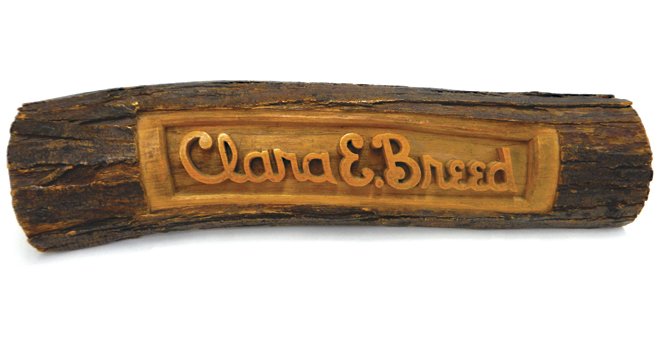
Tets carved this wooden nameplate for Clara with a bedspring.
Poston
Tetsuzo “Tets” Hirasaki, his sister Yaeao, and 1200 other Japanese-Americans from San Diego were “relocated” to Poston, Arizona, in early September, 1942. After a 20-hour train ride, with shades drawn and no idea where they were headed, they came to a military-style camp in the midst of a bone-dry wilderness: rows and rows of bay-type barracks, many still under construction. The nearest town, Parker, Arizona, was 12, 16, or 20 miles away. No one knew for sure.
They’d spent the previous six months in a cramped “assembly center” at Santa Anita Racetrack. Many slept in former stables with tar-papered floors. Someone named it “Santa Japanita.”
Poston was three separate camps four or five miles apart, and would incarcerate almost 18,000 Nikkei (people of Japanese ancestry) ordered from their homes, on short notice, four months after the bombing of Pearl Harbor.
When she saw Poston for the first time, Louise Ogawa wrote: It’s “so far away from civilization, it makes me feel like a convict not allowed to see anyone. I’d much rather sleep in the Santa Anita horse stables.”
Many called Poston the end of the world. They also wondered why no Japanese Americans from Arizona — and only a few from Hawaii — had been sent to relocation camps.
As he did at Santa Anita, Tets wrote letters “home” to San Diego librarian Clara Breed.
September 7, 1942: “Dear Miss Breed. This is ole prodigal writing you amid the heat and dust of this h- hole called ‘The Colorado River War Relocation Project.’ The natives told us we were lucky to have come ‘on a cool day…only 104 degrees and not dusty at all. Wait ’til it really gets hot and dusty.’ How true those words — how true!
“After ‘signing away my life, liberty, the pursuit of happiness’ [War Relocation Authority enlistment documents], we were assigned quarters in a 12´ x 20´ room. Then we went to the mess hall for our first supper. Rice, wieners, pickled cabbage, bread, and water…. Dining room seats 300.
“Have been keeping busy helping everyone so I won’t have time to get heartaches thinking of SANTA ANITA and the friends left behind. Somehow it works most of the time.
“The evenings are wonderful, cool and refreshing. The sky so black that the stars fairly pop out…aside from that, the view is very drab, unless I look through my green sunglasses.”
Along with temperatures reaching the mid-120s, coarse sand and fine dust coated everything, even in the barracks; the knotty floorboards had wide spaces between them. Internees learned to leave shoes upside-down, so scorpions couldn’t climb inside.
Showers and latrines stood along walls with no partitions. Blankets or sections of cloth, hung from laundry lines, afforded the only privacy. The heat was so oppressive, the military had to construct a second roof over the first, leaving an open space in between, to keep the barracks from boiling.
September 7, continued: “On the eve of my birthday, I went out for a walk at night by myself. I sure felt blue. Things around here just got me down. Felt so small and bewildered. Saw a moth fluttering against a street lamp. That’s the way I felt. Like butting my head against a brick wall.
“My whole being rebels against some things — the WRA [War Relocation Authority] set up sloppy, no foresight, red tape, grafting…. That’s why Poston is a He- of a place to live in. We’re so d- far away from the public who are interested…. At an Assembly Center on the coast complaints can be seen by a visitor, but what fool would venture out to this forsaken land just to see if the Japs are being looked after?
“So ran my thoughts until I just ran out. Then I figure, well, I’m here so I gotta make the best of it! And SOOOO to the Future — may it be what it shall be???”
October 3, 1942: “Life is beginning to settle down to the monotonous regularity that is truly depressing. People have gotten so that they don’t leave their own block. Let alone leave their ‘home’ (apt.). Not much sociable visiting going on at all…. And who wants to walk in dust up to the ankles.
“We have to buy what we used to get free from S.A.A.C. (Japanita). Brooms, buckets, baby food, fresh fruit, mattresses. At the present time, soap is being delivered to the mess halls since we fought for it. After all, the dishes had to be washed.
“There’s quite a bit of graft going on, and I think we’re going to get rid of that now that we ‘agitators’ from S.A.A.C. are waking up the people of Poston.
“I hope to have more ‘inside dope’ soon.”
Tets worked in the mess hall, and as a barber. Joe Yamada, one of San Diego’s foremost landscape architects, had known Tets before relocation. They shared a barracks: Unit 14A, Block 322, at the western end of Camp III. Yamada, age 12 at the time, remembers Tets as a “genius with carpentry.” He “made furniture and it was perfection — no nails showing.” Tets and others scrounged wood from piles of scraps left over from the barracks.
Tets also taught himself the ukulele and, Yamada remembers, was one of the best dancers in camp: “All the women, even the married ones, wanted to glide around with him. The rest of us just did the ‘Poston Shuffle’ — you know, one stiff leg at a time.”
What Yamada remembers most: “He played an important role to us younger kids.” And Tets encouraged everyone, as did his mentor, Clara Breed, to develop a love for reading.
The year before, he’d had a tubercular lesion removed from his right arm. It continued to give him trouble.
November 16, 1942: “Guess who? Yup, it’s ole unreliable again. Gosh the wind’s been blowing all night and all morning. Kinda threatening to blow the roofs down. My arm is all right. Not near so strong as at Santa Anita…. Have been doing a little carpentry, as many of us don’t have no furniture other than cots.
“The medical situation here is pitiful. The main and only hospital is at Camp I, 15 miles away. Here in Camp III, there is one young doctor with not too much experience and one student doctor working in an emergency clinic. They are supposed to take care of approximately 5000 people! And they (the Big Shots) wonder why we squawk about medical attention.”
The Colorado River was three miles west.
“No. I haven’t hiked to the river yet. I’d better do it soon, ’cause there is going to be a fence around the camp!! 5 strands of barbed wire!! They say it’s to keep people out — ha ha ha, what people? It’s also to keep out cattle. Where in the cattle countries do they use 5 strands of barbed wire? If they don’t watch out, there’s going to be trouble.
“At Santa Anita, at the time of the riot, the armored cars parked outside the main gates, pointed heavy machine guns inside, and then the army had the gall to tell us that the purpose…was to keep the white folks from coming in…. Same with the guards on the watch towers…hah, hah, hah…
“What a morbid letter this turned out to be!”
As the months passed, internees dug ponds and lakes. They planted trees and gardens. The camps grew into green oases amid the endless desert drab.
November 16, continued: “We are learning to make beautiful things out of ugly scrap...ugly dead mesquite branches and twigs and turn them into a thing of beauty by attaching paper orange blossoms or cherry blossoms made from Kleenex…. Words just can’t describe the beautiful carvings, paintings, knitting, crochet work, dress making, etc. If I only had a camera.
Tets sent Breed a nameplate carved from mesquite. Joanne Oppenheim: “It remained one of Clara’s treasures.” Tets had carved the wood “with a bedspring he turned into a chisel.”
December 1, 1942: “Receiving things from the outside is such a rarity that most of us share what we receive, no matter how little it is.”
February 19, 1943: “This is prodigal reporting. Things have been popping rather fast lately…. When the Army came here to Camp III to…take volunteers for the Japanese American Combat Unit, it was the best piece of news we Nisei [Japanese Americans born in the U.S. and therefore citizens] have had in a long time. We were despairing in ever becoming recognized. But now we have the chance to prove our loyalty, because after the evacuation, Nisei were classed as aliens ineligible for military service.
“I am proud to say that the San Diego group has the most volunteers of any other in camp. All together, in our block we have just about 15 volunteers, including yours truly, which makes about the best record yet.”
About this letter, Breed told a friend that it “had a lift and exhilaration that has been absent from former letters. He is an idealist and this experience has been hard for him.”
March 3, 1943: “Still waiting for orders. All of us are getting quite impatient. Rumors are going fast as to when we are going. Rather nerve wracking!!”
March 15, 1943: “Still waiting for orders. The sentiment in camp is very good now. Thanx to the S.D. group…the ball has been rolling toward the good ole American spirit. The majority of the people are now behind us…Our camouflage net projects are going full speed. Caucasians are amazed at production. Yessiree, everything OK.”
In early April, Tets took his physical for the military.
April 21, 1943: “Regret to inform you that for the good of the country and morale of the U.S. Army, I have been ‘rejected for general military service’ as a result of the physical examination.
“I have applied for limited military service, although present plans do not include limited service men in the Japanese American Combat Unit…. At any rate, until further orders, I am in the rejected class.”
June 17, 1943: “Well, I’m the ‘last of the Mohicans’ now. Early this morning, the next to the last of our old gang left for Colorado. Just about all of the volunteers have gone outside to wait for the Army call.”
September 27, 1943: “Dear Miss Breed: Good news!! My father has been paroled [just days after Pearl Harbor, he was imprisoned as an ‘enemy alien’]. Your affidavit did much to bring about parole. Thanks a million and more.”
December 29, 1943: [re his father, Chiyomatsu, who by this time was working as a barber with Tets at Poston]. “We have been so busy cutting hair that that is all we have time for during the day. Everyone wants to look his best for the New Year.
“It rained Christmas night, and I couldn’t help but to think back to that Christmas two short and yet long years ago when we were all together — now there are hundreds of miles separating us.”
June 10, 1944: “Six years ago today, I graduated from San Diego High School. Tonight, the first graduating class of Parker Valley High School [Poston III] marched into the partially constructed auditorium and received their diplomas. The students can rightfully be proud to say ‘It’s my school,’ for they built it [of adobe bricks] with sweat and toil during the hot summer days Poston is noted for. The class gift was a beautiful American flag. I believe this is the first American high school graduation to have a Buddhist blessing.
“The class motto: ‘The past, forever gone; the future still our own.’
“The doctor advised me that the arm bone is in a dubious state and would take some time to clear up. I could have walked under a snake’s belly. I felt so low. Then I read some articles…of heroic deeds of the Nisei soldiers, of the hardships they suffered. I woke up. What I am going through is nothing compared to the fighting man on the front.
“I am back in training now. I am weight lifting to condition my body. Exercise seems to do my arm more good than resting it all the time. I have started playing golf. The arm is a handicap, but after all, there are one-armed golfers who do all right. Besides, I have fun.
“I am trying to learn how to play bridge too. Just now with all the exercising and music lessons, I am kept busy after work. It certainly helps keep my mind off the fact that I can’t relocate just yet.”
After the war, Tets returned to San Diego. He took a job at Consolidated, an airplane factory, and later worked for General Dynamics. Lynn Eller, his niece, says he was reticent to talk about the past, but would answer questions if asked. Inspired by Clara Breed, he remained a voracious reader all his life. He died in 1991.
Late in life, Tets wrote: “The letters Miss Breed sent to her ‘children’ during the war years helped all of us keep the faith. I am sure those of us who were touched by her avoided bitterness over our fate.”
Elizabeth Kikuchi Yamada (who met her husband Joe at Poston when both were 12 years old), after the war: “My parents and many internees resumed or searched for a new life and occupation without time for the ‘negative’ feelings. Tets, like most Nisei, worked hard to support his family without regrets. As we now say, ‘it is what it is’ — ‘shikata ga nai.’” ■
— Jeff Smith
QUOTATIONS
- Roger Daniels: “The barbed-wire fences, the guards, and the surrounding wasteland were always there to remind the detainees that they were exiled, incarcerated Americans, who didn’t know whether they would ever be allowed to return to their former homes.”
- President Gerald Ford: “We know now what we should have known then — not only was the evacuation wrong, but Japanese-Americans were and are loyal Americans…on the battlefields and at home.”
- Clara Breed (to Tets): “You have been one of my restorers-of-faith in the human spirit. I know that you will keep your courage and humor in the weeks and days that lie ahead, no matter what they may bring.”
SOURCES
- Daniels, Roger, Prisoners Without Trial: Japanese Americans in World War II, New York, 2004.
Estes, Donald H. and Matthew T., “Further and Further Away: The Relocation of San Diego’s Nikkei Community,” Journal of San Diego History, Spring, 1993.- Hirasaki, Tetsuzo, letters, Gift of Elizabeth Y. Yamada, Japanese American National Museum (93.75.31G), (3.75.3EL), (93.75, 31FK).
Oppenheim, Joanne, Dear Miss Breed: True Stories of the Japanese American Incarceration During World War II and a Librarian Who Made a Difference, Singapore, 2006; interview.
Schlenker, Gerald, “The Internment of the Japanese of San Diego County During the Second World War,” master’s thesis, San Diego State University, 1968.
Interviews: Lynn Eller, Joanne Oppenheim, Elizabeth Yamada, Joe Yamada.
Here's something you might be interested in.
Letters from the End of the World, Part Two

Letters from the End of the World, Part Two
Tets carved this wooden nameplate for Clara with a bedspring.
Poston
Tetsuzo “Tets” Hirasaki, his sister Yaeao, and 1200 other Japanese-Americans from San Diego were “relocated” to Poston, Arizona, in early September, 1942. After a 20-hour train ride, with shades drawn and no idea where they were headed, they came to a military-style camp in the midst of a bone-dry wilderness: rows and rows of bay-type barracks, many still under construction. The nearest town, Parker, Arizona, was 12, 16, or 20 miles away. No one knew for sure.
They’d spent the previous six months in a cramped “assembly center” at Santa Anita Racetrack. Many slept in former stables with tar-papered floors. Someone named it “Santa Japanita.”
Poston was three separate camps four or five miles apart, and would incarcerate almost 18,000 Nikkei (people of Japanese ancestry) ordered from their homes, on short notice, four months after the bombing of Pearl Harbor.
When she saw Poston for the first time, Louise Ogawa wrote: It’s “so far away from civilization, it makes me feel like a convict not allowed to see anyone. I’d much rather sleep in the Santa Anita horse stables.”
Many called Poston the end of the world. They also wondered why no Japanese Americans from Arizona — and only a few from Hawaii — had been sent to relocation camps.
As he did at Santa Anita, Tets wrote letters “home” to San Diego librarian Clara Breed.
September 7, 1942: “Dear Miss Breed. This is ole prodigal writing you amid the heat and dust of this h- hole called ‘The Colorado River War Relocation Project.’ The natives told us we were lucky to have come ‘on a cool day…only 104 degrees and not dusty at all. Wait ’til it really gets hot and dusty.’ How true those words — how true!
“After ‘signing away my life, liberty, the pursuit of happiness’ [War Relocation Authority enlistment documents], we were assigned quarters in a 12´ x 20´ room. Then we went to the mess hall for our first supper. Rice, wieners, pickled cabbage, bread, and water…. Dining room seats 300.
“Have been keeping busy helping everyone so I won’t have time to get heartaches thinking of SANTA ANITA and the friends left behind. Somehow it works most of the time.
“The evenings are wonderful, cool and refreshing. The sky so black that the stars fairly pop out…aside from that, the view is very drab, unless I look through my green sunglasses.”
Along with temperatures reaching the mid-120s, coarse sand and fine dust coated everything, even in the barracks; the knotty floorboards had wide spaces between them. Internees learned to leave shoes upside-down, so scorpions couldn’t climb inside.
Showers and latrines stood along walls with no partitions. Blankets or sections of cloth, hung from laundry lines, afforded the only privacy. The heat was so oppressive, the military had to construct a second roof over the first, leaving an open space in between, to keep the barracks from boiling.
September 7, continued: “On the eve of my birthday, I went out for a walk at night by myself. I sure felt blue. Things around here just got me down. Felt so small and bewildered. Saw a moth fluttering against a street lamp. That’s the way I felt. Like butting my head against a brick wall.
“My whole being rebels against some things — the WRA [War Relocation Authority] set up sloppy, no foresight, red tape, grafting…. That’s why Poston is a He- of a place to live in. We’re so d- far away from the public who are interested…. At an Assembly Center on the coast complaints can be seen by a visitor, but what fool would venture out to this forsaken land just to see if the Japs are being looked after?
“So ran my thoughts until I just ran out. Then I figure, well, I’m here so I gotta make the best of it! And SOOOO to the Future — may it be what it shall be???”
October 3, 1942: “Life is beginning to settle down to the monotonous regularity that is truly depressing. People have gotten so that they don’t leave their own block. Let alone leave their ‘home’ (apt.). Not much sociable visiting going on at all…. And who wants to walk in dust up to the ankles.
“We have to buy what we used to get free from S.A.A.C. (Japanita). Brooms, buckets, baby food, fresh fruit, mattresses. At the present time, soap is being delivered to the mess halls since we fought for it. After all, the dishes had to be washed.
“There’s quite a bit of graft going on, and I think we’re going to get rid of that now that we ‘agitators’ from S.A.A.C. are waking up the people of Poston.
“I hope to have more ‘inside dope’ soon.”
Tets worked in the mess hall, and as a barber. Joe Yamada, one of San Diego’s foremost landscape architects, had known Tets before relocation. They shared a barracks: Unit 14A, Block 322, at the western end of Camp III. Yamada, age 12 at the time, remembers Tets as a “genius with carpentry.” He “made furniture and it was perfection — no nails showing.” Tets and others scrounged wood from piles of scraps left over from the barracks.
Tets also taught himself the ukulele and, Yamada remembers, was one of the best dancers in camp: “All the women, even the married ones, wanted to glide around with him. The rest of us just did the ‘Poston Shuffle’ — you know, one stiff leg at a time.”
What Yamada remembers most: “He played an important role to us younger kids.” And Tets encouraged everyone, as did his mentor, Clara Breed, to develop a love for reading.
The year before, he’d had a tubercular lesion removed from his right arm. It continued to give him trouble.
November 16, 1942: “Guess who? Yup, it’s ole unreliable again. Gosh the wind’s been blowing all night and all morning. Kinda threatening to blow the roofs down. My arm is all right. Not near so strong as at Santa Anita…. Have been doing a little carpentry, as many of us don’t have no furniture other than cots.
“The medical situation here is pitiful. The main and only hospital is at Camp I, 15 miles away. Here in Camp III, there is one young doctor with not too much experience and one student doctor working in an emergency clinic. They are supposed to take care of approximately 5000 people! And they (the Big Shots) wonder why we squawk about medical attention.”
The Colorado River was three miles west.
“No. I haven’t hiked to the river yet. I’d better do it soon, ’cause there is going to be a fence around the camp!! 5 strands of barbed wire!! They say it’s to keep people out — ha ha ha, what people? It’s also to keep out cattle. Where in the cattle countries do they use 5 strands of barbed wire? If they don’t watch out, there’s going to be trouble.
“At Santa Anita, at the time of the riot, the armored cars parked outside the main gates, pointed heavy machine guns inside, and then the army had the gall to tell us that the purpose…was to keep the white folks from coming in…. Same with the guards on the watch towers…hah, hah, hah…
“What a morbid letter this turned out to be!”
As the months passed, internees dug ponds and lakes. They planted trees and gardens. The camps grew into green oases amid the endless desert drab.
November 16, continued: “We are learning to make beautiful things out of ugly scrap...ugly dead mesquite branches and twigs and turn them into a thing of beauty by attaching paper orange blossoms or cherry blossoms made from Kleenex…. Words just can’t describe the beautiful carvings, paintings, knitting, crochet work, dress making, etc. If I only had a camera.
Tets sent Breed a nameplate carved from mesquite. Joanne Oppenheim: “It remained one of Clara’s treasures.” Tets had carved the wood “with a bedspring he turned into a chisel.”
December 1, 1942: “Receiving things from the outside is such a rarity that most of us share what we receive, no matter how little it is.”
February 19, 1943: “This is prodigal reporting. Things have been popping rather fast lately…. When the Army came here to Camp III to…take volunteers for the Japanese American Combat Unit, it was the best piece of news we Nisei [Japanese Americans born in the U.S. and therefore citizens] have had in a long time. We were despairing in ever becoming recognized. But now we have the chance to prove our loyalty, because after the evacuation, Nisei were classed as aliens ineligible for military service.
“I am proud to say that the San Diego group has the most volunteers of any other in camp. All together, in our block we have just about 15 volunteers, including yours truly, which makes about the best record yet.”
About this letter, Breed told a friend that it “had a lift and exhilaration that has been absent from former letters. He is an idealist and this experience has been hard for him.”
March 3, 1943: “Still waiting for orders. All of us are getting quite impatient. Rumors are going fast as to when we are going. Rather nerve wracking!!”
March 15, 1943: “Still waiting for orders. The sentiment in camp is very good now. Thanx to the S.D. group…the ball has been rolling toward the good ole American spirit. The majority of the people are now behind us…Our camouflage net projects are going full speed. Caucasians are amazed at production. Yessiree, everything OK.”
In early April, Tets took his physical for the military.
April 21, 1943: “Regret to inform you that for the good of the country and morale of the U.S. Army, I have been ‘rejected for general military service’ as a result of the physical examination.
“I have applied for limited military service, although present plans do not include limited service men in the Japanese American Combat Unit…. At any rate, until further orders, I am in the rejected class.”
June 17, 1943: “Well, I’m the ‘last of the Mohicans’ now. Early this morning, the next to the last of our old gang left for Colorado. Just about all of the volunteers have gone outside to wait for the Army call.”
September 27, 1943: “Dear Miss Breed: Good news!! My father has been paroled [just days after Pearl Harbor, he was imprisoned as an ‘enemy alien’]. Your affidavit did much to bring about parole. Thanks a million and more.”
December 29, 1943: [re his father, Chiyomatsu, who by this time was working as a barber with Tets at Poston]. “We have been so busy cutting hair that that is all we have time for during the day. Everyone wants to look his best for the New Year.
“It rained Christmas night, and I couldn’t help but to think back to that Christmas two short and yet long years ago when we were all together — now there are hundreds of miles separating us.”
June 10, 1944: “Six years ago today, I graduated from San Diego High School. Tonight, the first graduating class of Parker Valley High School [Poston III] marched into the partially constructed auditorium and received their diplomas. The students can rightfully be proud to say ‘It’s my school,’ for they built it [of adobe bricks] with sweat and toil during the hot summer days Poston is noted for. The class gift was a beautiful American flag. I believe this is the first American high school graduation to have a Buddhist blessing.
“The class motto: ‘The past, forever gone; the future still our own.’
“The doctor advised me that the arm bone is in a dubious state and would take some time to clear up. I could have walked under a snake’s belly. I felt so low. Then I read some articles…of heroic deeds of the Nisei soldiers, of the hardships they suffered. I woke up. What I am going through is nothing compared to the fighting man on the front.
“I am back in training now. I am weight lifting to condition my body. Exercise seems to do my arm more good than resting it all the time. I have started playing golf. The arm is a handicap, but after all, there are one-armed golfers who do all right. Besides, I have fun.
“I am trying to learn how to play bridge too. Just now with all the exercising and music lessons, I am kept busy after work. It certainly helps keep my mind off the fact that I can’t relocate just yet.”
After the war, Tets returned to San Diego. He took a job at Consolidated, an airplane factory, and later worked for General Dynamics. Lynn Eller, his niece, says he was reticent to talk about the past, but would answer questions if asked. Inspired by Clara Breed, he remained a voracious reader all his life. He died in 1991.
Late in life, Tets wrote: “The letters Miss Breed sent to her ‘children’ during the war years helped all of us keep the faith. I am sure those of us who were touched by her avoided bitterness over our fate.”
Elizabeth Kikuchi Yamada (who met her husband Joe at Poston when both were 12 years old), after the war: “My parents and many internees resumed or searched for a new life and occupation without time for the ‘negative’ feelings. Tets, like most Nisei, worked hard to support his family without regrets. As we now say, ‘it is what it is’ — ‘shikata ga nai.’” ■
— Jeff Smith
QUOTATIONS
- Roger Daniels: “The barbed-wire fences, the guards, and the surrounding wasteland were always there to remind the detainees that they were exiled, incarcerated Americans, who didn’t know whether they would ever be allowed to return to their former homes.”
- President Gerald Ford: “We know now what we should have known then — not only was the evacuation wrong, but Japanese-Americans were and are loyal Americans…on the battlefields and at home.”
- Clara Breed (to Tets): “You have been one of my restorers-of-faith in the human spirit. I know that you will keep your courage and humor in the weeks and days that lie ahead, no matter what they may bring.”
SOURCES
- Daniels, Roger, Prisoners Without Trial: Japanese Americans in World War II, New York, 2004.
Estes, Donald H. and Matthew T., “Further and Further Away: The Relocation of San Diego’s Nikkei Community,” Journal of San Diego History, Spring, 1993.- Hirasaki, Tetsuzo, letters, Gift of Elizabeth Y. Yamada, Japanese American National Museum (93.75.31G), (3.75.3EL), (93.75, 31FK).
Oppenheim, Joanne, Dear Miss Breed: True Stories of the Japanese American Incarceration During World War II and a Librarian Who Made a Difference, Singapore, 2006; interview.
Schlenker, Gerald, “The Internment of the Japanese of San Diego County During the Second World War,” master’s thesis, San Diego State University, 1968.
Interviews: Lynn Eller, Joanne Oppenheim, Elizabeth Yamada, Joe Yamada.