

Here's something you might be interested in.
Ask a Hipster — Advice you didn't know you needed
Big Screen — Movie commentary
Blurt — Music's inside track
Booze News — San Diego spirits
Classical Music — Immortal beauty
Classifieds — Free and easy
Close to Home — What it’s like on the street where you live
Cover Stories — Front-page features
Drinks All Around — Bartenders' drink recipes
Excerpts — Literary and spiritual excerpts
Feast! — Food & drink reviews
Feature Stories — Local news & stories
Fishing Report — What’s getting hooked from ship and shore
From the Archives — Spotlight on the past
Golden Dreams — Talk of the town
The Gonzo Report — Making the musical scene, or at least reporting from it
Letters — Our inbox
Movies@Home — Local movie buffs share favorites
Movie Reviews — Our critics' picks and pans
Musician Interviews — Up close with local artists
Neighborhood News from Stringers — Hyperlocal news
News Ticker — News & politics
Obermeyer — San Diego politics illustrated
Outdoors — Weekly changes in flora and fauna
Overheard in San Diego — Eavesdropping illustrated
Poetry — The old and the new
Reader Travel — Travel section built by travelers
Reading — The hunt for intellectuals
Roam-O-Rama — SoCal's best hiking/biking trails
San Diego Beer — Inside San Diego suds
SD on the QT — Almost factual news
Sheep and Goats — Places of worship
Special Issues — The best of
Street Style — San Diego streets have style
Surf Diego — Real stories from those braving the waves
Theater — On stage in San Diego this week
Tin Fork — Silver spoon alternative
Under the Radar — Matt Potter's undercover work
Unforgettable — Long-ago San Diego
Unreal Estate — San Diego's priciest pads
Your Week — Daily event picks
Kent Keigwin tases and strangles friend John Watson in La Jolla
A long plan to get money


It was March 2009 when the British-born siblings Gillian Ison and John Graham Watson met at Zermatt, a resort in the shadow of Switzerland’s Matterhorn. There, with family members, they indulged a passion for skiing: Watson, an alpine expert, loved running the fall line, the steepest and fastest route down the slope. A traveler, an adventurer, the 64-year-old relished high-performance sports as much as he did his career with pharmaceutical and biotech firms. Balancing business and play had made his life storybook-successful. The self-made Watson had just retired, a multimillionaire.
The odd thing his sister Gillian Ison recalled about the trip to Zermatt was her brother’s “friend.” The man, a financial planner named Kent Thomas Keigwin, showed up, surprising John. It was true the two had met in San Diego. And, according to Keigwin, Watson had invited him skiing. No, he hadn’t, Watson told his sister. Keigwin had invited himself. “He was,” she remembered, “nothing like he made himself out to be.”
Ison found Keigwin offensive right away. On the aerial tram, he told dirty jokes. He bragged about a “serious girlfriend” he had in America for whom he’d bought “a boob job and a face-lift.” On skis, the barrel-chested man, clearly out of shape, was awkward at best, staying far behind the group. Ison and Watson were aghast watching Keigwin fall. She said he “embarrassed” her brother. That evening, the siblings met him for a quick drink. Otherwise, they spent no more time with him, and Keigwin soon flew home.
Who, Ison asked her brother, was this faker?
Watson said Keigwin came to Zermatt to show that he had rich friends who spent their vacations in luxury. (Keigwin roomed in a cheap pension, far from the resort.) Without doubt, Watson was wealthy, although few of his friends knew just how wealthy. The Brit’s road to millions began when the Cambridge-educated economist and marketer came to America to work in the pharmaceutical industry. His executive career, always vertically progressive, had taken him to Johnson & Johnson and Wyeth Laboratories, and then, specializing in biotech, to Vestar, Biotech Consulting, CarboMed, and, finally, Ionian Technologies in San Diego, where he was president and chief executive. In his professional life, Watson helped launch products for people with HIV, inflammatory diseases, and spinal cord injuries, among other ailments. When he retired from Ionian in 2008, he joined Tech Coast Angels, a nonprofit organization of wealthy people who invest in worthy start-ups. Watson was quickly elected to the board.
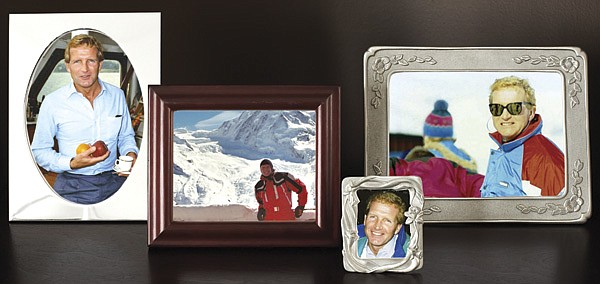
John Graham Watson
An associate of Watson’s, Charlie Grebenstein, said of him, “John was rollicking good company. Quick wit, cultured, broadly read, passionately devoted to his adopted country. He valued being an American because America provided opportunity. He loved California for that reason, plus the freedom to innovate and the endless opportunities to play.”
Arriving in San Diego in late 2007, Watson met Anna Sorriso and joined her in the Action Ski Club. He, Sorriso, and others enjoyed hikes, beach walks, dances, and skiing. “He liked active people,” a friend recalled. At La Jolla Shores, Watson rented an apartment in a boxy building at 8111 Camino del Oro. The two-bedroom pad suited his lifestyle: travel and working out — swimming, tennis, inline skating, wind surfing, running — “two hours or more every day,” said another friend. Watson liked sailing, too, which was how he met Keigwin.
Rarely opening up, Watson was guarded about his wealth. But he did have a penchant for discussing stocks. Keigwin did as well. Born in 1950, he was a certified public accountant. His brother Jim said that during the 1970s, Keigwin was hired by the Shah of Iran to establish an accounting system for the government. When that ended with the Iranian revolution, he returned to America with an Iranian Jew whom he married. A financial advisor, Keigwin counseled clients first at UBS, then at Morgan Stanley in La Jolla. But, his sales performance fell off at Morgan Stanley, and he was let go. In April 2010 he hired on with Wedbush Securities, working on commission. Keigwin sold annuities as well as life, accident, and health insurance on behalf of New York Life and other companies. At Wedbush, Keigwin fattened his contact list, dozens of well-heeled individuals like Watson whom Keigwin targeted as potential clients.
Watson and Keigwin, Sorriso said, sailed once or twice but developed no friendship. At best, Keigwin was in a group who received “jokey” emails from Watson. One day in 2008 she noticed Keigwin’s name had been dropped from the CC line. Watson told her that he’d become “disenamored” of him. He was angry that Keigwin had lied to him about an investment property for sale. He also told her that Keigwin was in “dire financial straits.” Watson said he no longer wished to “associate with that turd ball.”
Still, wishing the opportunist away doesn’t get rid of him. In November 2009, a woman with Citibank phoned Watson about his new credit card application. Watson said he hadn’t applied for a card. But, she asked, hadn’t he just opened an account using his Social Security and phone numbers? Absolutely not, Watson said. He realized he’d been hacked and notified police. Two months later, a manager from E-Trade called Watson to welcome him as a new client. Same as before — the online applicant had used Watson’s Social Security and phone numbers. Watson was livid. It wasn’t he who had applied. Who had? Neither E-Trade nor Citibank knew. Watson notified police again.
“Perfectly Posed”
In May 2010, Watson and Dr. Barry Kassar, a fellow board member at Tech Coast Angels, put the final touches on their “Quick Pitch” event for June 8 at 6:00 p.m. At these confabs, start-up executives made presentations, hoping to lure new money. Up first on June 8, a Tuesday, was a 3:30 Angels board meeting. Watson, always hands-on and on time, didn’t show. When he failed to arrive for happy hour at 5:00, Kassar “got suspicious.” He phoned him twice and left messages.
No one had spoken to or heard from Watson since the previous week. The lifelong bachelor, whose immediate family lived in England, traveled often. He lived alone, seldom if ever had people over. He liked his privacy, had no cell phone, kept an untidy apartment, and spent time studying his portfolio on his living room table.

Dr. Barry Kassar (left) found Watson
after he had been dead for at least a day
Kassar knew Watson could handle any emergency. He was the picture of health, no heart problems, just a bum knee and some bruises from skiing. He was like a senior fitness model in the swim ads for Modern Maturity. He told his sister that he was once robbed at knifepoint in Spain and without a weapon had subdued two assailants, though he was bloodied in the process.
After 6:00, Kassar decided to investigate Watson’s absence. At 8111 Camino del Oro, he, a security guard, and an emergency medical technician rode the elevator to Watson’s third-floor apartment, K.
Knocking loudly, then unlocking deadbolt and doorknob, the guard, the medical tech, and Kassar entered. Kassar saw a “disheveled” apartment that looked as though it had been burglarized. A dresser’s drawers had been left pulled out, and a book, Time Management for Dummies, lay on the floor. One of Watson’s financial statements was set out on the living room table. It caught Kassar’s eye. It was from Watson’s Deutsche Bank account and showed a balance in the millions. Kassar clicked on the answering machine and heard the messages.
In the bedroom came the shock. There, on the floor, beside the red-sheeted bed, lay John Watson, his body speckled with scrapes and scratches, bite marks and bruises. Clad only in low-rise black underwear, he was on his back, arms rigid at his side. He was facing up, like a stone sarcophagus. Watson, Kassar recalled, seemed “perfectly posed.”
The medical tech checked for a pulse, but there was none. The lividity of the body was pronounced; Watson had been dead at least a day. Soon, San Diego police arrived and found only the phone number of Beth Martinez, Watson’s emergency contact. She and her husband Manny were very close friends. Their kids called Watson “Uncle John,” and the children and parents often spent ski holidays with him. The Martinezes were devastated by the news.
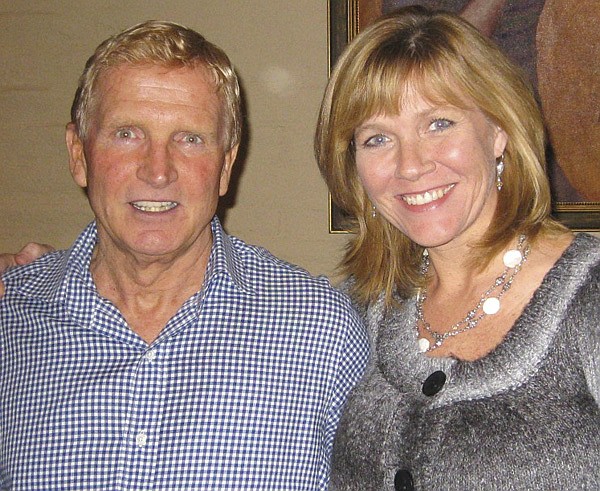
Beth Martinez was Watson’s
emergency contact
The following morning Beth arrived at the apartment and was told that Watson’s wallet was missing. His 14-year-old Saab was still parked in the parking lot, and eight ripe pineapples, Watson’s favorite fruit, were in the fridge. No one could locate his computer, where phone numbers for his family in England were stored. It was obvious, she told the detectives: there had to have been foul play.
Kassar, who also came by on Wednesday, felt the same. Thinking that Watson’s death reeked of financial theft, he called William Conn, Watson’s financial advisor with Deutsche Bank in San Francisco. He conveyed the sad tidings and then told Conn to check Watson’s account. The account showed no withdrawals.
But when Conn looked the next day, there was a request from Scottrade, via its office in La Jolla, to transfer a very large sum to a new Scottrade account — in John Watson’s name. This can’t be, Conn thought. He had met his client at the Marine Room in mid-May to strategize about investments. He said that Watson had told him then that he was concerned about fraud. Someone had been using his personal information to open bogus accounts.
On Thursday, when Conn checked Watson’s account, he saw that a transfer of funds to Scottrade had gone through — of Watson’s $11.77 million, $8.9 million had been taken. As if from the grave, Watson had transferred that money to himself.
A Millionaire Opportunity
Kent Keigwin’s plan to get at John Watson’s money began in early 2009. He opened a Yahoo email account in Watson’s name. The applications at Citibank and E*Trade for new accounts, about which Watson had alerted police, also fit Keigwin’s M.O. As one detective who investigated Watson’s death said, Keigwin’s profession gave him “a great deal of knowledge about how money moves in our financial system.”
Some of Keigwin’s internet searches in the spring of 2010 showed a design: “Taser Gun Superstore”; “Scottrade”; “GPS tracker”; “Millionaire Opportunities,” a website with advice for attaining the “mentality” of the rich; and an online store for purchasing “fantasy swords, bowie knives,” and a “lock-picking kit.”
In April, Keigwin used the name, birth date, and address of a longtime client, Lance Keith, who lived in China, to buy a stun gun online from Taser International. To get the civilian model, the C2, the buyer had to pass a background check. For that, Keigwin used Keith’s personal information. Keith’s record was clean, so the Taser was shipped to Keigwin. To pay, Keigwin used his own credit card.
On Sunday, June 6, two days before his body was found, Watson left his home around 3:00 p.m. for the Walmart at Clairemont Mesa Boulevard and I-805. A security camera videotaped him parking, making his purchases, and walking back to his car, all between 3:30 and 4:30.
What Watson didn’t know was that Keigwin had installed a tracking device on the Saab and was following Watson’s movements. While Watson ran his errand, Keigwin waited in his car, the Taser in his backpack, three blocks from Watson’s La Jolla home. Keigwin received a ping every two minutes on his cell phone telling him the location of his prey — driving on 52 to Walmart, parking, driving home.
Keigwin most likely let himself into Watson’s apartment. Soon after Watson came in, Keigwin tased him in the back.
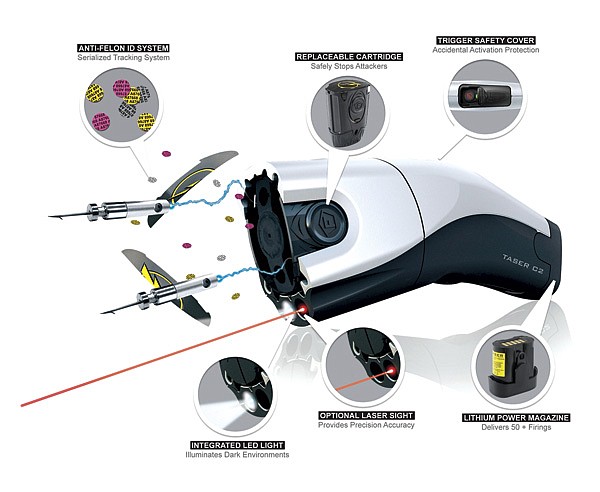
Keigwin used the identity of a longtime client to purchase a Taser C2 on the internet
An electronic firearm, the Taser shoots twin probes attached to wires 15 feet long. Keigwin fired the probes — which deliver a 50,000-volt shock — from three feet away. They punctured and burned into Watson’s lower back. The sensation, said one criminal investigator whose training included being stunned, is “extremely painful: it’s like grabbing ahold of electricity on the end of a jackhammer.”
Keigwin’s C2 Taser was unlike a law enforcement Taser: the jolt from that Taser lasts 5 seconds. The civilian Taser’s jolt lasts 30 seconds. It’s built for a longer stun so whoever uses it, presumably in self-defense, can get away. When the C2 fires its probes, it also releases a confetti stream of some two dozen “afids,” antifelon identification “tags.” On these paper dots, in microprint, are the gun’s serial number, traceable to the owner. Keigwin picked up as many of these as he could. In addition, the Taser scatters, from its front-loaded cartridge, two “blast doors,” one of which Keigwin also retrieved.
With Watson tased, Keigwin began strangling him. At some point Watson came to and fought back. He bit Keigwin, once on the leg and once on each forearm. He scratched his face. He punched him in the chest and back, bruising him. And, with foresight or luck, Watson clawed at Keigwin’s skin, gathering a sliver of his assailant’s tissue, later matched with Keigwin’s DNA. To gain the upper hand again, Keigwin may have subdued Watson a second time, triggering another 30-second jolt through the still-attached probes in Watson’s back.
Killing Watson required incredible force. (One friend said Keigwin was “as strong as an ox.”) To strangle a person, one applies a chokehold, compressing the neck hard enough to stop the airflow in the trachea or the blood flow to the brain for three to four minutes. First, the person goes unconscious. Then, with the brain deprived of oxygen for those minutes, death is guaranteed. It is possible, if hands or forearm are used, that no mark remains.
Watson was murdered Sunday evening, June 6. At 7:42 Monday morning, Keigwin was online, opening an account at Scottrade in Watson’s name. To complete the process, “Watson” was asked to come into a branch office. An hour later, Keigwin entered the Scottrade branch at La Jolla Village Square, carrying Watson’s Deutsche Bank statement. He introduced himself to the manager, Craig Dock, as John Watson. Dock recalled that Keigwin wore a black ball cap and black pullover and his face was cut up badly — a gash across one cheek, a fresh scab on his forehead. Dock thanked him for coming in to verify the transfer. Keigwin signed several required forms. (He didn’t bother to copy Watson’s penmanship. Keigwin’s 7’s and 2’s and 6’s and capital J’s were nothing like the victim’s.) Dock told him that the money transfer — an uncommonly large sum, $8.9 million — would take five days. No sooner? No sooner. With this, Dock recalled, “Watson” looked very nervous, then excused himself to get a cup of coffee. He apologized. He said he’d been traveling a lot.
An Autopsy That Almost Wasn’t
On Wednesday morning, when Beth Martinez arrived at her friend’s apartment, she learned that the previous night Chris Burton, an investigator from the coroner’s office, had classified Watson’s wounds as “nonfatal” — his death was not suspicious. No autopsy would be performed. Burton “waived jurisdiction” over the body, and it was on its way to the crematorium.
At 2:00 p.m. on Wednesday, after telling detectives she was sure there was foul play, Martinez called Burton and told him they had to find the cause of death: Watson was too healthy to just keel over and die. “I knew how much he worked out to stay in shape for skiing.” Burton listened, agreed, and called a deputy medical examiner, Dr. Othon Mena. Mena “invoked jurisdiction,” ordering Watson’s body to the morgue for an autopsy.
Mena removed Watson’s organs and observed no cause of death. He scoured the body for other signs, noting two round puncture wounds, perhaps burn marks, on Watson’s back. When he cut and peeled back the skin of the neck, he saw extensive bruising to the muscles. He found that the horseshoe-shaped hyoid bone at the top of the throat was fractured. Because of its position, this bone is hard to break, requiring great pressure. That break and the trauma to the neck muscles told Mena all he needed to make a ruling: Watson had been strangled.
What’s more, Mena biopsied the skin around the puncture wounds on Watson’s back and determined they were burn marks, originating from a stun gun. He certified Watson’s death a homicide — tased and subdued, throttled and killed.
Not until Thursday night at 8:20 was a search warrant issued for Watson’s apartment. It had taken two full days for San Diego detectives to see the death as murder — something that Watson’s friends understood from the get-go.
Why Return to the Scene of the Crime?
Meanwhile, Keigwin had been continuing his Watson impersonation. Using Watson’s California driver’s license, he opened a mailbox in person at the Torrey Hills PostalAnnex, charging the $152 fee on Watson’s credit card. The man who processed the request asked to see a photo I.D. He looked at the license and at Keigwin and later recalled that the two faces were “pretty close.” Keigwin then filed an online change-of-address form with the U.S. Postal Service in Watson’s name — from 8111 Camino del Oro to the PostalAnnex box. Last, Keigwin secured a safe-deposit box to store his own passport and Social Security card. The woman who served him remembered “red dots all over his face, a skin condition,” she thought.
By Thursday morning, four days after strangling Watson, Keigwin had seen no report on TV or in the paper about the death. Had no one found the body? In coat and tie, he delivered an envelope to a front-desk clerk at the La Jolla Shores Hotel, which manages the apartments at 8111 Camino del Oro. The envelope held Watson’s car keys, wallet (containing $40), and a note — to “J” from “K.” The note read, in part, “I’m returning your wallet and keys you left in the car.… Your answering machine does not work. You need to get an electronic [one]. Missed you at dinner. Hope nothing is wrong.”
The clerk gave Keigwin the news: Watson had died after a medical emergency. He remembered Keigwin tearing up.
Friday morning, at 6:00 a.m., Keigwin returned to Watson’s apartment. He let himself in the building’s front door, took the elevator to the third floor, and walked toward apartment K, the only residence in that direction. Serendipity: a detective who was investigating the crime scene and taking a break in the hallway saw Keigwin in his black ball cap and black pullover. He asked, “Can I help you?”
Keigwin had a brain freeze. He said he was there to see a Mr. Kent Keigwin who lived on this or another floor, he wasn’t sure. The detective noticed Keigwin’s face, its red splotches, its scabs and scrapes. The man was nervous, and the detective asked again why he was there. After a half-hour of hemming and hawing, Keigwin confessed that he was Keigwin and he’d come to visit the site where he’d heard just yesterday that his friend, John Watson, had died.
Really? When was the last time you saw Mr. Watson?
Keigwin said that the two of them had been biking the previous Saturday and John had fallen, suffering facial cuts and body bruises. Keigwin dropped Watson off at the hospital and realized, days later, that his friend had left his car keys and wallet in Keigwin’s car. These he had returned to the La Jolla Shores office the day before, when he heard the news.
The detective placed Keigwin under arrest. In his backpack were three plastic bags, a flashlight, and a dust mask. The police also found a small piece of plastic, one of the two blast doors from the Taser. The keys to Watson’s apartment were in Keigwin’s pocket. In his car, detectives located Watson’s computer, and later, searching Keigwin’s apartment, they found financial statements from Deutsche Bank and the new Scottrade account spread out on his living room table.
Verdict and Sentencing
The eight-day trial, in November 2011, nearly a year and a half after the crime, was unyielding in its prosecutorial force. Deputy district attorney Sharla Evert showcased some 35 witnesses and 180 pieces of evidence, arguing the charge of first-degree murder with the special circumstances of murder during a robbery and murder for financial gain. In addition, Keigwin was charged with five other felonies: two counts of identify theft, attempted grand theft, burglary, and forgery.
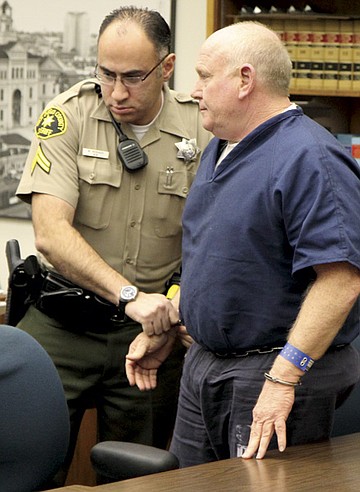
At his sentencing in January, Keigwin (right) said
“I am sad for the death of John Watson”
Pretrial, Keigwin tried to escape his fate by offering to plead guilty to second-degree murder and to the other felonies. But Evert knew the evidence in the case was “overwhelming.” So her office sought first-degree murder but not the death penalty. “Bonnie [Dumanis] didn’t believe it fit the criteria,” Evert told me; the defendant’s age and his lack of a criminal record were in his favor. Besides, she added, Watson’s friends and family hoped to see Keigwin tried, exposed, and held accountable. A plan she agreed with.
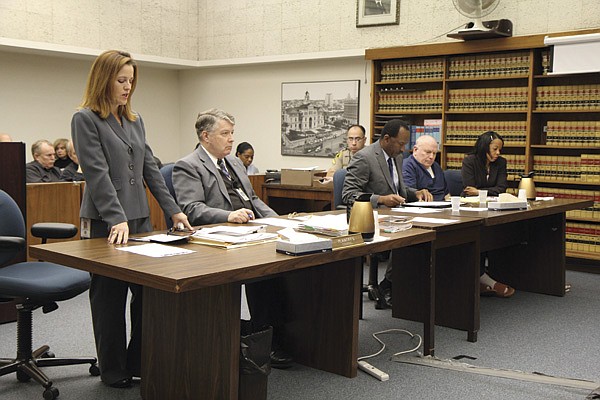
Deputy district attorney Sharla Evert (left) teared up at one point during her description of Watson’s murder
During her 90-minute summation, Evert said Keigwin acted like a hunter: “He finds his target, observes it, then goes in for the kill.” At one point she teared up. She said Keigwin had to choke Watson, hands clamped around his neck, for several minutes to stop his breathing. She paused and asked the jury to consider, “How much time do you need before the person goes limp?”
Keigwin’s public defender, Stacy Gulley, suggested in his 29-minute closing argument that Keigwin had killed a friend “in the heat of passion” — admitting to the crime in hopes of planting doubt in the jurors’ minds about its premeditation. The two men were buddies, he claimed. Watson invited him in. They talked. They quarreled. A struggle ensued. “Yes, a man died. But nobody knows what happened in that apartment that night.”
And yet, during the trial, this was not the tack Gulley took. Instead, he insisted that the police may have “contaminated the evidence” in the lab (shades of O.J. Simpson). And he argued that positional asphyxia — an accident in which Watson fell, lost consciousness and, lying in an awkward position, suffocated — might have been the cause.
One juror told me that Gulley’s theory of an argument gone bad between two so-called friends was risible: “If you were going to settle a difference with a friend,” he said, “you don’t bring a Taser with you.”
The jury bought none of Gulley’s suspicions and all of the prosecution’s facts.
Guilty on all counts. Murder in the first degree.
After the trial, Evert observed that families of those charged with murder often don’t believe that their loved one committed the crime. During this case, she said, Keigwin’s family “saw what he was capable of doing.” This may be why none of his kin came for the verdict. “John Watson died to his family,” Evert said, “and Kent Keigwin did to his family as well. Not because they’ll never visit him [in prison], but because the person they knew doesn’t exist.”
Such sentiments were expressed to the court prior to Judge Frederic Link’s sentencing of Keigwin in January. Keigwin’s brother Jim said the family was “dumbfounded and crushed.” “We don’t ask for mercy” for Kent “because he gave no mercy” to Watson. Beth Martinez kept the focus on her and her husband’s friend. “John didn’t live like a man who had millions of dollars. He drove a 14-year-old car and lived in a modest two-bedroom apartment. He had worked hard and sacrificed for over 40 years, building his nest egg to enable him to enjoy his later years in comfort. John lived a noble life characterized by his passion, conviction, impeccable ethics, and high standard of excellence.”
Keigwin briefly addressed the judge, saying, “I am sad for the death of John Watson,” and he quoted a passage from the Bible about God showing compassion to everyone. One trial watcher noted that perhaps in jail Keigwin had had a religious conversion.
Evert stated to the court that the one thing family and friends wanted to hear from Keigwin was something he would not say: “‘I killed this man and I’m sorry.’” (Evert told me later that Keigwin, on the advice of his attorney, would not admit to the murder because he didn’t want to jeopardize the likely appeal of his conviction. She said she understood: “the right to appeal a verdict is one of the only things that brings hope” to a convicted felon.)
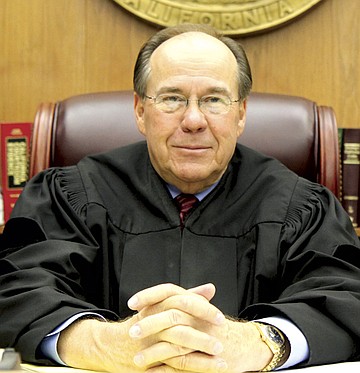
Judge Frederic Link told Keigwin “I have no mercy for you,” and sentenced him
to life in prison without parole
In England, there were no doubt tears and relief when Watson’s sister Gillian Ison heard that Link had sentenced her brother’s killer to life in prison without parole. It may soothe her to know that Link underscored his decision on Keigwin’s fate with his knifelike line: “I have no mercy for you.”
Ison said after the verdicts were read that life in prison would make Keigwin suffer the most — some compensation for what her brother had endured. “In England it’s as though they stay in hotels.” But in America, she said defiantly, “He’ll rot.”
To honor Watson’s memory, his family has endowed the John G. Watson Foundation with $1 million to promote entrepreneurism, overseen by Tech Coast Angels, and the nonprofit Friends of La Jolla Shores is building a new comfort station at the beach where Watson loved to swim and surf.
Here's something you might be interested in.
Kent Keigwin tases and strangles friend John Watson in La Jolla
A long plan to get money

Kent Keigwin tases and strangles friend John Watson in La Jolla
A long plan to get money
It was March 2009 when the British-born siblings Gillian Ison and John Graham Watson met at Zermatt, a resort in the shadow of Switzerland’s Matterhorn. There, with family members, they indulged a passion for skiing: Watson, an alpine expert, loved running the fall line, the steepest and fastest route down the slope. A traveler, an adventurer, the 64-year-old relished high-performance sports as much as he did his career with pharmaceutical and biotech firms. Balancing business and play had made his life storybook-successful. The self-made Watson had just retired, a multimillionaire.
The odd thing his sister Gillian Ison recalled about the trip to Zermatt was her brother’s “friend.” The man, a financial planner named Kent Thomas Keigwin, showed up, surprising John. It was true the two had met in San Diego. And, according to Keigwin, Watson had invited him skiing. No, he hadn’t, Watson told his sister. Keigwin had invited himself. “He was,” she remembered, “nothing like he made himself out to be.”
Ison found Keigwin offensive right away. On the aerial tram, he told dirty jokes. He bragged about a “serious girlfriend” he had in America for whom he’d bought “a boob job and a face-lift.” On skis, the barrel-chested man, clearly out of shape, was awkward at best, staying far behind the group. Ison and Watson were aghast watching Keigwin fall. She said he “embarrassed” her brother. That evening, the siblings met him for a quick drink. Otherwise, they spent no more time with him, and Keigwin soon flew home.
Who, Ison asked her brother, was this faker?
Watson said Keigwin came to Zermatt to show that he had rich friends who spent their vacations in luxury. (Keigwin roomed in a cheap pension, far from the resort.) Without doubt, Watson was wealthy, although few of his friends knew just how wealthy. The Brit’s road to millions began when the Cambridge-educated economist and marketer came to America to work in the pharmaceutical industry. His executive career, always vertically progressive, had taken him to Johnson & Johnson and Wyeth Laboratories, and then, specializing in biotech, to Vestar, Biotech Consulting, CarboMed, and, finally, Ionian Technologies in San Diego, where he was president and chief executive. In his professional life, Watson helped launch products for people with HIV, inflammatory diseases, and spinal cord injuries, among other ailments. When he retired from Ionian in 2008, he joined Tech Coast Angels, a nonprofit organization of wealthy people who invest in worthy start-ups. Watson was quickly elected to the board.
John Graham Watson
An associate of Watson’s, Charlie Grebenstein, said of him, “John was rollicking good company. Quick wit, cultured, broadly read, passionately devoted to his adopted country. He valued being an American because America provided opportunity. He loved California for that reason, plus the freedom to innovate and the endless opportunities to play.”
Arriving in San Diego in late 2007, Watson met Anna Sorriso and joined her in the Action Ski Club. He, Sorriso, and others enjoyed hikes, beach walks, dances, and skiing. “He liked active people,” a friend recalled. At La Jolla Shores, Watson rented an apartment in a boxy building at 8111 Camino del Oro. The two-bedroom pad suited his lifestyle: travel and working out — swimming, tennis, inline skating, wind surfing, running — “two hours or more every day,” said another friend. Watson liked sailing, too, which was how he met Keigwin.
Rarely opening up, Watson was guarded about his wealth. But he did have a penchant for discussing stocks. Keigwin did as well. Born in 1950, he was a certified public accountant. His brother Jim said that during the 1970s, Keigwin was hired by the Shah of Iran to establish an accounting system for the government. When that ended with the Iranian revolution, he returned to America with an Iranian Jew whom he married. A financial advisor, Keigwin counseled clients first at UBS, then at Morgan Stanley in La Jolla. But, his sales performance fell off at Morgan Stanley, and he was let go. In April 2010 he hired on with Wedbush Securities, working on commission. Keigwin sold annuities as well as life, accident, and health insurance on behalf of New York Life and other companies. At Wedbush, Keigwin fattened his contact list, dozens of well-heeled individuals like Watson whom Keigwin targeted as potential clients.
Watson and Keigwin, Sorriso said, sailed once or twice but developed no friendship. At best, Keigwin was in a group who received “jokey” emails from Watson. One day in 2008 she noticed Keigwin’s name had been dropped from the CC line. Watson told her that he’d become “disenamored” of him. He was angry that Keigwin had lied to him about an investment property for sale. He also told her that Keigwin was in “dire financial straits.” Watson said he no longer wished to “associate with that turd ball.”
Still, wishing the opportunist away doesn’t get rid of him. In November 2009, a woman with Citibank phoned Watson about his new credit card application. Watson said he hadn’t applied for a card. But, she asked, hadn’t he just opened an account using his Social Security and phone numbers? Absolutely not, Watson said. He realized he’d been hacked and notified police. Two months later, a manager from E-Trade called Watson to welcome him as a new client. Same as before — the online applicant had used Watson’s Social Security and phone numbers. Watson was livid. It wasn’t he who had applied. Who had? Neither E-Trade nor Citibank knew. Watson notified police again.
“Perfectly Posed”
In May 2010, Watson and Dr. Barry Kassar, a fellow board member at Tech Coast Angels, put the final touches on their “Quick Pitch” event for June 8 at 6:00 p.m. At these confabs, start-up executives made presentations, hoping to lure new money. Up first on June 8, a Tuesday, was a 3:30 Angels board meeting. Watson, always hands-on and on time, didn’t show. When he failed to arrive for happy hour at 5:00, Kassar “got suspicious.” He phoned him twice and left messages.
No one had spoken to or heard from Watson since the previous week. The lifelong bachelor, whose immediate family lived in England, traveled often. He lived alone, seldom if ever had people over. He liked his privacy, had no cell phone, kept an untidy apartment, and spent time studying his portfolio on his living room table.
Dr. Barry Kassar (left) found Watson
after he had been dead for at least a day
Kassar knew Watson could handle any emergency. He was the picture of health, no heart problems, just a bum knee and some bruises from skiing. He was like a senior fitness model in the swim ads for Modern Maturity. He told his sister that he was once robbed at knifepoint in Spain and without a weapon had subdued two assailants, though he was bloodied in the process.
After 6:00, Kassar decided to investigate Watson’s absence. At 8111 Camino del Oro, he, a security guard, and an emergency medical technician rode the elevator to Watson’s third-floor apartment, K.
Knocking loudly, then unlocking deadbolt and doorknob, the guard, the medical tech, and Kassar entered. Kassar saw a “disheveled” apartment that looked as though it had been burglarized. A dresser’s drawers had been left pulled out, and a book, Time Management for Dummies, lay on the floor. One of Watson’s financial statements was set out on the living room table. It caught Kassar’s eye. It was from Watson’s Deutsche Bank account and showed a balance in the millions. Kassar clicked on the answering machine and heard the messages.
In the bedroom came the shock. There, on the floor, beside the red-sheeted bed, lay John Watson, his body speckled with scrapes and scratches, bite marks and bruises. Clad only in low-rise black underwear, he was on his back, arms rigid at his side. He was facing up, like a stone sarcophagus. Watson, Kassar recalled, seemed “perfectly posed.”
The medical tech checked for a pulse, but there was none. The lividity of the body was pronounced; Watson had been dead at least a day. Soon, San Diego police arrived and found only the phone number of Beth Martinez, Watson’s emergency contact. She and her husband Manny were very close friends. Their kids called Watson “Uncle John,” and the children and parents often spent ski holidays with him. The Martinezes were devastated by the news.
Beth Martinez was Watson’s
emergency contact
The following morning Beth arrived at the apartment and was told that Watson’s wallet was missing. His 14-year-old Saab was still parked in the parking lot, and eight ripe pineapples, Watson’s favorite fruit, were in the fridge. No one could locate his computer, where phone numbers for his family in England were stored. It was obvious, she told the detectives: there had to have been foul play.
Kassar, who also came by on Wednesday, felt the same. Thinking that Watson’s death reeked of financial theft, he called William Conn, Watson’s financial advisor with Deutsche Bank in San Francisco. He conveyed the sad tidings and then told Conn to check Watson’s account. The account showed no withdrawals.
But when Conn looked the next day, there was a request from Scottrade, via its office in La Jolla, to transfer a very large sum to a new Scottrade account — in John Watson’s name. This can’t be, Conn thought. He had met his client at the Marine Room in mid-May to strategize about investments. He said that Watson had told him then that he was concerned about fraud. Someone had been using his personal information to open bogus accounts.
On Thursday, when Conn checked Watson’s account, he saw that a transfer of funds to Scottrade had gone through — of Watson’s $11.77 million, $8.9 million had been taken. As if from the grave, Watson had transferred that money to himself.
A Millionaire Opportunity
Kent Keigwin’s plan to get at John Watson’s money began in early 2009. He opened a Yahoo email account in Watson’s name. The applications at Citibank and E*Trade for new accounts, about which Watson had alerted police, also fit Keigwin’s M.O. As one detective who investigated Watson’s death said, Keigwin’s profession gave him “a great deal of knowledge about how money moves in our financial system.”
Some of Keigwin’s internet searches in the spring of 2010 showed a design: “Taser Gun Superstore”; “Scottrade”; “GPS tracker”; “Millionaire Opportunities,” a website with advice for attaining the “mentality” of the rich; and an online store for purchasing “fantasy swords, bowie knives,” and a “lock-picking kit.”
In April, Keigwin used the name, birth date, and address of a longtime client, Lance Keith, who lived in China, to buy a stun gun online from Taser International. To get the civilian model, the C2, the buyer had to pass a background check. For that, Keigwin used Keith’s personal information. Keith’s record was clean, so the Taser was shipped to Keigwin. To pay, Keigwin used his own credit card.
On Sunday, June 6, two days before his body was found, Watson left his home around 3:00 p.m. for the Walmart at Clairemont Mesa Boulevard and I-805. A security camera videotaped him parking, making his purchases, and walking back to his car, all between 3:30 and 4:30.
What Watson didn’t know was that Keigwin had installed a tracking device on the Saab and was following Watson’s movements. While Watson ran his errand, Keigwin waited in his car, the Taser in his backpack, three blocks from Watson’s La Jolla home. Keigwin received a ping every two minutes on his cell phone telling him the location of his prey — driving on 52 to Walmart, parking, driving home.
Keigwin most likely let himself into Watson’s apartment. Soon after Watson came in, Keigwin tased him in the back.
Keigwin used the identity of a longtime client to purchase a Taser C2 on the internet
An electronic firearm, the Taser shoots twin probes attached to wires 15 feet long. Keigwin fired the probes — which deliver a 50,000-volt shock — from three feet away. They punctured and burned into Watson’s lower back. The sensation, said one criminal investigator whose training included being stunned, is “extremely painful: it’s like grabbing ahold of electricity on the end of a jackhammer.”
Keigwin’s C2 Taser was unlike a law enforcement Taser: the jolt from that Taser lasts 5 seconds. The civilian Taser’s jolt lasts 30 seconds. It’s built for a longer stun so whoever uses it, presumably in self-defense, can get away. When the C2 fires its probes, it also releases a confetti stream of some two dozen “afids,” antifelon identification “tags.” On these paper dots, in microprint, are the gun’s serial number, traceable to the owner. Keigwin picked up as many of these as he could. In addition, the Taser scatters, from its front-loaded cartridge, two “blast doors,” one of which Keigwin also retrieved.
With Watson tased, Keigwin began strangling him. At some point Watson came to and fought back. He bit Keigwin, once on the leg and once on each forearm. He scratched his face. He punched him in the chest and back, bruising him. And, with foresight or luck, Watson clawed at Keigwin’s skin, gathering a sliver of his assailant’s tissue, later matched with Keigwin’s DNA. To gain the upper hand again, Keigwin may have subdued Watson a second time, triggering another 30-second jolt through the still-attached probes in Watson’s back.
Killing Watson required incredible force. (One friend said Keigwin was “as strong as an ox.”) To strangle a person, one applies a chokehold, compressing the neck hard enough to stop the airflow in the trachea or the blood flow to the brain for three to four minutes. First, the person goes unconscious. Then, with the brain deprived of oxygen for those minutes, death is guaranteed. It is possible, if hands or forearm are used, that no mark remains.
Watson was murdered Sunday evening, June 6. At 7:42 Monday morning, Keigwin was online, opening an account at Scottrade in Watson’s name. To complete the process, “Watson” was asked to come into a branch office. An hour later, Keigwin entered the Scottrade branch at La Jolla Village Square, carrying Watson’s Deutsche Bank statement. He introduced himself to the manager, Craig Dock, as John Watson. Dock recalled that Keigwin wore a black ball cap and black pullover and his face was cut up badly — a gash across one cheek, a fresh scab on his forehead. Dock thanked him for coming in to verify the transfer. Keigwin signed several required forms. (He didn’t bother to copy Watson’s penmanship. Keigwin’s 7’s and 2’s and 6’s and capital J’s were nothing like the victim’s.) Dock told him that the money transfer — an uncommonly large sum, $8.9 million — would take five days. No sooner? No sooner. With this, Dock recalled, “Watson” looked very nervous, then excused himself to get a cup of coffee. He apologized. He said he’d been traveling a lot.
An Autopsy That Almost Wasn’t
On Wednesday morning, when Beth Martinez arrived at her friend’s apartment, she learned that the previous night Chris Burton, an investigator from the coroner’s office, had classified Watson’s wounds as “nonfatal” — his death was not suspicious. No autopsy would be performed. Burton “waived jurisdiction” over the body, and it was on its way to the crematorium.
At 2:00 p.m. on Wednesday, after telling detectives she was sure there was foul play, Martinez called Burton and told him they had to find the cause of death: Watson was too healthy to just keel over and die. “I knew how much he worked out to stay in shape for skiing.” Burton listened, agreed, and called a deputy medical examiner, Dr. Othon Mena. Mena “invoked jurisdiction,” ordering Watson’s body to the morgue for an autopsy.
Mena removed Watson’s organs and observed no cause of death. He scoured the body for other signs, noting two round puncture wounds, perhaps burn marks, on Watson’s back. When he cut and peeled back the skin of the neck, he saw extensive bruising to the muscles. He found that the horseshoe-shaped hyoid bone at the top of the throat was fractured. Because of its position, this bone is hard to break, requiring great pressure. That break and the trauma to the neck muscles told Mena all he needed to make a ruling: Watson had been strangled.
What’s more, Mena biopsied the skin around the puncture wounds on Watson’s back and determined they were burn marks, originating from a stun gun. He certified Watson’s death a homicide — tased and subdued, throttled and killed.
Not until Thursday night at 8:20 was a search warrant issued for Watson’s apartment. It had taken two full days for San Diego detectives to see the death as murder — something that Watson’s friends understood from the get-go.
Why Return to the Scene of the Crime?
Meanwhile, Keigwin had been continuing his Watson impersonation. Using Watson’s California driver’s license, he opened a mailbox in person at the Torrey Hills PostalAnnex, charging the $152 fee on Watson’s credit card. The man who processed the request asked to see a photo I.D. He looked at the license and at Keigwin and later recalled that the two faces were “pretty close.” Keigwin then filed an online change-of-address form with the U.S. Postal Service in Watson’s name — from 8111 Camino del Oro to the PostalAnnex box. Last, Keigwin secured a safe-deposit box to store his own passport and Social Security card. The woman who served him remembered “red dots all over his face, a skin condition,” she thought.
By Thursday morning, four days after strangling Watson, Keigwin had seen no report on TV or in the paper about the death. Had no one found the body? In coat and tie, he delivered an envelope to a front-desk clerk at the La Jolla Shores Hotel, which manages the apartments at 8111 Camino del Oro. The envelope held Watson’s car keys, wallet (containing $40), and a note — to “J” from “K.” The note read, in part, “I’m returning your wallet and keys you left in the car.… Your answering machine does not work. You need to get an electronic [one]. Missed you at dinner. Hope nothing is wrong.”
The clerk gave Keigwin the news: Watson had died after a medical emergency. He remembered Keigwin tearing up.
Friday morning, at 6:00 a.m., Keigwin returned to Watson’s apartment. He let himself in the building’s front door, took the elevator to the third floor, and walked toward apartment K, the only residence in that direction. Serendipity: a detective who was investigating the crime scene and taking a break in the hallway saw Keigwin in his black ball cap and black pullover. He asked, “Can I help you?”
Keigwin had a brain freeze. He said he was there to see a Mr. Kent Keigwin who lived on this or another floor, he wasn’t sure. The detective noticed Keigwin’s face, its red splotches, its scabs and scrapes. The man was nervous, and the detective asked again why he was there. After a half-hour of hemming and hawing, Keigwin confessed that he was Keigwin and he’d come to visit the site where he’d heard just yesterday that his friend, John Watson, had died.
Really? When was the last time you saw Mr. Watson?
Keigwin said that the two of them had been biking the previous Saturday and John had fallen, suffering facial cuts and body bruises. Keigwin dropped Watson off at the hospital and realized, days later, that his friend had left his car keys and wallet in Keigwin’s car. These he had returned to the La Jolla Shores office the day before, when he heard the news.
The detective placed Keigwin under arrest. In his backpack were three plastic bags, a flashlight, and a dust mask. The police also found a small piece of plastic, one of the two blast doors from the Taser. The keys to Watson’s apartment were in Keigwin’s pocket. In his car, detectives located Watson’s computer, and later, searching Keigwin’s apartment, they found financial statements from Deutsche Bank and the new Scottrade account spread out on his living room table.
Verdict and Sentencing
The eight-day trial, in November 2011, nearly a year and a half after the crime, was unyielding in its prosecutorial force. Deputy district attorney Sharla Evert showcased some 35 witnesses and 180 pieces of evidence, arguing the charge of first-degree murder with the special circumstances of murder during a robbery and murder for financial gain. In addition, Keigwin was charged with five other felonies: two counts of identify theft, attempted grand theft, burglary, and forgery.
At his sentencing in January, Keigwin (right) said
“I am sad for the death of John Watson”
Pretrial, Keigwin tried to escape his fate by offering to plead guilty to second-degree murder and to the other felonies. But Evert knew the evidence in the case was “overwhelming.” So her office sought first-degree murder but not the death penalty. “Bonnie [Dumanis] didn’t believe it fit the criteria,” Evert told me; the defendant’s age and his lack of a criminal record were in his favor. Besides, she added, Watson’s friends and family hoped to see Keigwin tried, exposed, and held accountable. A plan she agreed with.
Deputy district attorney Sharla Evert (left) teared up at one point during her description of Watson’s murder
During her 90-minute summation, Evert said Keigwin acted like a hunter: “He finds his target, observes it, then goes in for the kill.” At one point she teared up. She said Keigwin had to choke Watson, hands clamped around his neck, for several minutes to stop his breathing. She paused and asked the jury to consider, “How much time do you need before the person goes limp?”
Keigwin’s public defender, Stacy Gulley, suggested in his 29-minute closing argument that Keigwin had killed a friend “in the heat of passion” — admitting to the crime in hopes of planting doubt in the jurors’ minds about its premeditation. The two men were buddies, he claimed. Watson invited him in. They talked. They quarreled. A struggle ensued. “Yes, a man died. But nobody knows what happened in that apartment that night.”
And yet, during the trial, this was not the tack Gulley took. Instead, he insisted that the police may have “contaminated the evidence” in the lab (shades of O.J. Simpson). And he argued that positional asphyxia — an accident in which Watson fell, lost consciousness and, lying in an awkward position, suffocated — might have been the cause.
One juror told me that Gulley’s theory of an argument gone bad between two so-called friends was risible: “If you were going to settle a difference with a friend,” he said, “you don’t bring a Taser with you.”
The jury bought none of Gulley’s suspicions and all of the prosecution’s facts.
Guilty on all counts. Murder in the first degree.
After the trial, Evert observed that families of those charged with murder often don’t believe that their loved one committed the crime. During this case, she said, Keigwin’s family “saw what he was capable of doing.” This may be why none of his kin came for the verdict. “John Watson died to his family,” Evert said, “and Kent Keigwin did to his family as well. Not because they’ll never visit him [in prison], but because the person they knew doesn’t exist.”
Such sentiments were expressed to the court prior to Judge Frederic Link’s sentencing of Keigwin in January. Keigwin’s brother Jim said the family was “dumbfounded and crushed.” “We don’t ask for mercy” for Kent “because he gave no mercy” to Watson. Beth Martinez kept the focus on her and her husband’s friend. “John didn’t live like a man who had millions of dollars. He drove a 14-year-old car and lived in a modest two-bedroom apartment. He had worked hard and sacrificed for over 40 years, building his nest egg to enable him to enjoy his later years in comfort. John lived a noble life characterized by his passion, conviction, impeccable ethics, and high standard of excellence.”
Keigwin briefly addressed the judge, saying, “I am sad for the death of John Watson,” and he quoted a passage from the Bible about God showing compassion to everyone. One trial watcher noted that perhaps in jail Keigwin had had a religious conversion.
Evert stated to the court that the one thing family and friends wanted to hear from Keigwin was something he would not say: “‘I killed this man and I’m sorry.’” (Evert told me later that Keigwin, on the advice of his attorney, would not admit to the murder because he didn’t want to jeopardize the likely appeal of his conviction. She said she understood: “the right to appeal a verdict is one of the only things that brings hope” to a convicted felon.)
Judge Frederic Link told Keigwin “I have no mercy for you,” and sentenced him
to life in prison without parole
In England, there were no doubt tears and relief when Watson’s sister Gillian Ison heard that Link had sentenced her brother’s killer to life in prison without parole. It may soothe her to know that Link underscored his decision on Keigwin’s fate with his knifelike line: “I have no mercy for you.”
Ison said after the verdicts were read that life in prison would make Keigwin suffer the most — some compensation for what her brother had endured. “In England it’s as though they stay in hotels.” But in America, she said defiantly, “He’ll rot.”
To honor Watson’s memory, his family has endowed the John G. Watson Foundation with $1 million to promote entrepreneurism, overseen by Tech Coast Angels, and the nonprofit Friends of La Jolla Shores is building a new comfort station at the beach where Watson loved to swim and surf.
Comments