

Here's something you might be interested in.
Ask a Hipster — Advice you didn't know you needed
Big Screen — Movie commentary
Blurt — Music's inside track
Booze News — San Diego spirits
Classical Music — Immortal beauty
Classifieds — Free and easy
Close to Home — What it’s like on the street where you live
Cover Stories — Front-page features
Drinks All Around — Bartenders' drink recipes
Excerpts — Literary and spiritual excerpts
Feast! — Food & drink reviews
Feature Stories — Local news & stories
Fishing Report — What’s getting hooked from ship and shore
From the Archives — Spotlight on the past
Golden Dreams — Talk of the town
The Gonzo Report — Making the musical scene, or at least reporting from it
Letters — Our inbox
Movies@Home — Local movie buffs share favorites
Movie Reviews — Our critics' picks and pans
Musician Interviews — Up close with local artists
Neighborhood News from Stringers — Hyperlocal news
News Ticker — News & politics
Obermeyer — San Diego politics illustrated
Outdoors — Weekly changes in flora and fauna
Overheard in San Diego — Eavesdropping illustrated
Poetry — The old and the new
Reader Travel — Travel section built by travelers
Reading — The hunt for intellectuals
Roam-O-Rama — SoCal's best hiking/biking trails
San Diego Beer — Inside San Diego suds
SD on the QT — Almost factual news
Sheep and Goats — Places of worship
Special Issues — The best of
Street Style — San Diego streets have style
Surf Diego — Real stories from those braving the waves
Theater — On stage in San Diego this week
Tin Fork — Silver spoon alternative
Under the Radar — Matt Potter's undercover work
Unforgettable — Long-ago San Diego
Unreal Estate — San Diego's priciest pads
Your Week — Daily event picks
Africans, Asians, Hispanics...and Hipsters: Changes in City Heights
A haven for war refugees and other displaced persons.
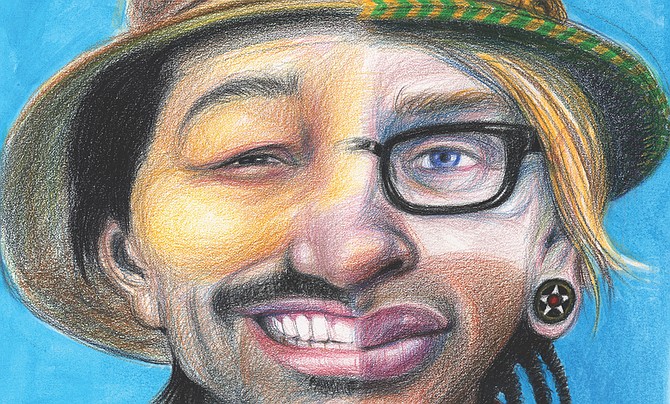
Tower Bar owner Mick Rossler: “City Heights people are unpretentious.”
From the Killing Fields to the Noodle House
When Mark Lau was ten years old, he couldn’t add one plus one. On the day he began the fourth grade at Adams Elementary School in City Heights, he had been in San Diego for only two months. Prior to his arrival, he had spent eight months in refugee camps in Thailand, and before that, three and a half years under Communist rule in Cambodia. Rather than attend school, he was forced to work for his daily bowls of vegetable soup and porridge.
Many of his memories from that time are vague.
“I remember there was a tray that we held, it was for rocks. So that’s why I keep telling my kids, ‘Daddy was moving rocks back and forth.’ We didn’t know what we were doing. I was six, seven years old.”
Lau remembers the rocks, but he doesn’t remember where he had to carry them or why.
Today, half a block west from the corner of University and Euclid, on the north side of the street, Lau works out of two offices in a family-owned building. One office holds his accounting and tax firm. In the other, he conducts his business as a real estate agent and insurance salesman. The same building also houses two of his family’s restaurants: 777 Noodle House and the Great Wall Express. Lau acts as financial manager for both.
In the open, cafeteria-like space of the Noodle House, Mr. Lau recommends customer favorites from the menu and offers water or tea with an efficiency that’s distant and ultra polite. He takes his responsibilities seriously. It’s evident in the straight line of his posture, the tuck of his buttoned-up shirt into ironed slacks, and the slight glaze of his eyes that says he has other places he needs to be.
But as soon he begins to talk about what he remembers from the time before he moved to the United States, his eyes become focused, and he leans in close to speak with sincerity and eagerness. Even his posture softens. The memories are important to him. What he remembers, he shares with his children. One story in particular stands out.
On Christmas Day, 1978, the Vietnamese invaded Cambodia, effectively ending the reign of the Khmer Rouge. Lau’s family was one of thousands that followed the Vietnamese through the country, hoping to find their way across the border into Thailand. Lau leans in close to describe his family’s arrival at a Vietnamese encampment too late in the day to be let in.
“We knew the Khmer Rouge was coming. But we did not make it. We were outside the fence, and we were exposed.”
Other latecomers dug trenches, but Lau’s family was too late even for that. They had no time to dig, so 13 of them, including Lau’s mother and his pregnant sister, hid under the wagon, which contained everything they owned.
“During this time, the bullets were flying all over our wagon. We were pretty much in the open battlefield.”
He describes lying face down under the wagon, too terrified to open his eyes. He remembers the sharp ping of bullets hitting the pots and pans in the wagon. The Khmer Rouge soldiers didn’t spare the civilians. They threw grenades down into some of the trenches and killed them.
“There were quite a bit of people that died that night,” says Lau. “They opened up a pregnant lady and they killed the baby.”
His eyes widen with emphasis on the importance of this detail.
He also remembers that, at one point, during a lull in the shooting, he felt a presence near the wagon, a Communist soldier maybe. He didn’t open his eyes, but he heard a voice say, “These people are dead.” Immediately afterward, another voice whispered, “Quiet.” The second voice was, he believes, a soldier who warned Lau’s family in order to help them. All 13 people under the wagon survived the evening.
“Something happened that night,” he says. “I think somebody out there was saving us.” But he’s not sure if it was a Communist soldier with a good heart or if some greater being was answering their prayers.
“You don’t know if there’s a God up there,” he says. “You can’t say that the Communist people were all bad. We heard two voices, so maybe somebody…” He doesn’t complete the thought, but he does go on to say that whether it was God or man, the 13 people under that wagon were deliberately saved.
After three exhausting attempts, Mark Lau’s family crossed the border into Thailand in 1979. Then, after seven or eight months in refugee camps, they arrived in City Heights on the sponsorship of a sister who had made it ahead of them. The relief, however, did not override the trauma of starting school at Adams Elementary two months later.
“The first day, I cried,” Lau says. “But my teacher, Mrs. Costello, she had this guy be my mentor. He kind of walked me around, and that made me feel a little bit safer.”
Lau didn’t speak any English at the time, so he and the boy communicated with hands, fingers, and gesticulation.
“The first year was tough. I couldn’t even add one plus one. They gave us a math problem, and I didn’t even know how to add up. A…B…C. I was learning everything from scratch.”
He attributes his success today to a Chinese mentor who worked with him every afternoon. By eighth grade, he was able to transition out of ESL classes and into the general population.
Back on University Avenue, at the Noodle House, Mark Lau says he loves City Heights. It’s where his childhood began. But he’s seen it change quite a bit over the years. For him, those changes mean the dissipation of the community he grew up in.
“We used to be more mixed, [a] melting pot: Chinese, Cambodian, Lao, African-American, Hispanic.”
The Asian community is shrinking, he believes, because of the improved financial situation of his peers.
“Most of my friends that I used to go to school with, they all live in Rancho Bernardo and Scripps Ranch.”
Lau, however, is not going anywhere. The optimist in him hopes that the variety of international flavors on the Noodle House menu will draw people back to the neighborhood.
“It will be good for City Heights if we are successful because we also have the Thai food. We have some Vietnamese food, Chinese food, a little bit of Cambodian.”
He says that if his family can continue to improve their menu, then maybe one day, they’ll be able to compete with the Vietnamese pho (beef and noodle soup) houses in the neighborhood.
Doing Good in the Neighborhood
Mark Lau’s story differs only in detail from those of thousands of refugees who flee their countries and make their way to City Heights. For decades, the neighborhood has been home to immigrants from all over the world. The La Maestra Community Health Care Center’s website describes San Diego as a “resettlement or ‘immigration zone’ for refugees” and quotes a local resident who said, “Anytime there is a conflict in the world, refugees from the country land in City Heights within three months.” While this sounds like an exaggeration, in many cases, it’s not far from the truth.
East of Lau’s Noodle House, less than two miles down University, past the landmark art deco Tower and through Little Mogadishu, where large numbers of Somali immigrants live and work, a two-story brick building at the corner of University and 54th Street houses the five offices of the International Rescue Committee San Diego.
The nonprofit organization assists refugees all over the world. On the international side, they provide emergency response (including shelter, sanitation, water, food, and the administration of services inside refugee camps) in the event of war or violent conflict.
The domestic branch, which includes offices in 22 U.S. cities, helps refugees to resettle inside the United States. They make sure newly arrived refugees receive a furnished home, help with rent, and English classes. They also help to enroll the children in school and the families in Medi-Cal. Their economic-development program includes financial education, career development, and the microenterprise program, which helps the refugees start or expand small businesses.
The San Diego office is the largest in their domestic-resettlement network. It’s been around for 34 years but has moved to City Heights only within the last 4.
“We’ve grown with the refugee population,” says Joel Chrisco, one of the organization’s microenterprise program specialists, “and have developed programs and services to meet their ongoing needs.”
The convenience of location is one reason the organization moved its office from North Park to the current location in City Heights. The move took place about three and a half years ago, just when Chrisco had been hired. At that time, the organization was resettling large numbers of Somali refugees, and because City Heights already had an established Somali community, the move made sense.
“This location,” he says, “made it much easier for our clients to come in and access services. It also made it much easier for us to stay in touch with our clients and make sure they’re getting all the services that they need.”
The microenterprise program offers in-house loans of up to $15,000 as well as $500 grants (for women only) to cover small start-up costs. The services include assistance with marketing and advertising, with business cards, brochures, and websites. Their business directory provides a list of refugee-owned businesses that the organization has helped through the program. These include everything from transportation to child care and retail to restaurants. Many of these businesses are in City Heights.
A smiling woman in a red turtleneck, jeans, and a red head wrap graces the cover of the business directory. Her name is Mary Page, and she was one of the original vendors at the City Heights Farmers Market, which the IRC helped to establish in 2008. Page laughs often, and she’s the kind of person who would rather hug than shake hands. She expresses her affection for children by calling them “Grandson” or “Granddaughter.” It’s a toss-up whether her wares sell due to the value of the items themselves or to her abundance of personal charm.
Page’s story is sweet and sad. Like Lau, she has known her share of both war and triumph. One difference, however, is that when she arrived in San Diego, she didn’t have the comfort of family. She was alone.
The native Kenyan met and married her husband in West Africa. In 1988, during the First Civil War in Liberia, her husband disappeared, and she eventually fled back to Kenya.
“I thought I was a widow,” she says, “but I never gave up hope.”
For ten years, she searched for him.
“I used to fly from East Africa to West Africa, different places, to look for him. Everywhere. I went to Red Cross. I went to embassies. I went everywhere to look for him. I spent money also to look for him.”
In addition to the search for her husband, she became involved in the lives of Kenyan orphans. In 1992, she went to three chiefs in Kenya’s eastern province and told them of her concerns for the orphans who begged in the shopping centers.
“We called a big meeting, and people came and they started taking children into their homes.”
Page sent word out for anyone who knew any marketable trade to come and teach the children. She was able to round up artists, weavers, woodcarvers, batik-makers, and jewelers to volunteer their time.
In 1999, a young man who had once lived with Page’s family in Liberia found Page’s husband dying of cancer in a Minnesota hospital. Her husband said he had been told that his wife and their children had all been killed. Although Page doesn’t know exactly how the young man found him, she does know that he had a printed copy of the inquiry she’d posted online and so was able to provide a phone number in Kenya where Page could be reached. When her husband called, she went to him immediately.
“It was a special gift from God to be with him in his last days,” she says.
After he died, Page stayed in Minnesota for four months and then made her way to San Diego, where she had once vacationed with her husband.
“I loved San Diego because of the weather, first of all. And it was more open, you know. People were friendly and outgoing and free.”
At first, she lived in a small hotel downtown. Then she found a roommate. Eventually, she was able to get her own place. While working as a cashier at a gift shop in the airport, she began to make and sell jewelry on the side.
Once she got on her feet and her jewelry began to sell, she contacted the artists back in Kenya and arranged to sell their animal sculptures, batiks, and banana-leaf paintings, as well as those of the children they taught. She also began to sell jewelry and clothing made by an organization of widows in Kenya.
The money she makes, she sends back home. The way she tells it, the road would have been much harder if not for the International Rescue Committee.
“It’s not fun being a stranger and no money and in a foreign country where you don’t know anybody. So I found out about IRC, and I went to them, and I told them my story and they were so helpful. They are still very helpful to me.”
Although Page won’t tell how much money she received in grants and loans, she does say the organization helped with her logo, brochures, and business cards. Today, they continue to assist her by arranging for exhibitions and events (sometimes at a discounted price). Occasionally, they also help with transportation.
She’s grateful for the financial support and the business assistance, but what she most appreciates is the moral support she gets from the staff members. She emphasizes that sometimes they come to help her with the physical work of setting up her booth. She says Joel Chrisco is “like a little son to me.”
Chrisco has affection for Page as well. “Mary is one of our standout clients, and I have really enjoyed getting to know her.”
Page sells her handicrafts at street festivals and farmers’ markets and out of Where the World Meets, a multicultural gift shop on Euclid Avenue. She has not been back to Kenya since she arrived in San Diego, but her artists-and-orphans programs are still in effect today.
Because she is an artist herself, Mary Page can tell from the details and the finish of each piece of art whether or not the child who made it will graduate from the program soon. To watch her handle each piece, and to listen to her speak about the children, is to understand that this art is her connection to a life she no longer lives and a people with whom she has limited contact.
Page holds nothing back when expressing gratitude for the International Rescue Committee San Diego and as always speaks in familial terms.
“God bless them,” she says again. “They are really doing a great job for the globe. They are like a big parent — Mama and Daddy — caring for the world. You find everybody from all corners of the world there.”
Ms. Lila of Hoover High
On any given weekday at 11:30 a.m., the doors of the Continuing Ed Center at the corner of Wightman and Fairmount open to set loose a stream of people as diverse (in color, shape, size, and dress) as it gets in San Diego. These are the students who participate in the Ed Center’s free English classes, of which there are between 15 and 20 that begin at 8:30 and end at 11:30 every morning, Monday through Friday.
Statistics on the number of languages spoken in City Heights vary, depending on whether dialects are included, but the numbers are all high, especially for a single neighborhood.
For accurate numbers on a smaller scale, one need only head for Hoover High. The sprawling campus, not quite two miles from the IRC San Diego offices, occupies the entire 4400 block of El Cajon Boulevard, between Chamoune and Highland.
Once there, Lila Wagar is the person to ask for. Within seconds, she can produce a computer printout of the number of Hoover High’s 2136 students who speak each of 18 different native languages. Though this number is lower than the 30 languages the City of San Diego’s website claims are spoken in City Heights, Wagar’s list lumps together 35 African students who speak a language other than Swahili or Somali.
Wagar, or Ms. Lila as she’s called at work, is a small, soft woman in a red sweater. Santa earrings dangle from her ears. Her office is decorated with pictures of bright red, orange, and pink flowers. The shelves behind her desk hold a Vietnamese-English dictionary and binders of every color. On top sits a serene stone Buddha. In the corner, two small, clear-glass hummingbirds dangle from the ceiling. Suspended by fishing line, they appear to float in the leaves of the bamboo plant.
Wagar looks as if she would be soft-spoken, but she’s not. She’s motherly and flexible, as one would have to be to work a job with no definitive job description. She speaks freely and with confidence, clearly the ruler of her domain. These days, she wears the title of ESL assistant, but it’s a title that encompasses only a fraction of the work she does.
“Like everywhere else, they give you a title because they have to give you a title, but what is your job exactly?” she says. “I always consider myself a jack-of-all-trades. I do a lot of everything.”
The “everything” she does pertains to the school’s ESL population, many of whom are the children of the International Rescue Committee’s refugees and other newly arrived immigrants settling in City Heights. Ms. Lila assesses their English levels and places them in appropriate ESL classes (of which there are three levels — beginning, intermediate, and advanced), where they are taught English, history, and math. For those students who come with a strong foundation in English, the regular classes are sometimes an option.
One student arrived recently from Vietnam and passed the reading and writing assessments with ease, but her oral skills were lacking. Ms. Lila decided to place the student directly in the regular classes, without having her spend time in the ESL program. It took only a couple of months for the girl’s oral skills to catch up to her reading and writing skills. In cases when the student’s English skills are below basic, Ms. Lila places them in the New Arrivals Center, where they receive the extra support they need.
In addition to the assessments, Ms. Lila also provides translation for Vietnamese parents and helps to locate translators for families who speak other languages.
She has contact with the social workers who bring the students in, and she always asks for an okay to contact them later, if need be. This way, she has on hand the name of someone who can translate for each student. Occasionally, she uses students as well.
“A lot of times, the teachers or the administrators need translators. They’ll call me and say, ‘Lila, we have this student’s parents here, but do we have anyone on site that speaks the language, or do you know anyone that works with the district?’ And I will provide them the name of the students that I know that’s willing to do the translation.”
Some of the Vietnamese parents even call Ms. Lila, just to make sure their children are in school and sometimes to report an absence. There is an attendance office where they could get the same information, but many parents prefer to speak in their native language.
One such mother came to Ms. Lila’s office on a morning just before the winter break. Her son had been fined for truancy, and she’d received a letter from the court saying that he could work off the fine with community service. The son promised he would work with the school custodian, but his mother didn’t trust him to take care of it on his own. She came to Miss Lila, who promised to speak with the custodian and then proceeded to explain that the son could also work some hours at the Buddhist temple, if he wanted to, maybe in February, around the Chinese New Year.
The worried mother had arrived with a stack of holiday cards that she didn’t trust her son to pass on to his teachers, and Ms. Lila said she’d take care of that, too. While others may have complained behind the back of such a hovering parent, for pushing the limit of their job description, Ms. Lila had nothing but compassionate words to offer when the mother left.
“She worries. He’s the only son she has, so she comes a lot to check on [him].”
Wagar has worked at Hoover High for 30 years and has lived in City Heights for 25. The neighborhood’s ethnic diversity makes it an obvious choice for racially blended families, but for Wagar, born of East Indian and Vietnamese parentage and herself the mother of two children by her Caucasian husband, that’s beside the point. She was raised in Vietnam, schooled in France, and married in the U.S. and claims that she could be comfortable anywhere. The real reason she lives in City Heights is convenience.
“I bought the house not too far from school, first of all, because I don’t like to drive on the freeway. And secondly, like my husband told my kids, ‘Your mom will never move out of here because if she needs something at the Vietnamese store, it’s right there.’”
It’s the same for the families of her students.
“I know a lot of parents that say they’re most comfortable living in this neighborhood because, of course, they go out and they find their own people, and whatever they need is right there. A lot of the time, if they don’t have a car, they can even walk to the store.”
Ms. Lila, too, does all her shopping and much of her dining in the neighborhood. She and her husband love the Ethiopian fare at the Red Sea restaurant, and though she enjoys the Vietnamese restaurants, she doesn’t frequent them because her husband says the food she cooks is better.
City Heights Is Not Beautiful or Sexy…
…or even all that clean. It has no fancy boutiques or wine bars. Its residents are not trendy or famous. The library is loud and crowded, the traffic annoying, and the number of 99-cent stores exceeds the acceptable limit for any one neighborhood. Then, too, there’s the dog poo, which pedestrians in City Heights have to step around way too often. Despite these minor quirks and inconveniences, the neighborhood has enough flavor, culture, and comforts to hang on to its long-time residents and to draw in the new.
Last August, Australian native Mick Rossler left his North Park home of ten years to purchase a house less than three miles east down the University Avenue corridor on a quiet dead-end street in City Heights.
As owner of the Tower Bar (whose landmark 80-foot tower overlooks the corner of University and Euclid) since 2002, he’s spent enough time in the neighborhood to know that his fondness for it is no passing fancy. While he asserts that the variety of international food available is one of the major perks of living in City Heights, it’s the people that brought him to the neighborhood in the first place.
“The people are unpretentious,” he says, “which I kind of started to hate about living in North Park.”
The sputnik lights hanging over the sparkly red vinyl bar and the 1962 Ford Ranchero Rossler drives speak of another era, one in which he would have (no doubt) been a greaser, but there’s nothing preening about him. He comes free of fauxhawks and leather-studded wristbands. His personal dress code consists of jeans and T-shirts, and more than anything, he wants his customers to feel comfortable and have a good time. Every Sunday, he throws a free barbecue. The menu changes, maybe tacos one week, fajitas another, but he keeps it coming until everyone is satisfied. The eating competition he holds on Thursdays is open to anyone interested in, say, downing a whole box of saltines with nothing to drink but hot sauce, or eating a pint-glass full of wasabi peas — with chopsticks. Hipster, greaser, or whathaveyou, Rossler does have a bit of an edge, but he’s also the kind of guy who will fill up your pint glass on the house if the bottle you want isn’t yet cold enough.
City Heights doesn’t have the kind of reputation that draws the trendy, and Rossler appreciates that newcomers to the neighborhood are willing to look past its reputation as a crime-infested area. He’ll admit that there was a time when the reputation was warranted, but that’s no longer the case.
“Someone wrote online in the Union-Tribune [that] there was someone who got stabbed in City Heights a few weeks ago, and they said, ‘Oh, typical City Heights.’ But if you look up the crime statistics for P.B., I think it’s, like, 200 in the same period that there were less than 50 in City Heights. And it’s the same with the people that get shot in the Gaslamp. I guarantee you, if you go down to the Gaslamp this weekend, you’re going to see a fight. But I can guarantee you probably won’t see a fight in City Heights.”
Every year, the San Diego Police Department publishes a crime report on the City of San Diego website. This report tells the number of crimes per 1000 people for each neighborhood in the city. According to the January–November 2009 report, the average crime-index total for the 15 subneighborhoods that make up City Heights was 25.56. For the Gaslamp and Pacific Beach, during the same time period, the totals were 310.67 and 40.46, respectively. The total for North Park was 33.38.
Whether or not Rossler’s statistics are correct doesn’t matter as much as the fact that he feels safe here. He walks or rides his bike home from the bar at 3:00 or 4:00 in the morning. In the seven-plus years he’s owned the bar, he’s been accosted only once — and that incident took place half a block from his house on Boundary and McKinley. In North Park. The new house, just blocks from the bar, is further testament to his sense of safety. It’s where he’ll start his new family. His wife is pregnant, and the baby is due this month.
Paloma Ceballos is one of the Tower’s bartenders. Like Mick Rossler, she is a jeans and T-shirt kind of girl. Plus a leather studded belt, lots of bangles on her wrists, and a flirty yellow flower behind her ear. Tiny silver guns hang from her ears. Her round, smiling face is the kind that makes you say “Why the hell not?” to another beer.
That, and the fact that she brings in a fresh crowd that likes to drink made her a perfect choice when Rossler hired her to work behind the counter at the Tower Bar.
“She’s really popular. She knows a ton of people, and everyone likes her. She’s got a great personality. She’s kind of made for bartending.”
The way Paloma tells it, she got the job on a whim. She organized a bicycle pub-crawl with 30 or so friends. It was her choice to end the party at the Tower Bar because it’s her neighborhood spot, and she wanted to bring her drunken cyclist friends in for the regular Sunday-afternoon free barbecue. She also arranged to add a pot of chili to the spread.
A day or so later, she called Rossler and asked if he was looking for anyone to help out at the bar. Funny but true, he had been thinking the same thing.
“I was looking for someone,” he says, “and I was thinking I should ask Paloma if she would work here. And then just after I thought that, she asked if we were looking for someone.”
Her pub-crawl was such a success that not only did she get a job out of it, she also started the tradition of the now-weekly chili feed. She rotates between vegan and meaty chilis, but “across the board,” she says, “they’re all really hot. It’s not chili for wimps, that’s for sure.”
Aside from being the fun neighborhood bartender, Paloma also plays bass and sings in a quirky band called the Mad Mummies.
“We’re a mummy band,” she says, as if it’s the most normal thing in the world, “so we wrap ourselves like mummies every time we perform.”
Head to toe in gauze.
Paloma calls City Heights “the last of the cool old neighborhoods.”
And as most everyone with a soft spot for City Heights will, she begins her declaration of love for the neighborhood with the food.
“You can travel around the world just eating at these different food spots,” she says. Murphy’s Supermercado is her favorite place to pick up produce.
Although the Tower Bar does draw a hipster crowd, Paloma doesn’t think it will change the face of the neighborhood anytime soon.
At first Rossler doesn’t think so either. But then he begins to consider the coffee shop he and his wife have thought about opening. It’s one of the things he thinks the neighborhood is missing. Yes, there’s coffee, but not everyone wants what the big chains offer. The Rosslers are thinking of something more intimate, with a more local vibe.
“And maybe a Henry’s,” he says, adding that it would be great to have inexpensive organic produce just a jaunt from his new house.
Then he considers the possibility that replacing all the 99-cent stores and the money-lending shops with organic food markets and coffee shops will make too many other people want to be here. The last thing he wants is for City Heights to become the next North Park.
“It is really good like it is, actually.”
Indeed.
Here's something you might be interested in.
Africans, Asians, Hispanics...and Hipsters: Changes in City Heights
A haven for war refugees and other displaced persons.

Africans, Asians, Hispanics...and Hipsters: Changes in City Heights
A haven for war refugees and other displaced persons.
Tower Bar owner Mick Rossler: “City Heights people are unpretentious.”
From the Killing Fields to the Noodle House
When Mark Lau was ten years old, he couldn’t add one plus one. On the day he began the fourth grade at Adams Elementary School in City Heights, he had been in San Diego for only two months. Prior to his arrival, he had spent eight months in refugee camps in Thailand, and before that, three and a half years under Communist rule in Cambodia. Rather than attend school, he was forced to work for his daily bowls of vegetable soup and porridge.
Many of his memories from that time are vague.
“I remember there was a tray that we held, it was for rocks. So that’s why I keep telling my kids, ‘Daddy was moving rocks back and forth.’ We didn’t know what we were doing. I was six, seven years old.”
Lau remembers the rocks, but he doesn’t remember where he had to carry them or why.
Today, half a block west from the corner of University and Euclid, on the north side of the street, Lau works out of two offices in a family-owned building. One office holds his accounting and tax firm. In the other, he conducts his business as a real estate agent and insurance salesman. The same building also houses two of his family’s restaurants: 777 Noodle House and the Great Wall Express. Lau acts as financial manager for both.
In the open, cafeteria-like space of the Noodle House, Mr. Lau recommends customer favorites from the menu and offers water or tea with an efficiency that’s distant and ultra polite. He takes his responsibilities seriously. It’s evident in the straight line of his posture, the tuck of his buttoned-up shirt into ironed slacks, and the slight glaze of his eyes that says he has other places he needs to be.
But as soon he begins to talk about what he remembers from the time before he moved to the United States, his eyes become focused, and he leans in close to speak with sincerity and eagerness. Even his posture softens. The memories are important to him. What he remembers, he shares with his children. One story in particular stands out.
On Christmas Day, 1978, the Vietnamese invaded Cambodia, effectively ending the reign of the Khmer Rouge. Lau’s family was one of thousands that followed the Vietnamese through the country, hoping to find their way across the border into Thailand. Lau leans in close to describe his family’s arrival at a Vietnamese encampment too late in the day to be let in.
“We knew the Khmer Rouge was coming. But we did not make it. We were outside the fence, and we were exposed.”
Other latecomers dug trenches, but Lau’s family was too late even for that. They had no time to dig, so 13 of them, including Lau’s mother and his pregnant sister, hid under the wagon, which contained everything they owned.
“During this time, the bullets were flying all over our wagon. We were pretty much in the open battlefield.”
He describes lying face down under the wagon, too terrified to open his eyes. He remembers the sharp ping of bullets hitting the pots and pans in the wagon. The Khmer Rouge soldiers didn’t spare the civilians. They threw grenades down into some of the trenches and killed them.
“There were quite a bit of people that died that night,” says Lau. “They opened up a pregnant lady and they killed the baby.”
His eyes widen with emphasis on the importance of this detail.
He also remembers that, at one point, during a lull in the shooting, he felt a presence near the wagon, a Communist soldier maybe. He didn’t open his eyes, but he heard a voice say, “These people are dead.” Immediately afterward, another voice whispered, “Quiet.” The second voice was, he believes, a soldier who warned Lau’s family in order to help them. All 13 people under the wagon survived the evening.
“Something happened that night,” he says. “I think somebody out there was saving us.” But he’s not sure if it was a Communist soldier with a good heart or if some greater being was answering their prayers.
“You don’t know if there’s a God up there,” he says. “You can’t say that the Communist people were all bad. We heard two voices, so maybe somebody…” He doesn’t complete the thought, but he does go on to say that whether it was God or man, the 13 people under that wagon were deliberately saved.
After three exhausting attempts, Mark Lau’s family crossed the border into Thailand in 1979. Then, after seven or eight months in refugee camps, they arrived in City Heights on the sponsorship of a sister who had made it ahead of them. The relief, however, did not override the trauma of starting school at Adams Elementary two months later.
“The first day, I cried,” Lau says. “But my teacher, Mrs. Costello, she had this guy be my mentor. He kind of walked me around, and that made me feel a little bit safer.”
Lau didn’t speak any English at the time, so he and the boy communicated with hands, fingers, and gesticulation.
“The first year was tough. I couldn’t even add one plus one. They gave us a math problem, and I didn’t even know how to add up. A…B…C. I was learning everything from scratch.”
He attributes his success today to a Chinese mentor who worked with him every afternoon. By eighth grade, he was able to transition out of ESL classes and into the general population.
Back on University Avenue, at the Noodle House, Mark Lau says he loves City Heights. It’s where his childhood began. But he’s seen it change quite a bit over the years. For him, those changes mean the dissipation of the community he grew up in.
“We used to be more mixed, [a] melting pot: Chinese, Cambodian, Lao, African-American, Hispanic.”
The Asian community is shrinking, he believes, because of the improved financial situation of his peers.
“Most of my friends that I used to go to school with, they all live in Rancho Bernardo and Scripps Ranch.”
Lau, however, is not going anywhere. The optimist in him hopes that the variety of international flavors on the Noodle House menu will draw people back to the neighborhood.
“It will be good for City Heights if we are successful because we also have the Thai food. We have some Vietnamese food, Chinese food, a little bit of Cambodian.”
He says that if his family can continue to improve their menu, then maybe one day, they’ll be able to compete with the Vietnamese pho (beef and noodle soup) houses in the neighborhood.
Doing Good in the Neighborhood
Mark Lau’s story differs only in detail from those of thousands of refugees who flee their countries and make their way to City Heights. For decades, the neighborhood has been home to immigrants from all over the world. The La Maestra Community Health Care Center’s website describes San Diego as a “resettlement or ‘immigration zone’ for refugees” and quotes a local resident who said, “Anytime there is a conflict in the world, refugees from the country land in City Heights within three months.” While this sounds like an exaggeration, in many cases, it’s not far from the truth.
East of Lau’s Noodle House, less than two miles down University, past the landmark art deco Tower and through Little Mogadishu, where large numbers of Somali immigrants live and work, a two-story brick building at the corner of University and 54th Street houses the five offices of the International Rescue Committee San Diego.
The nonprofit organization assists refugees all over the world. On the international side, they provide emergency response (including shelter, sanitation, water, food, and the administration of services inside refugee camps) in the event of war or violent conflict.
The domestic branch, which includes offices in 22 U.S. cities, helps refugees to resettle inside the United States. They make sure newly arrived refugees receive a furnished home, help with rent, and English classes. They also help to enroll the children in school and the families in Medi-Cal. Their economic-development program includes financial education, career development, and the microenterprise program, which helps the refugees start or expand small businesses.
The San Diego office is the largest in their domestic-resettlement network. It’s been around for 34 years but has moved to City Heights only within the last 4.
“We’ve grown with the refugee population,” says Joel Chrisco, one of the organization’s microenterprise program specialists, “and have developed programs and services to meet their ongoing needs.”
The convenience of location is one reason the organization moved its office from North Park to the current location in City Heights. The move took place about three and a half years ago, just when Chrisco had been hired. At that time, the organization was resettling large numbers of Somali refugees, and because City Heights already had an established Somali community, the move made sense.
“This location,” he says, “made it much easier for our clients to come in and access services. It also made it much easier for us to stay in touch with our clients and make sure they’re getting all the services that they need.”
The microenterprise program offers in-house loans of up to $15,000 as well as $500 grants (for women only) to cover small start-up costs. The services include assistance with marketing and advertising, with business cards, brochures, and websites. Their business directory provides a list of refugee-owned businesses that the organization has helped through the program. These include everything from transportation to child care and retail to restaurants. Many of these businesses are in City Heights.
A smiling woman in a red turtleneck, jeans, and a red head wrap graces the cover of the business directory. Her name is Mary Page, and she was one of the original vendors at the City Heights Farmers Market, which the IRC helped to establish in 2008. Page laughs often, and she’s the kind of person who would rather hug than shake hands. She expresses her affection for children by calling them “Grandson” or “Granddaughter.” It’s a toss-up whether her wares sell due to the value of the items themselves or to her abundance of personal charm.
Page’s story is sweet and sad. Like Lau, she has known her share of both war and triumph. One difference, however, is that when she arrived in San Diego, she didn’t have the comfort of family. She was alone.
The native Kenyan met and married her husband in West Africa. In 1988, during the First Civil War in Liberia, her husband disappeared, and she eventually fled back to Kenya.
“I thought I was a widow,” she says, “but I never gave up hope.”
For ten years, she searched for him.
“I used to fly from East Africa to West Africa, different places, to look for him. Everywhere. I went to Red Cross. I went to embassies. I went everywhere to look for him. I spent money also to look for him.”
In addition to the search for her husband, she became involved in the lives of Kenyan orphans. In 1992, she went to three chiefs in Kenya’s eastern province and told them of her concerns for the orphans who begged in the shopping centers.
“We called a big meeting, and people came and they started taking children into their homes.”
Page sent word out for anyone who knew any marketable trade to come and teach the children. She was able to round up artists, weavers, woodcarvers, batik-makers, and jewelers to volunteer their time.
In 1999, a young man who had once lived with Page’s family in Liberia found Page’s husband dying of cancer in a Minnesota hospital. Her husband said he had been told that his wife and their children had all been killed. Although Page doesn’t know exactly how the young man found him, she does know that he had a printed copy of the inquiry she’d posted online and so was able to provide a phone number in Kenya where Page could be reached. When her husband called, she went to him immediately.
“It was a special gift from God to be with him in his last days,” she says.
After he died, Page stayed in Minnesota for four months and then made her way to San Diego, where she had once vacationed with her husband.
“I loved San Diego because of the weather, first of all. And it was more open, you know. People were friendly and outgoing and free.”
At first, she lived in a small hotel downtown. Then she found a roommate. Eventually, she was able to get her own place. While working as a cashier at a gift shop in the airport, she began to make and sell jewelry on the side.
Once she got on her feet and her jewelry began to sell, she contacted the artists back in Kenya and arranged to sell their animal sculptures, batiks, and banana-leaf paintings, as well as those of the children they taught. She also began to sell jewelry and clothing made by an organization of widows in Kenya.
The money she makes, she sends back home. The way she tells it, the road would have been much harder if not for the International Rescue Committee.
“It’s not fun being a stranger and no money and in a foreign country where you don’t know anybody. So I found out about IRC, and I went to them, and I told them my story and they were so helpful. They are still very helpful to me.”
Although Page won’t tell how much money she received in grants and loans, she does say the organization helped with her logo, brochures, and business cards. Today, they continue to assist her by arranging for exhibitions and events (sometimes at a discounted price). Occasionally, they also help with transportation.
She’s grateful for the financial support and the business assistance, but what she most appreciates is the moral support she gets from the staff members. She emphasizes that sometimes they come to help her with the physical work of setting up her booth. She says Joel Chrisco is “like a little son to me.”
Chrisco has affection for Page as well. “Mary is one of our standout clients, and I have really enjoyed getting to know her.”
Page sells her handicrafts at street festivals and farmers’ markets and out of Where the World Meets, a multicultural gift shop on Euclid Avenue. She has not been back to Kenya since she arrived in San Diego, but her artists-and-orphans programs are still in effect today.
Because she is an artist herself, Mary Page can tell from the details and the finish of each piece of art whether or not the child who made it will graduate from the program soon. To watch her handle each piece, and to listen to her speak about the children, is to understand that this art is her connection to a life she no longer lives and a people with whom she has limited contact.
Page holds nothing back when expressing gratitude for the International Rescue Committee San Diego and as always speaks in familial terms.
“God bless them,” she says again. “They are really doing a great job for the globe. They are like a big parent — Mama and Daddy — caring for the world. You find everybody from all corners of the world there.”
Ms. Lila of Hoover High
On any given weekday at 11:30 a.m., the doors of the Continuing Ed Center at the corner of Wightman and Fairmount open to set loose a stream of people as diverse (in color, shape, size, and dress) as it gets in San Diego. These are the students who participate in the Ed Center’s free English classes, of which there are between 15 and 20 that begin at 8:30 and end at 11:30 every morning, Monday through Friday.
Statistics on the number of languages spoken in City Heights vary, depending on whether dialects are included, but the numbers are all high, especially for a single neighborhood.
For accurate numbers on a smaller scale, one need only head for Hoover High. The sprawling campus, not quite two miles from the IRC San Diego offices, occupies the entire 4400 block of El Cajon Boulevard, between Chamoune and Highland.
Once there, Lila Wagar is the person to ask for. Within seconds, she can produce a computer printout of the number of Hoover High’s 2136 students who speak each of 18 different native languages. Though this number is lower than the 30 languages the City of San Diego’s website claims are spoken in City Heights, Wagar’s list lumps together 35 African students who speak a language other than Swahili or Somali.
Wagar, or Ms. Lila as she’s called at work, is a small, soft woman in a red sweater. Santa earrings dangle from her ears. Her office is decorated with pictures of bright red, orange, and pink flowers. The shelves behind her desk hold a Vietnamese-English dictionary and binders of every color. On top sits a serene stone Buddha. In the corner, two small, clear-glass hummingbirds dangle from the ceiling. Suspended by fishing line, they appear to float in the leaves of the bamboo plant.
Wagar looks as if she would be soft-spoken, but she’s not. She’s motherly and flexible, as one would have to be to work a job with no definitive job description. She speaks freely and with confidence, clearly the ruler of her domain. These days, she wears the title of ESL assistant, but it’s a title that encompasses only a fraction of the work she does.
“Like everywhere else, they give you a title because they have to give you a title, but what is your job exactly?” she says. “I always consider myself a jack-of-all-trades. I do a lot of everything.”
The “everything” she does pertains to the school’s ESL population, many of whom are the children of the International Rescue Committee’s refugees and other newly arrived immigrants settling in City Heights. Ms. Lila assesses their English levels and places them in appropriate ESL classes (of which there are three levels — beginning, intermediate, and advanced), where they are taught English, history, and math. For those students who come with a strong foundation in English, the regular classes are sometimes an option.
One student arrived recently from Vietnam and passed the reading and writing assessments with ease, but her oral skills were lacking. Ms. Lila decided to place the student directly in the regular classes, without having her spend time in the ESL program. It took only a couple of months for the girl’s oral skills to catch up to her reading and writing skills. In cases when the student’s English skills are below basic, Ms. Lila places them in the New Arrivals Center, where they receive the extra support they need.
In addition to the assessments, Ms. Lila also provides translation for Vietnamese parents and helps to locate translators for families who speak other languages.
She has contact with the social workers who bring the students in, and she always asks for an okay to contact them later, if need be. This way, she has on hand the name of someone who can translate for each student. Occasionally, she uses students as well.
“A lot of times, the teachers or the administrators need translators. They’ll call me and say, ‘Lila, we have this student’s parents here, but do we have anyone on site that speaks the language, or do you know anyone that works with the district?’ And I will provide them the name of the students that I know that’s willing to do the translation.”
Some of the Vietnamese parents even call Ms. Lila, just to make sure their children are in school and sometimes to report an absence. There is an attendance office where they could get the same information, but many parents prefer to speak in their native language.
One such mother came to Ms. Lila’s office on a morning just before the winter break. Her son had been fined for truancy, and she’d received a letter from the court saying that he could work off the fine with community service. The son promised he would work with the school custodian, but his mother didn’t trust him to take care of it on his own. She came to Miss Lila, who promised to speak with the custodian and then proceeded to explain that the son could also work some hours at the Buddhist temple, if he wanted to, maybe in February, around the Chinese New Year.
The worried mother had arrived with a stack of holiday cards that she didn’t trust her son to pass on to his teachers, and Ms. Lila said she’d take care of that, too. While others may have complained behind the back of such a hovering parent, for pushing the limit of their job description, Ms. Lila had nothing but compassionate words to offer when the mother left.
“She worries. He’s the only son she has, so she comes a lot to check on [him].”
Wagar has worked at Hoover High for 30 years and has lived in City Heights for 25. The neighborhood’s ethnic diversity makes it an obvious choice for racially blended families, but for Wagar, born of East Indian and Vietnamese parentage and herself the mother of two children by her Caucasian husband, that’s beside the point. She was raised in Vietnam, schooled in France, and married in the U.S. and claims that she could be comfortable anywhere. The real reason she lives in City Heights is convenience.
“I bought the house not too far from school, first of all, because I don’t like to drive on the freeway. And secondly, like my husband told my kids, ‘Your mom will never move out of here because if she needs something at the Vietnamese store, it’s right there.’”
It’s the same for the families of her students.
“I know a lot of parents that say they’re most comfortable living in this neighborhood because, of course, they go out and they find their own people, and whatever they need is right there. A lot of the time, if they don’t have a car, they can even walk to the store.”
Ms. Lila, too, does all her shopping and much of her dining in the neighborhood. She and her husband love the Ethiopian fare at the Red Sea restaurant, and though she enjoys the Vietnamese restaurants, she doesn’t frequent them because her husband says the food she cooks is better.
City Heights Is Not Beautiful or Sexy…
…or even all that clean. It has no fancy boutiques or wine bars. Its residents are not trendy or famous. The library is loud and crowded, the traffic annoying, and the number of 99-cent stores exceeds the acceptable limit for any one neighborhood. Then, too, there’s the dog poo, which pedestrians in City Heights have to step around way too often. Despite these minor quirks and inconveniences, the neighborhood has enough flavor, culture, and comforts to hang on to its long-time residents and to draw in the new.
Last August, Australian native Mick Rossler left his North Park home of ten years to purchase a house less than three miles east down the University Avenue corridor on a quiet dead-end street in City Heights.
As owner of the Tower Bar (whose landmark 80-foot tower overlooks the corner of University and Euclid) since 2002, he’s spent enough time in the neighborhood to know that his fondness for it is no passing fancy. While he asserts that the variety of international food available is one of the major perks of living in City Heights, it’s the people that brought him to the neighborhood in the first place.
“The people are unpretentious,” he says, “which I kind of started to hate about living in North Park.”
The sputnik lights hanging over the sparkly red vinyl bar and the 1962 Ford Ranchero Rossler drives speak of another era, one in which he would have (no doubt) been a greaser, but there’s nothing preening about him. He comes free of fauxhawks and leather-studded wristbands. His personal dress code consists of jeans and T-shirts, and more than anything, he wants his customers to feel comfortable and have a good time. Every Sunday, he throws a free barbecue. The menu changes, maybe tacos one week, fajitas another, but he keeps it coming until everyone is satisfied. The eating competition he holds on Thursdays is open to anyone interested in, say, downing a whole box of saltines with nothing to drink but hot sauce, or eating a pint-glass full of wasabi peas — with chopsticks. Hipster, greaser, or whathaveyou, Rossler does have a bit of an edge, but he’s also the kind of guy who will fill up your pint glass on the house if the bottle you want isn’t yet cold enough.
City Heights doesn’t have the kind of reputation that draws the trendy, and Rossler appreciates that newcomers to the neighborhood are willing to look past its reputation as a crime-infested area. He’ll admit that there was a time when the reputation was warranted, but that’s no longer the case.
“Someone wrote online in the Union-Tribune [that] there was someone who got stabbed in City Heights a few weeks ago, and they said, ‘Oh, typical City Heights.’ But if you look up the crime statistics for P.B., I think it’s, like, 200 in the same period that there were less than 50 in City Heights. And it’s the same with the people that get shot in the Gaslamp. I guarantee you, if you go down to the Gaslamp this weekend, you’re going to see a fight. But I can guarantee you probably won’t see a fight in City Heights.”
Every year, the San Diego Police Department publishes a crime report on the City of San Diego website. This report tells the number of crimes per 1000 people for each neighborhood in the city. According to the January–November 2009 report, the average crime-index total for the 15 subneighborhoods that make up City Heights was 25.56. For the Gaslamp and Pacific Beach, during the same time period, the totals were 310.67 and 40.46, respectively. The total for North Park was 33.38.
Whether or not Rossler’s statistics are correct doesn’t matter as much as the fact that he feels safe here. He walks or rides his bike home from the bar at 3:00 or 4:00 in the morning. In the seven-plus years he’s owned the bar, he’s been accosted only once — and that incident took place half a block from his house on Boundary and McKinley. In North Park. The new house, just blocks from the bar, is further testament to his sense of safety. It’s where he’ll start his new family. His wife is pregnant, and the baby is due this month.
Paloma Ceballos is one of the Tower’s bartenders. Like Mick Rossler, she is a jeans and T-shirt kind of girl. Plus a leather studded belt, lots of bangles on her wrists, and a flirty yellow flower behind her ear. Tiny silver guns hang from her ears. Her round, smiling face is the kind that makes you say “Why the hell not?” to another beer.
That, and the fact that she brings in a fresh crowd that likes to drink made her a perfect choice when Rossler hired her to work behind the counter at the Tower Bar.
“She’s really popular. She knows a ton of people, and everyone likes her. She’s got a great personality. She’s kind of made for bartending.”
The way Paloma tells it, she got the job on a whim. She organized a bicycle pub-crawl with 30 or so friends. It was her choice to end the party at the Tower Bar because it’s her neighborhood spot, and she wanted to bring her drunken cyclist friends in for the regular Sunday-afternoon free barbecue. She also arranged to add a pot of chili to the spread.
A day or so later, she called Rossler and asked if he was looking for anyone to help out at the bar. Funny but true, he had been thinking the same thing.
“I was looking for someone,” he says, “and I was thinking I should ask Paloma if she would work here. And then just after I thought that, she asked if we were looking for someone.”
Her pub-crawl was such a success that not only did she get a job out of it, she also started the tradition of the now-weekly chili feed. She rotates between vegan and meaty chilis, but “across the board,” she says, “they’re all really hot. It’s not chili for wimps, that’s for sure.”
Aside from being the fun neighborhood bartender, Paloma also plays bass and sings in a quirky band called the Mad Mummies.
“We’re a mummy band,” she says, as if it’s the most normal thing in the world, “so we wrap ourselves like mummies every time we perform.”
Head to toe in gauze.
Paloma calls City Heights “the last of the cool old neighborhoods.”
And as most everyone with a soft spot for City Heights will, she begins her declaration of love for the neighborhood with the food.
“You can travel around the world just eating at these different food spots,” she says. Murphy’s Supermercado is her favorite place to pick up produce.
Although the Tower Bar does draw a hipster crowd, Paloma doesn’t think it will change the face of the neighborhood anytime soon.
At first Rossler doesn’t think so either. But then he begins to consider the coffee shop he and his wife have thought about opening. It’s one of the things he thinks the neighborhood is missing. Yes, there’s coffee, but not everyone wants what the big chains offer. The Rosslers are thinking of something more intimate, with a more local vibe.
“And maybe a Henry’s,” he says, adding that it would be great to have inexpensive organic produce just a jaunt from his new house.
Then he considers the possibility that replacing all the 99-cent stores and the money-lending shops with organic food markets and coffee shops will make too many other people want to be here. The last thing he wants is for City Heights to become the next North Park.
“It is really good like it is, actually.”
Indeed.
Comments