

Here's something you might be interested in.
Ask a Hipster — Advice you didn't know you needed
Big Screen — Movie commentary
Blurt — Music's inside track
Booze News — San Diego spirits
Classical Music — Immortal beauty
Classifieds — Free and easy
Close to Home — What it’s like on the street where you live
Cover Stories — Front-page features
Drinks All Around — Bartenders' drink recipes
Excerpts — Literary and spiritual excerpts
Feast! — Food & drink reviews
Feature Stories — Local news & stories
Fishing Report — What’s getting hooked from ship and shore
From the Archives — Spotlight on the past
Golden Dreams — Talk of the town
The Gonzo Report — Making the musical scene, or at least reporting from it
Letters — Our inbox
Movies@Home — Local movie buffs share favorites
Movie Reviews — Our critics' picks and pans
Musician Interviews — Up close with local artists
Neighborhood News from Stringers — Hyperlocal news
News Ticker — News & politics
Obermeyer — San Diego politics illustrated
Outdoors — Weekly changes in flora and fauna
Overheard in San Diego — Eavesdropping illustrated
Poetry — The old and the new
Reader Travel — Travel section built by travelers
Reading — The hunt for intellectuals
Roam-O-Rama — SoCal's best hiking/biking trails
San Diego Beer — Inside San Diego suds
SD on the QT — Almost factual news
Sheep and Goats — Places of worship
Special Issues — The best of
Street Style — San Diego streets have style
Surf Diego — Real stories from those braving the waves
Theater — On stage in San Diego this week
Tin Fork — Silver spoon alternative
Under the Radar — Matt Potter's undercover work
Unforgettable — Long-ago San Diego
Unreal Estate — San Diego's priciest pads
Your Week — Daily event picks
Married rich: Helen Copley, Susan Golding, Robert Dynes, Scott Peters, Maureen O'Connor, Joan Kroc, Alan Bersin
Handsome dowries among San Diego elite
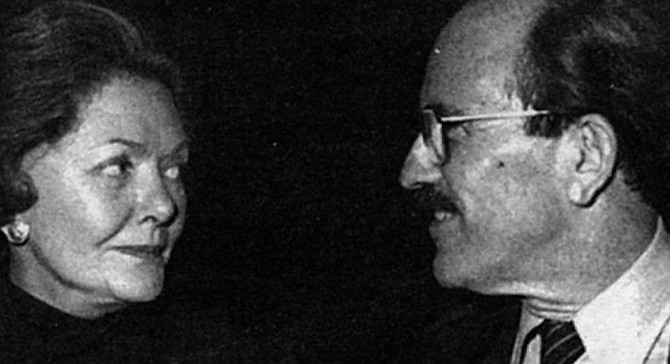
Helen Copley's friendship with financier Richard Silberman in the late 1970s became an embarrassment.
"Your wife has an ownership interest of approximately 11 percent in the Miracle Recreation Company, a Missouri company which designs, manufactures, and sells playground equipment. This interest is a separate property interest arising from your wife's interest in a separate property trust. The trust owns stock in a company called Playpower, Inc. Playpower is a holding company with several operating subsidiaries, one of which is Miracle Recreation.

Left to right, top to bottom: James and Helen Copley, Susan Golding and Richard Silberman, Scott Peters and Lynn Gorguze, Joan and Ray Kroc, Alan Bersin, Frances Hellman and Robert Dynes, Robert Peterson and Maureen O'Connor
"It is each official's responsibility to determine whether he or she has any interest, financial or not, which is 'incompatible with the proper discharge of official duties.' If an official determines that he or she cannot be objective about a decision because of a financial or personal interest, the official may choose to abstain from participating in discussions or discussions and votes on a particular project.
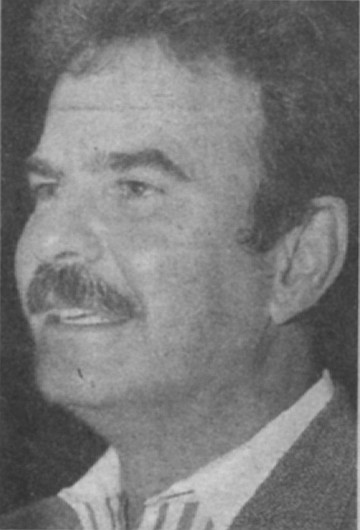
Golding began her political career after striking up a close friendship with political consultant George Gorton.
"You may wish to consider this policy in determining whether or not to participate in these Council decisions on funding projects, which could potentially use Miracle Recreation equipment, even though a determination has been made that there is no legal conflict of interest."
-- San Diego city attorney legal-opinion letter to city councilman Scott Peters, February 20, 2001
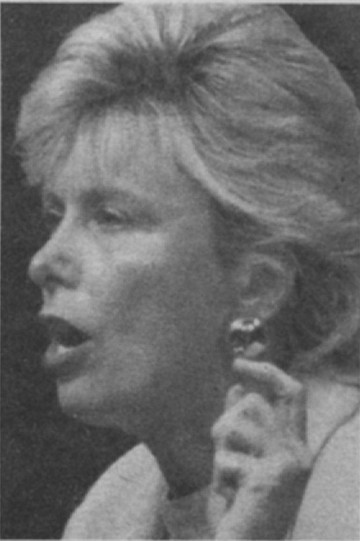
Golding went on to win her county-board seat, easily defeating a former Silberman protégée, Democratic lawyer Lynn Schenk.
Money and politics have long been married to each other in San Diego, where four of the city's most powerful women made their way to the top after marrying local captains of commerce and industry. Union-Tribune publisher Helen Copley, ex-mayors Maureen O'Connor and Susan Golding, and McDonald's heiress Joan Kroc all started their lives with humble means, only to find fortune and power in the arms of wealthy husbands.
The women married their money in the '70s and '80s. In the '90s, it was the men's turn. Three of the city's most prominent civic players, UCSD chancellor Robert Dynes, San Diego Unified School District superintendent Alan Bersin, and San Diego city councilman Scott Peters, are married to rich wives. Each spouse is probably worth millions of dollars, according to the personal financial disclosure statements the men are required to file.
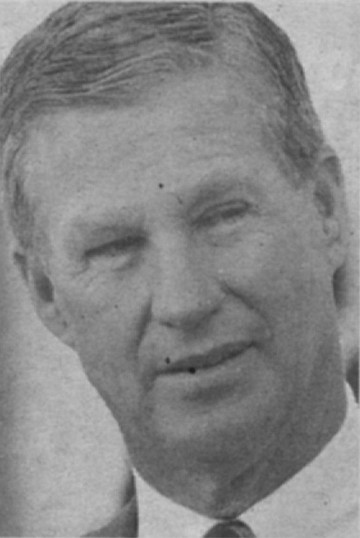
Downtown-hotel magnate Douglas Manchester accused O'Connor of holding up the construction of the city's bay-front convention center
But having money has proved a mixed blessing for these San Diegans. Along their path to wealth and influence, two of the women, Copley and Golding, and one of the men, Dynes, reinvented part of themselves, sanitizing their biographies by erasing marriages, divorces, and the recriminations that followed. And the surnames of the children of Copley and Golding were later changed. For Bersin, Dynes, and Peters, spousal wealth has raised questions about conflicts between their official roles and the financial holdings of their wives.
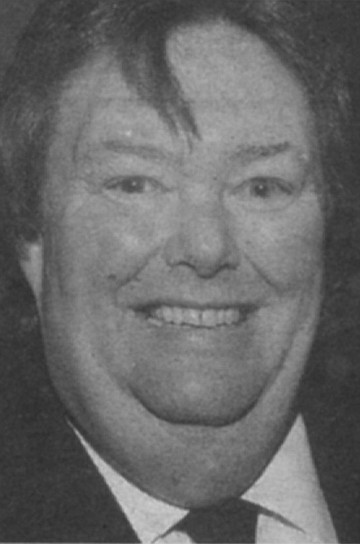
When Helen Copley named son David publisher of the Union-Tribune this April, she had spent almost 28 years at the helm of the newspaper company.
Fifty years ago this spring, Copley was a secretary in Cedar Rapids, Iowa, when, according to court documents, she became pregnant after a tryst with a fellow worker at a dairy company. At 29, she married the child's father, John Hunt, in one county, divorced him two weeks later in another, and, accompanied by her mother, headed west to San Diego, where she gave birth to a son on January 31, 1952. Years later, asked about the father of her child, Copley would say, "I never talk about him. I don't know where he is, and I don't want to know."
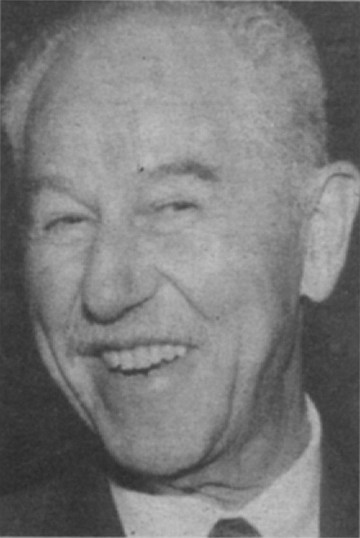
Lisa Foster was the daughter of Stanley E. Foster, who himself had married into San Diego's wealthy Ratner family almost 50 years earlier.
Not long after arriving in San Diego, Helen Hunt got a job at the San Diego Union and its sister paper, the Tribune, where she met publisher James S. Copley, who had inherited his newspaper empire from his adoptive father, Colonel Ira Copley, a one-time Illinois congressman. Smitten by the svelte brunette, Jim Copley made Helen his personal secretary. In August 1965, he divorced his wife and the mother of his two adopted children and married Helen. At the time of their marriage, Jim adopted Helen's 13-year-old son David Hunt, whose birth certificate was altered to eliminate any reference to the boy's birth father.

Father of the bride was Warren Hellman, a multi-millionaire investment banker and venture capitalist with close connections to the University of California.
Seven years later on his deathbed, the publisher drew up trust agreements leaving his wife complete control of his newspaper empire. After Jim died of lung cancer in 1973 at the age of 57, Helen, then 48, consolidated her hold on the company, allegedly locking out Jim's two children by his first marriage, and triggering a lawsuit charging that Helen had looted the children's trusts for the benefit of herself and her son David. After years of litigation, Helen agreed to settle the case in 1982 for a sizable, undisclosed sum.
By the time she named David publisher of the Union-Tribune this April, Helen Copley had spent almost 28 years at the helm of the newspaper company. She had provided political and editorial support to Pete Wilson as mayor, then United States senator, then governor, only to see him blamed for the decimation of the state's Republican Party because of his backing of the anti-immigrant Proposition 187.
Copley used her newspapers to stimulate the city's explosive growth, pushing for North City residential sprawl, convincing voters to approve encroachment of the Naval Hospital expansion into Balboa Park's Florida Canyon, advocating giving away city-owned land for industrial projects, and promoting the Chargers' ticket-guarantee. Few candidates for local office dared challenge the Union-Tribune's dominance, and when they did, they found themselves dispatched to political oblivion.
And yet, though her editorial defeats were few, Copley as publisher never seemed to find her personal bearings. She rarely spoke in public. Her friendship with financier Richard Silberman in the late 1970s became an embarrassment when a reporter at the Evening Tribune accused the paper of spiking a story about Silberman's conflicts of interest stemming from his ownership of the Bazaar del Mundo. When Silberman began dating a young Union reporter, his relationship with Copley cooled. She retreated to her mansion, known as Fox Hill, overlooking the fairways of the La Jolla Country Club, and was seldom again seen by anyone other than close friends.
A few years after his split with Copley, Silberman married Susan Golding on July 22, 1984. Golding arrived for the wedding at Temple Beth Israel in a red Jaguar; Silberman pulled up in a Lamborghini Spada. It was the city's money marriage of the decade. Everyone knew Silberman as the millionaire wonderboy who, along with fellow San Diego State grad Bob Peterson, made a fortune when they sold the Jack In The Box hamburger chain to Ralston Purina more than a decade earlier.
At the time of the wedding, Democrat Silberman -- a self-proclaimed influence-peddler and confidant of former governor Jerry Brown -- was spending hundreds of thousands of dollars to get his new wife elected to the county board of supervisors. Golding, a Republican, had arrived in San Diego in the late 1970s with her husband, attorney Stanley Prowse.
Though she was the daughter of San Diego State president Brage Golding, she and her husband had modest assets. They were soon divorced, and Golding began her political career after striking up a close friendship with political consultant George Gorton, a key advisor to then-San Diego mayor Pete Wilson.
With Gorton's assistance, Golding won an appointment to the San Diego City Council in January 1981. Two years later, in February 1983, Golding quit her council job to accept an appointment as a functionary in the administration of Governor George Deukmejian. Her council salary had been $35,000. The new job paid $50,784. She and Silberman were soon considering marriage.
"Susan talked to me on the phone about marrying Dick shortly after she had moved to Sacramento in the spring of 1983," her ex-husband Stanley Prowse recalled in a declaration filed in a child-support case Golding brought against him. "She told me that she thought she loved him, and that they were talking about getting married, but that she was nervous about it, particularly in light of their age difference and the fact that she was building her political career as a Republican while he was a prominent Democrat. I told her that I felt her fears were justified and that she should ask him to settle a substantial sum on her when and if they were married, so that she would feel secure and not dependent on him. She told me she thought my advice was sound. I did not doubt that she had followed it when she and Dick were wed the following year."
Golding went on to win her county-board seat, easily defeating a former Silberman protégée, Democratic lawyer Lynn Schenk. For most of her two terms on the board, Golding and Silberman were inseparable, personally and politically. Wiretaps, recorded during an FBI sting that resulted in Silberman's conviction on felony money-laundering charges, showed that Silberman was frequently in contact with Golding's office about arranging government contacts for Silberman's business friends.
Golding's ex-husband Stanley Prowse complained that Silberman was being overly generous to his two children, Vanessa and Sam. "They have both been showered with material things and have had so little interest in birthday and Christmas gifts we have given them that they have often ignored our invitations to visit and claim them." He added, "As I recall, Christmas of 1986 brought a bush plane tour of Alaska, while last Christmas brought a tour of the Far East, complete with surfing in Bali and bar-hopping in Bangkok -- heady stuff for impressionable teenagers."
Prowse was angered by what he charged were Golding's attempts to change the children's surnames. "Several years after our separation, I discovered that she had enrolled them in school as 'Sam Golding' and 'Vanessa Golding' without saying a word to me on the subject. By the time I found out, it was too late to do anything about it without embroiling them in a painful dispute. The sight of 'Golding' in bold letters on the back of Sam's high school letterman's jacket is painful to me, and for years I have received little or no acknowledgement from the children on Father's Day or my birthday. They do not treat [my wife] Joy or me respectfully. Susan has done her best to wipe the slate clean." Both Sam and Vanessa later went to court to make their name-change legal and permanent.
By the time Silberman was convicted on the money-laundering charges in June 1990, his business empire had been shown to be a massive fraud, based more on local myth of his financial infallibility than his balance sheet. A year later, Golding filed for divorce, and Silberman issued a statement from federal prison saying he had lied to his wife. "Unfortunately, I was not always truthful with her regarding critical and vital aspects of my life, and I know I am responsible for the changes in our relationship."
In November 1992, Golding was elected mayor of San Diego, narrowly beating Peter Navarro, the UC Irvine economics professor who was the bête noir of San Diego's establishment. Golding did not remarry, and, to outward appearances, lived a hermetic social life until leaving the public spotlight last year.
In contrast to Copley and Golding, Maureen O'Connor and Joan Kroc seemed to find post-spousal happiness. Kroc, a buxom blonde who at age 27 had met 53-year-old McDonald's founder Ray Kroc while playing piano at a bar in St. Paul, Minnesota, in 1957. For the next six years, they carried on a secret relationship. Ray Kroc divorced his wife, but Joan refused to divorce her first husband, who had become a McDonald's franchisee, and they didn't see each other at all for another six years. Meeting up with Kroc again at a 1969 McDonald's convention in San Diego, Joan finally ditched her husband and married the feisty billionaire.
After Ray Kroc died in January 1984, leaving Joan not only his fortune, but ownership of the San Diego Padres, she styled herself as a grand philanthropist, backing every cause from nuclear disarmament and world peace to the San Diego Zoo and Midwest flood victims. She tried to donate the Padres to the City of San Diego, a plan thwarted by her fellow Major League Baseball owners, who banned public ownership of teams.
Kroc's personal life, too, was more colorful than Copley's. She commissioned a sprawling house in Fairbanks Ranch and purchased a 300-foot yacht (the Impromptu), a helicopter (the Luvduv), a private Gulfstream jet, and a fleet of gold Cadillac Sevilles to provide transportation. She stopped driving the Cadillacs in October 1997 after she rolled one of the Sevilles on Interstate 5 near Clairemont Drive, suffering what were reported to be minor facial lacerations.
Like Kroc and Golding, former mayor Maureen O'Connor has not remarried. As a physical education teacher at a Catholic school, O'Connor, then 25, met Robert O. Peterson while running for the San Diego City Council in 1971. He was 55. Peterson, founder of the Jack In The Box hamburger chain, provided financial backing to O'Connor's subsequent campaigns and married her in 1977 in a European wedding.
Peterson lavished more than $500,000 on O'Connor's first mayoral race against Roger Hedgecock in the 1983 special election to replace Pete Wilson. During his victorious campaign against her, Hedgecock allies accused O'Connor and Peterson of conflicts of interest arising from Peterson's partial ownership interest in the Grant Hotel. A year later, Hedgecock found himself embroiled in the J. David political contribution scandal, but O'Connor declined to run in the June 1984 regular election, saying neither she nor Peterson were ready for another vitriolic go-around with Hedgecock.
Then, in September 1985, with Hedgecock on trial for political corruption and a likelihood that he would be forced from office, Peterson filed for divorce against O'Connor after eight years of marriage. Union-Tribune columnist Tom Blair reported that "the settlement isn't public, but an O'Connor friend says it's sizable. O'Connor, whose maiden name was restored, according to court documents, reportedly was in New York City when the dissolution was filed." Others claimed that the rift was caused by Peterson's opposition to O'Connor's ambition to run for mayor again.
The couple eventually reconciled, and by the spring of 1986, O'Connor was campaigning to replace Hedgecock, who had departed city hall after his conviction on the corruption charges. Vowing to spend no more than $170,000 on the campaign, she won the election that June. When she filed her first financial disclosure statement as mayor, it revealed an array of holdings from Gustaf Anders restaurant -- owned jointly with Union-Tribune publisher Helen Copley, an O'Connor intimate -- to 20 pieces of property in the county, valued well in excess of $2.5 million.
The couple's assets outside San Diego were not disclosed. "We listed anything that could even remotely be construed as doing business with the city," her attorney, David Bain, told the Los Angeles Times. "But it's safe to say that Maureen and Bob have interests outside San Diego that have nothing at all to do with San Diego." Though Bain didn't mention it, it was common knowledge that Peterson owned much of the Northern California resort town of Mendocino, as well as a hotel in Orange County.
"I don't see how anything that she and her husband hold could cause a significant conflict," Bain added. "Her policy has always been not to vote on anything that even remotely could be seen as a conflict, and she'll continue to follow that guideline. But I don't think there are going to be many cases where she might disqualify herself, and if there are, they'll be minor ones."
In December 1989, downtown-hotel magnate Douglas Manchester accused O'Connor of holding up the construction of the city's bay-front convention center while failing to reveal that she and her husband had a financial interest in the 249-room Grand Hotel, across the street from Disneyland. Oscar Irwin, an attorney for the Port of San Diego, defended the mayor, saying she had disclosed the interest earlier, while serving on the Port Commission. "Why are they crying to the press...unless it has to do with Manchester's vindictiveness?" Irwin told the Los Angeles Times.
"I came in as a maverick," O'Connor was quoted as saying, "and I will go out as a maverick." She served only one term as mayor. Peterson died of leukemia at the age of 78 in April 1994, less than two years after she left office. The former mayor, who is seen around town driving a silver Mercedes Benz, now manages much of her late husband's real estate empire, including the properties in Mendocino. On occasion, she has returned to the San Diego political fray, most notably to oppose the Chargers' ticket-guarantee and to speak out against Sempra Energy. She is said to remain friendly with Joan Kroc and Helen and David Copley, political allies and confidants of years past.
As the last decade of the century dawned, three men emerged to inherit San Diego's wealthy-spouse legacy. Alan Bersin was a corporate lawyer in Los Angeles when he married Lisa Foster in 1991. He had met her while working pro bono at a homeless legal clinic. It was her first marriage, his second. Foster was the daughter of Stanley E. Foster, who himself had married into San Diego's wealthy Ratner family almost 50 years earlier.
San Diego's legendary Ratner dynasty had begun in 1921 when Isaac Ratner arrived in town from New York and established United Cap Works on the east side of downtown. From the Depression through World War II, the factory made Navy uniforms and caps. After the war, Isaac's sons Abe and Nathaniel, along with Abe's son-in-law Stan Foster, switched to making menswear and casual clothing, eventually becoming one of the county's biggest employers.
A flood of cheap imports eventually doomed their clothing factory, but the Ratners, led by Foster, sold off that end of the business and switched to licensing their brand name, Hang Ten. Foster also became one of the county's biggest developers of so-called "maquiladora" sites in the South Bay and along Otay Mesa. He snapped up large tracts of cheap agricultural land near the border and developed them into trucking depots and warehouses supporting the burgeoning "twin plant" movement in Tijuana, where low-wage workers toiled making goods for low-duty import into the U.S. By 1991, when he was 64, Foster boasted to a magazine writer that he owned 17 industrial projects with more than two million square feet.
With Silberman's imprisonment and the death of his one-time partner, liberal Republican Robert Peterson, Foster had become one of the few remaining pillars of the city's left-of-center establishment. He backed stiff handgun controls and gave generously to Planned Parenthood and the Democratic party. Bersin had graduated from Yale Law School in 1974, one class behind Bill Clinton, and, like Clinton, had attended Oxford's Balliol College on a Rhodes scholarship. He spoke of his personal relationship with the Arkansas governor and told the Union-Tribune that Hillary Clinton had introduced him to his first wife.
Newly married Bersin and Lisa Foster arrived in San Diego in the spring of 1992, in time for presidential primary season. He took a job as "visiting professor" at the University of San Diego's law school and became a key operative of San Diegans for Clinton. With Clinton's election, Bersin, who had been in town for less than a year, was named United States Attorney. Attorney General Janet Reno designated him U.S. "border czar," a position he used to advocate tough restrictions on immigrants while championing Otay Mesa development and the maquiladora movement.
As it happened, Bersin, Foster, and their wives had a personal interest along the border. County records showed that in January 1992 they had formed a general partnership called Otay Terminal, which snapped up four industrial parcels worth more than $12 million. One of the sites, subsequently leased to a freight-forwarding service, was located less than a quarter-mile from the frontier.
"It's a partnership in which my wife and I have an interest," Bersin explained in a 1998 interview. "I don't know when we made it, but it's something my father-in-law organized. It's a truck -- Consolidated Freight -- transfer point." He pointed out that the Otay Mesa property was purchased in 1992, "before I was U.S. Attorney." Bersin defended himself against allegations that the border-area property holdings of he and his family represented at least an appearance of conflict of interest by saying, "No, because first of all, it's fully disclosed, and it had no bearing on,you know, the requirement is to disclose it. Frankly, none of the decisions I made as a prosecutor were affected by that." He added, "the notion that my role was driven by a desire to feather my own nest, I think, is a little bit far-fetched."
Still, there were skeptics who pointed to Bersin's role in the development of the so-called International Gateway of the Americas project, a shopping and office complex next to the San Ysidro border crossing. "When the proposed International Gateway of the Americas Project was going nowhere," said a San Diego Union-Tribune editorial praising him in March 1998, "it was Bersin who stepped in and cut through the red tape to get the border development project on track." In a later interview, Bersin downplayed his role, saying he was just trying to get better circulation through the notoriously congested border.
In March 1998, the San Diego Unified School District board voted to name Bersin superintendent of schools. Backed by his father-in-law Foster, the Union-Tribune, and other members of the city's old guard, he launched a controversial overhaul of the district.
Last year, when Frances O'Neill Zimmerman -- an opponent of Bersin's restructuring moves, who was the lone hold-out against hiring him -- was up for re-election, Foster and his business and real estate allies spent almost $1 million in a losing bid to unseat her.
Another high-ranking member of San Diego's educational establishment to come to power here after meeting a wealthy wife-to-be is UCSD chancellor Robert Carr Dynes. A physicist who grew up poor in a small Canadian city, Dynes was a researcher at AT&T Bell Labs in New Jersey from 1968 until late 1990, when he became a UCSD professor. His wife-to-be, Frances Hellman, had worked with Dynes at Bell Labs from 1985 to 1987, when she moved to UCSD, also to become a physics professor.
Dynes was named UCSD chancellor in April 1996. Hellman was seated at the chancellor's inaugural dinner table. In May 1998, the couple was wed in San Francisco, where the marriage on Stinson Beach in Marin County was big news. The father of the bride was Warren Hellman, a multi-millionaire investment banker and venture capitalist with close connections to the University of California. Hellman's company, Hellman and Friedman, claims to have raised more than $4.5 billion in investment capital from investors, including the California Public Employees Retirement System, known as CALPERS. A well-known Bay Area philanthropist and political power broker, Hellman is a close ally of San Francisco mayor Willie Brown. Business Week magazine recently referred to the financier as the Warren Buffett of the West Coast.
News of Dynes's wealthy father-in-law did not make it into the Union-Tribune, however. Nor did word of Dynes's bitter split-up from his first wife Christel, still living in New Jersey. Dynes had sued for divorce in July 1996, shortly after he became chancellor. Christel had responded by claiming that Dynes had "deserted" her "on or about January 1, 1991, ever since which time and for more than 12 months last past, [Dynes] has willfully and continuously deserted [Christel Dynes]."
A final divorce decree was issued in January 1998 after a caustic series of court filings. Dynes agreed to give his ex-wife their house in New Jersey, pay her $6000 a month alimony -- about a third of his UCSD salary -- and split all patent royalties with her 50-50.
As chancellor, Dynes had become a friend of Padres owner and venture capitalist John Moores. Named in 1997 by Mayor Susan Golding to a committee exploring whether taxpayers should subsidize a new ballpark, Dynes wholeheartedly endorsed the idea. He and Moores also joined the board of Leap Wireless, a corporate spin-off of Qualcomm, the cell-phone pioneer closely tied to the university. Moores had kind words for his friend. "I would not expect a physicist to have the interpersonal skills and the energy level this guy does," he told the Union-Tribune in November 1998.
As it turned out, Dynes and Moores had something else in common. In October 1999, Moores and Warren Hellman paid an undisclosed sum to take over Blackbaud, Inc., a South Carolina accounting and business-management software company. As part of the deal, Hellman's son, Mick, became Blackbaud's chairman of the board. In a February 2000 interview, Dynes said he had no knowledge of his in-laws' arrangement, and it would not have mattered if he had. (Moores, it also happens, is a member of the University of California board of regents.)
In January 2000, a reporter's inquiries caused Dynes to amend his financial disclosure statement to disclose his wife's assets, which he had not previously reported, as required by state law. It revealed 16 separate interests, each valued at more than $100,000, the maximum reporting category, including holdings in Bank of America, First Capital Corp, and Avon Products, in addition to the Hellman & Friedman Management Fund.
San Diego's latest wealthy wife-ambitious-husband relationship came to light after last November's election, when attorney Scott Peters beat Linda Davis for the city's District 1 city-council seat. Peters, a self-styled "environmental attorney" and former deputy county counsel, loaned his campaign more than $200,000. The job pays just $60,715. In an interview published in early November, he told the Union-Tribune that he had to put his own money into the campaign because Davis, his opponent, had been endorsed by the building industry. "That's generally where money comes from in San Diego politics, so we've had to make up for that by kicking in our own funds."
Peters, 41, is married to Lynn Gorguze, who, along with her father, Vince, the former president and chief operating officer of Emerson Electric Company, operate a privately owned conglomerate called Cameron Holdings. It is named for Cameron Indoor Stadium at Duke University, the alma mater of both Lynn Gorguze and Peters.
In February 2000, the St. Louis Business Journal reported that Cameron had gross revenues of $350 million. According to that account, Vince Gorguze, originally of St. Louis, began buying small- and middle-sized industrial businesses in 1978 by purchasing Sinclair & Rush, a plastic-molding venture in St. Louis.
His daughter was a senior partner in a Minneapolis investment firm, First Bank Systems, in 1988 when she first joined her father to help raise capital for his purchase of a million-dollar stake in San Diego's Aldila, Inc., a golf-club maker. By November 1990, according to a report in the San Diego Business Journal, Gorguze, then vice president of corporate development for Aldila, was working on a 30,000-square-foot Tijuana maquiladora for the company.
Today, Cameron's biggest single holding is reported to be PlayPower Inc., the largest manufacturer of commercial playground equipment in the country. The firm grossed $143.8 million in 2000, $27 million more than the year before, the St. Louis Business Journal reported this March. "Through its family of companies," the company website says, "PlayPower can satisfy your entire commercial playground, floating dock and boat or personal water craft (PWC) lift requirements. Our product offering includes traditional play systems (both wood and steel), soft contained play systems, water slide, pool slides, free standing slides and swings, benches, tables, floating docks, boat lifts, PWC lifts...the list goes on and on." The company also owns SpectraTurf of Corona, maker of rubberized surfacing for playgrounds and businesses.
Owning a conglomerate has clearly been lucrative for Lynn and Vince Gorguze. But it has presented a raft of complex legal questions for her husband Scott Peters. Because the city is a likely future customer of PlayPower and its subsidiaries, including Miracle Recreation, Peters recently asked the city attorney's office for an official opinion regarding possible conflicts. After researching the issue, the attorneys concluded that Peters would have to be especially vigilant.
"The City has used Miracle Recreation equipment in some of its facilities, and has acquired products from the company both directly, in the case of replacement parts, and indirectly, through a general contractor, in the case of construction and renovation projects," the attorney wrote. "Miracle Recreation does not install playground equipment, and does not have a general contractor's license, therefore, it does not directly bid on City playground construction renovation projects, and does not have any contractual relationship with the City when it provides materials for such projects.
"The February 20, 2001, Council Docket includes an item seeking to add four Park and Recreation Department projects in Council District 6 to the Fiscal Year 2001 Capital Improvement Program budget. Of the four projects, two are 'tot lot' renovations. Additionally, the City Council docket of February 26, 2001, includes a similar item involving five park projects in Council Districts 2, 6, 7, and 8. Two of the five projects are tot lot renovation projects. The two Council items are for the purpose of approving funding for the projects only, neither item involves the award of any contracts.
"Because these Council decisions to fund park projects are preliminary funding items, with no known connection at this time to Miracle Recreation, you do not have a conflict of interest that would disqualify you from participating in these decisions under the Act or Section 1090.
"Future Council actions related to tot lot renovations may involve different facts, and should be analyzed on a case by case basis. Please feel free to call me if you have any further questions about this matter."
The opinion also pointed out that the city council has adopted a broad conflict-of-interest policy, not enforceable by law, more stringent than the state's conflict code: "No elected official...of the City of San Diego shall engage in any business or transaction or shall have a financial or other personal interest, direct or indirect, which is incompatible with the proper discharge of his official duties or would tend to impair his independence or judgment or action in the performance of such duties."
"Under this policy," the attorney explained, "it is each official's responsibility to determine whether he or she has any interest, financial or not, which is 'incompatible with the proper discharge of official duties'
"If an official determines that he or she cannot be objective about a decision because of a financial or personal interest, the official may choose to abstain from participating in discussions or discussions and votes on a particular project.
"You may wish to consider this policy in determining whether or not to participate in these Council decisions on funding projects, which could potentially use Miracle Recreation equipment, even though a determination has been made that there is no legal conflict of interest. It should be emphasized, however, that this is a policy, not a law, and does not have the force and effect of law."
Peters has vowed to avoid any conflicts of interest scrupulously. As a frequently mentioned candidate for Democrat Howard Wayne's seat in the state assembly, his opponents will be watching every move. The legacy left by San Diego's other weddings of wealth and power suggests that the path to success for the ambitious young politician married to money is fraught with peril.
Here's something you might be interested in.
Married rich: Helen Copley, Susan Golding, Robert Dynes, Scott Peters, Maureen O'Connor, Joan Kroc, Alan Bersin
Handsome dowries among San Diego elite

Married rich: Helen Copley, Susan Golding, Robert Dynes, Scott Peters, Maureen O'Connor, Joan Kroc, Alan Bersin
Handsome dowries among San Diego elite
Helen Copley's friendship with financier Richard Silberman in the late 1970s became an embarrassment.
"Your wife has an ownership interest of approximately 11 percent in the Miracle Recreation Company, a Missouri company which designs, manufactures, and sells playground equipment. This interest is a separate property interest arising from your wife's interest in a separate property trust. The trust owns stock in a company called Playpower, Inc. Playpower is a holding company with several operating subsidiaries, one of which is Miracle Recreation.
Left to right, top to bottom: James and Helen Copley, Susan Golding and Richard Silberman, Scott Peters and Lynn Gorguze, Joan and Ray Kroc, Alan Bersin, Frances Hellman and Robert Dynes, Robert Peterson and Maureen O'Connor
"It is each official's responsibility to determine whether he or she has any interest, financial or not, which is 'incompatible with the proper discharge of official duties.' If an official determines that he or she cannot be objective about a decision because of a financial or personal interest, the official may choose to abstain from participating in discussions or discussions and votes on a particular project.
Golding began her political career after striking up a close friendship with political consultant George Gorton.
"You may wish to consider this policy in determining whether or not to participate in these Council decisions on funding projects, which could potentially use Miracle Recreation equipment, even though a determination has been made that there is no legal conflict of interest."
-- San Diego city attorney legal-opinion letter to city councilman Scott Peters, February 20, 2001
Golding went on to win her county-board seat, easily defeating a former Silberman protégée, Democratic lawyer Lynn Schenk.
Money and politics have long been married to each other in San Diego, where four of the city's most powerful women made their way to the top after marrying local captains of commerce and industry. Union-Tribune publisher Helen Copley, ex-mayors Maureen O'Connor and Susan Golding, and McDonald's heiress Joan Kroc all started their lives with humble means, only to find fortune and power in the arms of wealthy husbands.
The women married their money in the '70s and '80s. In the '90s, it was the men's turn. Three of the city's most prominent civic players, UCSD chancellor Robert Dynes, San Diego Unified School District superintendent Alan Bersin, and San Diego city councilman Scott Peters, are married to rich wives. Each spouse is probably worth millions of dollars, according to the personal financial disclosure statements the men are required to file.
Downtown-hotel magnate Douglas Manchester accused O'Connor of holding up the construction of the city's bay-front convention center
But having money has proved a mixed blessing for these San Diegans. Along their path to wealth and influence, two of the women, Copley and Golding, and one of the men, Dynes, reinvented part of themselves, sanitizing their biographies by erasing marriages, divorces, and the recriminations that followed. And the surnames of the children of Copley and Golding were later changed. For Bersin, Dynes, and Peters, spousal wealth has raised questions about conflicts between their official roles and the financial holdings of their wives.
When Helen Copley named son David publisher of the Union-Tribune this April, she had spent almost 28 years at the helm of the newspaper company.
Fifty years ago this spring, Copley was a secretary in Cedar Rapids, Iowa, when, according to court documents, she became pregnant after a tryst with a fellow worker at a dairy company. At 29, she married the child's father, John Hunt, in one county, divorced him two weeks later in another, and, accompanied by her mother, headed west to San Diego, where she gave birth to a son on January 31, 1952. Years later, asked about the father of her child, Copley would say, "I never talk about him. I don't know where he is, and I don't want to know."
Lisa Foster was the daughter of Stanley E. Foster, who himself had married into San Diego's wealthy Ratner family almost 50 years earlier.
Not long after arriving in San Diego, Helen Hunt got a job at the San Diego Union and its sister paper, the Tribune, where she met publisher James S. Copley, who had inherited his newspaper empire from his adoptive father, Colonel Ira Copley, a one-time Illinois congressman. Smitten by the svelte brunette, Jim Copley made Helen his personal secretary. In August 1965, he divorced his wife and the mother of his two adopted children and married Helen. At the time of their marriage, Jim adopted Helen's 13-year-old son David Hunt, whose birth certificate was altered to eliminate any reference to the boy's birth father.
Father of the bride was Warren Hellman, a multi-millionaire investment banker and venture capitalist with close connections to the University of California.
Seven years later on his deathbed, the publisher drew up trust agreements leaving his wife complete control of his newspaper empire. After Jim died of lung cancer in 1973 at the age of 57, Helen, then 48, consolidated her hold on the company, allegedly locking out Jim's two children by his first marriage, and triggering a lawsuit charging that Helen had looted the children's trusts for the benefit of herself and her son David. After years of litigation, Helen agreed to settle the case in 1982 for a sizable, undisclosed sum.
By the time she named David publisher of the Union-Tribune this April, Helen Copley had spent almost 28 years at the helm of the newspaper company. She had provided political and editorial support to Pete Wilson as mayor, then United States senator, then governor, only to see him blamed for the decimation of the state's Republican Party because of his backing of the anti-immigrant Proposition 187.
Copley used her newspapers to stimulate the city's explosive growth, pushing for North City residential sprawl, convincing voters to approve encroachment of the Naval Hospital expansion into Balboa Park's Florida Canyon, advocating giving away city-owned land for industrial projects, and promoting the Chargers' ticket-guarantee. Few candidates for local office dared challenge the Union-Tribune's dominance, and when they did, they found themselves dispatched to political oblivion.
And yet, though her editorial defeats were few, Copley as publisher never seemed to find her personal bearings. She rarely spoke in public. Her friendship with financier Richard Silberman in the late 1970s became an embarrassment when a reporter at the Evening Tribune accused the paper of spiking a story about Silberman's conflicts of interest stemming from his ownership of the Bazaar del Mundo. When Silberman began dating a young Union reporter, his relationship with Copley cooled. She retreated to her mansion, known as Fox Hill, overlooking the fairways of the La Jolla Country Club, and was seldom again seen by anyone other than close friends.
A few years after his split with Copley, Silberman married Susan Golding on July 22, 1984. Golding arrived for the wedding at Temple Beth Israel in a red Jaguar; Silberman pulled up in a Lamborghini Spada. It was the city's money marriage of the decade. Everyone knew Silberman as the millionaire wonderboy who, along with fellow San Diego State grad Bob Peterson, made a fortune when they sold the Jack In The Box hamburger chain to Ralston Purina more than a decade earlier.
At the time of the wedding, Democrat Silberman -- a self-proclaimed influence-peddler and confidant of former governor Jerry Brown -- was spending hundreds of thousands of dollars to get his new wife elected to the county board of supervisors. Golding, a Republican, had arrived in San Diego in the late 1970s with her husband, attorney Stanley Prowse.
Though she was the daughter of San Diego State president Brage Golding, she and her husband had modest assets. They were soon divorced, and Golding began her political career after striking up a close friendship with political consultant George Gorton, a key advisor to then-San Diego mayor Pete Wilson.
With Gorton's assistance, Golding won an appointment to the San Diego City Council in January 1981. Two years later, in February 1983, Golding quit her council job to accept an appointment as a functionary in the administration of Governor George Deukmejian. Her council salary had been $35,000. The new job paid $50,784. She and Silberman were soon considering marriage.
"Susan talked to me on the phone about marrying Dick shortly after she had moved to Sacramento in the spring of 1983," her ex-husband Stanley Prowse recalled in a declaration filed in a child-support case Golding brought against him. "She told me that she thought she loved him, and that they were talking about getting married, but that she was nervous about it, particularly in light of their age difference and the fact that she was building her political career as a Republican while he was a prominent Democrat. I told her that I felt her fears were justified and that she should ask him to settle a substantial sum on her when and if they were married, so that she would feel secure and not dependent on him. She told me she thought my advice was sound. I did not doubt that she had followed it when she and Dick were wed the following year."
Golding went on to win her county-board seat, easily defeating a former Silberman protégée, Democratic lawyer Lynn Schenk. For most of her two terms on the board, Golding and Silberman were inseparable, personally and politically. Wiretaps, recorded during an FBI sting that resulted in Silberman's conviction on felony money-laundering charges, showed that Silberman was frequently in contact with Golding's office about arranging government contacts for Silberman's business friends.
Golding's ex-husband Stanley Prowse complained that Silberman was being overly generous to his two children, Vanessa and Sam. "They have both been showered with material things and have had so little interest in birthday and Christmas gifts we have given them that they have often ignored our invitations to visit and claim them." He added, "As I recall, Christmas of 1986 brought a bush plane tour of Alaska, while last Christmas brought a tour of the Far East, complete with surfing in Bali and bar-hopping in Bangkok -- heady stuff for impressionable teenagers."
Prowse was angered by what he charged were Golding's attempts to change the children's surnames. "Several years after our separation, I discovered that she had enrolled them in school as 'Sam Golding' and 'Vanessa Golding' without saying a word to me on the subject. By the time I found out, it was too late to do anything about it without embroiling them in a painful dispute. The sight of 'Golding' in bold letters on the back of Sam's high school letterman's jacket is painful to me, and for years I have received little or no acknowledgement from the children on Father's Day or my birthday. They do not treat [my wife] Joy or me respectfully. Susan has done her best to wipe the slate clean." Both Sam and Vanessa later went to court to make their name-change legal and permanent.
By the time Silberman was convicted on the money-laundering charges in June 1990, his business empire had been shown to be a massive fraud, based more on local myth of his financial infallibility than his balance sheet. A year later, Golding filed for divorce, and Silberman issued a statement from federal prison saying he had lied to his wife. "Unfortunately, I was not always truthful with her regarding critical and vital aspects of my life, and I know I am responsible for the changes in our relationship."
In November 1992, Golding was elected mayor of San Diego, narrowly beating Peter Navarro, the UC Irvine economics professor who was the bête noir of San Diego's establishment. Golding did not remarry, and, to outward appearances, lived a hermetic social life until leaving the public spotlight last year.
In contrast to Copley and Golding, Maureen O'Connor and Joan Kroc seemed to find post-spousal happiness. Kroc, a buxom blonde who at age 27 had met 53-year-old McDonald's founder Ray Kroc while playing piano at a bar in St. Paul, Minnesota, in 1957. For the next six years, they carried on a secret relationship. Ray Kroc divorced his wife, but Joan refused to divorce her first husband, who had become a McDonald's franchisee, and they didn't see each other at all for another six years. Meeting up with Kroc again at a 1969 McDonald's convention in San Diego, Joan finally ditched her husband and married the feisty billionaire.
After Ray Kroc died in January 1984, leaving Joan not only his fortune, but ownership of the San Diego Padres, she styled herself as a grand philanthropist, backing every cause from nuclear disarmament and world peace to the San Diego Zoo and Midwest flood victims. She tried to donate the Padres to the City of San Diego, a plan thwarted by her fellow Major League Baseball owners, who banned public ownership of teams.
Kroc's personal life, too, was more colorful than Copley's. She commissioned a sprawling house in Fairbanks Ranch and purchased a 300-foot yacht (the Impromptu), a helicopter (the Luvduv), a private Gulfstream jet, and a fleet of gold Cadillac Sevilles to provide transportation. She stopped driving the Cadillacs in October 1997 after she rolled one of the Sevilles on Interstate 5 near Clairemont Drive, suffering what were reported to be minor facial lacerations.
Like Kroc and Golding, former mayor Maureen O'Connor has not remarried. As a physical education teacher at a Catholic school, O'Connor, then 25, met Robert O. Peterson while running for the San Diego City Council in 1971. He was 55. Peterson, founder of the Jack In The Box hamburger chain, provided financial backing to O'Connor's subsequent campaigns and married her in 1977 in a European wedding.
Peterson lavished more than $500,000 on O'Connor's first mayoral race against Roger Hedgecock in the 1983 special election to replace Pete Wilson. During his victorious campaign against her, Hedgecock allies accused O'Connor and Peterson of conflicts of interest arising from Peterson's partial ownership interest in the Grant Hotel. A year later, Hedgecock found himself embroiled in the J. David political contribution scandal, but O'Connor declined to run in the June 1984 regular election, saying neither she nor Peterson were ready for another vitriolic go-around with Hedgecock.
Then, in September 1985, with Hedgecock on trial for political corruption and a likelihood that he would be forced from office, Peterson filed for divorce against O'Connor after eight years of marriage. Union-Tribune columnist Tom Blair reported that "the settlement isn't public, but an O'Connor friend says it's sizable. O'Connor, whose maiden name was restored, according to court documents, reportedly was in New York City when the dissolution was filed." Others claimed that the rift was caused by Peterson's opposition to O'Connor's ambition to run for mayor again.
The couple eventually reconciled, and by the spring of 1986, O'Connor was campaigning to replace Hedgecock, who had departed city hall after his conviction on the corruption charges. Vowing to spend no more than $170,000 on the campaign, she won the election that June. When she filed her first financial disclosure statement as mayor, it revealed an array of holdings from Gustaf Anders restaurant -- owned jointly with Union-Tribune publisher Helen Copley, an O'Connor intimate -- to 20 pieces of property in the county, valued well in excess of $2.5 million.
The couple's assets outside San Diego were not disclosed. "We listed anything that could even remotely be construed as doing business with the city," her attorney, David Bain, told the Los Angeles Times. "But it's safe to say that Maureen and Bob have interests outside San Diego that have nothing at all to do with San Diego." Though Bain didn't mention it, it was common knowledge that Peterson owned much of the Northern California resort town of Mendocino, as well as a hotel in Orange County.
"I don't see how anything that she and her husband hold could cause a significant conflict," Bain added. "Her policy has always been not to vote on anything that even remotely could be seen as a conflict, and she'll continue to follow that guideline. But I don't think there are going to be many cases where she might disqualify herself, and if there are, they'll be minor ones."
In December 1989, downtown-hotel magnate Douglas Manchester accused O'Connor of holding up the construction of the city's bay-front convention center while failing to reveal that she and her husband had a financial interest in the 249-room Grand Hotel, across the street from Disneyland. Oscar Irwin, an attorney for the Port of San Diego, defended the mayor, saying she had disclosed the interest earlier, while serving on the Port Commission. "Why are they crying to the press...unless it has to do with Manchester's vindictiveness?" Irwin told the Los Angeles Times.
"I came in as a maverick," O'Connor was quoted as saying, "and I will go out as a maverick." She served only one term as mayor. Peterson died of leukemia at the age of 78 in April 1994, less than two years after she left office. The former mayor, who is seen around town driving a silver Mercedes Benz, now manages much of her late husband's real estate empire, including the properties in Mendocino. On occasion, she has returned to the San Diego political fray, most notably to oppose the Chargers' ticket-guarantee and to speak out against Sempra Energy. She is said to remain friendly with Joan Kroc and Helen and David Copley, political allies and confidants of years past.
As the last decade of the century dawned, three men emerged to inherit San Diego's wealthy-spouse legacy. Alan Bersin was a corporate lawyer in Los Angeles when he married Lisa Foster in 1991. He had met her while working pro bono at a homeless legal clinic. It was her first marriage, his second. Foster was the daughter of Stanley E. Foster, who himself had married into San Diego's wealthy Ratner family almost 50 years earlier.
San Diego's legendary Ratner dynasty had begun in 1921 when Isaac Ratner arrived in town from New York and established United Cap Works on the east side of downtown. From the Depression through World War II, the factory made Navy uniforms and caps. After the war, Isaac's sons Abe and Nathaniel, along with Abe's son-in-law Stan Foster, switched to making menswear and casual clothing, eventually becoming one of the county's biggest employers.
A flood of cheap imports eventually doomed their clothing factory, but the Ratners, led by Foster, sold off that end of the business and switched to licensing their brand name, Hang Ten. Foster also became one of the county's biggest developers of so-called "maquiladora" sites in the South Bay and along Otay Mesa. He snapped up large tracts of cheap agricultural land near the border and developed them into trucking depots and warehouses supporting the burgeoning "twin plant" movement in Tijuana, where low-wage workers toiled making goods for low-duty import into the U.S. By 1991, when he was 64, Foster boasted to a magazine writer that he owned 17 industrial projects with more than two million square feet.
With Silberman's imprisonment and the death of his one-time partner, liberal Republican Robert Peterson, Foster had become one of the few remaining pillars of the city's left-of-center establishment. He backed stiff handgun controls and gave generously to Planned Parenthood and the Democratic party. Bersin had graduated from Yale Law School in 1974, one class behind Bill Clinton, and, like Clinton, had attended Oxford's Balliol College on a Rhodes scholarship. He spoke of his personal relationship with the Arkansas governor and told the Union-Tribune that Hillary Clinton had introduced him to his first wife.
Newly married Bersin and Lisa Foster arrived in San Diego in the spring of 1992, in time for presidential primary season. He took a job as "visiting professor" at the University of San Diego's law school and became a key operative of San Diegans for Clinton. With Clinton's election, Bersin, who had been in town for less than a year, was named United States Attorney. Attorney General Janet Reno designated him U.S. "border czar," a position he used to advocate tough restrictions on immigrants while championing Otay Mesa development and the maquiladora movement.
As it happened, Bersin, Foster, and their wives had a personal interest along the border. County records showed that in January 1992 they had formed a general partnership called Otay Terminal, which snapped up four industrial parcels worth more than $12 million. One of the sites, subsequently leased to a freight-forwarding service, was located less than a quarter-mile from the frontier.
"It's a partnership in which my wife and I have an interest," Bersin explained in a 1998 interview. "I don't know when we made it, but it's something my father-in-law organized. It's a truck -- Consolidated Freight -- transfer point." He pointed out that the Otay Mesa property was purchased in 1992, "before I was U.S. Attorney." Bersin defended himself against allegations that the border-area property holdings of he and his family represented at least an appearance of conflict of interest by saying, "No, because first of all, it's fully disclosed, and it had no bearing on,you know, the requirement is to disclose it. Frankly, none of the decisions I made as a prosecutor were affected by that." He added, "the notion that my role was driven by a desire to feather my own nest, I think, is a little bit far-fetched."
Still, there were skeptics who pointed to Bersin's role in the development of the so-called International Gateway of the Americas project, a shopping and office complex next to the San Ysidro border crossing. "When the proposed International Gateway of the Americas Project was going nowhere," said a San Diego Union-Tribune editorial praising him in March 1998, "it was Bersin who stepped in and cut through the red tape to get the border development project on track." In a later interview, Bersin downplayed his role, saying he was just trying to get better circulation through the notoriously congested border.
In March 1998, the San Diego Unified School District board voted to name Bersin superintendent of schools. Backed by his father-in-law Foster, the Union-Tribune, and other members of the city's old guard, he launched a controversial overhaul of the district.
Last year, when Frances O'Neill Zimmerman -- an opponent of Bersin's restructuring moves, who was the lone hold-out against hiring him -- was up for re-election, Foster and his business and real estate allies spent almost $1 million in a losing bid to unseat her.
Another high-ranking member of San Diego's educational establishment to come to power here after meeting a wealthy wife-to-be is UCSD chancellor Robert Carr Dynes. A physicist who grew up poor in a small Canadian city, Dynes was a researcher at AT&T Bell Labs in New Jersey from 1968 until late 1990, when he became a UCSD professor. His wife-to-be, Frances Hellman, had worked with Dynes at Bell Labs from 1985 to 1987, when she moved to UCSD, also to become a physics professor.
Dynes was named UCSD chancellor in April 1996. Hellman was seated at the chancellor's inaugural dinner table. In May 1998, the couple was wed in San Francisco, where the marriage on Stinson Beach in Marin County was big news. The father of the bride was Warren Hellman, a multi-millionaire investment banker and venture capitalist with close connections to the University of California. Hellman's company, Hellman and Friedman, claims to have raised more than $4.5 billion in investment capital from investors, including the California Public Employees Retirement System, known as CALPERS. A well-known Bay Area philanthropist and political power broker, Hellman is a close ally of San Francisco mayor Willie Brown. Business Week magazine recently referred to the financier as the Warren Buffett of the West Coast.
News of Dynes's wealthy father-in-law did not make it into the Union-Tribune, however. Nor did word of Dynes's bitter split-up from his first wife Christel, still living in New Jersey. Dynes had sued for divorce in July 1996, shortly after he became chancellor. Christel had responded by claiming that Dynes had "deserted" her "on or about January 1, 1991, ever since which time and for more than 12 months last past, [Dynes] has willfully and continuously deserted [Christel Dynes]."
A final divorce decree was issued in January 1998 after a caustic series of court filings. Dynes agreed to give his ex-wife their house in New Jersey, pay her $6000 a month alimony -- about a third of his UCSD salary -- and split all patent royalties with her 50-50.
As chancellor, Dynes had become a friend of Padres owner and venture capitalist John Moores. Named in 1997 by Mayor Susan Golding to a committee exploring whether taxpayers should subsidize a new ballpark, Dynes wholeheartedly endorsed the idea. He and Moores also joined the board of Leap Wireless, a corporate spin-off of Qualcomm, the cell-phone pioneer closely tied to the university. Moores had kind words for his friend. "I would not expect a physicist to have the interpersonal skills and the energy level this guy does," he told the Union-Tribune in November 1998.
As it turned out, Dynes and Moores had something else in common. In October 1999, Moores and Warren Hellman paid an undisclosed sum to take over Blackbaud, Inc., a South Carolina accounting and business-management software company. As part of the deal, Hellman's son, Mick, became Blackbaud's chairman of the board. In a February 2000 interview, Dynes said he had no knowledge of his in-laws' arrangement, and it would not have mattered if he had. (Moores, it also happens, is a member of the University of California board of regents.)
In January 2000, a reporter's inquiries caused Dynes to amend his financial disclosure statement to disclose his wife's assets, which he had not previously reported, as required by state law. It revealed 16 separate interests, each valued at more than $100,000, the maximum reporting category, including holdings in Bank of America, First Capital Corp, and Avon Products, in addition to the Hellman & Friedman Management Fund.
San Diego's latest wealthy wife-ambitious-husband relationship came to light after last November's election, when attorney Scott Peters beat Linda Davis for the city's District 1 city-council seat. Peters, a self-styled "environmental attorney" and former deputy county counsel, loaned his campaign more than $200,000. The job pays just $60,715. In an interview published in early November, he told the Union-Tribune that he had to put his own money into the campaign because Davis, his opponent, had been endorsed by the building industry. "That's generally where money comes from in San Diego politics, so we've had to make up for that by kicking in our own funds."
Peters, 41, is married to Lynn Gorguze, who, along with her father, Vince, the former president and chief operating officer of Emerson Electric Company, operate a privately owned conglomerate called Cameron Holdings. It is named for Cameron Indoor Stadium at Duke University, the alma mater of both Lynn Gorguze and Peters.
In February 2000, the St. Louis Business Journal reported that Cameron had gross revenues of $350 million. According to that account, Vince Gorguze, originally of St. Louis, began buying small- and middle-sized industrial businesses in 1978 by purchasing Sinclair & Rush, a plastic-molding venture in St. Louis.
His daughter was a senior partner in a Minneapolis investment firm, First Bank Systems, in 1988 when she first joined her father to help raise capital for his purchase of a million-dollar stake in San Diego's Aldila, Inc., a golf-club maker. By November 1990, according to a report in the San Diego Business Journal, Gorguze, then vice president of corporate development for Aldila, was working on a 30,000-square-foot Tijuana maquiladora for the company.
Today, Cameron's biggest single holding is reported to be PlayPower Inc., the largest manufacturer of commercial playground equipment in the country. The firm grossed $143.8 million in 2000, $27 million more than the year before, the St. Louis Business Journal reported this March. "Through its family of companies," the company website says, "PlayPower can satisfy your entire commercial playground, floating dock and boat or personal water craft (PWC) lift requirements. Our product offering includes traditional play systems (both wood and steel), soft contained play systems, water slide, pool slides, free standing slides and swings, benches, tables, floating docks, boat lifts, PWC lifts...the list goes on and on." The company also owns SpectraTurf of Corona, maker of rubberized surfacing for playgrounds and businesses.
Owning a conglomerate has clearly been lucrative for Lynn and Vince Gorguze. But it has presented a raft of complex legal questions for her husband Scott Peters. Because the city is a likely future customer of PlayPower and its subsidiaries, including Miracle Recreation, Peters recently asked the city attorney's office for an official opinion regarding possible conflicts. After researching the issue, the attorneys concluded that Peters would have to be especially vigilant.
"The City has used Miracle Recreation equipment in some of its facilities, and has acquired products from the company both directly, in the case of replacement parts, and indirectly, through a general contractor, in the case of construction and renovation projects," the attorney wrote. "Miracle Recreation does not install playground equipment, and does not have a general contractor's license, therefore, it does not directly bid on City playground construction renovation projects, and does not have any contractual relationship with the City when it provides materials for such projects.
"The February 20, 2001, Council Docket includes an item seeking to add four Park and Recreation Department projects in Council District 6 to the Fiscal Year 2001 Capital Improvement Program budget. Of the four projects, two are 'tot lot' renovations. Additionally, the City Council docket of February 26, 2001, includes a similar item involving five park projects in Council Districts 2, 6, 7, and 8. Two of the five projects are tot lot renovation projects. The two Council items are for the purpose of approving funding for the projects only, neither item involves the award of any contracts.
"Because these Council decisions to fund park projects are preliminary funding items, with no known connection at this time to Miracle Recreation, you do not have a conflict of interest that would disqualify you from participating in these decisions under the Act or Section 1090.
"Future Council actions related to tot lot renovations may involve different facts, and should be analyzed on a case by case basis. Please feel free to call me if you have any further questions about this matter."
The opinion also pointed out that the city council has adopted a broad conflict-of-interest policy, not enforceable by law, more stringent than the state's conflict code: "No elected official...of the City of San Diego shall engage in any business or transaction or shall have a financial or other personal interest, direct or indirect, which is incompatible with the proper discharge of his official duties or would tend to impair his independence or judgment or action in the performance of such duties."
"Under this policy," the attorney explained, "it is each official's responsibility to determine whether he or she has any interest, financial or not, which is 'incompatible with the proper discharge of official duties'
"If an official determines that he or she cannot be objective about a decision because of a financial or personal interest, the official may choose to abstain from participating in discussions or discussions and votes on a particular project.
"You may wish to consider this policy in determining whether or not to participate in these Council decisions on funding projects, which could potentially use Miracle Recreation equipment, even though a determination has been made that there is no legal conflict of interest. It should be emphasized, however, that this is a policy, not a law, and does not have the force and effect of law."
Peters has vowed to avoid any conflicts of interest scrupulously. As a frequently mentioned candidate for Democrat Howard Wayne's seat in the state assembly, his opponents will be watching every move. The legacy left by San Diego's other weddings of wealth and power suggests that the path to success for the ambitious young politician married to money is fraught with peril.
Comments