

Here's something you might be interested in.
Ask a Hipster — Advice you didn't know you needed
Big Screen — Movie commentary
Blurt — Music's inside track
Booze News — San Diego spirits
Classical Music — Immortal beauty
Classifieds — Free and easy
Cover Stories — Front-page features
Drinks All Around — Bartenders' drink recipes
Excerpts — Literary and spiritual excerpts
Feast! — Food & drink reviews
Feature Stories — Local news & stories
Fishing Report — What’s getting hooked from ship and shore
From the Archives — Spotlight on the past
Golden Dreams — Talk of the town
The Gonzo Report — Making the musical scene, or at least reporting from it
Letters — Our inbox
Movies@Home — Local movie buffs share favorites
Movie Reviews — Our critics' picks and pans
Musician Interviews — Up close with local artists
Neighborhood News from Stringers — Hyperlocal news
News Ticker — News & politics
Obermeyer — San Diego politics illustrated
Outdoors — Weekly changes in flora and fauna
Overheard in San Diego — Eavesdropping illustrated
Poetry — The old and the new
Reader Travel — Travel section built by travelers
Reading — The hunt for intellectuals
Roam-O-Rama — SoCal's best hiking/biking trails
San Diego Beer — Inside San Diego suds
SD on the QT — Almost factual news
Sheep and Goats — Places of worship
Special Issues — The best of
Street Style — San Diego streets have style
Surf Diego — Real stories from those braving the waves
Theater — On stage in San Diego this week
Tin Fork — Silver spoon alternative
Under the Radar — Matt Potter's undercover work
Unforgettable — Long-ago San Diego
Unreal Estate — San Diego's priciest pads
Your Week — Daily event picks
With Friends Like These
A shady pal queers Alan Glick's social life
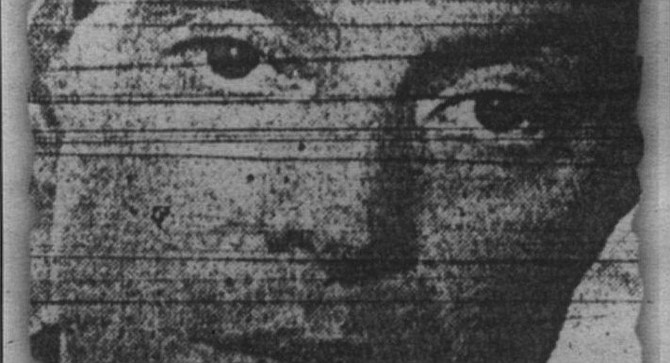
Alan Glick. The book Casino, published in the mid-1990s, was supposed to be the true story about Glick’s involvement in the hotels and the infiltration of the Mafia into the hotels.
If they think of him at all these days, most San Diegans probably remember Allen Glick as the Mafia puppet, thinly disguised as “Mr. Green,” in Martin Scorcese’s movie version of Casino, a book by Nick Pileggi. Back in the mid-1970s, Glick, a small-time San Diego real estate developer with an office just down the street from Mr. A’s restaurant, was set up by the Midwest mob as straw owner of the Stardust and Fremont hotels on the Las Vegas strip.
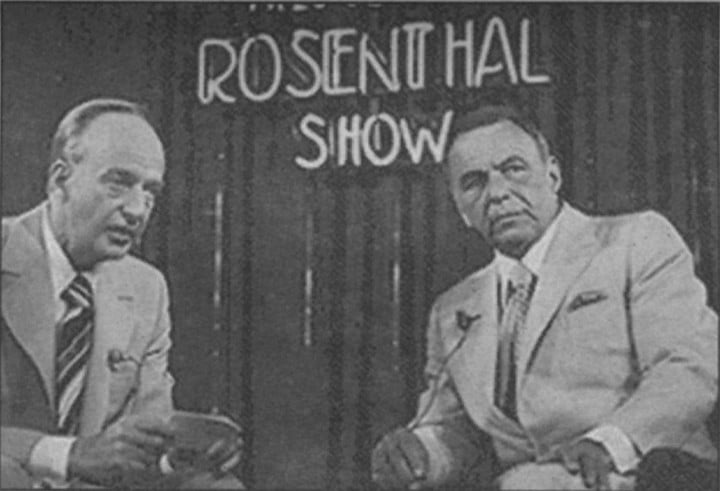
Frank "Lefty" Rosenthal with Frank Sinatra. Rosenthal, a handicapper, bookie, and sports fixer, was variously billed as Glick’s entertainment director, assistant, and food-and-beverage manager.
Glick’s main job in Las Vegas, it later emerged, was to sit quietly while two Mafia henchmen, Frank “Lefty” Rosenthal and Tony “The Ant” Spilotro, skimmed millions from the hotels’ casinos. Rosenthal, a handicapper, bookie, and sports fixer, was variously billed as Glick’s entertainment director, assistant, and food-and-beverage manager. He allegedly reported to his bosses in Chicago and Kansas City, who had arranged Glick’s hotel purchases with $62 million in loans from the corrupt Teamsters Central States pension fund.
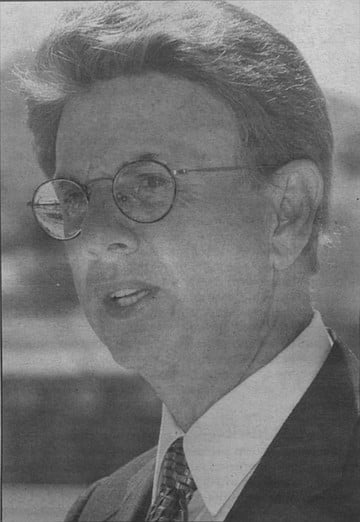
The Arizona Republic blew the whistle on part-time La Jollan Jeremy Simms, a Glick associate with a checkered past who now heads the Turf Paradise horse-racing track in Phoenix.
Rosenthal’s friend Spilotro, a hit man suspected of at least 25 killings, provided the muscle for the operation; in his spare time he freelanced around Las Vegas with his own makeshift crew of Mafiosi, breaking into upscale homes in a series of high-profile “Hole in the Wall Gang” jewel thefts. Spilotro also ended up two-timing with Rosenthal’s wife Geri, an ex call girl.
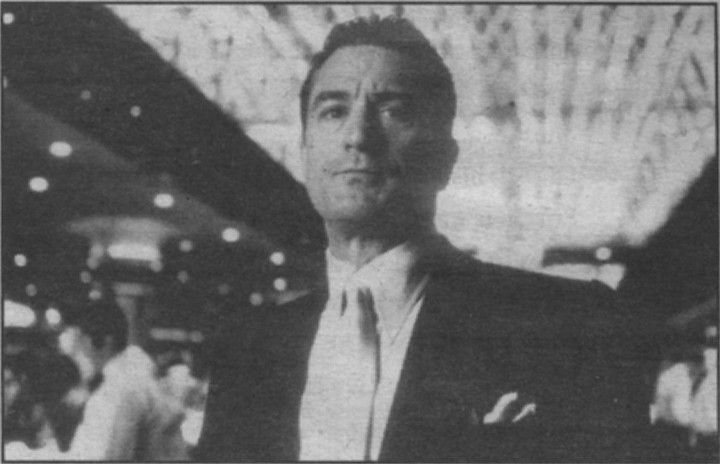
Robert De Niro as character in Casino based on Frank "Lefty" Rosenthal
In the movie, a fictionalized version of Spilotro, played by Joe Pesci, is seen to murder a character closely resembling Tamara Rand, a San Diego real estate woman whose business dealings with Glick had soured and who had threatened to blow the whistle on him. Rand was gunned down in 1975 in the kitchen of her Mission Hills home, arguably becoming one of San Diego’s most famous victims of a Mafia hit, though the case was never officially solved.
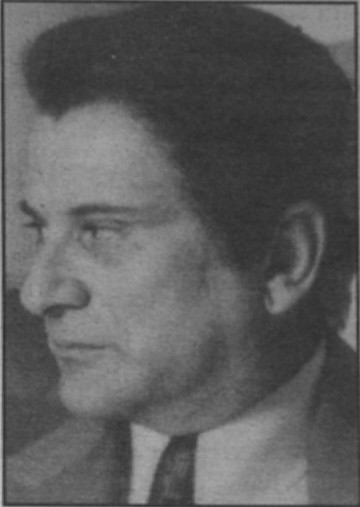
Jo Pesci as character in Casino based on Tony Spilotro
When the feds moved in on Glick’s operation and shut it down in 1979, he lost his casinos and became a cooperating witness, immunized from prosecution in a celebrated criminal case against 15 members of the mob. In 1983, Rosenthal narrowly survived a Las Vegas car bombing. Spilotro was said to be a suspect, but nothing became of the case. Never charged with a crime, Rosenthal retired to Florida and told his story to author Pileggi. He was portrayed by Robert De Niro in the movie.

Sharon Stone as character based on Tony Spilotro's wife
Spilotro, indicted for his jewel thefts, disappeared in June 1986; his body was later found alongside that of his brother Michael’s in shallow graves dug into an Indiana cornfield. Casino depicts their gruesome murder by baseball bat–wielding executioners from the Chicago mob.
Glick, meanwhile, always maintaining he had been duped by the mob, continued to live an outwardly peaceful and prosperous life behind the large walls and elaborate security devices ringing his La Jolla mansion. Over the years since his Las Vegas endeavor, Glick’s business links have variously been reported to include casinos in the Philippines and Costa Rica; riverboat gambling ventures in Pennsylvania; electronic lotteries; and the manufacture of a canned diet drink called California Slim. Author Dan Moldea wrote that Glick had been in a real estate deal with Oakland Raiders owner Al Davis. Glick was also an investor with convicted felon Richard Silberman in Silberman’s ill-fated gold-mining venture, Yuba Natural Resources.
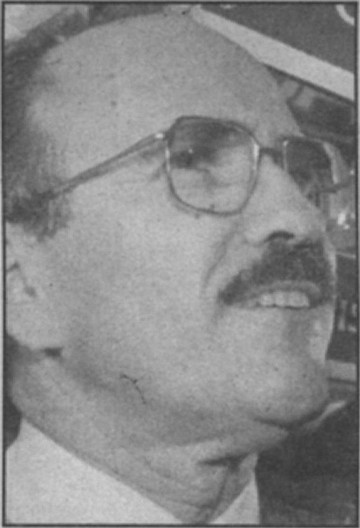
Richard Silberman. Glick was also an investor with convicted felon Richard Silberman in Silberman’s ill-fated gold-mining venture, Yuba Natural Resources.
For the most part, Glick has managed to lead a low-key existence, giving generously to the private schools attended by his children, playing golf at La Costa, and easily mixing with La Jolla’s beautiful people. But that began to change last fall when the Arizona Republic blew the whistle on part-time La Jollan Jeremy Simms, a Glick associate with a checkered past who now heads the Turf Paradise horse-racing track in Phoenix.
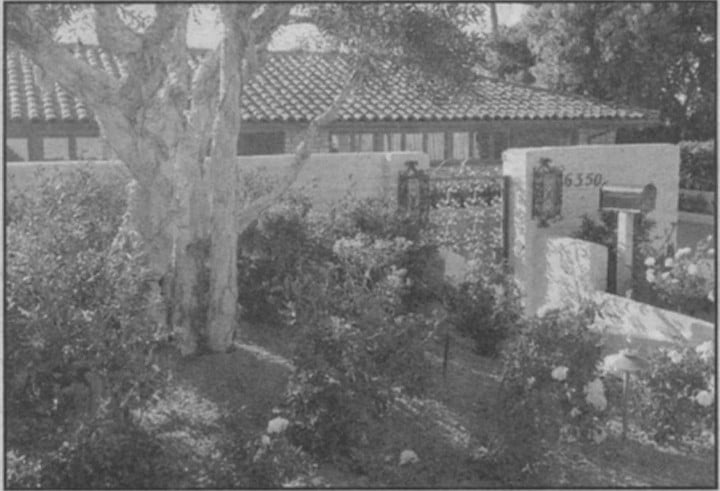
Simms property at 6350 Camino de La Costa, La Jolla
Simms, his family members, and some La Jolla friends — including high-dollar residential real estate broker Maxine Gellens and Dr. Don and Emily Einhorn — were granted a three-year license to run Turf Paradise in May of last year by the Arizona Racing Commission. But after a series of September stories in the Republic linking Simms to Glick, Arizona governor Jane Hull sacked racing department chief Jim Higginbottom and ordered an investigation into Simms and his operation.
Last week, the Arizona gaming department notified Simms that his application to operate video-gambling devices and offtrack betting at Indian casinos in the state would be denied.
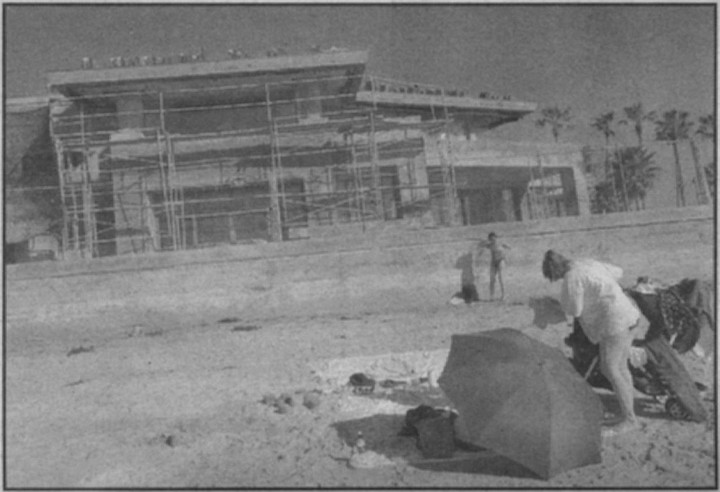
Simms property at 8406 El Paseo Grande, La Jolla
In addition to his relationship with Glick, regulators said, Simms’s connection with a bribery case against ex-California coastal commissioner Mark Nathanson in which Simms sought a permit to build a pool at his La Jolla mansion, made him unworthy of an Arizona gambling license. An unsuccessful attempt to stop construction of the Sheraton on Torrey Pines by other payoffs to Nathanson also figure in the license denial.
Simms has vowed to appeal the ruling. He and his partners reportedly paid $53 million for the track operation last year and hope to add slot machines at the track. He claims that he no longer talks to Glick, and the monetary dealings he had with Nathanson were the result of extortion.
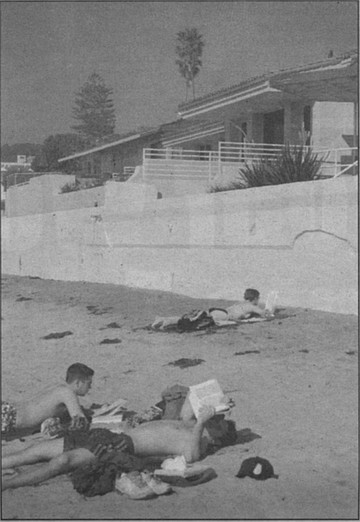
Simms property at 8454 El Paseo Grande, La Jolla
In any case, the allegations against Simms, as spelled out in the official “Investigations Report” and “State Certification of Denial” from the Arizona Department of Gaming, provide an intriguing glimpse into the fast life and allegedly shady doings of Simms and his old pal from La Jolla, Allen Glick. Excerpts follow.
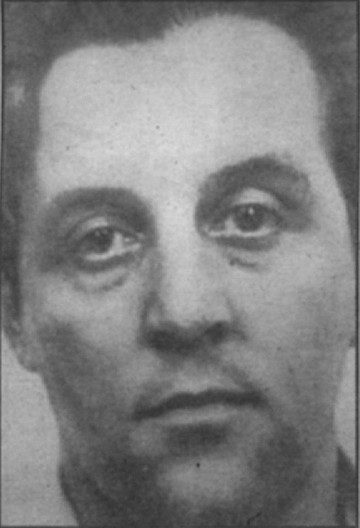
Tony "The Ant" Spilotro, a hit man suspected of at least 25 killings, provided the muscle for the operation. Spilotro ended up two-timing with Rosenthal’s wife Geri, an ex-call girl.
“Mr. Jeremy Ellis Simms made a false statement about his involvement in corrupt payments to California Coastal Commissioner Mark Nathanson and California State Senator Alan Robbins. He misrepresented his financial dealings and personal relationship with Allen Glick. He has pursued economic gain in an occupational manner by the use of corrupt payments. Mr. Simms’s prior activities and association pose a threat to the public interest of the Tribe and State, and the effective regulation and control of Class III Gaming.

Bob Baker bought the Acura dealership from Mr. Simms and Senator Robbins. Simms informed Baker that he wanted $400,000 for the dealership. Mr. Baker became uncomfortable with Mr. Simms when Mr. Simms stated that he (Simms) had ‘underworld’ contacts.
“Glick, meanwhile, always maintaining he had been duped by the mob, In interviews with Department Investigators, Jeremy Simms and Allen Glick both stated all funds advanced to Glick by Simms are business transactions. The investigation disclosed only the first three loan transactions dated back to 1992 and 1993 are evidenced by loan documents. The schedule of loans provided by Jeremy Simms indicates Glick owes Simms $252,122 including an unreconciled difference of $60,000.
“Principal payments are irregular and interest payments cannot be reconciled to loan balances. All other business loans made by Simms appear to be well documented. The investigation failed to disclose a reason why the business loans between Simms and Glick lack documentation and accountability.
“In a September 22, 2000, interview, Simms stated he would advance funds to Glick by check and wire transfers. Simms would make the checks out pursuant to Glick’s instructions. For wire transfers, Simms stated, ‘I would call Bank of America and tell them they will be receiving a phone call from Mr. Glick and the amount, and then it was okay to wire it wherever he said to wire it.’
“The investigation disclosed that in 1995 Simms authorized monthly wire transfers to accounts controlled by Glick totaling $2,273,051.29, and Simms received monthly wire transfers from accounts controlled by Glick totaling $2,573,051.29. Simms would liquidate Treasury Bills held at Bank of America at a loss, and the proceeds would be advanced to Glick. The documentation submitted by Simms regarding Simms’ loans to Glick did not disclose these monthly transactions. The transactions were contained in tax files held on Simms’s behalf by his accountants. Other than a handwritten note by Simms noting the loss on the sale of these ‘bonds’ and that he was loaning Glick approximately $250,000 each month, no documentation exists to support the loans from Simms to Glick. When shown the documents evidencing the cash transactions, Glick’s accountant Thomas Reid, CPA, indicated he did not know anything about the monthly wire transfers between Simms and Glick.
“Mr. Simms outlined his relationship with Mr. Allen R. Glick as follows: Mr. Simms met Mr. Glick in the 1970s. His cousin, Ron Hecker, introduced them. In 1985 Mr. Simms started to socialize with Mr. Glick and his family.
“Around this time, Mr. Simms learned Mr. Glick had owned some hotels and casinos in Las Vegas during the 1970s. Mr. Simms learned that Mr. Glick owned and sold the Hacienda Hotel, Fremont Hotel, Marina Hotel, and the Stardust Hotel. Mr. Simms also learned Mr. Glick was to be a government witness in a trial in Kansas City against several organized crime figures. Simms’s cousin, Ron Heckler [sic], continued to tell Simms that Glick was not an organized-crime figure and had been victimized by the Mafia. ‘More recent magazine articles and a book about the trial seemed to confirm my cousin’s belief that Mr. Glick was a victim of the Mafia.’
“After the trial, Mr. Simms and his cousin were among the few friends Mr. Glick still had in the area. According to Mr. Simms, the book Casino, published in the mid-1990s, was supposed to be the true story about Mr. Glick’s involvement in the hotels and the infiltration of the Mafia into the hotels. Even though the book and the trial ‘tainted’ Mr. Glick, Simms remained friends with Mr. Glick.
“In his affidavit, Mr. Simms stated the book Casino indicated Mr. Glick did not know the Teamsters Pension fund was controlled by organized crime. The book actually stated that Mr. Glick knew the person arranging the loans, Frank Balistrieri, was the organized-crime boss of Milwaukee.
“During Mr. Simms’s interview, conducted on September 22, 2000, Mr. Simms stated he no longer had a relationship with Mr. Glick. He stated he ceased the relationship about ‘a week or two ago.’ ‘I told him that based upon things that have been put in the newspapers recently, I thought it would be best for myself and for him if we didn’t continue our friendship, even though I still cared about him, because I’m in the gaming business and because of his articles — the articles in the paper.’
“Corporate Manager Connie Clapper and Investigator Callaghan interviewed Mr. Allen Glick on October 24, 2000, in La Jolla, California. Mr. Glick stated that Mr. Simms was a very dear friend and that they spoke on the telephone every day for the past 15 to 17 years. Mr. Glick did not indicate his relationship with Mr. Simms had ceased as Mr. Simms stated a month before.
“Mr. Glick also stated that he did not enjoy playing golf, but because Simms did, Glick would often play golf with Simms because he was a ‘dear friend.’
“Mr. Simms attempted to describe himself as a naive businessman. Even though he founded a bank and sat on the finance committee, Mr. Simms stated he was not aware of the rules regulating the reporting of certain financial transactions. Specifically, he stated he did not know that money transactions at a bank of $10,000 or above had to be reported. To the contrary, Mr. Glick described Mr. Simms as a very astute, detail-oriented, hard-boiled businessman. Mr. Glick also stated he would not want to be on the wrong side of the table from Mr. Simms. He added Mr. Simms always makes sure he gets repaid.
“In November 1985, Alan Robbins informed Jeremy Simms that he could acquire a franchise for a luxury automobile dealership that Honda planned to open under the name of Acura. Robbins indicated he had connections with Honda, having performed favors for Honda as a California State Senator in connection with legislation regarding Honda’s all-terrain vehicles, and in turn Robbins would receive the rights to an Acura dealership franchise. Robbins offered Simms a 50 percent interest if Simms would act as a front man to the Acura dealership.
“It should be noted that Honda was awarding Acura dealerships only to existing owners of Honda dealerships. Neither Robbins nor Simms held an ownership interest in a Honda dealership. Robbins told Simms that if they could find an existing Honda dealer who was not interested in an Acura franchise, Honda would turn the Acura franchise over to the Honda dealership, acting as a straw man for Robbins and Simms, who would then transfer the Acura franchise over to Robbins and Simms. In consideration for the inside deal, Robbins would have to purchase a new Acura Legend for a Paul Priolo. Paul Priolo was a lobbyist for Honda.
“Simms, with full knowledge of Robbins’s inside position, agreed to Robbins’s terms and located an existing Honda dealer willing to act as a straw man in the transaction. In October 1986, Robbins and Simms sold their rights to the Acura franchise, for which they received $400,000. Simms received $150,000 and Robbins received $250,000.
“On February 28, 2001, Investigator Thomas spoke with Mr. Bob Baker on the telephone. Mr. Baker is the person who bought the Acura dealership from Mr. Simms and Senator Robbins. Mr. Baker stated he met with Mr. Simms at Simms’ La Jolla residence. Simms informed Baker that he wanted $400,000 for the dealership. Mr. Baker became uncomfortable with Mr. Simms when Mr. Simms stated that he (Simms) had ‘underworld’ contacts. Investigator Thomas asked Mr. Baker if by underworld he (Baker) meant Mafia or Organized Crime. Mr. Baker replied, ‘Yes.’ From then on, Mr. Baker only dealt with Senator Robbins.
“Mr. Simms was involved with Senator Robbins on two incidents involving corrupt payments or questionable benefit to a government official to influence a decision. Mr. Simms requested a permit from the California Coastal Commission to build a lap pool at his residence in La Jolla. In April of 1987, California Coastal Commission staff recommended denial of the permit. Mr. Simms discussed the denial with Senator Robbins, and the Senator suggested Mr. Simms contact California Coastal Commissioner Nathanson. Mr. Simms contacted Coastal Commissioner Nathanson. Coastal Commissioner Nathanson asked Mr. Simms for a $100,000 loan. Nathanson reminded Simms that he was helping him get his lap pool…Mr. Simms received approval to build his lap pool. Coastal Commissioner Nathanson received his $100,000 loan.
“On April 29, 1992, Simms, in sworn testimony before a federal grand jury, admitted the following:
“Question: And did you understand, sir, that if you made the loan to Mark Nathanson for $100,000, he would use his position as a Coastal Commissioner to make sure that you got a Coastal Commission permit for your lap pool and that the Sheraton Torrey Pines project would be defeated?
“Simms: Yes.
“In early 1987, Jack Naiman was attempting to have a hotel project located in Torrey Pines approved by the California Coastal Commission. At the same time a competing hotel project (Sheraton Torrey Pines) was seeking similar approval from the California Coastal Commission. Naiman asked Simms for assistance in defeating the competing project. Simms formed the Friends of Torrey Pines and appeared at community group, city council, and planning commission meetings to voice opposition to the Sheraton Torrey Pines project. Simms approached Robbins about his (Simms) work in opposing the Sheraton project, and Robbins suggested that Simms contact Nathanson for assistance.
“Despite Simms’s efforts, the Sheraton Torrey Pines project was approved by the local city council. Simms contacted Robbins about the city council approval and Robbins again suggested Simms contact Nathanson for assistance as the Sheraton project still required California Coastal Commission approval. Simms agreed to call Nathanson. Robbins also told Simms to use pay telephones when contacting Robbins or Nathanson to discuss the Torrey Pines project. In May 1987, Naiman at Simms suggestion met with and asked Nathanson for assistance.
“In June 1987, Robbins and Nathanson met and agreed to seek a $250,000 payment from Naiman for Nathanson’s assistance. On June 4, 1987, Naiman met with Robbins and Robbins solicited the bribe. On June 5, 1987, Nathanson met with Robbins and received cash from Robbins that Robbins had received from Naiman earlier that day. Between June 1987 and February 1989, Nathanson received several cash payments totaling $116,000 from Naiman.
“On June 4, 1987, Naiman informed Simms that Robbins had demanded a cash payment from Naiman. Sometime during that day, Simms had a conversation with Nathanson and informed Nathanson the money would be paid. On June 4, 1987, Nathanson asked Simms if he could borrow some cash to make the payment demanded by Robbins. Simms agreed to advance Naiman the cash. Simms also told Naiman that Robbins informed him Naiman should make withdrawals from the bank in increments below $10,000. Robbins informed Simms any transaction over $10,000 would cause the bank to make a record, which is something Robbins wanted to avoid.
“On the morning of June 5, 1987, Simms withdrew $9000 from First Interstate Bank using his MasterCard. Later on the same morning of June 5, 1987, Naiman went to Simms’s house and collected the $9000. Naiman informed Simms he would combine Simms’s money with the cash he withdrew and made a payment to Robbins.
“On May 9, 1991, Simms in sworn testimony before a federal grand jury admitted the following:
“Question: Did you understand that the $9000 that you had withdrawn and gave to Naiman was part of the $250,000 demanded by Robbins and Nathanson?
“Simms: Yes.
“Question: And that that $9000 was part of an illegal payment — an extortion or bribe payment that Robbins had demanded from Naiman and that Nathanson had confirmed had been demanded from Robbins?
“Simms: Yeah.
“Question: You understood that that was a corrupt payment?
“Simms: Yes, I did.
“Question: And you understood that that money was being paid in connection with an effort to influence the official vote of the Coastal Commission, correct?
“Simms: Yes.
“Both Robbins and Nathanson pled to violation of the racketeering statute and filing a false tax return. Mr. Simms received immunity from prosecution in exchange for his testimony against Robbins and Nathanson. During his grand jury testimony, Mr. Simms admitted that on at least three occasions, he made corrupt payments or loaned money to public officials for his personal gain.
“During his interview with Department of Racing investigators, Mr. Simms made the following comment about FBI Agent Wedick writing a letter on his behalf. ‘…I wish I could send Jim Wedick something for taking the time to write that letter that he wrote that time because he took heat for that letter…I swear to you when I got that letter, if I could have done something to make his life better, if I could have gone and paid off his mortgage, not as a bribe…’
“This is not to say Mr. Simms was seeking to bribe the Racing investigators during the interview. However, it is evidence of how cavalier and comfortable Mr. Simms is in paying money to influence people’s decisions.”
Update: Turf Paradise is still owned and operated by Jerry Simms. — Matt Potter
Here's something you might be interested in.
With Friends Like These
A shady pal queers Alan Glick's social life

With Friends Like These
A shady pal queers Alan Glick's social life
Alan Glick. The book Casino, published in the mid-1990s, was supposed to be the true story about Glick’s involvement in the hotels and the infiltration of the Mafia into the hotels.
If they think of him at all these days, most San Diegans probably remember Allen Glick as the Mafia puppet, thinly disguised as “Mr. Green,” in Martin Scorcese’s movie version of Casino, a book by Nick Pileggi. Back in the mid-1970s, Glick, a small-time San Diego real estate developer with an office just down the street from Mr. A’s restaurant, was set up by the Midwest mob as straw owner of the Stardust and Fremont hotels on the Las Vegas strip.
Frank "Lefty" Rosenthal with Frank Sinatra. Rosenthal, a handicapper, bookie, and sports fixer, was variously billed as Glick’s entertainment director, assistant, and food-and-beverage manager.
Glick’s main job in Las Vegas, it later emerged, was to sit quietly while two Mafia henchmen, Frank “Lefty” Rosenthal and Tony “The Ant” Spilotro, skimmed millions from the hotels’ casinos. Rosenthal, a handicapper, bookie, and sports fixer, was variously billed as Glick’s entertainment director, assistant, and food-and-beverage manager. He allegedly reported to his bosses in Chicago and Kansas City, who had arranged Glick’s hotel purchases with $62 million in loans from the corrupt Teamsters Central States pension fund.
The Arizona Republic blew the whistle on part-time La Jollan Jeremy Simms, a Glick associate with a checkered past who now heads the Turf Paradise horse-racing track in Phoenix.
Rosenthal’s friend Spilotro, a hit man suspected of at least 25 killings, provided the muscle for the operation; in his spare time he freelanced around Las Vegas with his own makeshift crew of Mafiosi, breaking into upscale homes in a series of high-profile “Hole in the Wall Gang” jewel thefts. Spilotro also ended up two-timing with Rosenthal’s wife Geri, an ex call girl.
Robert De Niro as character in Casino based on Frank "Lefty" Rosenthal
In the movie, a fictionalized version of Spilotro, played by Joe Pesci, is seen to murder a character closely resembling Tamara Rand, a San Diego real estate woman whose business dealings with Glick had soured and who had threatened to blow the whistle on him. Rand was gunned down in 1975 in the kitchen of her Mission Hills home, arguably becoming one of San Diego’s most famous victims of a Mafia hit, though the case was never officially solved.
Jo Pesci as character in Casino based on Tony Spilotro
When the feds moved in on Glick’s operation and shut it down in 1979, he lost his casinos and became a cooperating witness, immunized from prosecution in a celebrated criminal case against 15 members of the mob. In 1983, Rosenthal narrowly survived a Las Vegas car bombing. Spilotro was said to be a suspect, but nothing became of the case. Never charged with a crime, Rosenthal retired to Florida and told his story to author Pileggi. He was portrayed by Robert De Niro in the movie.
Sharon Stone as character based on Tony Spilotro's wife
Spilotro, indicted for his jewel thefts, disappeared in June 1986; his body was later found alongside that of his brother Michael’s in shallow graves dug into an Indiana cornfield. Casino depicts their gruesome murder by baseball bat–wielding executioners from the Chicago mob.
Glick, meanwhile, always maintaining he had been duped by the mob, continued to live an outwardly peaceful and prosperous life behind the large walls and elaborate security devices ringing his La Jolla mansion. Over the years since his Las Vegas endeavor, Glick’s business links have variously been reported to include casinos in the Philippines and Costa Rica; riverboat gambling ventures in Pennsylvania; electronic lotteries; and the manufacture of a canned diet drink called California Slim. Author Dan Moldea wrote that Glick had been in a real estate deal with Oakland Raiders owner Al Davis. Glick was also an investor with convicted felon Richard Silberman in Silberman’s ill-fated gold-mining venture, Yuba Natural Resources.
Richard Silberman. Glick was also an investor with convicted felon Richard Silberman in Silberman’s ill-fated gold-mining venture, Yuba Natural Resources.
For the most part, Glick has managed to lead a low-key existence, giving generously to the private schools attended by his children, playing golf at La Costa, and easily mixing with La Jolla’s beautiful people. But that began to change last fall when the Arizona Republic blew the whistle on part-time La Jollan Jeremy Simms, a Glick associate with a checkered past who now heads the Turf Paradise horse-racing track in Phoenix.
Simms property at 6350 Camino de La Costa, La Jolla
Simms, his family members, and some La Jolla friends — including high-dollar residential real estate broker Maxine Gellens and Dr. Don and Emily Einhorn — were granted a three-year license to run Turf Paradise in May of last year by the Arizona Racing Commission. But after a series of September stories in the Republic linking Simms to Glick, Arizona governor Jane Hull sacked racing department chief Jim Higginbottom and ordered an investigation into Simms and his operation.
Last week, the Arizona gaming department notified Simms that his application to operate video-gambling devices and offtrack betting at Indian casinos in the state would be denied.
Simms property at 8406 El Paseo Grande, La Jolla
In addition to his relationship with Glick, regulators said, Simms’s connection with a bribery case against ex-California coastal commissioner Mark Nathanson in which Simms sought a permit to build a pool at his La Jolla mansion, made him unworthy of an Arizona gambling license. An unsuccessful attempt to stop construction of the Sheraton on Torrey Pines by other payoffs to Nathanson also figure in the license denial.
Simms has vowed to appeal the ruling. He and his partners reportedly paid $53 million for the track operation last year and hope to add slot machines at the track. He claims that he no longer talks to Glick, and the monetary dealings he had with Nathanson were the result of extortion.
Simms property at 8454 El Paseo Grande, La Jolla
In any case, the allegations against Simms, as spelled out in the official “Investigations Report” and “State Certification of Denial” from the Arizona Department of Gaming, provide an intriguing glimpse into the fast life and allegedly shady doings of Simms and his old pal from La Jolla, Allen Glick. Excerpts follow.
Tony "The Ant" Spilotro, a hit man suspected of at least 25 killings, provided the muscle for the operation. Spilotro ended up two-timing with Rosenthal’s wife Geri, an ex-call girl.
“Mr. Jeremy Ellis Simms made a false statement about his involvement in corrupt payments to California Coastal Commissioner Mark Nathanson and California State Senator Alan Robbins. He misrepresented his financial dealings and personal relationship with Allen Glick. He has pursued economic gain in an occupational manner by the use of corrupt payments. Mr. Simms’s prior activities and association pose a threat to the public interest of the Tribe and State, and the effective regulation and control of Class III Gaming.
Bob Baker bought the Acura dealership from Mr. Simms and Senator Robbins. Simms informed Baker that he wanted $400,000 for the dealership. Mr. Baker became uncomfortable with Mr. Simms when Mr. Simms stated that he (Simms) had ‘underworld’ contacts.
“Glick, meanwhile, always maintaining he had been duped by the mob, In interviews with Department Investigators, Jeremy Simms and Allen Glick both stated all funds advanced to Glick by Simms are business transactions. The investigation disclosed only the first three loan transactions dated back to 1992 and 1993 are evidenced by loan documents. The schedule of loans provided by Jeremy Simms indicates Glick owes Simms $252,122 including an unreconciled difference of $60,000.
“Principal payments are irregular and interest payments cannot be reconciled to loan balances. All other business loans made by Simms appear to be well documented. The investigation failed to disclose a reason why the business loans between Simms and Glick lack documentation and accountability.
“In a September 22, 2000, interview, Simms stated he would advance funds to Glick by check and wire transfers. Simms would make the checks out pursuant to Glick’s instructions. For wire transfers, Simms stated, ‘I would call Bank of America and tell them they will be receiving a phone call from Mr. Glick and the amount, and then it was okay to wire it wherever he said to wire it.’
“The investigation disclosed that in 1995 Simms authorized monthly wire transfers to accounts controlled by Glick totaling $2,273,051.29, and Simms received monthly wire transfers from accounts controlled by Glick totaling $2,573,051.29. Simms would liquidate Treasury Bills held at Bank of America at a loss, and the proceeds would be advanced to Glick. The documentation submitted by Simms regarding Simms’ loans to Glick did not disclose these monthly transactions. The transactions were contained in tax files held on Simms’s behalf by his accountants. Other than a handwritten note by Simms noting the loss on the sale of these ‘bonds’ and that he was loaning Glick approximately $250,000 each month, no documentation exists to support the loans from Simms to Glick. When shown the documents evidencing the cash transactions, Glick’s accountant Thomas Reid, CPA, indicated he did not know anything about the monthly wire transfers between Simms and Glick.
“Mr. Simms outlined his relationship with Mr. Allen R. Glick as follows: Mr. Simms met Mr. Glick in the 1970s. His cousin, Ron Hecker, introduced them. In 1985 Mr. Simms started to socialize with Mr. Glick and his family.
“Around this time, Mr. Simms learned Mr. Glick had owned some hotels and casinos in Las Vegas during the 1970s. Mr. Simms learned that Mr. Glick owned and sold the Hacienda Hotel, Fremont Hotel, Marina Hotel, and the Stardust Hotel. Mr. Simms also learned Mr. Glick was to be a government witness in a trial in Kansas City against several organized crime figures. Simms’s cousin, Ron Heckler [sic], continued to tell Simms that Glick was not an organized-crime figure and had been victimized by the Mafia. ‘More recent magazine articles and a book about the trial seemed to confirm my cousin’s belief that Mr. Glick was a victim of the Mafia.’
“After the trial, Mr. Simms and his cousin were among the few friends Mr. Glick still had in the area. According to Mr. Simms, the book Casino, published in the mid-1990s, was supposed to be the true story about Mr. Glick’s involvement in the hotels and the infiltration of the Mafia into the hotels. Even though the book and the trial ‘tainted’ Mr. Glick, Simms remained friends with Mr. Glick.
“In his affidavit, Mr. Simms stated the book Casino indicated Mr. Glick did not know the Teamsters Pension fund was controlled by organized crime. The book actually stated that Mr. Glick knew the person arranging the loans, Frank Balistrieri, was the organized-crime boss of Milwaukee.
“During Mr. Simms’s interview, conducted on September 22, 2000, Mr. Simms stated he no longer had a relationship with Mr. Glick. He stated he ceased the relationship about ‘a week or two ago.’ ‘I told him that based upon things that have been put in the newspapers recently, I thought it would be best for myself and for him if we didn’t continue our friendship, even though I still cared about him, because I’m in the gaming business and because of his articles — the articles in the paper.’
“Corporate Manager Connie Clapper and Investigator Callaghan interviewed Mr. Allen Glick on October 24, 2000, in La Jolla, California. Mr. Glick stated that Mr. Simms was a very dear friend and that they spoke on the telephone every day for the past 15 to 17 years. Mr. Glick did not indicate his relationship with Mr. Simms had ceased as Mr. Simms stated a month before.
“Mr. Glick also stated that he did not enjoy playing golf, but because Simms did, Glick would often play golf with Simms because he was a ‘dear friend.’
“Mr. Simms attempted to describe himself as a naive businessman. Even though he founded a bank and sat on the finance committee, Mr. Simms stated he was not aware of the rules regulating the reporting of certain financial transactions. Specifically, he stated he did not know that money transactions at a bank of $10,000 or above had to be reported. To the contrary, Mr. Glick described Mr. Simms as a very astute, detail-oriented, hard-boiled businessman. Mr. Glick also stated he would not want to be on the wrong side of the table from Mr. Simms. He added Mr. Simms always makes sure he gets repaid.
“In November 1985, Alan Robbins informed Jeremy Simms that he could acquire a franchise for a luxury automobile dealership that Honda planned to open under the name of Acura. Robbins indicated he had connections with Honda, having performed favors for Honda as a California State Senator in connection with legislation regarding Honda’s all-terrain vehicles, and in turn Robbins would receive the rights to an Acura dealership franchise. Robbins offered Simms a 50 percent interest if Simms would act as a front man to the Acura dealership.
“It should be noted that Honda was awarding Acura dealerships only to existing owners of Honda dealerships. Neither Robbins nor Simms held an ownership interest in a Honda dealership. Robbins told Simms that if they could find an existing Honda dealer who was not interested in an Acura franchise, Honda would turn the Acura franchise over to the Honda dealership, acting as a straw man for Robbins and Simms, who would then transfer the Acura franchise over to Robbins and Simms. In consideration for the inside deal, Robbins would have to purchase a new Acura Legend for a Paul Priolo. Paul Priolo was a lobbyist for Honda.
“Simms, with full knowledge of Robbins’s inside position, agreed to Robbins’s terms and located an existing Honda dealer willing to act as a straw man in the transaction. In October 1986, Robbins and Simms sold their rights to the Acura franchise, for which they received $400,000. Simms received $150,000 and Robbins received $250,000.
“On February 28, 2001, Investigator Thomas spoke with Mr. Bob Baker on the telephone. Mr. Baker is the person who bought the Acura dealership from Mr. Simms and Senator Robbins. Mr. Baker stated he met with Mr. Simms at Simms’ La Jolla residence. Simms informed Baker that he wanted $400,000 for the dealership. Mr. Baker became uncomfortable with Mr. Simms when Mr. Simms stated that he (Simms) had ‘underworld’ contacts. Investigator Thomas asked Mr. Baker if by underworld he (Baker) meant Mafia or Organized Crime. Mr. Baker replied, ‘Yes.’ From then on, Mr. Baker only dealt with Senator Robbins.
“Mr. Simms was involved with Senator Robbins on two incidents involving corrupt payments or questionable benefit to a government official to influence a decision. Mr. Simms requested a permit from the California Coastal Commission to build a lap pool at his residence in La Jolla. In April of 1987, California Coastal Commission staff recommended denial of the permit. Mr. Simms discussed the denial with Senator Robbins, and the Senator suggested Mr. Simms contact California Coastal Commissioner Nathanson. Mr. Simms contacted Coastal Commissioner Nathanson. Coastal Commissioner Nathanson asked Mr. Simms for a $100,000 loan. Nathanson reminded Simms that he was helping him get his lap pool…Mr. Simms received approval to build his lap pool. Coastal Commissioner Nathanson received his $100,000 loan.
“On April 29, 1992, Simms, in sworn testimony before a federal grand jury, admitted the following:
“Question: And did you understand, sir, that if you made the loan to Mark Nathanson for $100,000, he would use his position as a Coastal Commissioner to make sure that you got a Coastal Commission permit for your lap pool and that the Sheraton Torrey Pines project would be defeated?
“Simms: Yes.
“In early 1987, Jack Naiman was attempting to have a hotel project located in Torrey Pines approved by the California Coastal Commission. At the same time a competing hotel project (Sheraton Torrey Pines) was seeking similar approval from the California Coastal Commission. Naiman asked Simms for assistance in defeating the competing project. Simms formed the Friends of Torrey Pines and appeared at community group, city council, and planning commission meetings to voice opposition to the Sheraton Torrey Pines project. Simms approached Robbins about his (Simms) work in opposing the Sheraton project, and Robbins suggested that Simms contact Nathanson for assistance.
“Despite Simms’s efforts, the Sheraton Torrey Pines project was approved by the local city council. Simms contacted Robbins about the city council approval and Robbins again suggested Simms contact Nathanson for assistance as the Sheraton project still required California Coastal Commission approval. Simms agreed to call Nathanson. Robbins also told Simms to use pay telephones when contacting Robbins or Nathanson to discuss the Torrey Pines project. In May 1987, Naiman at Simms suggestion met with and asked Nathanson for assistance.
“In June 1987, Robbins and Nathanson met and agreed to seek a $250,000 payment from Naiman for Nathanson’s assistance. On June 4, 1987, Naiman met with Robbins and Robbins solicited the bribe. On June 5, 1987, Nathanson met with Robbins and received cash from Robbins that Robbins had received from Naiman earlier that day. Between June 1987 and February 1989, Nathanson received several cash payments totaling $116,000 from Naiman.
“On June 4, 1987, Naiman informed Simms that Robbins had demanded a cash payment from Naiman. Sometime during that day, Simms had a conversation with Nathanson and informed Nathanson the money would be paid. On June 4, 1987, Nathanson asked Simms if he could borrow some cash to make the payment demanded by Robbins. Simms agreed to advance Naiman the cash. Simms also told Naiman that Robbins informed him Naiman should make withdrawals from the bank in increments below $10,000. Robbins informed Simms any transaction over $10,000 would cause the bank to make a record, which is something Robbins wanted to avoid.
“On the morning of June 5, 1987, Simms withdrew $9000 from First Interstate Bank using his MasterCard. Later on the same morning of June 5, 1987, Naiman went to Simms’s house and collected the $9000. Naiman informed Simms he would combine Simms’s money with the cash he withdrew and made a payment to Robbins.
“On May 9, 1991, Simms in sworn testimony before a federal grand jury admitted the following:
“Question: Did you understand that the $9000 that you had withdrawn and gave to Naiman was part of the $250,000 demanded by Robbins and Nathanson?
“Simms: Yes.
“Question: And that that $9000 was part of an illegal payment — an extortion or bribe payment that Robbins had demanded from Naiman and that Nathanson had confirmed had been demanded from Robbins?
“Simms: Yeah.
“Question: You understood that that was a corrupt payment?
“Simms: Yes, I did.
“Question: And you understood that that money was being paid in connection with an effort to influence the official vote of the Coastal Commission, correct?
“Simms: Yes.
“Both Robbins and Nathanson pled to violation of the racketeering statute and filing a false tax return. Mr. Simms received immunity from prosecution in exchange for his testimony against Robbins and Nathanson. During his grand jury testimony, Mr. Simms admitted that on at least three occasions, he made corrupt payments or loaned money to public officials for his personal gain.
“During his interview with Department of Racing investigators, Mr. Simms made the following comment about FBI Agent Wedick writing a letter on his behalf. ‘…I wish I could send Jim Wedick something for taking the time to write that letter that he wrote that time because he took heat for that letter…I swear to you when I got that letter, if I could have done something to make his life better, if I could have gone and paid off his mortgage, not as a bribe…’
“This is not to say Mr. Simms was seeking to bribe the Racing investigators during the interview. However, it is evidence of how cavalier and comfortable Mr. Simms is in paying money to influence people’s decisions.”
Update: Turf Paradise is still owned and operated by Jerry Simms. — Matt Potter
Comments