

Here's something you might be interested in.
Ask a Hipster — Advice you didn't know you needed
Big Screen — Movie commentary
Blurt — Music's inside track
Booze News — San Diego spirits
Classical Music — Immortal beauty
Classifieds — Free and easy
Cover Stories — Front-page features
Drinks All Around — Bartenders' drink recipes
Excerpts — Literary and spiritual excerpts
Feast! — Food & drink reviews
Feature Stories — Local news & stories
Fishing Report — What’s getting hooked from ship and shore
From the Archives — Spotlight on the past
Golden Dreams — Talk of the town
The Gonzo Report — Making the musical scene, or at least reporting from it
Letters — Our inbox
Movies@Home — Local movie buffs share favorites
Movie Reviews — Our critics' picks and pans
Musician Interviews — Up close with local artists
Neighborhood News from Stringers — Hyperlocal news
News Ticker — News & politics
Obermeyer — San Diego politics illustrated
Outdoors — Weekly changes in flora and fauna
Overheard in San Diego — Eavesdropping illustrated
Poetry — The old and the new
Reader Travel — Travel section built by travelers
Reading — The hunt for intellectuals
Roam-O-Rama — SoCal's best hiking/biking trails
San Diego Beer — Inside San Diego suds
SD on the QT — Almost factual news
Sheep and Goats — Places of worship
Special Issues — The best of
Street Style — San Diego streets have style
Surf Diego — Real stories from those braving the waves
Theater — On stage in San Diego this week
Tin Fork — Silver spoon alternative
Under the Radar — Matt Potter's undercover work
Unforgettable — Long-ago San Diego
Unreal Estate — San Diego's priciest pads
Your Week — Daily event picks
Just Say Nay
Horses acting funny cast a shadow over Del Mar
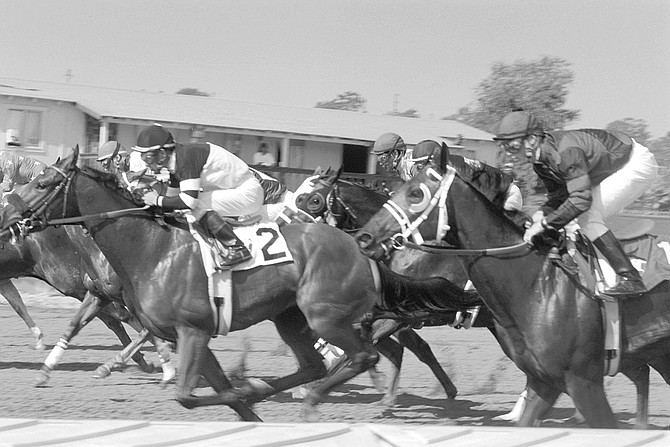
Sooner or later a horse loaded with banned drugs will stumble or fall during a race.
San Diegans flock to the Del Mar racetrack each summer, making it the most successful racing plant in the land, in terms of attendance. For nonregular racegoers, Del Mar is a another excuse for a party. For racetrack regulars, however, a shadow hangs over the sport they love.
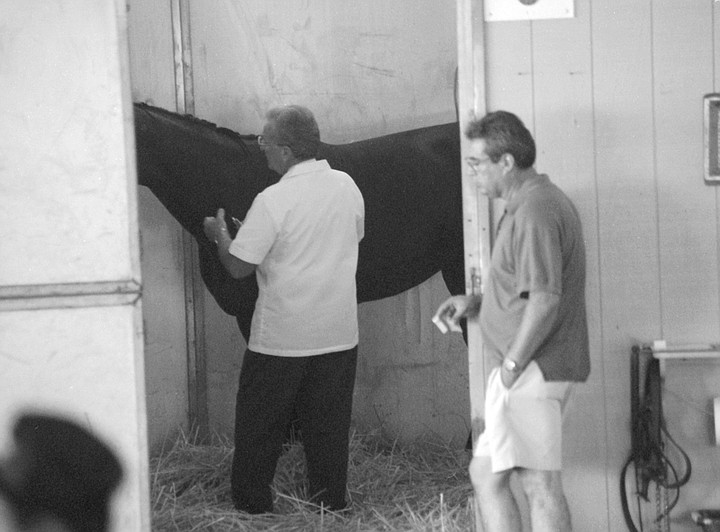
Board veterinarian taking blood sample. "Some say the vets now do most of the training, because of the drugs, legal and illegal."
Bruce Fleury of Solana Beach is in the latter group. "I had so much enjoyment from the game when it was good, when it was an event. Now, it's become diluted. We're losing it. One reason is the drugging of the animals."
Fleury, 71, is a retired teacher of oceanography and geology at Long Beach State. In the '60s and '70s, he owned and raced thoroughbreds and has been a fan for 50 years. He's rented a season box at the Del Mar track for years. Fleury believes performance-enhancing drugs used by Olympic athletes have set the pace for the illicit doping of thoroughbreds.
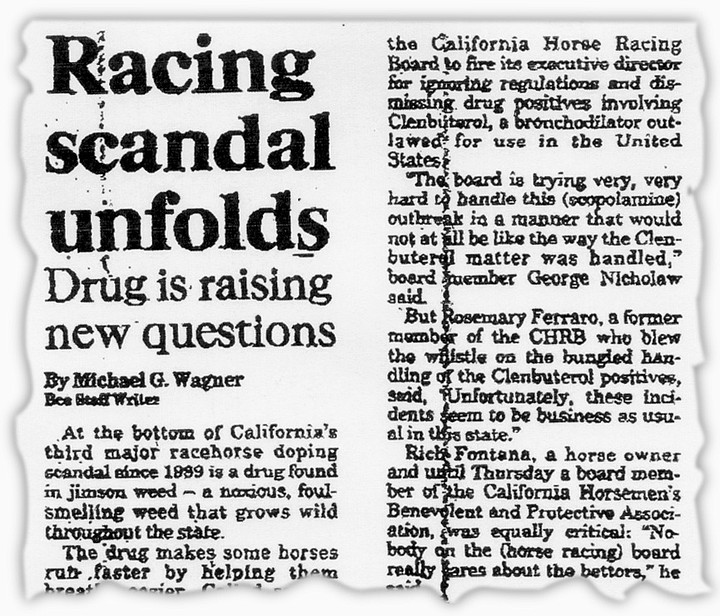
From The Sacramento bee, June 24, 1994. Mandella today states that the Bee story was premature.
Veterinarians who specialize in administering to thoroughbreds are a fixture at modern American tracks, an unhealthy development in Fleury's view. "A trainer can hardly survive now if he doesn't use [illegal drugs], because the other guys who do will beat you on the racetrack. Some say the vets now do most of the training, because of the drugs, legal and illegal."
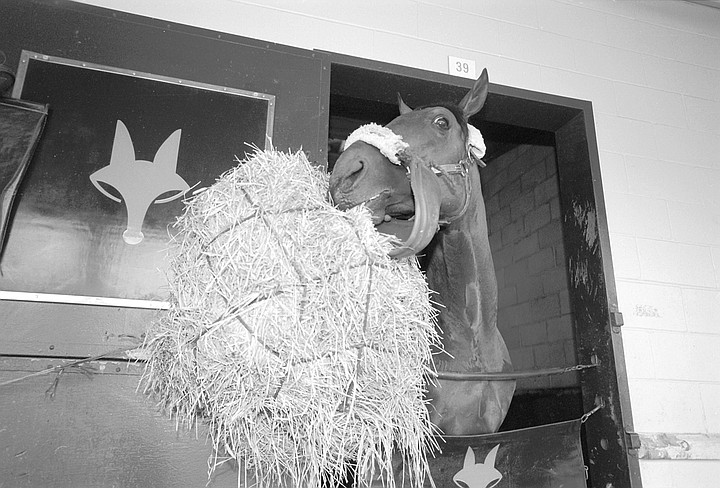
Del Mar before race time. The only drugs that can be given to a horse on or near race day are furesomide and a nonsteroidal anti-inflammatory called Butazolidin, or bute.
Fleury believes that "more than half" of California thoroughbred trainers "at one time or another" have deliberately administered prohibited medications to their charges, lending themselves an advantage. "The smaller, less successful trainers," he says, "often won't use illegal drugs, because they can't afford the costs of the vets, which could be around 30 percent of the training costs." And he knows some older trainers who stay away from the doping for ethical reasons.
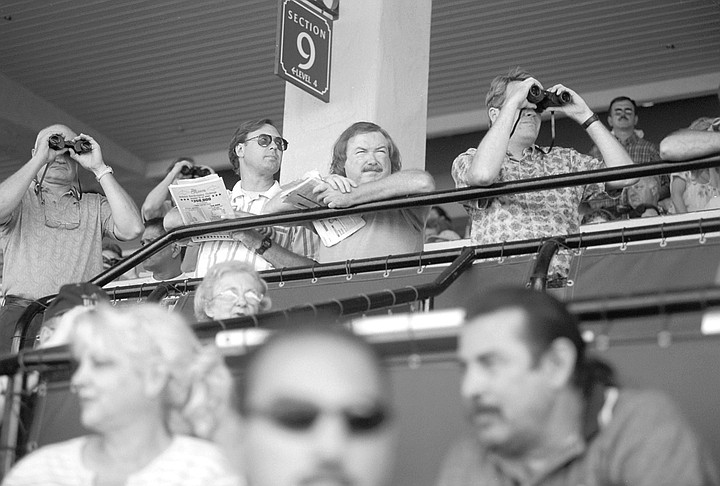
Del Mar. In the early 1930s the federal government successfully prosecuted over a hundred horse trainers and owners for shooting up their animals with drugs as potent as heroin.
Fleury is a dedicated handicapper, who pores over past performances in the Daily Racing Form to pick his winners. The use of illicit drugs on the track lessens the challenge and enjoyment of handicapping. He knows lifelong players who've given up the game because of the scandals on the backstretch. "[The doping] causes sudden form reversals. You used to have a lot of players who felt they could beat the game, but now these guys are just going to put their money in the quarter slots, because they got just as much chance."
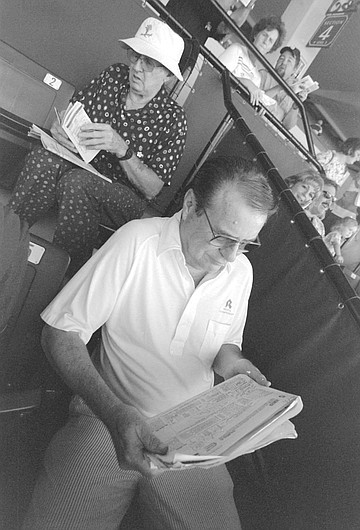
Bruce Fleury: "[The doping] causes sudden form reversals."
Fleury's on a first-name basis with a hundred people in the racing industry, some of whom he invites to his house for a party every Del Mar meeting. Many were among the hundreds who signed a petition he and close friend Dr. Richard Tannyhill, a Solana Beach dentist and horse owner, circulated a few years ago. The petition called for a racing-rules overhaul and a second look at the penalties assessed. "The doping is bad for the players and bad for the animals. When you start introducing other materials into any form of life you're likely to change that form of life. It's an evolutionary principle. It expresses itself in mares not being able to get into foal and males not being able to produce offspring."
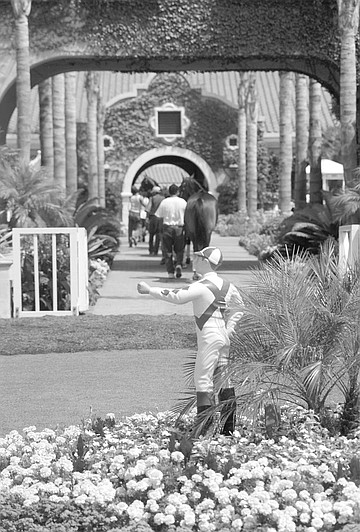
Should a test show positive for illegal medication, the trainer is held solely responsible.
Doping scandals in the horse racing business aren't new; they probably go back to the days when Ben Hur was setting records in ancient Rome. In the early 1930s the federal government successfully prosecuted over a hundred horse trainers and owners for shooting up their animals with drugs as potent as heroin (one of heroin's street names used to be "horse"). The California Horse Racing Board is supposed to safeguard the integrity of the game in this state. Seven governor-appointed boardmembers and their paid staff are based in Sacramento.
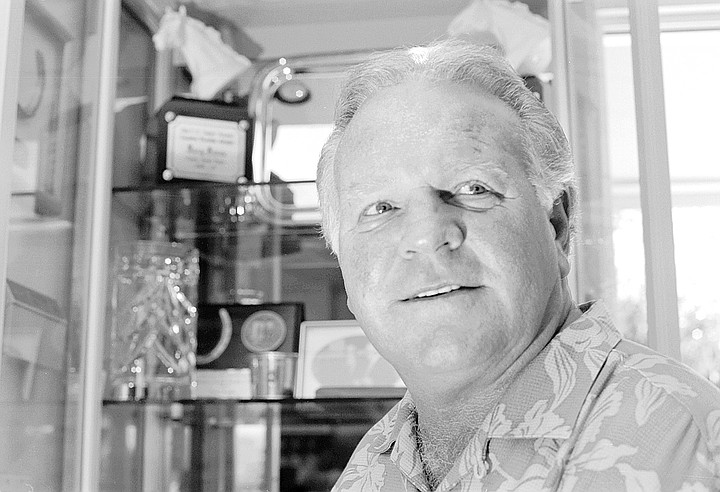
Gary Jones believes the horse racing board overregulates. "They're political appointees, you know how that works."
The staff sets the rules and doles out violators' fines and punishments. According to the rules, the only drugs that can be given to a horse on or near race day are furesomide and a nonsteroidal anti-inflammatory called Butazolidin, or bute. The furosemide is usually Lasix, a diuretic also used to control bleeding. A large percentage of American thoroughbreds are chronic bleeders and need Lasix to race. The drug is controversial; some veterinarians believe its diuretic action washes out illegal medications.
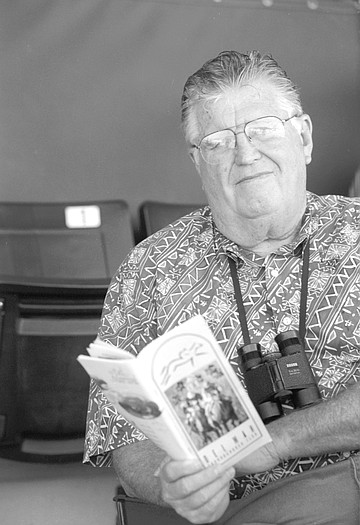
Richard Tannyhill: "The doping is bad for the players and bad for the animals."
The winner of each race has its urine and blood tested at one of two facilities, a lab in Orange County or the veterinary research clinic at the University of California in Davis. Track stewards -- the horse racing board's eyes and ears -- order random tests on other racers: a hot favorite that ran poorly or a longshot that almost won. Should a test show positive for illegal medication, the trainer is held solely responsible, under the "absolute insurer rule." Although Bruce Fleury and others believe the board comes down hardest on the lesser-known trainers, a few months ago Bob Baffert, one of the top trainers in the country, had a horse test positive for morphine. Famed jockey Bill Shoemaker, after he became a trainer, had at least one horse test positive for a prohibited substance.
As a "matter of confidentiality," the board will not release test-positive trainers' names, though if information is obtained from other sources, they will confirm it. Harvey Furgatch, a former boardmember, thinks the board doesn't release all the test information. In the early '90s he unsuccessfully sued the board to release all information relating to positive tests. A former owner and breeder of thoroughbreds, Furgatch lives in Del Mar. When he was on the board in the '70s, he failed to convince the board to ban all medications. "They all affect performance," he says.
Today, Furgatch is out of racing. "It's tough enough to come out ahead in racing, even on a level playing field, so I had no chance to really compete. Too many games can be played with medication, too many things the public is completely unaware of. Everyone closes their eyes to it. There's no political will to change it, to protect the public. But I know some major players around here, heavy bettors. They say, 'I know the stuff is being used; I just hope the trainer of the horse I bet on is using it.' "
Owners don't care if their trainer uses illegal dope, he says, as long as they win. " 'If he gets caught,' they'll say, 'it's his problem.' " The board-assessed fines for illicit drugs ranges from $500 to $2000. As most top Southern California trainers earn in the high-six figures annually, Furgatch doesn't see fines as a deterrent. "Considering the purses, they probably consider it a pretty good investment." Most suspensions are for 30 days; they have as much effect, Furgatch notes, "as a manager getting kicked out of a baseball game."
People often call Furgatch and urge him to get back into the fight to clean up racing, but he prefers detached cynicism. A few years back, when a well-known trainer had a horse test positive for morphine, the trainer claimed one of his grooms had fed the horse a poppy-seed bagel, which had caused the positive. "I went up to him and asked if the bagel had cream cheese."
A racing-board stat sheet indicates that from 1994 through 1999, post-race lab tests came up with 102 positives for prohibited drugs, including morphine, albuterol, procaine, caffeine, scopolamine, and clenbuterol, the last three the most common. Caffeine is a stimulant; scopolamine and clenbuterol are bronchodilators, which help horses with breathing problems or increase the pulmonary capacities of those that do not.
When a horse tests positive, the trainer or owner can first send a split sample for independent testing to a reputable laboratory approved by the racing board. If that comes up positive, the trainer can appeal any penalty to an administrative law judge, an arbitrator who works for the state and hears the evidence from both sides -- presented by lawyers -- and then recommends a course of action. Such appeals occur in fewer than ten percent of all cases, but when they do, according to a press spokesman for the board, "The trainers almost always win." Though the board is not obligated to accept the recommendations of the judge, frequently a compromise penalty is agreed to.
Those 102 positives were the result of over 100,000 tests, or one-tenth of one percent, the press spokesman said. Current racing board chairman Robert Tourtelot, made that same point in a speech delivered earlier this year to a convention of state-racing commissioners. "Even that low figure represents too much," said Tourtelot, "but we aren't talking about a lot of serious cheaters out there, even though the rumors would have you believe the opposite -- rumors that are fueled by naysayers and the media." Tourtelot told the convention that the interests of the betting public will be protected by the board's policy of "zero tolerance."
The one-tenth of one percent figure infuriates Bruce Fleury. "That's a lie. That's an outright fabrication. You can multiply that by at least ten. The horse racing board is a joke. They don't do anything. They investigate, but their thing really is, 'Don't rock the boat, we don't want any bad press.' "
Warren Eves, 64, an industry gadfly, is another who rejects the low positive test figures advanced by the horse racing board. Eves spent his life in the racing business, at various tracks, in both management and on the backside. Some 20 years ago he was turf editor of the Pasadena Star-News. His many contacts at the California tracks, he says, convince him that the problem of illicit doping is pandemic. He believes advances in pharmacology regularly outpace testing procedures.
Chemists have told him that it's not difficult to "take a winning edge by making a simple molecular change in the chemical makeup of a drug," rendering it undetectable. He mentions the practice of "blocking," or injecting a pain-killing drug like Serapin or Ambloc directly into the nerves of hurting horses to improve their performance. No tests can consistently detect these drugs, he claims. "It's gone from clenbuterol to blood doping. A few years ago we saw [a trainer with] horses that couldn't outrun a fat man. Then, all of a sudden, they'd break at the top of the lane and gallop out to the backside like they wanted to go a mile and half. You figure it out.
"Somebody has got to step up and indict the cheaters in our training ranks. These guys are never guilty. It's like all the guys in prison. Nobody's ever guilty of anything. Trainers get nailed for hard drugs [in a horse], and they blame it on an addicted groom. And they'll say a nanogram of something is too small an amount to affect a horse."
Eves now runs a handicapping service out of Las Vegas. "I'd be kidding you if I told you [the illegal doping] doesn't affect anyone who does a handicap." He believes the track stewards and the board have a double standard, going after the small trainers but laying off the rich and famous. "[The board] sometimes do get the guy with no money, the guy who can't defend himself. Those that have money are going to appeal to the administrative law judge. The guys that don't are going to get penalized. Same in the judicial system. To say that I'm disgusted with it is an understatement. They either have to eliminate all drugs or just say, 'The hell with it, use anything you want.' "
A case that still angers Eves involved Richard Mandella, now training horses at the Del Mar meeting. In 1994, after two of his horses tested positive for scopolamine, Mandella successfully appealed to an administrative law judge. He claimed the drug was in the animals' systems because they had eaten jimson weed with their feed. Jimson weed grows wild in California and can produce a positive for scopolamine when ingested. Mandella says he traced the weed to a field in Santa Rosa. The horse racing board cancelled his $750 fine, although the purse money was taken and distributed to the owners of the runner-up horses.
Mandella's case became the subject of an investigative article in the Sacramento Bee, which quoted a number of veterinarians and racing chemists that scopolamine derived from the ingestion of jimson weed would also produce a corollary substance, atropine. There was no atropine in the Mandella samples, which prompted Warren Eves to state that "Dick Mandella's jimson-weed theory is nothing more than smoke and mirrors. He's got this squeaky-clean image, but I call him the Teflon man."
Mandella today states that the Bee story was premature; it's now known that a trace amount, as he says, as was the case with his horses, will not necessarily produce atropine. No sane trainer would use the drug, he says, since it's like a poison: "It slows down their intestines and gives them colic. It doesn't help a horse." He argues that environmental contamination by prohibited chemicals is everywhere and that the U.S. Department of Agriculture has assured him that even high-quality grains meant for human consumption could have trace amounts of substances considered harmful.
The racing board's testing procedures are too sensitive, Mandella thinks; they pick up trace amounts caused by environmental factors rather than deliberate trainer wrongdoing, which he believes is nonexistent on the California tracks. Referring to the recent morphine positive of a Bob Baffert horse, he says, "A guy would have to be pretty stupid to think he could give morphine and get away with it. Baffert's not a moron, he's a pretty smart guy. I don't know what should be done, but you've got to learn contamination levels." He hopes the enlarged lab at U.C. Davis will come up with more sophisticated tests, "so we're not witch-hunting."
Dr. Scott Stanley is the director of the Kenneth L. Maddy Equine Analytical Laboratory at U.C. Davis. Although he was one of the chemists who was quoted by the Sacramento Bee that scopolamine from the Mandella sample must have been a "prescription form" rather than from jimson weed, he now acknowledges that Mandella was probably correct, as more conclusive tests have indicated that atropine will not necessarily show up, even in environmental-contamination cases. Stanley also notes that eating poppy seeds can cause a morphine positive, not only in horses but in humans. "Racing chemistry can't answer every question about the postrace findings. There are some drugs from environmental sources. The laboratory can't definitely say."
Stanley believes that all illicit drugs will be discovered by current testing procedures but also admits it "takes a lot of effort for the laboratories to stay up with all the medications being produced by the pharmaceutical industries." His lab is working to develop more reliable testing procedures, to "find out anything [illegal] that was going undetected prior."
In 1998 several Southern California trainers had horses test positive for clenbuterol, the bronchodilator with a reputation for strengthening muscle tissue and acting as a stimulant (the drug has been found in show animals, like calves and sheep, which concerns federal health authorities; consuming meat from animals contaminated by clenbuterol could cause health problems). One of the trainers involved is Darrell Vienna, himself an attorney.
Because the case is still in litigation before an administrative judge, Vienna couldn't discuss specifics, but "I can tell you this," he said from his barn at Del Mar. "The horse racing board chose the venue, the office of administrative hearing; they basically hand-picked the judge, and after hearing all the evidence the judge rules that the case should be dismissed. And the horse racing board rejected his proposed decision."
The director of the California Horse Racing Board, Roy Wood, did not return calls, but in a brief telephone conversation his assistant, Roy Minami, characterized Vienna's remarks as "baloney." Vienna is appealing to an administrative judge.
Another trainer involved in a similar case, who settled with the board and paid a stiff fine, said that after clenbuterol was legalized by the Food and Drug Administration in 1998 the racing board failed to issue guidelines for the use of the drug on or near race day. They had also, unbeknownst to trainers, come up with a test to detect its presence to a trillionth of a gram. Warren Eves, who wrote an article for the Pasadena Star-News in 1978 about Vienna's problems over illegal doping, doesn't think the trainer has much to worry about. "They can't beat Darrell Vienna. What are you going to do when you have a sharp guy like Vienna going against the morons they have as investigators?"
Gary Jones is a Del Mar resident on both sides of the issue. For 22 years Jones has been a leading trainer at Southern California tracks, until his retirement in 1996. He once had a horse test positive, he says, although he'd done nothing wrong. Jones believes the horse racing board overregulates. "They're political appointees, you know how that works. The politicians want to do something, and it's not always right. They should only have horsemen on the board, people who know the game. But they'd say that would be conflict of interest. But isn't that what you have right now?"
Unlike Mandella, Jones does not believe that morality and ethics always rule on the backside. "I don't want to say anything that would hurt horse racing, because I love the game. But you ask any real horseman out there, all they want is a level playing field. When things are really going good, you win maybe one out of four races. And then you see some kid come in who's getting 50 percent winners, and that goes on for a year. And then it suddenly stops, maybe because the board gets after them.
"There was a time when clenbuterol was all over, and the board may have been letting some people get away with it, especially the bigger trainers. There's a lot of good trainers out there who would be in favor of just entirely eliminating all the drugs."
That's not likely to happen anytime soon. Eves believes that only by "completely rewriting the rules of racing," specifying penalties for each offense and enforcing same, can the game be saved from itself. But "as long as you got Roy Wood as California Horse Racing Board director, nothing will be done," he says bitterly. "The guy is a fraud, and his investigators are frauds. They're like the Keystone Kops."
Still the California Horse Racing Board chairman Robert Tourtelot has promised action against the cheaters. In his speech to the racing commissioners he said, "Let me tell you that in California you are going to see more and more severe penalties being applied.... We think we know who the few culprits are, and they're either going to stop testing us or we're going to help them find another occupation."
Bruce Fleury's friend, Richard Tannyhill, the dentist with prominent racetrackers among his patients, is not convinced that the racing board has the will to make changes. He believes that a tragic occurrence will galvanize opinion and force reform to drive illicit doping from the racetracks. Sooner or later, he thinks, a horse loaded with banned drugs will stumble or fall during a race. "It's going to take a top jockey being killed. Then everything will hit the fan."
Here's something you might be interested in.
Just Say Nay
Horses acting funny cast a shadow over Del Mar

Just Say Nay
Horses acting funny cast a shadow over Del Mar
Sooner or later a horse loaded with banned drugs will stumble or fall during a race.
San Diegans flock to the Del Mar racetrack each summer, making it the most successful racing plant in the land, in terms of attendance. For nonregular racegoers, Del Mar is a another excuse for a party. For racetrack regulars, however, a shadow hangs over the sport they love.
Board veterinarian taking blood sample. "Some say the vets now do most of the training, because of the drugs, legal and illegal."
Bruce Fleury of Solana Beach is in the latter group. "I had so much enjoyment from the game when it was good, when it was an event. Now, it's become diluted. We're losing it. One reason is the drugging of the animals."
Fleury, 71, is a retired teacher of oceanography and geology at Long Beach State. In the '60s and '70s, he owned and raced thoroughbreds and has been a fan for 50 years. He's rented a season box at the Del Mar track for years. Fleury believes performance-enhancing drugs used by Olympic athletes have set the pace for the illicit doping of thoroughbreds.
From The Sacramento bee, June 24, 1994. Mandella today states that the Bee story was premature.
Veterinarians who specialize in administering to thoroughbreds are a fixture at modern American tracks, an unhealthy development in Fleury's view. "A trainer can hardly survive now if he doesn't use [illegal drugs], because the other guys who do will beat you on the racetrack. Some say the vets now do most of the training, because of the drugs, legal and illegal."
Del Mar before race time. The only drugs that can be given to a horse on or near race day are furesomide and a nonsteroidal anti-inflammatory called Butazolidin, or bute.
Fleury believes that "more than half" of California thoroughbred trainers "at one time or another" have deliberately administered prohibited medications to their charges, lending themselves an advantage. "The smaller, less successful trainers," he says, "often won't use illegal drugs, because they can't afford the costs of the vets, which could be around 30 percent of the training costs." And he knows some older trainers who stay away from the doping for ethical reasons.
Del Mar. In the early 1930s the federal government successfully prosecuted over a hundred horse trainers and owners for shooting up their animals with drugs as potent as heroin.
Fleury is a dedicated handicapper, who pores over past performances in the Daily Racing Form to pick his winners. The use of illicit drugs on the track lessens the challenge and enjoyment of handicapping. He knows lifelong players who've given up the game because of the scandals on the backstretch. "[The doping] causes sudden form reversals. You used to have a lot of players who felt they could beat the game, but now these guys are just going to put their money in the quarter slots, because they got just as much chance."
Bruce Fleury: "[The doping] causes sudden form reversals."
Fleury's on a first-name basis with a hundred people in the racing industry, some of whom he invites to his house for a party every Del Mar meeting. Many were among the hundreds who signed a petition he and close friend Dr. Richard Tannyhill, a Solana Beach dentist and horse owner, circulated a few years ago. The petition called for a racing-rules overhaul and a second look at the penalties assessed. "The doping is bad for the players and bad for the animals. When you start introducing other materials into any form of life you're likely to change that form of life. It's an evolutionary principle. It expresses itself in mares not being able to get into foal and males not being able to produce offspring."
Should a test show positive for illegal medication, the trainer is held solely responsible.
Doping scandals in the horse racing business aren't new; they probably go back to the days when Ben Hur was setting records in ancient Rome. In the early 1930s the federal government successfully prosecuted over a hundred horse trainers and owners for shooting up their animals with drugs as potent as heroin (one of heroin's street names used to be "horse"). The California Horse Racing Board is supposed to safeguard the integrity of the game in this state. Seven governor-appointed boardmembers and their paid staff are based in Sacramento.
Gary Jones believes the horse racing board overregulates. "They're political appointees, you know how that works."
The staff sets the rules and doles out violators' fines and punishments. According to the rules, the only drugs that can be given to a horse on or near race day are furesomide and a nonsteroidal anti-inflammatory called Butazolidin, or bute. The furosemide is usually Lasix, a diuretic also used to control bleeding. A large percentage of American thoroughbreds are chronic bleeders and need Lasix to race. The drug is controversial; some veterinarians believe its diuretic action washes out illegal medications.
Richard Tannyhill: "The doping is bad for the players and bad for the animals."
The winner of each race has its urine and blood tested at one of two facilities, a lab in Orange County or the veterinary research clinic at the University of California in Davis. Track stewards -- the horse racing board's eyes and ears -- order random tests on other racers: a hot favorite that ran poorly or a longshot that almost won. Should a test show positive for illegal medication, the trainer is held solely responsible, under the "absolute insurer rule." Although Bruce Fleury and others believe the board comes down hardest on the lesser-known trainers, a few months ago Bob Baffert, one of the top trainers in the country, had a horse test positive for morphine. Famed jockey Bill Shoemaker, after he became a trainer, had at least one horse test positive for a prohibited substance.
As a "matter of confidentiality," the board will not release test-positive trainers' names, though if information is obtained from other sources, they will confirm it. Harvey Furgatch, a former boardmember, thinks the board doesn't release all the test information. In the early '90s he unsuccessfully sued the board to release all information relating to positive tests. A former owner and breeder of thoroughbreds, Furgatch lives in Del Mar. When he was on the board in the '70s, he failed to convince the board to ban all medications. "They all affect performance," he says.
Today, Furgatch is out of racing. "It's tough enough to come out ahead in racing, even on a level playing field, so I had no chance to really compete. Too many games can be played with medication, too many things the public is completely unaware of. Everyone closes their eyes to it. There's no political will to change it, to protect the public. But I know some major players around here, heavy bettors. They say, 'I know the stuff is being used; I just hope the trainer of the horse I bet on is using it.' "
Owners don't care if their trainer uses illegal dope, he says, as long as they win. " 'If he gets caught,' they'll say, 'it's his problem.' " The board-assessed fines for illicit drugs ranges from $500 to $2000. As most top Southern California trainers earn in the high-six figures annually, Furgatch doesn't see fines as a deterrent. "Considering the purses, they probably consider it a pretty good investment." Most suspensions are for 30 days; they have as much effect, Furgatch notes, "as a manager getting kicked out of a baseball game."
People often call Furgatch and urge him to get back into the fight to clean up racing, but he prefers detached cynicism. A few years back, when a well-known trainer had a horse test positive for morphine, the trainer claimed one of his grooms had fed the horse a poppy-seed bagel, which had caused the positive. "I went up to him and asked if the bagel had cream cheese."
A racing-board stat sheet indicates that from 1994 through 1999, post-race lab tests came up with 102 positives for prohibited drugs, including morphine, albuterol, procaine, caffeine, scopolamine, and clenbuterol, the last three the most common. Caffeine is a stimulant; scopolamine and clenbuterol are bronchodilators, which help horses with breathing problems or increase the pulmonary capacities of those that do not.
When a horse tests positive, the trainer or owner can first send a split sample for independent testing to a reputable laboratory approved by the racing board. If that comes up positive, the trainer can appeal any penalty to an administrative law judge, an arbitrator who works for the state and hears the evidence from both sides -- presented by lawyers -- and then recommends a course of action. Such appeals occur in fewer than ten percent of all cases, but when they do, according to a press spokesman for the board, "The trainers almost always win." Though the board is not obligated to accept the recommendations of the judge, frequently a compromise penalty is agreed to.
Those 102 positives were the result of over 100,000 tests, or one-tenth of one percent, the press spokesman said. Current racing board chairman Robert Tourtelot, made that same point in a speech delivered earlier this year to a convention of state-racing commissioners. "Even that low figure represents too much," said Tourtelot, "but we aren't talking about a lot of serious cheaters out there, even though the rumors would have you believe the opposite -- rumors that are fueled by naysayers and the media." Tourtelot told the convention that the interests of the betting public will be protected by the board's policy of "zero tolerance."
The one-tenth of one percent figure infuriates Bruce Fleury. "That's a lie. That's an outright fabrication. You can multiply that by at least ten. The horse racing board is a joke. They don't do anything. They investigate, but their thing really is, 'Don't rock the boat, we don't want any bad press.' "
Warren Eves, 64, an industry gadfly, is another who rejects the low positive test figures advanced by the horse racing board. Eves spent his life in the racing business, at various tracks, in both management and on the backside. Some 20 years ago he was turf editor of the Pasadena Star-News. His many contacts at the California tracks, he says, convince him that the problem of illicit doping is pandemic. He believes advances in pharmacology regularly outpace testing procedures.
Chemists have told him that it's not difficult to "take a winning edge by making a simple molecular change in the chemical makeup of a drug," rendering it undetectable. He mentions the practice of "blocking," or injecting a pain-killing drug like Serapin or Ambloc directly into the nerves of hurting horses to improve their performance. No tests can consistently detect these drugs, he claims. "It's gone from clenbuterol to blood doping. A few years ago we saw [a trainer with] horses that couldn't outrun a fat man. Then, all of a sudden, they'd break at the top of the lane and gallop out to the backside like they wanted to go a mile and half. You figure it out.
"Somebody has got to step up and indict the cheaters in our training ranks. These guys are never guilty. It's like all the guys in prison. Nobody's ever guilty of anything. Trainers get nailed for hard drugs [in a horse], and they blame it on an addicted groom. And they'll say a nanogram of something is too small an amount to affect a horse."
Eves now runs a handicapping service out of Las Vegas. "I'd be kidding you if I told you [the illegal doping] doesn't affect anyone who does a handicap." He believes the track stewards and the board have a double standard, going after the small trainers but laying off the rich and famous. "[The board] sometimes do get the guy with no money, the guy who can't defend himself. Those that have money are going to appeal to the administrative law judge. The guys that don't are going to get penalized. Same in the judicial system. To say that I'm disgusted with it is an understatement. They either have to eliminate all drugs or just say, 'The hell with it, use anything you want.' "
A case that still angers Eves involved Richard Mandella, now training horses at the Del Mar meeting. In 1994, after two of his horses tested positive for scopolamine, Mandella successfully appealed to an administrative law judge. He claimed the drug was in the animals' systems because they had eaten jimson weed with their feed. Jimson weed grows wild in California and can produce a positive for scopolamine when ingested. Mandella says he traced the weed to a field in Santa Rosa. The horse racing board cancelled his $750 fine, although the purse money was taken and distributed to the owners of the runner-up horses.
Mandella's case became the subject of an investigative article in the Sacramento Bee, which quoted a number of veterinarians and racing chemists that scopolamine derived from the ingestion of jimson weed would also produce a corollary substance, atropine. There was no atropine in the Mandella samples, which prompted Warren Eves to state that "Dick Mandella's jimson-weed theory is nothing more than smoke and mirrors. He's got this squeaky-clean image, but I call him the Teflon man."
Mandella today states that the Bee story was premature; it's now known that a trace amount, as he says, as was the case with his horses, will not necessarily produce atropine. No sane trainer would use the drug, he says, since it's like a poison: "It slows down their intestines and gives them colic. It doesn't help a horse." He argues that environmental contamination by prohibited chemicals is everywhere and that the U.S. Department of Agriculture has assured him that even high-quality grains meant for human consumption could have trace amounts of substances considered harmful.
The racing board's testing procedures are too sensitive, Mandella thinks; they pick up trace amounts caused by environmental factors rather than deliberate trainer wrongdoing, which he believes is nonexistent on the California tracks. Referring to the recent morphine positive of a Bob Baffert horse, he says, "A guy would have to be pretty stupid to think he could give morphine and get away with it. Baffert's not a moron, he's a pretty smart guy. I don't know what should be done, but you've got to learn contamination levels." He hopes the enlarged lab at U.C. Davis will come up with more sophisticated tests, "so we're not witch-hunting."
Dr. Scott Stanley is the director of the Kenneth L. Maddy Equine Analytical Laboratory at U.C. Davis. Although he was one of the chemists who was quoted by the Sacramento Bee that scopolamine from the Mandella sample must have been a "prescription form" rather than from jimson weed, he now acknowledges that Mandella was probably correct, as more conclusive tests have indicated that atropine will not necessarily show up, even in environmental-contamination cases. Stanley also notes that eating poppy seeds can cause a morphine positive, not only in horses but in humans. "Racing chemistry can't answer every question about the postrace findings. There are some drugs from environmental sources. The laboratory can't definitely say."
Stanley believes that all illicit drugs will be discovered by current testing procedures but also admits it "takes a lot of effort for the laboratories to stay up with all the medications being produced by the pharmaceutical industries." His lab is working to develop more reliable testing procedures, to "find out anything [illegal] that was going undetected prior."
In 1998 several Southern California trainers had horses test positive for clenbuterol, the bronchodilator with a reputation for strengthening muscle tissue and acting as a stimulant (the drug has been found in show animals, like calves and sheep, which concerns federal health authorities; consuming meat from animals contaminated by clenbuterol could cause health problems). One of the trainers involved is Darrell Vienna, himself an attorney.
Because the case is still in litigation before an administrative judge, Vienna couldn't discuss specifics, but "I can tell you this," he said from his barn at Del Mar. "The horse racing board chose the venue, the office of administrative hearing; they basically hand-picked the judge, and after hearing all the evidence the judge rules that the case should be dismissed. And the horse racing board rejected his proposed decision."
The director of the California Horse Racing Board, Roy Wood, did not return calls, but in a brief telephone conversation his assistant, Roy Minami, characterized Vienna's remarks as "baloney." Vienna is appealing to an administrative judge.
Another trainer involved in a similar case, who settled with the board and paid a stiff fine, said that after clenbuterol was legalized by the Food and Drug Administration in 1998 the racing board failed to issue guidelines for the use of the drug on or near race day. They had also, unbeknownst to trainers, come up with a test to detect its presence to a trillionth of a gram. Warren Eves, who wrote an article for the Pasadena Star-News in 1978 about Vienna's problems over illegal doping, doesn't think the trainer has much to worry about. "They can't beat Darrell Vienna. What are you going to do when you have a sharp guy like Vienna going against the morons they have as investigators?"
Gary Jones is a Del Mar resident on both sides of the issue. For 22 years Jones has been a leading trainer at Southern California tracks, until his retirement in 1996. He once had a horse test positive, he says, although he'd done nothing wrong. Jones believes the horse racing board overregulates. "They're political appointees, you know how that works. The politicians want to do something, and it's not always right. They should only have horsemen on the board, people who know the game. But they'd say that would be conflict of interest. But isn't that what you have right now?"
Unlike Mandella, Jones does not believe that morality and ethics always rule on the backside. "I don't want to say anything that would hurt horse racing, because I love the game. But you ask any real horseman out there, all they want is a level playing field. When things are really going good, you win maybe one out of four races. And then you see some kid come in who's getting 50 percent winners, and that goes on for a year. And then it suddenly stops, maybe because the board gets after them.
"There was a time when clenbuterol was all over, and the board may have been letting some people get away with it, especially the bigger trainers. There's a lot of good trainers out there who would be in favor of just entirely eliminating all the drugs."
That's not likely to happen anytime soon. Eves believes that only by "completely rewriting the rules of racing," specifying penalties for each offense and enforcing same, can the game be saved from itself. But "as long as you got Roy Wood as California Horse Racing Board director, nothing will be done," he says bitterly. "The guy is a fraud, and his investigators are frauds. They're like the Keystone Kops."
Still the California Horse Racing Board chairman Robert Tourtelot has promised action against the cheaters. In his speech to the racing commissioners he said, "Let me tell you that in California you are going to see more and more severe penalties being applied.... We think we know who the few culprits are, and they're either going to stop testing us or we're going to help them find another occupation."
Bruce Fleury's friend, Richard Tannyhill, the dentist with prominent racetrackers among his patients, is not convinced that the racing board has the will to make changes. He believes that a tragic occurrence will galvanize opinion and force reform to drive illicit doping from the racetracks. Sooner or later, he thinks, a horse loaded with banned drugs will stumble or fall during a race. "It's going to take a top jockey being killed. Then everything will hit the fan."
Comments